
Kitesurfing in Cabanas de Tavira
Tavira · Portugal
- Spot type Flat
- Rider level beginner
- Water Dark - Clear
- Beach Sand
- Crowd Some bystanders
- Tide effect None
Kitesurfing in Cabanas de Tavira: Conditions, Wind & Season
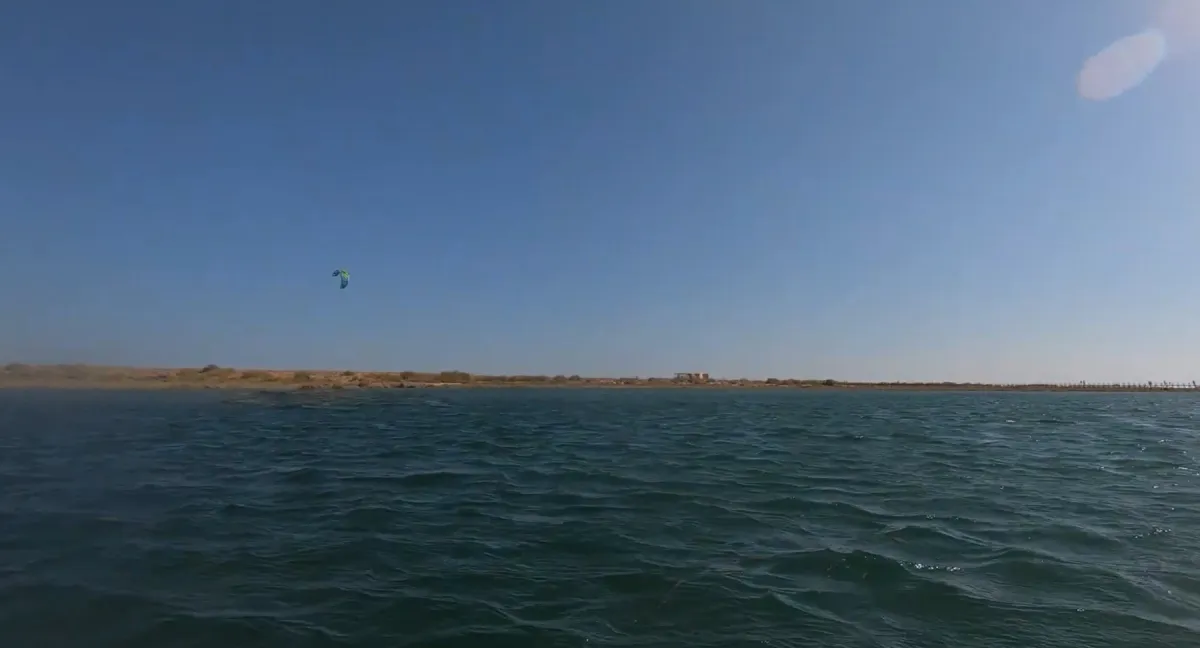
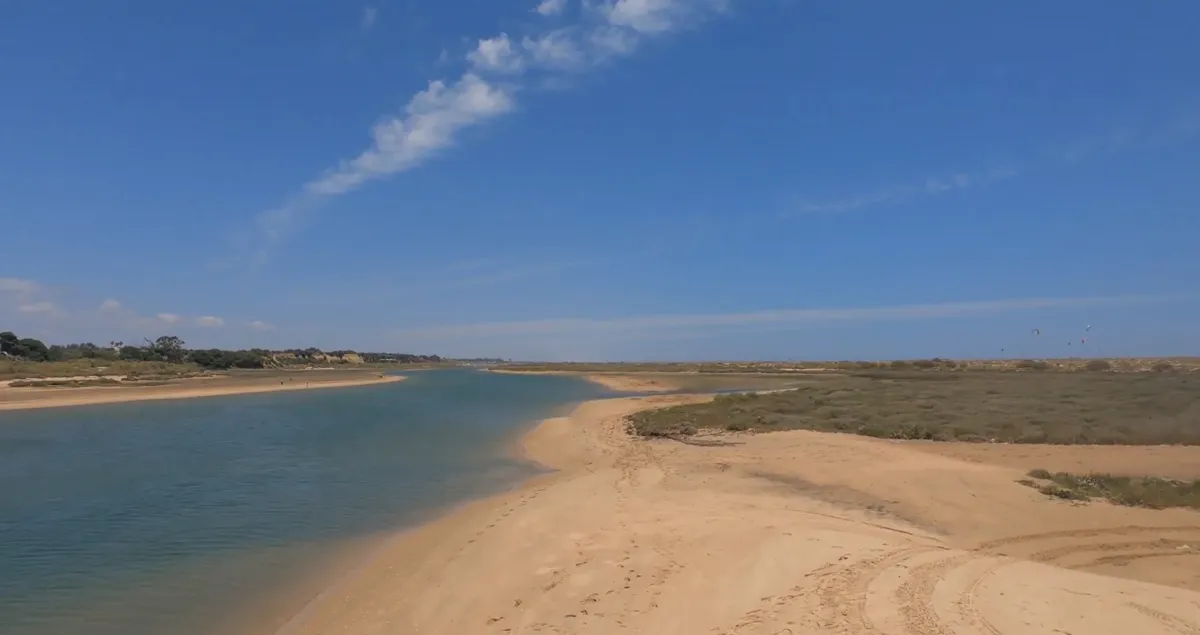
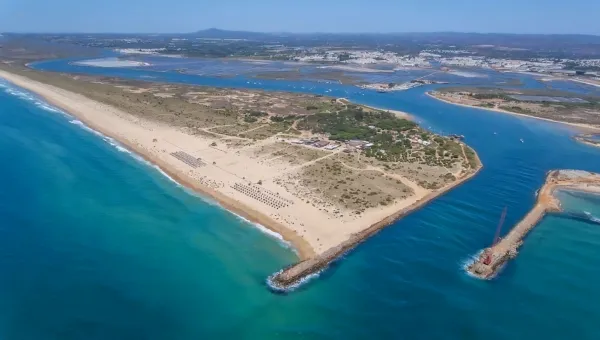
Cabanas de Tavira sits within the Ria Formosa Natural Park in the eastern Algarve and has become one of those reliable go-to spots for riders who want mellow lagoon conditions and the kind of uncrowded, focused sessions that are increasingly difficult to find at more accessible European kitesurfing destinations. The lagoon runs alongside a long narrow barrier island that is only reachable by a short boat ride from the village of Cabanas de Tavira, and that small logistical step is precisely what keeps the crowds away and the atmosphere on the water as calm as the lagoon itself.
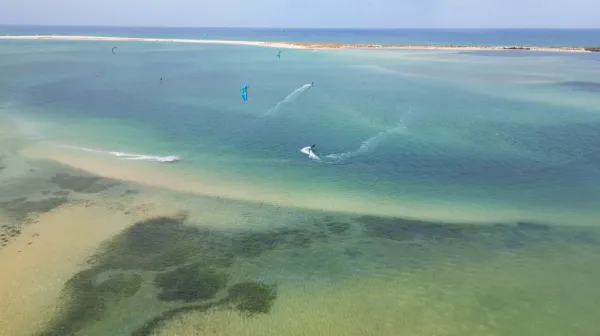
The spot works from April through October, with thermal winds driven by the heated inland air pulling cooler maritime air across the lagoon on a reliable daily cycle. Wind speeds range between 10 and 25 knots depending on the day, and bringing both a 9m and 12m setup covers the range comfortably for a rider around 75 to 80 kilograms. The wind direction varies between north, south, and east across the season, with the easterly direction being the most coveted since it pushes across the sandbar and produces the mirror-flat water surface that makes Cabanas such an effective freestyle playground. High tide is when the lagoon is at its best, filling out the riding area and smoothing the water into the kind of conditions that reward the patience of waiting for the right moment to rig up.
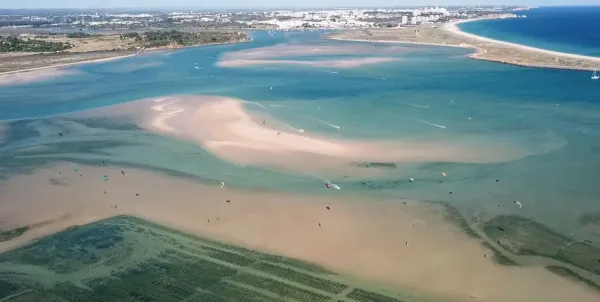
Low tide changes the character of the spot significantly and is worth understanding before planning sessions around it. The lagoon retreats into a collection of shallow channels and exposed sandbanks that reduce the rideable zone considerably, and unless you know the spot well enough to navigate the deeper channels confidently, waiting for the tide to come back in is the more sensible approach. Water shoes are essential regardless of the tide state, as shell patches and slippery sections on the launch area make going barefoot an unnecessary risk.
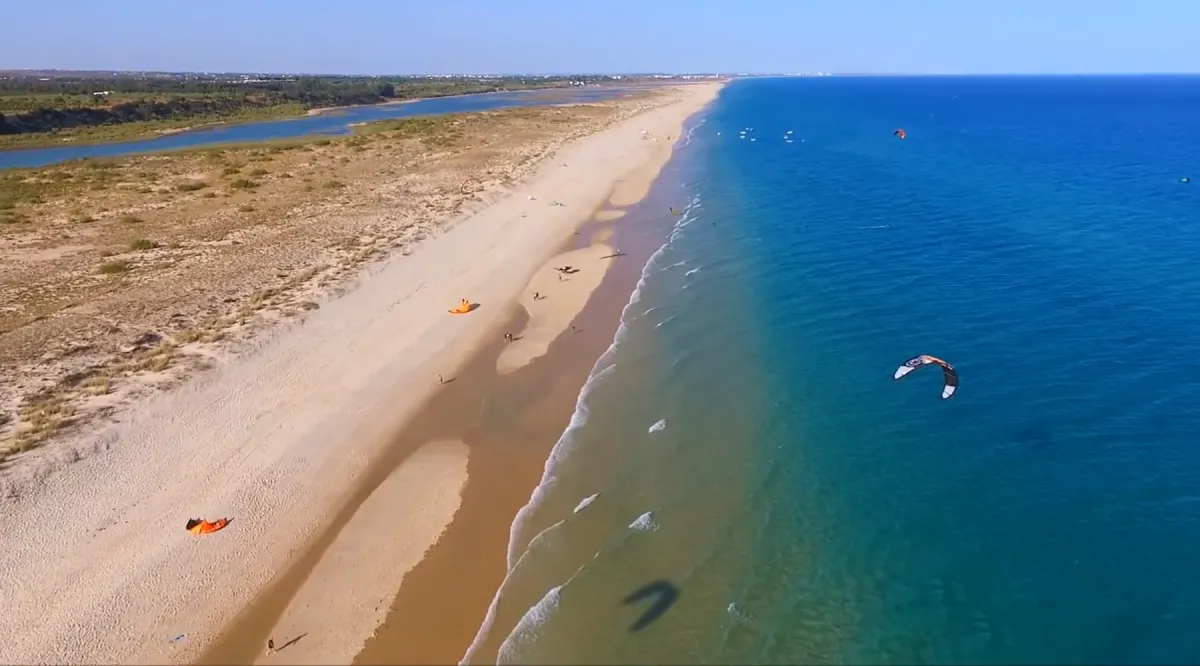
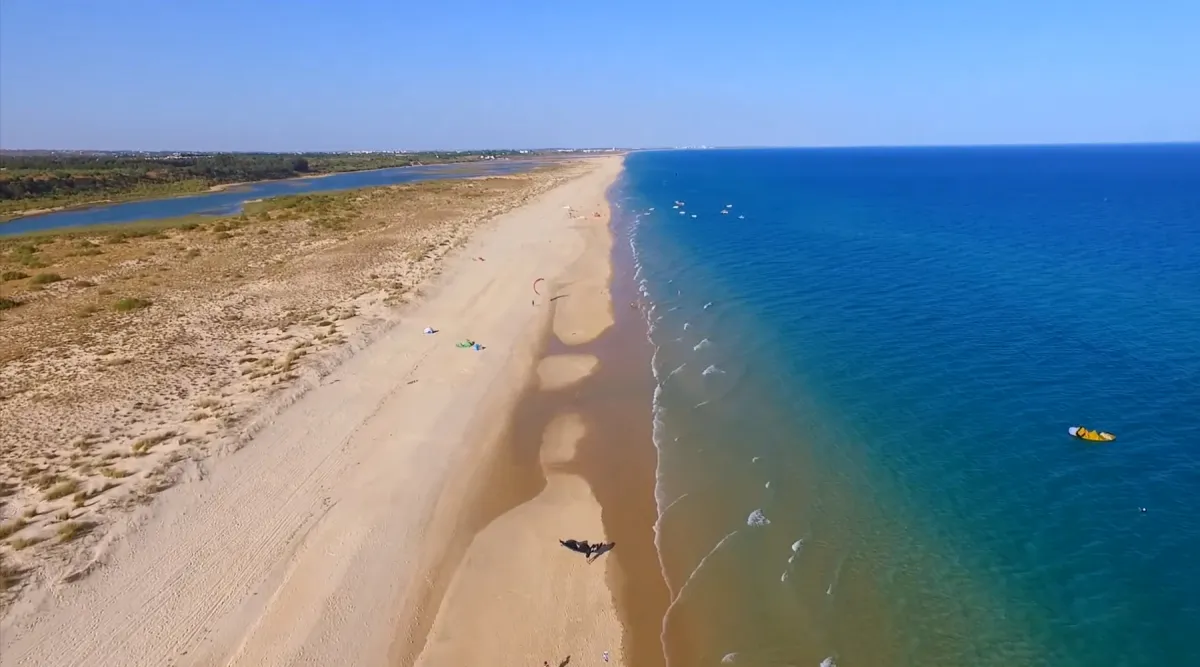
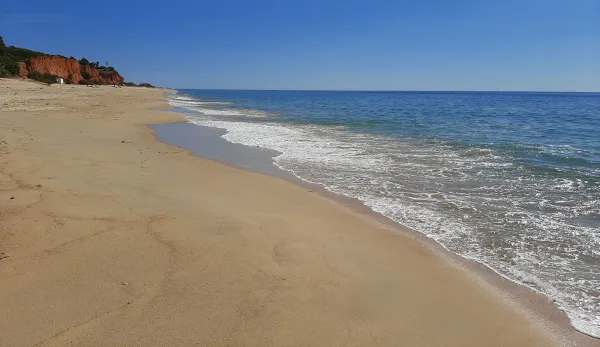
The terrain throughout the rideable zone is shallow flat water over a sandy bottom, which makes it as forgiving an environment as exists anywhere in Portugal for riders dialing in new moves or tightening up their upwind game without the consequences that deeper or more exposed water introduces. The atmosphere on the beach matches the conditions on the water, with seabirds providing more background noise than jet skis and a handful of kites lying in the sand being the extent of the activity on most days. There is no kite center directly on the lagoon, so arriving self-sufficient with your own gear is the standard approach, though several schools in Tavira offer rentals and lessons for those who need them.
Tavira itself is one of the more characterful towns in the Algarve, with cobbled streets, traditional tiled buildings, and restaurants serving grilled sardines and octopus that reflect the old-school southern Portuguese identity of the region. It provides everything needed for a comfortable base without the tourist saturation that affects more developed Algarve destinations further west. Sunset sessions at Cabanas carry a specific quality that is worth staying on the water for, with the light reflecting off the lagoon and the sandbar turning golden in the last hour before dark in a way that makes packing up early feel like a genuine missed opportunity. Bringing a hat and a long-sleeve layer for the post-session cooldown is worth remembering, as the wind chill once the sun drops can catch riders off guard after a warm afternoon on the water.
Something missing or out of date at this spot? Suggest a correction
Spot Gallery (4)
Cabanas de Tavira is best suited for
Spot profile
Travel spot
The typical kite travel destination, it is known for its great conditions, and kiters from around the world come here for their vacations.
Local spot
Maybe not be worth a real journey to reach this spot, but great if you live close by and it is a windy day. In the end, being out on the water feels great anywhere
Equipment
You’ll want a full wetsuit in winter months — 4/3 should do fine — and a shorty or even boardshorts during the peak of summer. Kite sizes range depending on your weight and wind, but bring your 12m and 9m for sure; sometimes an 8m if there’s a storm system. Water shoes are definitely recommended because the entry points can be slippery or packed with shells.
Wind Conditions
Main wind directions at Cabanas de Tavira
Windy days per month in Cabanas de Tavira
Wind Speed Range
From 10 to 25 Knots
Suggested sizes
8 - 9 mt
10 - 11 mt
12 - 13 mt
14 mt and above
Forecast on Windy.com
Kitesurfing Safety & Local Rules at Cabanas de Tavira
You really want to pay attention to the tide and lagoon access rules here. The biggest risk is kiting during restricted times. Since the lagoon sits within the Ria Formosa Natural Park, there are environmental protections in place. That means parts of the area are off-limits at certain times, especially when the tide is low or wildlife is active. If you don’t respect those zones, you could get hit with fines, and worse, hurt the sensitive ecosystem this area relies on — not cool.
Another thing is people sometimes underestimate the shallowness of the lagoon, especially during mid to low tide. Catching a fin in sandy patches can send you flying, and trust me, even soft sand packs a punch if you slam at speed. During stronger wind days, gusts can surprise you too. It’s mostly thermal, but if there’s a frontal system rolling through, conditions can change fast. Bring a variety of kite sizes and rig conservative until you’ve felt the wind curve.
Be mindful of swimmers and paddleboarders, especially closer to the launch site. It’s a shared zone, and while not super busy, you definitely need to keep situational awareness. Lastly, always secure your gear when launching. I’ve seen a few kites drift off or get snagged when folks let their guard down.
Respect local kiters’ space — the regulars here are super chill but picky about safe kiting. Oh, and don’t try to ride outside the lagoon toward the open ocean unless you know it well — current and swell pickup real fast out there, and you’re basically on your own if you get into trouble.
Location
Closest City
Tavira
How to get There
Fly into Faro Airport, which is just about 30 minutes driving time. From the airport, grab a rental car or taxi toward Cabanas de Tavira. When you reach the village, you’ll need to hop on a short boat ride — usually under 5 minutes — to access the actual kiting island. Boats run regularly during the day, especially in the warmer months, but you might want to touch base with local operators beforehand to organize transport if you're planning early or late sessions.
Access
You reach the kiting zone by a short boat ride from Cabanas village. It’s a public spot, but it does require scheduling with local boat operators, especially if you’re heading out early or staying late. There’s no road access across the lagoon, so factor boat times into your daily riding plan. It’s totally doable, just not as spontaneous as parked-on-the-beach sessions. Once you're there, you’ve g
No-Wind Days: What to Do Around Cabanas de Tavira
Cabanas de Tavira is the kind of spot that works just as well for traveling companions who have no interest in kitesurfing as it does for riders who are there specifically for the sessions. The village itself has the character of a sleepy fishing community that has eased gently into its role as a casual holiday destination without losing the pastel-colored buildings, fresh seafood, and friendly local atmosphere that define it. Grabbing lunch at one of the waterfront restaurants after a morning session is something worth building into the daily rhythm, and the grilled dorado is consistently fresh and worth ordering.
Tavira, a short distance away, is one of the more rewarding towns in the Algarve for a no-wind day wander. Roman bridges, tiled streets, and riverside cafes give it a depth of character that the more developed resort towns along the coast tend to lack, and the walkable scale of the place means that drifting through it without any particular agenda ends up being one of the more enjoyable parts of a stay in the area. Kite schools and rental operations are available in both Tavira and Cabanas for riders who need gear or instruction, but booking ahead during the high season is strongly advisable as availability for both lessons and gear storage tightens up quickly.
Accommodation options range from small pensions to mid-range hotels, and for stays of more than a few days a local guesthouse or private rental tends to work better than a hotel for the practical reason of having space to store and dry gear without it becoming an inconvenience. Bringing a full repair kit, spare lines, and any components that would be difficult to source locally is essential, as there are no kite shops directly at the launch and the nearest well-stocked options require a trip away from the immediate area.
The Ria Formosa Natural Park beyond the lagoon rewards exploration well beyond the kiting sessions. The coastal ecosystem of marshes, dunes, and saltwater channels that shift with the tide provides a constantly changing landscape that birdwatchers, hikers, and kayakers find genuinely compelling, and paddleboarding and kayaking tours through the park are available for no-wind mornings when staying active on the water in a different way makes more sense than watching the forecast and waiting. The calm and shallow beaches in the area make it an excellent environment for families with younger children, though the combination of reflected light off the water and a consistent breeze makes sun protection something to take seriously regardless of how mild the conditions feel.
Cabanas does not have a major party scene or a calendar of kite events, and that absence is a core part of what makes it appealing to the riders who keep coming back. The community is relaxed and largely made up of locals and riders who have found the spot through word of mouth rather than through heavy promotion, and the atmosphere that results from that self-selection is one of the more pleasant aspects of spending time here. It is ultimately a long-game kind of spot, one that rewards a slower pace, longer meals, and sunset paddles as much as it rewards progression sessions on the water, and the combination of all of those things together is what makes it genuinely difficult to leave feeling anything other than recharged.
Other kitesurfing spots near Cabanas de Tavira
All kitesurfing spots in Portugal
Last updated: