A 12 m² kite makes a perfectly good first purchase for some riders. It also makes a perfectly good kite to leave in the car all summer if you usually ride somewhere windy. The size only starts to mean something once you know who’s riding it, what board they’re on and how the wind behaves at their spot.
Part 1 covers when to buy and how to judge the condition of used gear.
What should a first kite feel like?
For a first inflatable kite, I’d start with an all-round freeride model that relaunches easily, turns predictably and reduces its pull progressively as you push the bar away. That last part matters when you’re learning to edge. If the pull builds in a way you can anticipate, you have time to shift your weight and set the board on its heel edge before you get pulled upright. You also want to be able to find the kite by feel while you’re looking at the water ahead of you.
The old categories such as Bow, Delta, Hybrid and C-kite can help you understand how designs developed. For buying, there’s more information in how a particular model behaves. The canopy shape, bridle and trim all affect the way it turns and how much pull you can take out through the bar’s travel. A specialist freestyle kite designed to give line slack after a loaded pop solves a problem you’re unlikely to have in your first season. If you can demo two freeride models, pay attention to what happens when you sheet out in a gust and how much work it takes to get each kite off the water. Your friend’s favourite brand can join the test. It has to earn its place like everything else.
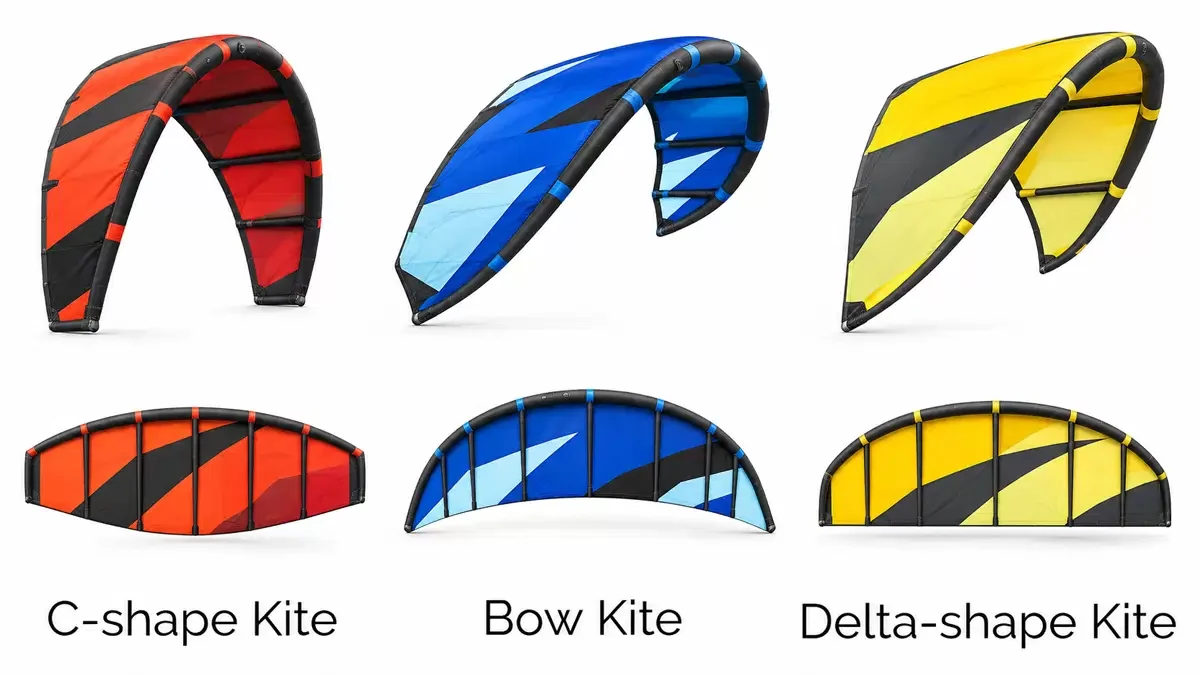
Read more about how kite shape, bridles and aspect ratio influence riding behaviour.
How many kites do you actually need?
Start with the conditions you’ll choose to go out in. If your usual spot gives you plenty of steady sessions in a fairly narrow wind band, one well-chosen kite can make sense. If you regularly get two distinct sets of conditions, such as lighter summer breezes and stronger autumn wind, a second size can buy you more usable sessions. Choose it when you know which sessions you’re missing.
A manufacturer’s wind chart gives you a starting point. For example, Duotone’s 2026 Evo manual lists 15–33 knots for the 9 m² and 11–26 knots for the 12 m², and describes those ranges as approximate. The overlap looks generous on paper. In practice, a rider who’s still learning to hold an edge on a small twin-tip will use that overlap differently from an experienced rider on a larger board. A forecast that averages 20 knots can also give you a very different session depending on how far apart the gusts and lulls are. Choose for the conditions you can handle comfortably, and use the exact model’s chart to sanity-check the size with your instructor.
You’ll often see pairs such as 9 and 12 m² or 10 and 14 m². Treat them as examples of spacing. Your weight, your board and the wind you actually ride decide where that pair should sit.
The kite and bar have to work together
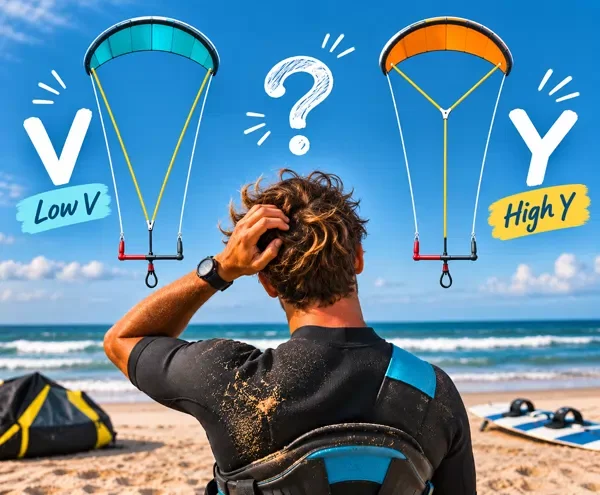
Two four-line bars can connect to the same kite and behave differently. The front lines may split at different heights, changing the angle at which they pull on the kite’s front attachment points. Line lengths and trim can change how it flies. And on a single-front-line flag-out system, the bar needs enough travel along the safety line for the other lines to go slack after you release. A kite that flies around the wind window normally has only passed the flying part of the test.
For a first setup, buy the manufacturer-specified bar or another bar the manufacturer explicitly lists as compatible with that kite model and year. Check the required configuration, including the front-line split and safety system. If a used package comes with a different bar and the seller says it works, ask for the exact model and check the documentation. Have an instructor or qualified shop check a used setup and show you how to operate and reset its release as specified by the manufacturer.
See the full checklist for buying used kitesurfing gear.
Choose the twin-tip before you blame the kite
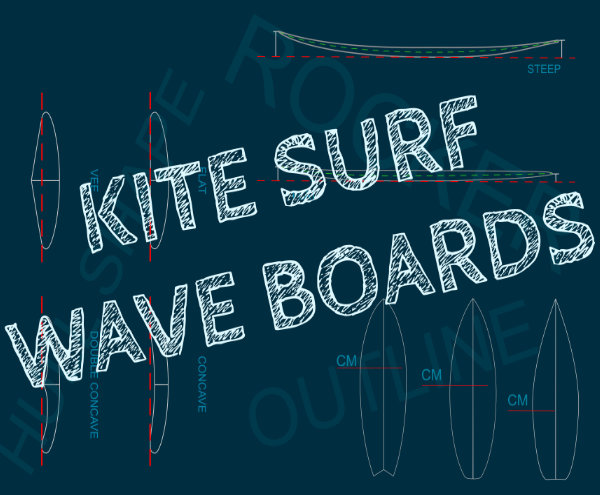
A freeride twin-tip with straps is a sensible first board. You can ride it in either direction without changing your feet, which leaves you one less thing to think about during a transition. Within the range recommended for your weight, a bit more width and a relatively flat rocker can help you get planing and keep moving through a lull. Rocker is the board’s lengthwise curve. A flatter board tends to get going earlier, while more curve can help it ride through chop at the cost of needing more power to get moving. Width matters at the other end of the session too. A board that feels easy in light wind may take more effort to hold on edge as the pull builds.
That’s why it helps to try boards before buying a bigger kite. If you keep sinking between gusts on a small, heavily rockered board, a more forgiving twin-tip may solve much of the problem. A decent freeride board can also stay with you well past your first season, even if you eventually add a directional for waves or a foil.
Seat or waist harness? Try both under pull
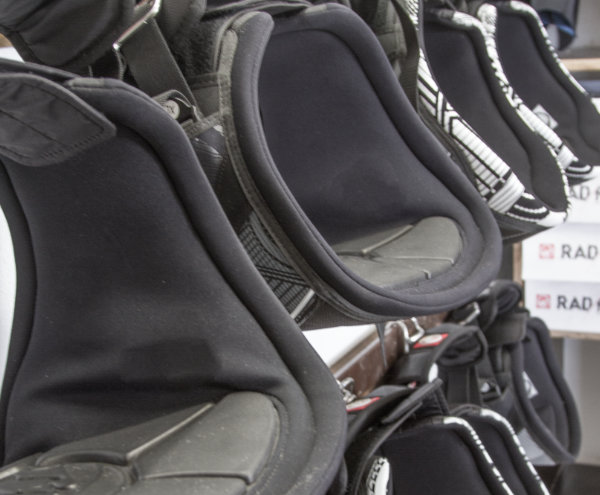
A seat harness uses leg straps to keep it low, which can help if a waist harness keeps creeping up when the kite is high. A waist harness generally gives your hips more freedom, and how well it stays in place depends on its shape, your torso and the fit of the spreader bar. Some experienced riders I know still use a seat harness because they’re more comfortable in it. They’ve had plenty of time to change their minds.
Try both with the spreader bar you’ll actually use, ideally over the wetsuit you ride in. Under pull, check whether you can bend and rotate comfortably, whether the harness slides up or twists, and whether you can easily reach the releases. Pay attention to where you feel the pressure. If the edge of a harness is already digging into your ribs after a minute in a shop, an hour of riding will give you plenty of time to think about it.
For the first purchase, take your local wind, your weight and the board you rode in lessons to someone who knows the spot. Ask them to help you put together one setup for the days you’ll ride most. After a few months, you’ll have a much better idea whether the next thing you need is another kite, a different board or simply more time on the one you already own.