
Kitesurfing in Sint Joris Baai
Willemstad · Curacao
- Spot type Flat
- Rider level beginner
- Water Seaweeds
- Beach Sand
- Crowd Few people
- Tide effect Conditions vary
Kitesurfing in Sint Joris Baai: Conditions, Wind & Season
St. Joris Bay is one of Curaçao's best-known kitesurfing locations, situated on the northeastern side of the island, a short drive from Willemstad in the southern Caribbean. This expansive, semi-enclosed bay offers an appealing combination of reliable trade winds, relatively sheltered water and established kitesurfing instruction. Unlike the exposed coastline facing the open Caribbean Sea, St. Joris Bay provides a more protected environment where riders can enjoy freeriding, practise freestyle manoeuvres and develop their skills without dealing with large ocean waves. Its accessibility, spacious riding area and favourable wind exposure have made it a popular destination for both local kitesurfers and visitors exploring kitesurfing in Curaçao.
The defining feature of St. Joris Bay is its exposure to the easterly and east-northeasterly trade winds that dominate Curaçao's climate. These winds blow across the island for much of the year, providing frequent opportunities for kitesurfing. Typical rideable conditions often fall around 17–22 knots, although lighter days and stronger periods are both possible. The island is widely recognised for its dependable trade-wind climate, but claims of more than 300 suitable kitesurfing days per year should be treated as indicative rather than guaranteed. Wind strength and consistency vary with seasonal weather patterns, and local conditions inside the bay may differ from measurements taken along the exposed coastline.
The strongest and most reliable kitesurfing season generally extends from January through August, when the Caribbean trade winds are well established. Spring and early summer can provide particularly consistent conditions, with numerous opportunities for powered freeriding and freestyle sessions. During September, October, November and December, the wind often becomes lighter or more variable, although many days remain suitable for kitesurfing. This makes St. Joris Bay a potential year-round destination, particularly for riders who can adapt their equipment to changing wind strength. Visitors planning a dedicated kitesurfing holiday should nevertheless prioritise the main trade-wind months for the greatest chance of regular sessions.
Wind conditions inside St. Joris Bay depend on both the prevailing direction and the surrounding terrain. Although the bay benefits from Curaçao's reliable trade winds, sections of the shoreline may experience turbulence or wind shadows where airflow passes over land, vegetation or uneven ground. The most suitable launching and riding areas are those where the wind reaches the water with a clean and predictable angle. Riders should assess conditions at the actual launch rather than relying exclusively on general island forecasts. Depending on the launching position, the prevailing easterly winds may also have an offshore component, making reliable upwind ability and awareness of local rescue arrangements particularly important.
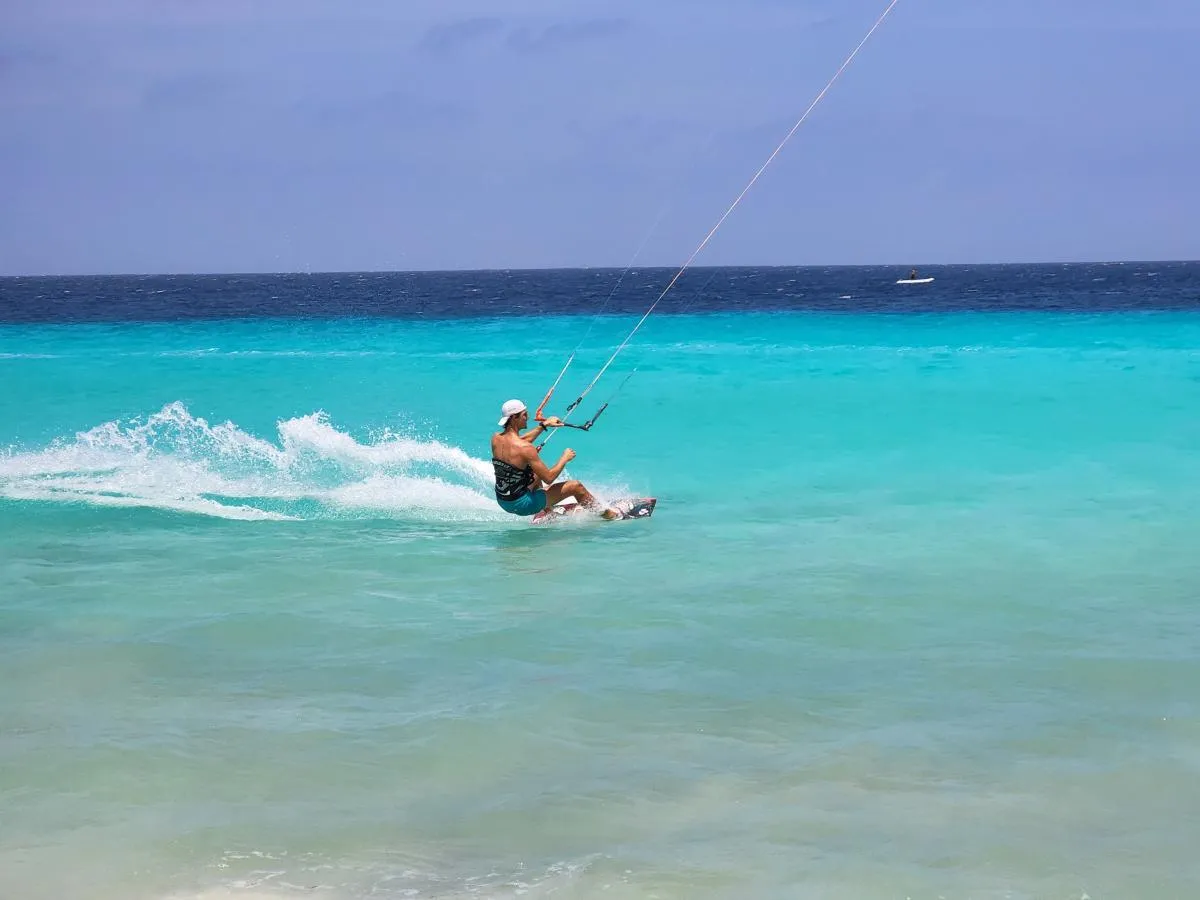
Water conditions are among the main attractions of St. Joris Bay. The enclosed geography protects the riding area from much of the open-sea swell, creating predominantly flat to moderately choppy water. During lighter winds, some sections can become relatively smooth, offering enjoyable conditions for practising transitions, edging and controlled freestyle manoeuvres. As the trade winds strengthen, short wind-driven chop develops across the wider stretches of the bay, particularly where the wind has a longer uninterrupted reach over the water. Although the surface is not always perfectly flat, it remains considerably more sheltered than the island's exposed ocean-facing beaches, making it attractive for riders who prefer freeriding to wave riding.
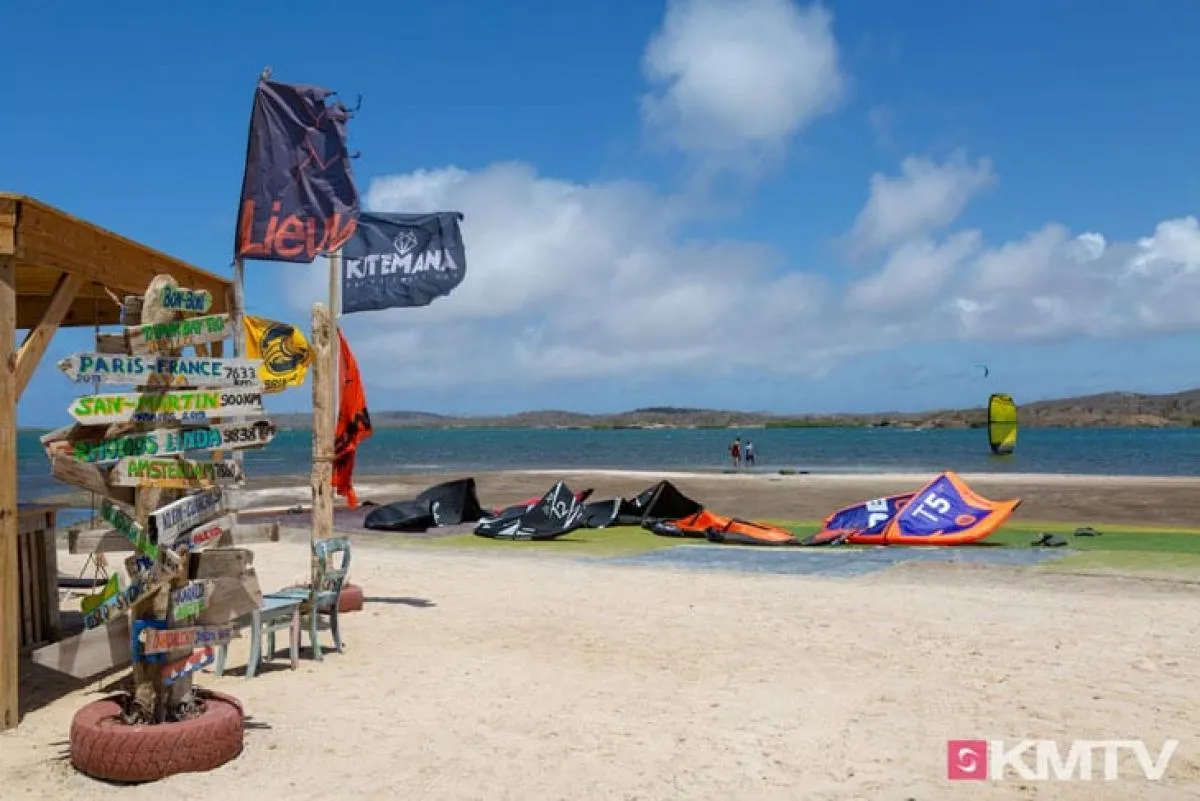
The established launching area at St. Joris Bay provides access to the water from a relatively open shoreline. Local kitesurfing schools, including Gusty Kiting, have operated in the area and helped establish the bay as a recognised teaching and riding location. The available space for preparing equipment and launching kites depends on the exact access point, current conditions and the number of riders present. Some sections of the shoreline are less suitable because of vegetation, uneven ground or restricted access. Visitors should use established launching areas, follow local instructions and avoid setting up equipment where obstacles could interfere with kite lines or safe launching procedures.
St. Joris Bay is suitable for kitesurfing instruction when the wind is moderate and the designated teaching area provides appropriate water depth and sufficient space. The absence of large breaking waves allows beginners to concentrate on kite control, body dragging and their first water starts without having to manage an exposed ocean shorebreak. However, the bay is not uniformly shallow or free from hazards, and some areas may have muddy sections, submerged obstacles or changes in depth. Beginners should therefore learn with qualified instructors who understand the local conditions and can provide appropriate supervision. The presence of reliable trade winds makes the bay attractive for lessons, but stronger days can still be demanding for inexperienced riders.
Intermediate kitesurfers can enjoy St. Joris Bay for relaxed freeriding, improving upwind performance and practising transitions in relatively protected water. The broad riding area allows longer reaches when conditions and local access rules permit, while the consistent trade winds can provide enough power for jumps and more advanced manoeuvres. Experienced freestyle riders may appreciate the flatter sections of the bay, particularly when the wind is strong enough for powered tricks but the water remains manageable. The spot is primarily associated with freeride and freestyle kitesurfing rather than wave riding, as its sheltered geography prevents the formation of substantial ocean swell inside the main riding area.
The seabed at St. Joris Bay varies between different sections, with shallow coastal areas, sediment and potentially harder or uneven submerged surfaces. Riders should not assume that the entire bay has a soft sandy bottom. Some sections may contain stones, shells, vegetation or other obstacles, while water depth can change away from the shoreline. Protective footwear may be useful when entering the water, particularly in unfamiliar areas. The bay's relatively protected conditions can make submerged hazards less obvious than they would be in breaking surf, so riders should identify safe riding zones before attempting jumps or powered manoeuvres. Shallow-water landings should always be avoided.
Hydrofoil kitesurfing may be possible in deeper sections of St. Joris Bay, provided there is sufficient clearance for the foil mast and no submerged obstacles along the intended route. The relatively smooth water can be attractive for experienced foil riders, especially during lighter trade-wind periods when conventional twin-tip riding becomes more difficult. However, the shallow margins and variable seabed require careful route selection. Wing-foiling may also be feasible when the wind and water depth are suitable, although launching from areas with limited space or shallow water can be challenging. Riders using foil equipment should seek local guidance before entering unfamiliar sections of the bay.
The main safety considerations at St. Joris Bay are wind direction, localised gusts, water depth and the possibility of drifting away from the launching area. Because some launching positions may experience offshore or cross-offshore winds, riders should understand the consequences of equipment failure or insufficient wind before heading onto the water. Reliable self-rescue skills are important, and beginners should remain within supervised teaching zones. Stronger trade winds can produce significant chop and make kite handling more demanding, while lighter periods may leave riders unable to return upwind. Local rescue support should be confirmed before launching rather than assumed to be available at all times.
Curaçao's tropical climate provides warm air and water temperatures throughout the year, with sea temperatures generally remaining around 26–29°C. Heavy wetsuits are rarely necessary, and most riders use boardshorts, rash guards or lightweight protective clothing. Strong trade winds can create some wind chill during extended sessions, particularly after repeated water starts, but sun exposure is usually the greater concern. UV protection, hydration and appropriate footwear are important, especially when spending several hours at the launching area. During the less predictable autumn months, riders should monitor regional weather systems carefully, as changes in wind direction or passing showers can affect conditions inside the bay.
For riders searching for kitesurfing at St. Joris Bay, reliable trade-wind kite spots in Curaçao or flat-water kitesurfing destinations in the southern Caribbean, this sheltered northeastern bay offers an attractive combination of consistent seasonal winds, accessible riding areas and established local instruction. Its greatest strengths are the dependable trade-wind climate, manageable water conditions and opportunities for beginner progression, freeriding and freestyle. However, offshore wind angles, variable seabed conditions and localised turbulence require careful attention to safety. With suitable conditions and guidance from experienced local operators, St. Joris Bay remains one of Curaçao's principal kitesurfing destinations.
Something missing or out of date at this spot? Suggest a correction
Spot Gallery (4)
Sint Joris Baai is best suited for
Spot profile
Adventure spot
That dream place out of the normal touristic routes. Once you reach it, you feel in paradise, it can be anything extraordinary, a hidden gem, remote and fascinating.
Local spot
Maybe not be worth a real journey to reach this spot, but great if you live close by and it is a windy day. In the end, being out on the water feels great anywhere
Equipment
Shoes are advised, wetsuit not necessary
Wind Conditions
Main wind directions at Sint Joris Baai
Windy days per month in Sint Joris Baai
Wind Speed Range
From 15 to 27 Knots
Suggested sizes
7 mt and below
8 - 9 mt
10 - 11 mt
12 - 13 mt
Forecast on Windy.com
Kitesurfing Safety & Local Rules at Sint Joris Baai
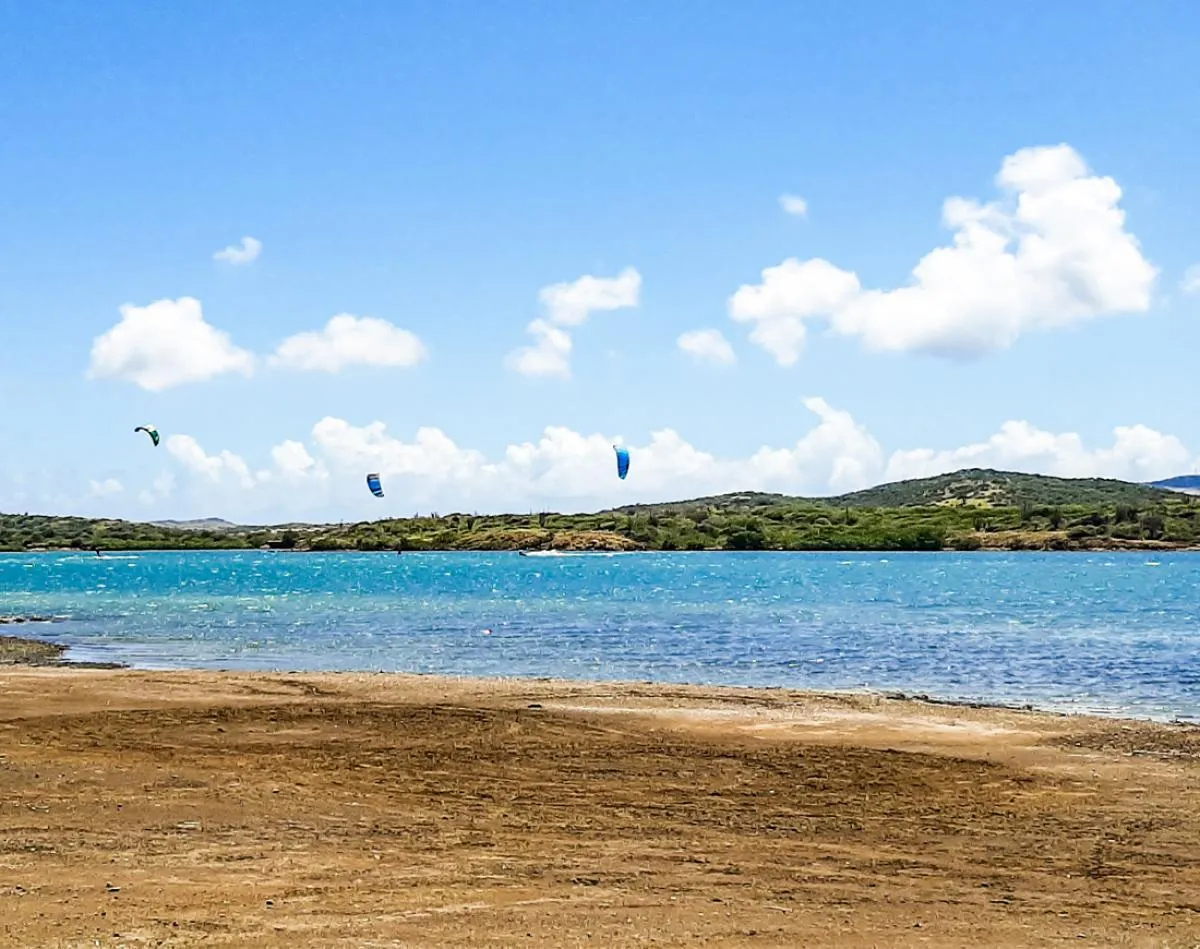
The main hazard at St. Joris Bay in Curaçao is the presence of mangroves downwind of the main kitesurfing area. Riders who lose control, struggle to maintain their upwind position or experience equipment problems risk drifting into the vegetation, where kite lines can become tangled and recovering equipment may be difficult. Maintain a generous safety distance from the mangroves and avoid riding too close to them, particularly when underpowered.
The bay regularly experiences strong trade winds, typically around 17–22 knots, which can make conditions challenging for inexperienced riders. Although the water is relatively sheltered, gusts and changes in wind strength can affect kite control, especially near the shoreline. Choose an appropriate kite size, remain aware of your downwind position and avoid attempting manoeuvres without sufficient room to recover safely.
A flat-water riding area is located upwind of the main kite beach, offering attractive conditions for freeriding and freestyle. However, reaching and returning from this section requires reliable upwind riding skills. Beginners should remain within the designated teaching area and follow guidance from local kite schools. Avoid venturing into unfamiliar sections of the bay without understanding the wind direction, available landing points and rescue arrangements.
Location
Closest City
Willemstad
How to get There
By car: Gusty Kiting is approximately 15 kilometres from the centre of Willemstad. You will find the Joris Bay by following the signs to Ostrich Farm. If you drive all the way to the end of this road, it turns into a dirt road. Gusty kiting is on the left side of the bay. Do you like to drive with navigation? Then download the Maps.me app. This allows you to navigate to the kitespot without internet.
Access
No fees apply and there is free parking, however, it is private property
No-Wind Days: What to Do Around Sint Joris Baai
Beyond kitesurfing, St. Joris Bay offers an excellent opportunity to discover the natural beauty and cultural attractions of Curaçao, one of the most colourful islands in the Dutch Caribbean. Located on the northeastern side of the island, approximately 20 minutes by car from Willemstad, the bay is surrounded by rugged hills, dry tropical vegetation, salt flats and peaceful coastal landscapes. Unlike Curaçao's more developed beach destinations, the St. Joris area retains a relatively wild and undeveloped atmosphere, making it particularly attractive to nature lovers and travellers seeking a quieter environment. For a kitesurfing trip with non-kiters or a family holiday in Curaçao, the surrounding region offers plenty of activities to enjoy on no-wind days.
St. Joris Bay itself is an interesting destination for nature walks, photography and exploring the island's distinctive coastal environment. The surrounding landscape features cacti, low hills, mangrove habitats and saltwater wetlands that attract various bird species. Flamingos and other waterbirds may occasionally be observed in suitable wetland areas, although sightings are not guaranteed. The rugged shoreline and surrounding countryside provide beautiful scenery, particularly during the early morning and late afternoon. Visitors should be aware that the bay is not a conventional swimming beach, and some areas have limited facilities or difficult access. Bringing drinking water, sun protection and suitable footwear is advisable.
One of the most enjoyable activities near St. Joris Bay is exploring the island's countryside by mountain bike or on foot. The surrounding hills and unpaved tracks offer opportunities to discover Curaçao's dry tropical landscape, with its characteristic divi-divi trees, cacti and rocky terrain. Guided mountain biking and hiking excursions may be available through local operators, while some routes can be explored independently with appropriate preparation. The area is exposed to strong sunshine, so early morning excursions are generally more comfortable. Visitors should respect private property, avoid disturbing wildlife and check local access conditions before entering unfamiliar trails.
For a more relaxed beach experience, Curaçao's southern and western coastlines offer some of the Caribbean's most beautiful swimming and snorkelling locations. Jan Thiel Beach and Mambo Beach, both within driving distance of St. Joris Bay, provide organised beachfront facilities, restaurants, sun loungers and recreational activities. These destinations are particularly appealing to families and non-kiting partners who prefer comfortable beach facilities and easy access to food and refreshments. Farther west, beaches such as Cas Abao and Playa Porto Mari offer turquoise water, attractive natural surroundings and opportunities for snorkelling when sea conditions are suitable.
Snorkelling and scuba diving are among Curaçao's most popular activities, thanks to the island's clear Caribbean waters and extensive coral reef habitats. Numerous dive centres organise excursions to reefs, walls and underwater sites around the southern and western coastline. Visitors may encounter colourful reef fish, sea turtles and a variety of marine species, although wildlife sightings depend on local conditions. Beginners can join introductory diving experiences with qualified instructors, while experienced divers can explore deeper reef formations and specialised sites. Snorkelling is also possible directly from several beaches, making it an accessible activity for families and travellers who prefer to remain close to shore.
A visit to Willemstad is one of the highlights of any holiday in Curaçao. The island's capital is famous for its colourful Dutch colonial architecture, lively waterfront and distinctive Caribbean atmosphere. The historic districts of Punda and Otrobanda feature brightly painted buildings, traditional streets, restaurants, shops and cultural attractions. The Queen Emma Bridge, a floating pedestrian bridge connecting the two sides of the harbour, is one of the city's most recognisable landmarks. Visitors can explore local markets, enjoy waterfront dining and discover the island's multicultural heritage. Willemstad's historic centre is recognised as a UNESCO World Heritage Site, with further information available through the UNESCO World Heritage Centre.
For travellers interested in local culture, Willemstad offers several museums and historical attractions. The Kura Hulanda Museum explores aspects of the Atlantic slave trade and African heritage, providing an important perspective on Curaçao's history. Other cultural sites introduce visitors to the island's colonial architecture, maritime traditions and diverse population. The city's markets and restaurants are also excellent places to experience local cuisine, including dishes influenced by Dutch, Caribbean, African and Latin American traditions. Traditional specialities include keshi yena, stewed meats, fresh seafood and local snacks. Exploring Willemstad provides an enjoyable contrast to the quiet natural surroundings of St. Joris Bay.
Another rewarding excursion is Christoffel National Park, located in the northwestern part of Curaçao. This protected natural area features rugged hills, dry forests, historic plantation landscapes and hiking trails through some of the island's most distinctive scenery. The park is home to native wildlife, including the Curaçao white-tailed deer, although sightings are relatively uncommon. More adventurous visitors can hike towards the summit of Christoffel Mountain, the island's highest point, where panoramic views reward the climb. The ascent is demanding and subject to park access rules, including restrictions related to heat and opening hours. Information about visiting the park is available through CARMABI, the organisation involved in managing Curaçao's protected natural areas.
Close to Christoffel National Park, Shete Boka National Park offers a completely different coastal experience. The park protects a dramatic section of Curaçao's northern shoreline, where powerful Atlantic waves crash against limestone cliffs and rocky inlets. Visitors can follow designated paths to viewpoints overlooking natural formations such as Boka Tabla and other rugged coastal features. The scenery is particularly impressive when the sea is rough, although visitors must remain behind safety barriers and avoid approaching exposed cliff edges. Swimming is not appropriate along these hazardous sections of coastline. The park is especially attractive for photographers and travellers interested in discovering the wilder side of Curaçao.
For families and nature enthusiasts, Curaçao also offers opportunities to explore salt flats, mangrove areas and coastal lagoons that support numerous bird species. The wetlands around Jan Kok are particularly associated with flamingo sightings, although their presence varies with environmental conditions. Guided nature excursions can provide an interesting introduction to the island's ecology and conservation challenges. Boat trips, kayaking and other organised outdoor activities are also available in selected coastal areas, depending on local regulations and weather conditions. These experiences offer enjoyable alternatives for visitors who want to spend time outdoors without necessarily visiting the island's busier beaches.
Accommodation directly around St. Joris Bay is relatively limited, reflecting the area's undeveloped character. Visitors can find holiday villas, apartments and smaller properties in nearby residential areas, while a much wider selection of hotels and resorts is available around Jan Thiel, Mambo Beach and Willemstad. Jan Thiel is particularly attractive for travellers seeking beachfront accommodation, restaurants and recreational facilities, while Willemstad offers boutique hotels, guesthouses and convenient access to cultural attractions. Renting a car is strongly recommended for visitors staying near St. Joris Bay, as the surrounding roads and attractions are spread across the island and public transport connections may be limited.
For anyone planning a kitesurfing holiday at St. Joris Bay and wondering what else there is to do, Curaçao offers an excellent combination of Caribbean beaches, cultural heritage and outdoor adventure. A no-wind day can include exploring the colourful streets of Willemstad, snorkelling along the southern coast, hiking in Christoffel National Park or discovering the dramatic cliffs of Shete Boka. Families and non-kiting partners can enjoy beach clubs, wildlife watching, restaurants and cultural excursions, while adventurous travellers can explore the island's rugged countryside and coastal trails. With its beautiful natural landscapes, diverse attractions and wide range of accommodation options, St. Joris Bay provides an excellent base for a memorable Caribbean holiday beyond kitesurfing.
Local Kitesurfing Schools
Following you can find links to the page of the kitesurfing schools which operate on this spot. From there you can contact them through our form or directly via email or phone (if it was provided by them on the page).