Kitesurfing in Cape Deprano
Spot Type
Flat
Water
Crystal Clear
Beach
Pebble
Rider Level
beginner
Spot characteristics
Spot Type
Flat
Rider Skill
beginner
Crowd
Very Crowded
Beach Type
Pebble
Water Quality
Crystal Clear
Tide Influence
All tide levels with different conditions (chop - flat - wave)
Kitesurfing in Cape Deprano: Conditions, Wind & Season
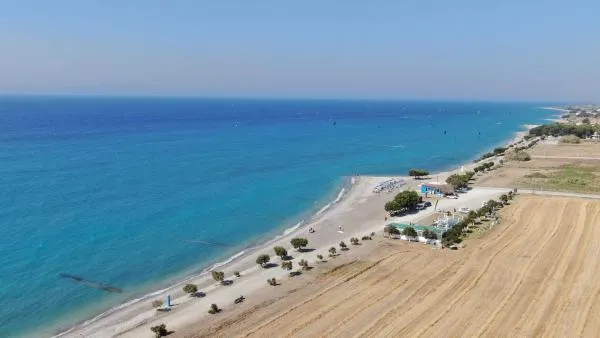
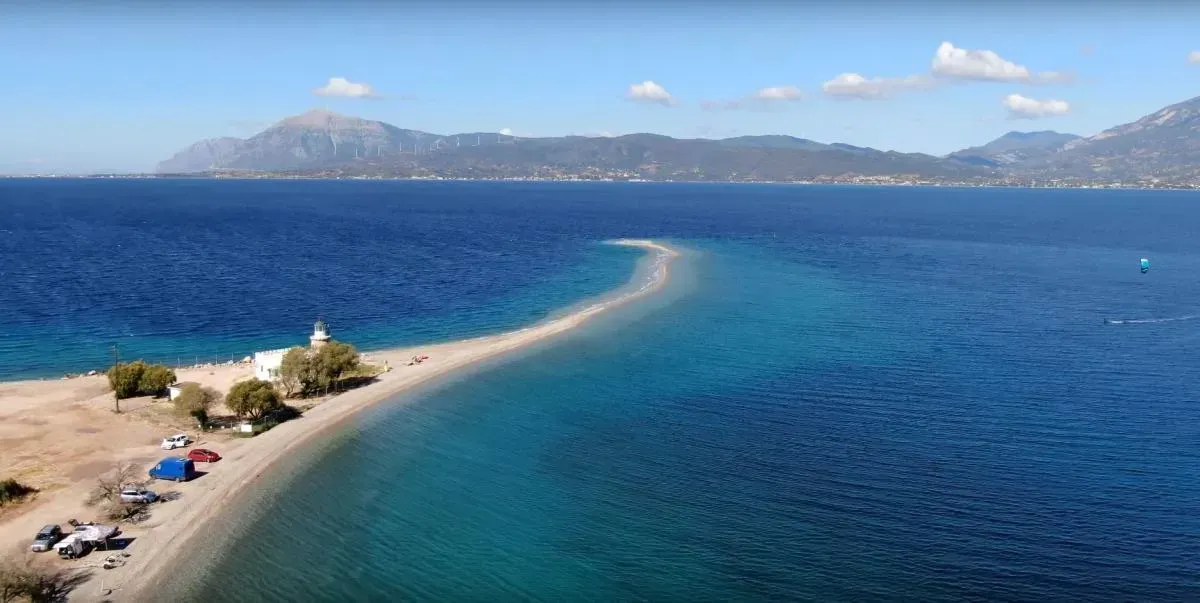
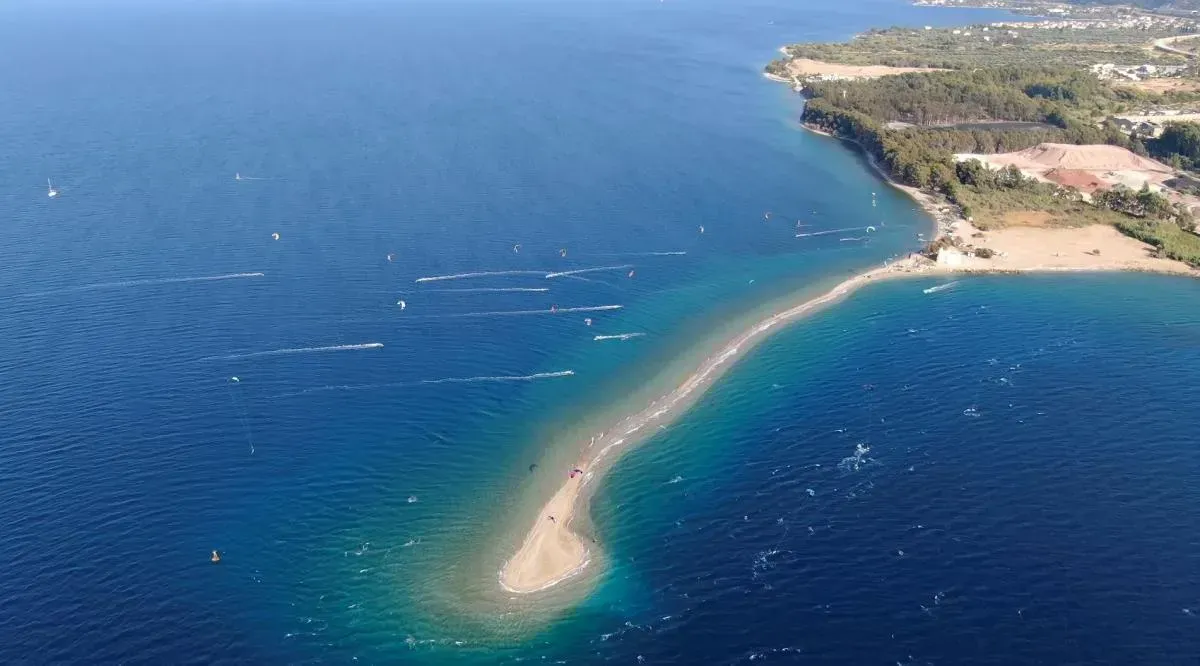
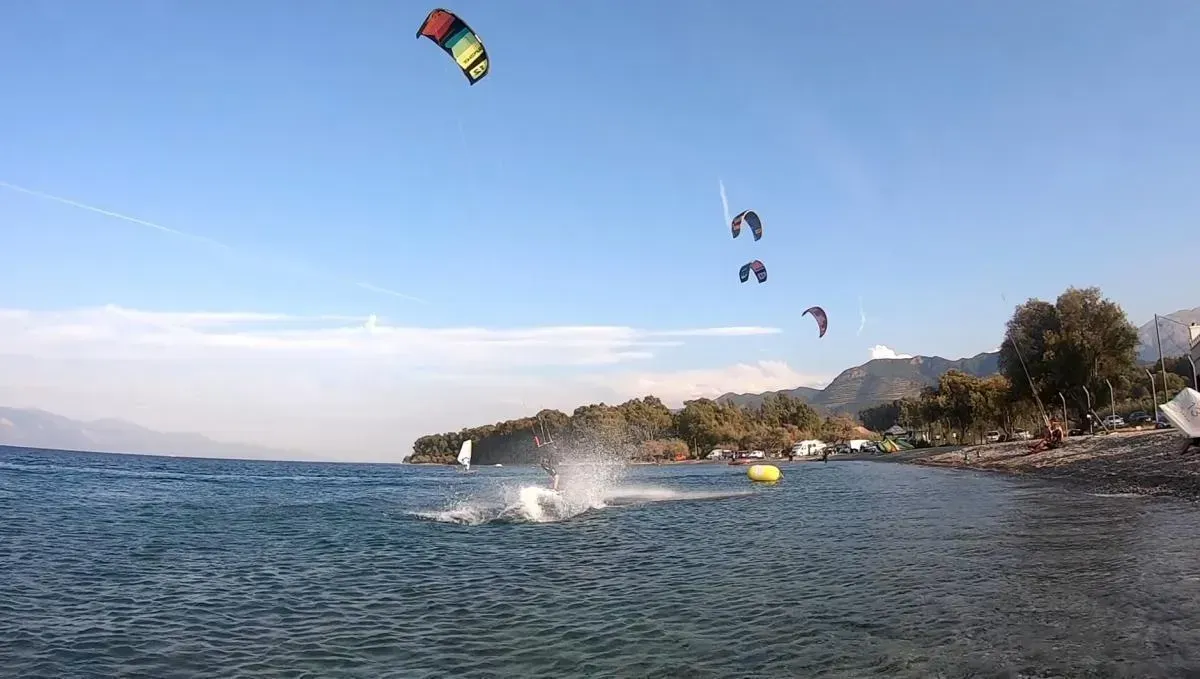
Cape Drepano, located around 15 kilometres northeast of Patras on the northern coast of the Peloponnese, is one of the best-known flat-water spots for kitesurfing in Greece. A long, narrow sand-and-pebble spit extends into the Gulf of Patras, creating two very different riding areas depending on the wind direction. The protected side can become exceptionally flat, providing the smooth water that has made Drepano particularly popular with freestyle riders, while the exposed side offers more chop and open-water freeriding. Its combination of reliable wind and flat water has established Cape Drepano as one of the reference kite spots in the western Peloponnese.
The main kitesurfing season runs from spring through autumn, with particularly good conditions between May and October. During the warmer months, thermal effects around the Gulf of Patras help strengthen the local wind, which often builds during the day and produces its best conditions from midday into the afternoon. Depending on the wind direction, riders can simply move to the appropriate side of the spit, with one side often providing considerably flatter water than the other. This versatility is one of the reasons Drepano has become such a popular destination for kitesurfing near Patras.
The flat-water section is the main attraction for freestyle riders, offering long stretches of smooth water ideal for practising tricks, powered riding and progression. Conditions farther away from the protection of the spit become progressively choppier, providing more conventional freeride terrain. Intermediate and advanced riders will generally get the most from the spot, particularly when it becomes crowded. Beginners can also learn at Drepano with the local kite schools, but quieter weekdays and periods outside the peak summer season provide a much more comfortable environment for lessons and practising basic skills.
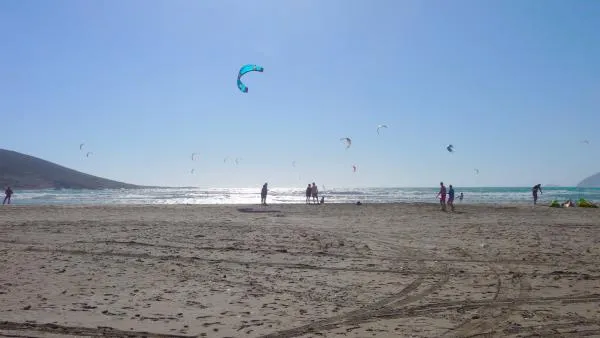
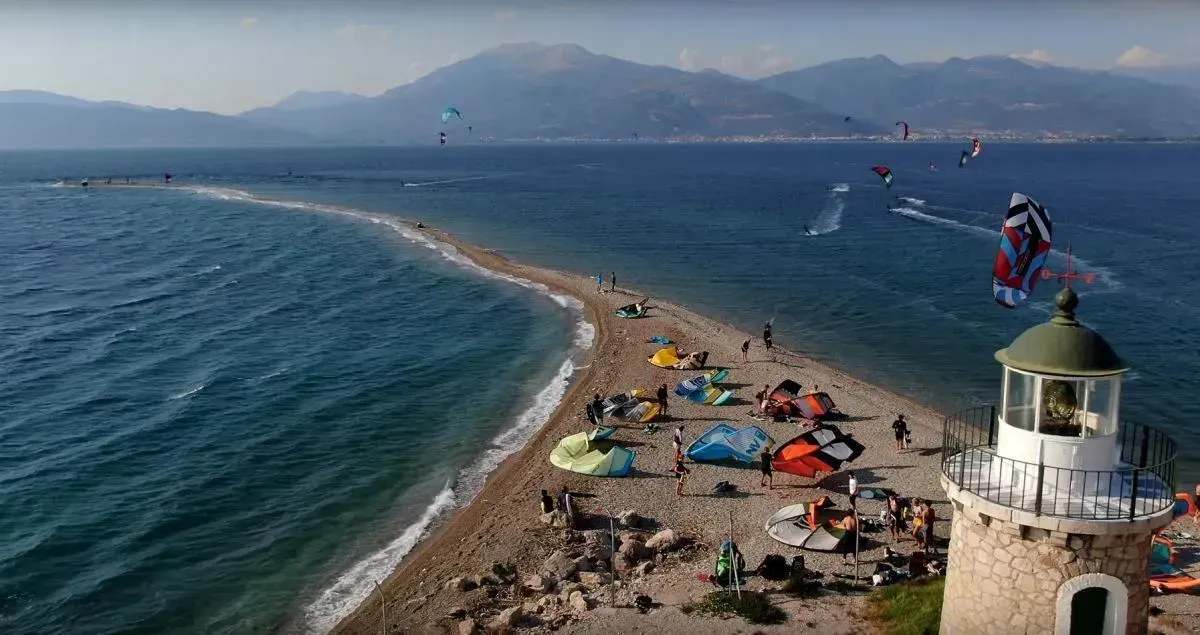
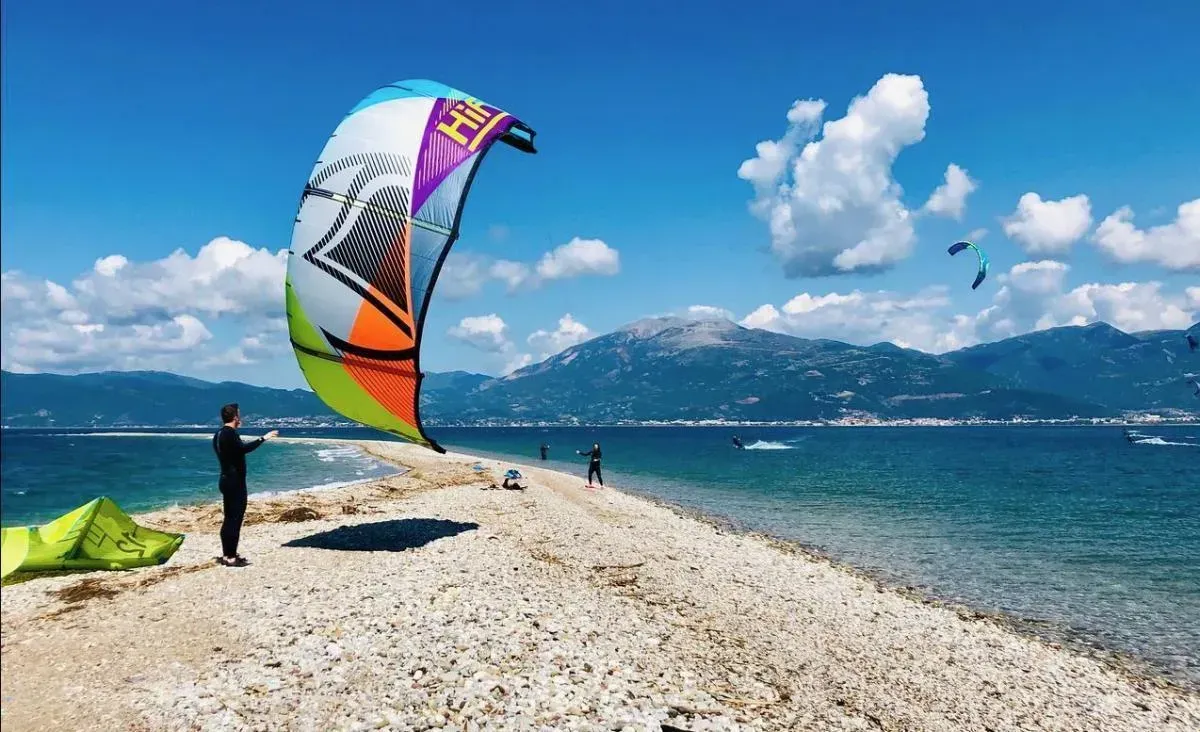
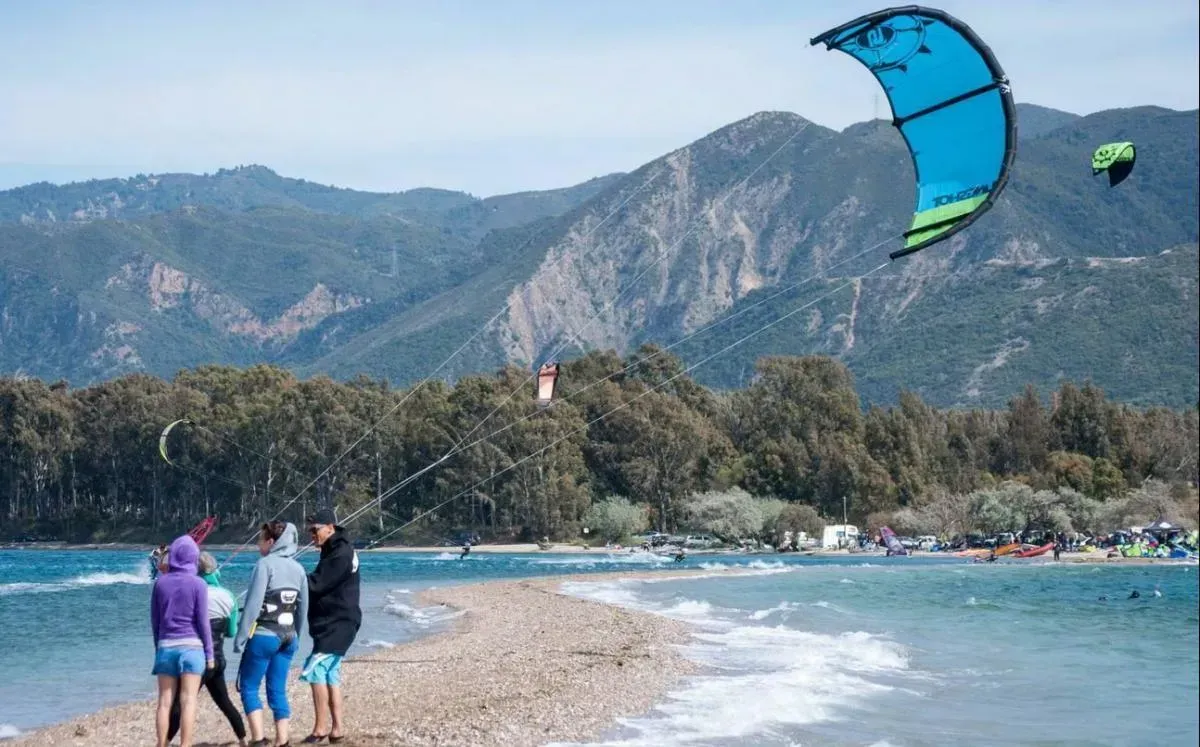
Space on land requires more attention than space on the water. The narrow spit consists of sand, gravel and pebbles, and the available area for preparing and launching kites can become limited when many riders arrive. Protective footwear can be useful because of the rougher sections of beach. During busy summer weekends, good launch etiquette is essential: prepare equipment away from the active launching area where possible, assist other riders and avoid leaving kites unnecessarily on the limited beach space. Windsurfers, wingfoilers and other watersports users also share the area.
Cape Drepano has a well-established watersports scene, with local kite centres providing lessons, equipment rental, storage and other services during the season. Its proximity to Patras is another major advantage, giving visiting riders easy access to accommodation, restaurants, nightlife and transport connections while remaining close to the kite spot. This makes Drepano particularly convenient for anyone planning a kitesurfing holiday in the Peloponnese without wanting to stay in an isolated beach destination.
For riders exploring kite spots in western Greece, Cape Drepano combines some of the region's most attractive ingredients: Mediterranean weather, frequent wind, smooth water and a lively local kite community. Patras provides the nearest major city, while the wider Achaea region and Gulf of Patras offer beaches, mountain scenery, archaeological sites and traditional Greek villages for days away from the water. When the wind lines up and the protected side of the spit turns glassy, it is easy to understand why Cape Drepano has become one of the most recognised destinations for flat-water kitesurfing in Greece.
Spot Gallery (8)
Cape Deprano is best suited for
Spot profile
Travel spot
The typical kite travel destination, it is known for its great conditions, and kiters from around the world come here for their vacations.
Family spot
Located in an area that offers amenities for all the family and can provide good alternatives for everyone when the kiters are in the water.
Equipment
Shorty or Lycra in the summer, normal wetsuit in the rest of the year. Shoes can be a good idea
Wind Conditions
Main wind directions at Cape Deprano
Windy days per month in Cape Deprano
Wind Speed Range
From 10 to 26 Knots
Suggested sizes
8 - 9 mt
10 - 11 mt
12 - 13 mt
14 mt and above
Forecast on Windy.com
Kitesurfing Safety & Local Rules at Cape Deprano
The main hazard at Cape Drepano is the limited space available for launching and landing, particularly when the spot becomes crowded. The narrow sand-and-pebble spit attracts large numbers of kitesurfers during windy summer days and weekends, and with many kites in the air the launch area can quickly become congested. Prepare your equipment away from the active launching zone where possible, coordinate with other riders and use assistance when launching and landing.
High tide can reduce the usable beach considerably, leaving very little room between the water and the rest of the narrow spit. This makes launching and landing more demanding and increases the risk of collisions with other kites, riders or equipment left on the beach. Check the tide before your session and avoid leaving your kite or lines unnecessarily in the limited launch area once you have finished riding.
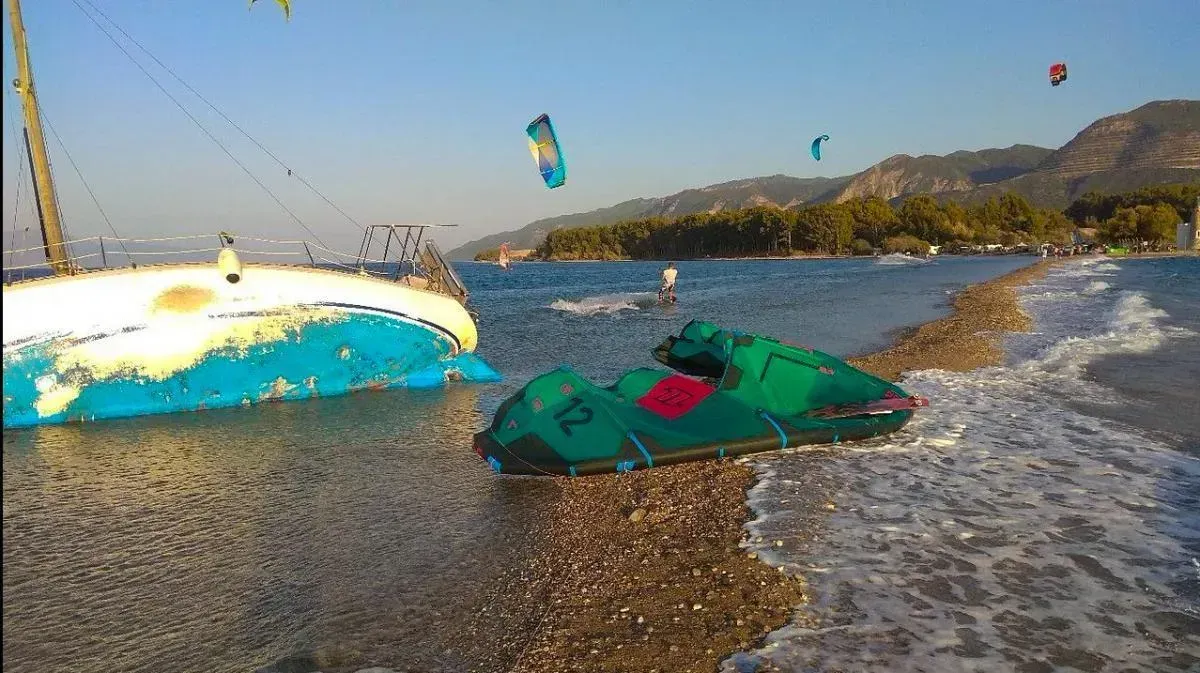
The beach consists of sand, gravel and pebbles rather than consistently soft sand, so take care when walking, launching or putting down the kite. Protective footwear can be useful, and it is worth checking the immediate setup area for stones or other objects that could damage the kite canopy or lines.
The water itself is generally more forgiving, particularly on the protected flat-water side, but the number of riders remains an important consideration. Freestylers, beginners, windsurfers and other watersports users may all share the area, so maintain plenty of separation and look carefully before jumping or attempting tricks. During the busiest periods, less experienced riders will generally find quieter weekdays or off-peak hours considerably safer and more comfortable.
Location
How to get There
The spot can be reached from Athens International Airport both by car and train in around 2 hours.
Another option is to land at Araxos International Airport which is only 45 min drive from the kite spot.
Access
Public parking directly on the spot.
No-Wind Days: What to Do Around Cape Deprano
Cape Drepano is a good base for a kitesurfing trip with non-kiters or a family holiday in Western Greece, because there is much more to explore than the flat water around the famous spit. Located just northeast of Patras on the northern Peloponnese, Drepano puts you within easy reach of beaches, mountains, forests and some of Greece's most important archaeological sites. When the thermal wind fails to develop, a no-wind day can quickly turn into an opportunity to discover a completely different side of the region.
The easiest cultural excursion is Patras, only a short drive from the kite spot. Greece's third-largest city has a lively centre, waterfront cafés and plenty of places for lunch or an evening out. Above the old town, Patras Castle has watched over the city for around fifteen centuries and offers panoramic views across Patras and its gulf. You can combine the castle with a walk through the historic centre and the nearby Roman Odeon before heading back towards Drepano if the wind starts building later in the afternoon.
For nature rather than history, head west of Patras to Strofylia Forest. This remarkable protected landscape combines stone-pine forest, sand dunes, wetlands and lagoons beside the Ionian Sea. Walking and cycling trails cross the reserve, while the Kotychi and Prokopos wetlands attract numerous migratory birds. Nearby Kalogria Beach adds a long stretch of sand and clear water, making this an excellent full-day escape for families or a non-kiting partner when Drepano has no wind.
If the forecast looks hopeless for the entire day, Ancient Olympia is worth the longer drive. This is the birthplace of the ancient Olympic Games and one of the most important archaeological destinations in Greece. Alongside the sanctuary and ancient stadium, you can visit the Archaeological Museum of Olympia, whose collection includes major works discovered at the Sanctuary of Zeus, and the Museum of the History of the Olympic Games. Allow most of the day if you want to explore Olympia properly rather than rushing back for a possible late session.
The mountains south and east of Drepano provide another completely different no-wind adventure. One of the classic excursions is the journey from Diakopto towards Kalavryta through the dramatic Vouraikos Gorge. The historic Odontotos rack railway climbs through tunnels, narrow passages and steep mountain scenery, while Kalavryta itself is a pleasant mountain town surrounded by hiking routes and traditional villages. Because railway services can occasionally be affected by weather or infrastructure restrictions, check the current timetable before planning the trip.
If you prefer to keep the day simple, the Gulf of Patras coastline has plenty of beaches, seaside villages and tavernas where a long Greek lunch can replace the missing kite session. Drepano's location also makes it easy to combine a morning excursion with a return to the spot later in the day, which is useful when the local thermal is simply late rather than completely absent.
For anyone planning a kite trip to the Peloponnese and wondering what else there is to do, Cape Drepano offers an unusually good mix. Patras provides culture and restaurants close by, Strofylia brings wetlands and wild Ionian scenery, while Olympia and the mountains around Kalavryta can turn a completely windless day into a memorable road trip. That variety makes Drepano particularly suitable for couples, families and groups where not everyone is travelling to Greece purely for kitesurfing.