
Kitesurfing in Hatteras Outer Banks
Kitty Hawk · United States Of America
Been here? Want to go? Add it to your kite spot lists.
Create a free account to save it- Spot type Flat
- Rider level beginner
- Water Crystal Clear
- Beach Sand
- Crowd Seasonal crowd
- Tide effect None
Kitesurfing in Hatteras Outer Banks: Conditions, Wind & Season
Hatteras, in North Carolina's Outer Banks, is one of the most celebrated kitesurfing destinations in the United States. Located along a chain of narrow barrier islands separating the Atlantic Ocean from Pamlico Sound, the area offers an exceptional variety of riding conditions. From the villages of Frisco and Buxton to Avon, Waves and Rodanthe, kitesurfers can choose between shallow, flat-water lagoons and exposed ocean beaches. This combination makes Cape Hatteras particularly attractive for beginners, freestyle enthusiasts, freeriders and experienced wave riders, with numerous spots available for different wind directions and skill levels.
The main kitesurfing season in Hatteras generally runs from April through October, when temperatures are more comfortable and local kiteboarding services are most active. However, the Outer Banks receive wind throughout the year, including powerful winter systems that can deliver excellent conditions for properly equipped riders. Wind speeds range from approximately 10 knots to more than 30 knots, depending on the season and weather pattern. Spring and autumn are especially popular for their frequent windy days, while summer often brings warmer conditions and lighter sea breezes. Because of this variability, a versatile kite quiver covering approximately 7–15 m² can be useful for riders planning an extended stay.
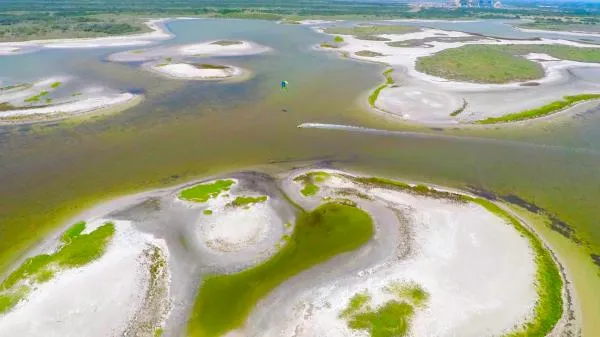
Pamlico Sound is the main attraction for flat-water kitesurfing in Hatteras. This enormous shallow lagoon offers extensive areas of waist-deep water, with conditions ranging from exceptionally smooth surfaces to moderate wind-generated chop. Its relatively protected environment makes it ideal for freeriding, freestyle and practising new manoeuvres without dealing with ocean swell. Westerly, southwesterly and northwesterly winds can provide favourable conditions at various sound-side locations, although the safest direction depends on the exact launch. The combination of shallow water and open riding space is particularly valuable for beginners taking lessons and advanced riders working on technical tricks.
The Atlantic-facing beaches provide a completely different kitesurfing experience, with open-ocean waves, shorebreak and long stretches of sandy coastline. Easterly winds can create side-onshore conditions along sections of the oceanfront, making them attractive for directional surfboards and wave riding. However, the coastline changes orientation along the barrier islands, so wind direction must always be evaluated locally. Wave size varies considerably with swell and weather systems, from manageable surf to powerful breaking waves during storms. These ocean spots are generally better suited to intermediate and advanced kitesurfers comfortable with shorebreak, currents and open-water self-rescue.
With so many riding locations spread across Hatteras Island, a detailed spot map is particularly useful. The Hatteras kite spot guide, shared by Kiteclub Hatteras, provides an overview of established launching areas and their characteristics. Among the locations highlighted for beginners are 2nd Turnout, D Spot and Isabel's/The Washout, where suitable conditions can provide accessible shallow-water riding. Nevertheless, beginners should always follow local instructors' recommendations, as water depth, launching space and wind direction can change the suitability of individual spots.
Another major attraction of kitesurfing in the Outer Banks is the opportunity for long downwinders. Both Pamlico Sound and the Atlantic coastline offer extensive routes, allowing experienced riders to cover considerable distances with the wind. Sound-side downwinders can combine shallow-water cruising with smoother sections, while ocean downwinders provide continuous wave-riding opportunities along the beaches. These sessions require careful planning, including suitable wind direction, knowledge of restricted areas and reliable transportation or pickup arrangements. Riders should never underestimate the distances involved or the difficulty of reaching shore in unfamiliar sections of the coastline.
Safety considerations vary significantly between the sound and ocean sides. In Pamlico Sound, shallow sandbars, changing water depths, submerged obstacles and offshore winds at certain launches can create hazards. On the Atlantic side, strong currents, shorebreak, powerful waves and changing weather conditions demand greater experience. The Outer Banks are also exposed to thunderstorms, coastal storms and tropical systems during the Atlantic hurricane season. Water temperatures vary substantially throughout the year, making wetsuits necessary during cooler months. Although Hatteras has an established kitesurfing community, riders should use designated launching areas, respect local restrictions and confirm rescue arrangements before venturing far from shore.
For anyone searching for kitesurfing in Hatteras, kiteboarding in the Outer Banks or the best kitesurfing spots in North Carolina, Cape Hatteras offers an outstanding combination of flat water, ocean waves and reliable seasonal wind opportunities. Few destinations provide such easy access to both shallow-water freestyle conditions and genuine Atlantic wave riding within the same coastal region. Whether learning in Pamlico Sound, practising advanced tricks or planning an ocean downwinder, Hatteras remains one of the most versatile and rewarding kitesurfing destinations on the East Coast of the United States.
Something missing or out of date at this spot? Suggest a correction
Spot Gallery (10)


Kited here? Add your photos to this gallery (free account, one minute).
Hatteras Outer Banks is best suited for
Spot profile
- Travel spotA proven kite destination with reliable conditions, worth a trip. Kiters fly in from all over the world for their kite holidays, and you will probably find schools, rentals and a lively kite scene nearby.
- Family spotEasy to visit with family and friends. Facilities are close by and non-kiters have plenty to do while you are on the water, so everyone enjoys the day, whether they kite or not.
- Local spotNot worth a long trip, but a great option if you live nearby and the wind is on. Ideal for a quick session after work or a spare afternoon, without planning a whole trip.
Equipment
Wetsuit, shorty, shoes
Wind Conditions
Main wind directions
Windy days per month
Share of the days with more than 10 knots.
Wind speed range
10 - 35 knots
Calculate your kite size
Estimate for a rider of your weight at Hatteras Outer Banks: kite size = weight / wind speed x 2.2, adjusted for the kite shape and aspect ratio. Board, skills and gusts change the ideal size.
Forecast on Windy.com
Kitesurfing Safety & Local Rules at Hatteras Outer Banks
The main hazards in the lagoon areas of Hatteras, on North Carolina's Outer Banks, include extensive aquatic vegetation and shallow water. Grass can become tangled around board fins or hydrofoil equipment, while the bottom may contain shells or other hidden objects. Wearing protective water shoes is advisable when walking through the lagoon, particularly in unfamiliar areas where underwater visibility is limited.
Water depth varies across the shallow sound, and submerged sandbars can create hazards during jumps, hard landings or high-speed falls. Riders should check the depth before attempting powered manoeuvres and take extra care when using hydrofoil equipment. Dense vegetation may also make board recovery more difficult in some sections, especially when combined with shallow water.
Wind conditions around Hatteras can change quickly with passing weather systems, bringing strong gusts or shifts in direction. Depending on the launch and wind direction, riders may risk drifting away from their starting point or toward shallow, vegetation-covered areas. Check the forecast, identify suitable landing points and maintain reliable self-rescue skills, particularly when riding farther into the sound.
How to reach Hatteras Outer Banks
- Closest cityKitty Hawk
- How to get thereFly to Norfolk International Airport. Renting a car to access all the potential of Hatteras is a must. Then just drive south along the NC-168 and US-158 to Cape Hatteras National Park Rd. Take the connection with North Carolina Hwy 12 all the way south to Hatteras. A 4x4 will be great when driving on the sand.
- AccessPlenty of access points to access both the Ocean and the Pamlico Sound side.
No-Wind Days: What to Do Around Hatteras Outer Banks
Beyond kitesurfing, Hatteras Island in North Carolina's Outer Banks offers an outstanding combination of Atlantic beaches, outdoor adventures, wildlife and coastal history. Stretching between the Atlantic Ocean and Pamlico Sound, this narrow barrier island is known for its natural landscapes, traditional fishing villages and relaxed atmosphere. With activities ranging from surfing and kayaking to fishing, nature walks and lighthouse visits, Hatteras is an excellent destination for kitesurfers travelling with families, couples or non-kiting partners. Even when the wind is unsuitable for riding, there is plenty to explore along this beautiful stretch of the North Carolina coast.
The Atlantic-facing beaches are among Hatteras Island's main attractions, offering miles of sand for walking, sunbathing, shell collecting and surfing. The area is particularly popular with surfers, with several established breaks around Buxton, Frisco and Cape Hatteras. Surf schools and rental shops provide equipment and lessons for different experience levels. Swimming is possible in suitable conditions, but visitors should remain aware of powerful waves, rip currents and changing ocean conditions. The protected beaches of Cape Hatteras National Seashore are also excellent for beachcombing, wildlife photography and enjoying the island's unspoiled coastline.
Kayaking and stand-up paddleboarding are popular alternatives on calmer days, particularly along the sheltered waterways of Pamlico Sound. Guided kayak tours explore shallow coastal environments, salt marshes and quiet creeks, providing opportunities to observe birds and other wildlife. Visitors can also rent equipment for independent excursions when conditions are suitable. The soundside waters around Salvo, Avon and Frisco offer several access points, although wind, currents and water depth should always be considered before heading out. For families and beginners, guided excursions are often the most convenient way to discover the island's natural environment.
One of the most recognisable attractions is the Cape Hatteras Lighthouse, famous for its distinctive black-and-white spiral markings. Located near Buxton, the lighthouse is an important symbol of the Outer Banks' maritime history and provides an interesting stop during a day of sightseeing. Visitors can explore the surrounding historic grounds and learn about the region's shipwrecks, navigation and coastal heritage. Lighthouse access and climbing opportunities depend on restoration work and operating arrangements, so checking the National Park Service visitor information before travelling is recommended.
Hatteras Island also offers opportunities for fishing, wildlife watching and guided 4x4 beach excursions. Surf fishing is a long-established local tradition, while charter boats departing from Hatteras Village provide access to offshore fishing grounds. Visitors interested in exploring more remote sections of the coastline can join organised off-road tours or use permitted beach-driving routes with an appropriate vehicle and the required permit. Seasonal closures protect nesting birds and sea turtles, making it important to follow local regulations. Nature lovers can also explore the nearby Pea Island National Wildlife Refuge, particularly rewarding for birdwatching and photography.
For a different experience, visitors can take the ferry from Hatteras Village to Ocracoke Island, another beautiful destination within the Outer Banks. Ocracoke is known for its historic village, quiet beaches, small shops and relaxed coastal atmosphere. Exploring the village, visiting its lighthouse and enjoying fresh seafood make for an enjoyable excursion, although ferry schedules and crossing conditions should be checked in advance. The journey also offers an opportunity to experience the distinctive landscape of the barrier islands from the water.
Families will find additional activities throughout the villages of Rodanthe, Waves, Salvo, Avon, Buxton, Frisco and Hatteras. Local attractions include small museums, fishing piers, nature trails, boat excursions and seasonal educational programmes. Restaurants specialise in fresh seafood, Southern cooking and casual American cuisine, while cafés and small shops provide convenient places to relax between activities. Evening entertainment is generally quieter than in larger resort towns, with the emphasis on waterfront dining, local bars and peaceful coastal surroundings. More ideas for exploring the area are available through the official Outer Banks Hatteras Island guide.
Accommodation on Hatteras Island is dominated by private holiday homes, beachfront cottages, rental condos and small independent hotels. Renting a house is particularly popular with families and groups of kitesurfers, as many properties provide spacious living areas, kitchens and room for storing equipment. Grocery stores and local markets are available in several villages, making self-catering convenient, while restaurants offer plenty of alternatives for dining out. Booking well in advance is advisable, especially during summer and other popular holiday periods, when the best-located properties can fill quickly. Visitors should also consider the distance between their accommodation and preferred riding locations, as Hatteras Island stretches across a considerable distance.
Hatteras Island is reached primarily by road along North Carolina Highway 12, which connects the villages with the northern Outer Banks. A rental car is highly recommended for transporting equipment, visiting different beaches and exploring the island's attractions. Travellers should allow extra time during busy holiday periods and remain aware that coastal storms, flooding and overwash can occasionally affect road access. The nearest major airports require a substantial drive, making advance travel planning particularly important for international visitors.
For anyone planning a kitesurfing holiday in Hatteras and wondering what else there is to do, the Outer Banks provide an excellent combination of adventure and relaxation. A no-wind day can include surfing Atlantic waves, kayaking through coastal marshes, exploring historic lighthouses, joining a 4x4 beach tour or visiting Ocracoke Island. With its extensive choice of holiday rentals, family-friendly activities and beautiful natural surroundings, Hatteras is one of the most appealing destinations on the US East Coast for combining kitesurfing with a memorable seaside vacation.
Video about Kite Spot
This is a great video from the 'Our Kite Life' guys on how to enjoy at best your stay in Hatteras
Other kitesurfing spots near Hatteras Outer Banks

All kitesurfing spots in United States Of America
Last updated: