
Kitesurfing in Lago de Amatitlán
Amatitlán · Guatemala
- Spot type Flat
- Rider level beginner
- Water Dark - Muddy
- Beach Sand
- Crowd Some bystanders
- Tide effect None
Kitesurfing in Lago de Amatitlán: Conditions, Wind & Season
Lago de Amatitlán is an inland kitesurfing location in southern Guatemala, situated near the town of Amatitlán, approximately 25 kilometres south of Guatemala City in the department of Guatemala. Unlike the country's Pacific and Caribbean coastal spots, this freshwater lake offers a predominantly flat-water environment without ocean swell, shorebreak or tidal restrictions. Its proximity to the capital makes it a practical option for local riders seeking accessible kitesurfing sessions without travelling to the coast. The spot is particularly associated with light-wind freeriding, basic freestyle progression and potentially hydrofoil riding, although its inland wind patterns and significant water-quality concerns require careful consideration before entering the lake.
The principal attraction of Lago de Amatitlán is its relatively sheltered freshwater surface. With no direct exposure to ocean swell, the lake generally offers flat to lightly choppy conditions, particularly during moderate winds. This can make the water appealing for practising transitions, improving board control and developing freeride technique. However, the surface is not always perfectly smooth, as stronger winds can generate short, closely spaced chop across the open sections of the lake. The surrounding hills and irregular shoreline can also influence the wind, creating areas of turbulence and inconsistent power. Riders should therefore expect a different experience from a coastal flat-water lagoon with steady trade winds.
The main wind directions reported for kitesurfing at Lago de Amatitlán are south-southwest and southwest, although local airflow can vary considerably with regional weather conditions and the surrounding terrain. The lake's position within a basin means that wind may be channelled, accelerated or disrupted by nearby hills, producing noticeable differences between individual sections of the water. During favourable conditions, riders may find sufficient wind for relaxed freeriding, but sudden gusts and lulls are possible. Forecasts for Guatemala City or the wider region may not accurately represent the conditions at the launching area, making local observations and real-time wind measurements particularly useful.
The most promising kitesurfing period is generally reported between September and February, with January, February and the final months of the year often identified as favourable for rideable wind. However, reliable long-term kitesurfing statistics for Lago de Amatitlán are limited, and seasonal wind patterns should be treated as approximate rather than guaranteed. Guatemala's regional climate is influenced by changing pressure systems, seasonal rainfall and local thermal effects, all of which can affect wind strength and direction. Outside the more favourable months, lighter and less predictable winds may reduce the number of suitable sessions. Riders planning a visit should prioritise recent local information over broad seasonal averages.
Wind speeds at Lago de Amatitlán are generally described as light to moderate, with many potentially rideable sessions falling around 8–17 knots. These conditions favour efficient equipment, larger kites and boards designed to perform well in lighter breezes. Stronger wind events may occasionally provide more powered riding, but the lake is not generally associated with consistently strong conditions or regular big-air sessions. During marginal winds, maintaining board speed and choosing an appropriate kite size become particularly important. Because inland winds can weaken unexpectedly, riders should avoid travelling too far from a safe landing point when the breeze is close to the minimum required for their equipment.
The launching area is described as a medium-sized sandy section of shoreline that provides space for preparing equipment and entering the water. Compared with rocky or heavily vegetated lake edges, a clear sandy launch can make rigging and kite handling more manageable. However, the amount of usable space depends on current shoreline conditions, water level and the presence of obstacles. Riders should inspect the area carefully for trees, fences, power lines, structures or other hazards before setting up. The lake is not a major internationally established kitesurfing centre, so visitors should not assume that dedicated launching zones, regular kite supervision or rescue services are available. Current access arrangements should be confirmed locally.
For intermediate riders, Lago de Amatitlán can provide opportunities to practise relaxed freeriding, transitions, edging and upwind technique during suitable wind conditions. The absence of breaking ocean waves allows riders to concentrate on board handling and kite control, while smoother sections may be suitable for basic freestyle manoeuvres. However, gusty or inconsistent wind can make powered tricks more difficult, particularly when reliable kite support is needed for jumps and landings. The lake is better suited to controlled technical progression than aggressive big-air riding. Riders should also maintain sufficient clearance from the shoreline and any submerged obstacles, especially when practising manoeuvres in unfamiliar water.
Although the flat-water setting may initially appear attractive for beginners, Lago de Amatitlán should not automatically be considered a suitable learning location. Inland wind turbulence can make kite control more demanding, and the lake's polluted water creates an additional concern for students who are likely to spend considerable time immersed during body dragging and water starts. Beginners should only consider lessons if qualified local instructors can confirm that current wind conditions, water quality, launching space and rescue arrangements are appropriate. The absence of waves and tides does not compensate for poor water conditions or unreliable wind. Independent beginner sessions are particularly inadvisable without established local support.
Water quality is one of the most important considerations at Lago de Amatitlán. The lake has a longstanding history of serious pollution associated with wastewater, nutrient runoff and other contaminants entering its watershed. Water can appear dark, muddy or discoloured, and harmful algal blooms may occur. These conditions can pose health risks through accidental ingestion, contact with contaminated water or exposure to certain algal toxins. Kitesurfers should check current environmental advisories and water-quality reports before considering a session. Avoid entering the water when visible algal scum, unusual discolouration, strong odours or official warnings are present. The lake's flat surface should never be interpreted as evidence that the water is safe for recreational contact.
The seabed equivalent in this freshwater environment consists of lake sediment, with muddy sections and potentially uneven submerged surfaces. Water depth varies across the lake, and riders should not assume that the bottom is uniformly shallow or suitable for standing. Sediment can reduce underwater visibility, making submerged objects difficult to identify. Floating debris may also be present, particularly after rainfall or periods of increased runoff. Riders should inspect the intended riding area and avoid jumping in unfamiliar shallow sections. Protective footwear may help during entry and exit, but it cannot address water contamination or eliminate the risks associated with submerged hazards.
Hydrofoil kitesurfing may be technically possible in deeper sections of Lago de Amatitlán, particularly because the moderate winds can favour efficient foil equipment. However, the combination of poor underwater visibility, possible floating debris and uncertain submerged obstacles makes careful route selection essential. Foil riders should confirm adequate depth and avoid launching through shallow or muddy areas where the mast could strike the bottom. Wing-foiling may also be possible during suitable wind conditions, but the same water-quality and access concerns apply. Neither discipline should be attempted without a clear understanding of the current environmental conditions and the availability of a safe entry and exit point.
The main safety considerations at Lago de Amatitlán are polluted water, variable inland winds, limited visibility beneath the surface and uncertain rescue arrangements. Sudden wind lulls can leave riders unable to return to their launching point, while gusts may develop as airflow moves around the surrounding hills. Riders should remain within a manageable distance from shore, avoid offshore wind angles and have reliable self-rescue skills. Because the lake is not a major commercial kitesurfing destination, equipment rental, instruction and dedicated rescue services should not be assumed to be available. Checking local access conditions, current water-quality advisories and weather forecasts is essential before launching.
Guatemala's tropical highland climate creates relatively warm conditions around Lago de Amatitlán, although air and water temperatures vary with the season, cloud cover and rainfall. Lightweight protective clothing may be sufficient during warmer periods, while a shorty or wetsuit can provide additional comfort during cooler or windier sessions. However, protective clothing does not make contaminated water safe. Rainfall can influence lake conditions by increasing runoff and carrying additional pollutants into the basin, so sessions immediately after heavy rain deserve particular caution. Riders should also monitor approaching thunderstorms, which can produce sudden wind changes and dangerous conditions on exposed inland water.
For riders researching kitesurfing at Lago de Amatitlán, flat-water kite spots near Guatemala City or inland kitesurfing locations in Guatemala, the lake offers the practical advantages of accessible shoreline, tide-independent water and occasional light-to-moderate wind conditions. Its sheltered surface can support freeriding and technical practice when the wind is suitable, but inconsistent airflow and serious water-quality concerns significantly limit its appeal. Unlike established coastal kite destinations, Lago de Amatitlán requires careful verification of environmental conditions, local access and safety support before any session. It is best regarded as a specialised local riding option rather than a reliably safe or fully developed kitesurfing destination.
Something missing or out of date at this spot? Suggest a correction
Lago de Amatitlán is best suited for
Spot profile
Family spot
Located in an area that offers amenities for all the family and can provide good alternatives for everyone when the kiters are in the water.
Local spot
Maybe not be worth a real journey to reach this spot, but great if you live close by and it is a windy day. In the end, being out on the water feels great anywhere
Equipment
A typical session at Lago de Amatitlán relies on larger freeride kites, typically in the 12-15m range for average-sized riders, to suit the light-to-moderate wind days that dominate the spot, especially outside the windiest months. A twin-tip board with efficient upwind ability works for most riding, while a hydrofoil setup is also a good match when winds are softer. Flat water means you can stick with normal kite boots or straps; booties aren’t required based on the available bottom description, but may appeal to those who want extra traction on potentially muddy sections. Wetsuits are generally optional, though a light shorty or thermal top is wise if wind chill picks up during the cooler months of December to February. For the rest of the year, boardshorts or a thin spring suit will usually suffice, as the lake temperature is moderate by regional standards and no extreme cold is reported.
Wind Conditions
Main wind directions at Lago de Amatitlán
Windy days per month in Lago de Amatitlán
Wind Speed Range
From 8 to 17 Knots
Suggested sizes
10 - 11 mt
12 - 13 mt
14 mt and above
Forecast on Windy.com
Kitesurfing Safety & Local Rules at Lago de Amatitlán
The main hazard at Lago de Amatitlán is the variable inland wind, which can produce sudden gusts and prolonged lulls as thermal conditions change throughout the day. Wind reliability is generally better during the September to February season, but unexpected drops can still leave riders stranded far from shore. Avoid venturing too far out in marginal conditions, choose an appropriate kite size and ensure you have the skills to perform a self-rescue if the wind disappears.
The lake's dark, muddy water offers limited underwater visibility, while the soft bottom can make footing slippery and unstable near the shoreline. Lost boards or other equipment may be difficult to locate after a crash, and submerged debris cannot always be spotted from the surface. Check the launching area and water entry carefully, avoid walking barefoot in unfamiliar sections and rinse equipment thoroughly after each session.
The medium-sized launching area requires attention when rigging, launching and landing, particularly during gusty conditions or busy weekends. Vegetation and occasional debris near the shoreline can create additional obstacles, while other riders may reduce the available space during local events. Keep kite lines clear of surrounding obstacles, maintain safe distances from other kitesurfers and avoid launching when the wind is too unstable for controlled handling.
Location
Closest City
Amatitlán
How to get There
The spot is next to Amatitlán and close to Guatemala City, so the easiest approach is usually by car or taxi from Guatemala City or from the town of Amatitlán. For international travelers, the usual route is to fly into Guatemala City and then continue by road to the lake. The available information does not point to a complicated access route or a need for a long boat transfer.
Access
The spot is publicly reachable and there are no specific access difficulties mentioned. It is located next to Amatitlán and near Guatemala City, so road access is the practical way in. No required fee, permit, or private-entry rule is indicated in the available information.
No-Wind Days: What to Do Around Lago de Amatitlán
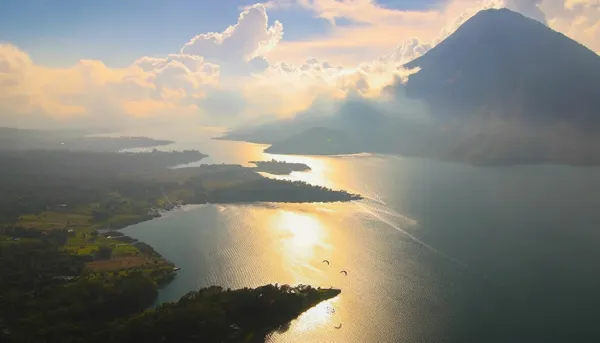
Beyond kitesurfing, Lago de Amatitlán offers an interesting combination of lakeside scenery, local culture and easy access to some of Guatemala's most important attractions. Located approximately 25 kilometres south of Guatemala City, near the town of Amatitlán, this volcanic lake is surrounded by green hills and settlements that reflect the region's long history. Unlike remote kitesurfing destinations, the area benefits from its proximity to the capital, making it convenient for short visits and weekend excursions. For a kitesurfing trip with non-kiters or a family holiday in central Guatemala, there are several enjoyable ways to spend a no-wind day, from exploring local markets to visiting museums, historic towns and volcanic landscapes.
The town of Amatitlán provides the most convenient starting point for discovering the area. Its streets, local markets and traditional restaurants offer an introduction to everyday Guatemalan life away from the country's main tourist centres. Visitors can sample regional dishes, browse small shops and enjoy the relaxed atmosphere around the town's central areas. Traditional Guatemalan cuisine includes tamales, grilled meats, tortillas and hearty soups, while local food stalls offer inexpensive snacks and refreshments. Amatitlán is particularly known for its sweets and traditional confectionery, making a visit to local vendors an enjoyable part of exploring the town.
The shores of Lago de Amatitlán offer scenic views of the surrounding hills and volcanic landscape. Visitors can enjoy lakeside walks, photography and relaxing at established waterfront areas, particularly during the cooler morning and late afternoon hours. The lake has historically been an important recreational destination for residents of Guatemala City, although environmental pollution has seriously affected its water quality. Swimming and other activities involving direct contact with the lake water are not recommended without reliable, current local safety information. Visitors should also check the operating status of any boat excursions or recreational facilities before planning activities on the water.
One of the area's traditional attractions is the Amatitlán cable car, known locally as the Teleférico de Amatitlán, which was developed to provide elevated views of the lake and surrounding countryside. When operational, the cable car offers an unusual perspective on the region's volcanic scenery. However, its operating status has varied, and visitors should verify whether services are currently available before including it in their itinerary. Even without the cable car, viewpoints around the lake and nearby hills can provide attractive opportunities for photography and appreciating the landscape.
For travellers seeking relaxation, the Amatitlán area has a long association with geothermal activity and thermal waters. Selected local establishments have historically offered thermal bathing and wellness facilities, taking advantage of the region's volcanic geology. Availability, water quality and operating conditions should be checked directly with individual properties before visiting. A relaxing afternoon at a suitable spa or thermal facility can provide an enjoyable alternative to outdoor activities, particularly for non-kiting partners looking for a quieter experience.
Guatemala City is one of the most rewarding excursions from Lago de Amatitlán, offering museums, cultural attractions, shopping centres and a wide selection of restaurants. The city's historic centre includes the Metropolitan Cathedral, the National Palace of Culture and Plaza de la Constitución, where visitors can discover important aspects of Guatemala's political and architectural history. The surrounding streets feature traditional buildings, markets and local eateries, while the city's modern districts offer shopping malls, international restaurants and entertainment venues. Traffic can be heavy, so journey times between Amatitlán and the capital vary considerably throughout the day.
For visitors interested in archaeology and history, the Museo Nacional de Arqueología y Etnología in Guatemala City offers an introduction to the country's extraordinary Maya heritage. Its collections include archaeological objects, ceramics, sculptures and exhibits related to Guatemala's Indigenous cultures. Another interesting destination is the Museo Popol Vuh, which houses an important collection of pre-Columbian and colonial art. These museums provide an excellent cultural alternative during windless or rainy days and are particularly appealing to families and travellers interested in understanding Guatemala's history before exploring archaeological sites elsewhere in the country.
One of the most attractive day trips from Amatitlán is Antigua Guatemala, the former colonial capital and one of Central America's most beautiful historic cities. Recognised as a UNESCO World Heritage Site, Antigua is famous for its cobblestone streets, colourful colonial buildings, churches and spectacular views of surrounding volcanoes. Visitors can explore historic squares, visit museums, discover traditional handicraft shops and enjoy the city's excellent cafés and restaurants. Antigua also offers numerous cultural activities, including cooking classes and visits to local coffee plantations. More information about its historical importance is available through the UNESCO World Heritage Centre.
For nature lovers and adventurous travellers, the volcanic landscapes of central Guatemala provide opportunities for hiking and guided excursions. Pacaya Volcano, located southeast of Guatemala City, is one of the region's best-known volcanic destinations and can be reached on an organised excursion from the Amatitlán area. Guided hikes explore volcanic terrain and offer impressive views of the surrounding highlands, although routes and access restrictions depend on volcanic activity and official safety assessments. Visitors should use authorised guides, wear suitable footwear and check current conditions before travelling. Information about volcanic monitoring and natural hazards is available through INSIVUMEH, Guatemala's national institute for seismology, volcanology, meteorology and hydrology.
Accommodation around Lago de Amatitlán includes smaller hotels, guesthouses and local properties suitable for short stays, although the selection is more limited than in Guatemala City. Visitors seeking a wider range of facilities can stay in the capital, where accommodation options extend from budget hotels and serviced apartments to international business hotels and luxury properties. The southern districts of Guatemala City can be convenient for accessing Amatitlán, while central locations provide better access to museums, restaurants and nightlife. Antigua is another attractive accommodation base for travellers combining the lake with cultural sightseeing, although it involves a longer journey. Renting a car or arranging reliable private transport is useful for exploring the surrounding attractions, particularly when travelling with family or sports equipment.
For anyone planning a kitesurfing holiday at Lago de Amatitlán and wondering what else there is to do, the region offers a convenient combination of urban attractions, local culture and volcanic scenery. A no-wind day can include exploring Amatitlán's markets, visiting museums in Guatemala City, discovering the colonial streets of Antigua or joining a guided excursion to Pacaya Volcano. Families and non-kiting partners can enjoy restaurants, cultural sightseeing and suitable wellness facilities, while adventurous travellers can explore the surrounding highlands. Although the lake's environmental problems limit water-based recreation, its location near Guatemala's capital makes it a practical starting point for discovering some of the country's most interesting destinations.
Other kitesurfing spots near Lago de Amatitlán
All kitesurfing spots in Guatemala
Last updated: