
Kitesurfing in South Brighton Beach
Christchurch · New Zealand
- Spot type Wave
- Rider level intermediate
- Water Dark - Clear
- Beach Sand
- Crowd Some bystanders
- Tide effect Conditions vary
Kitesurfing in South Brighton Beach: Conditions, Wind & Season
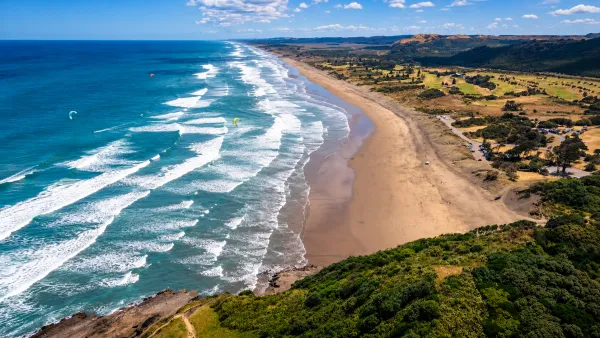
South Brighton Beach is one of the coastal kitesurfing locations around Christchurch, situated along the eastern shoreline of New Zealand's South Island in the Canterbury region. Facing the open Pacific Ocean and forming part of the extensive sandy coastline stretching south from New Brighton, this spot offers a combination of beach-break waves, wind-driven chop and open-water freeriding conditions. Unlike the sheltered flat-water environments found in nearby estuaries, South Brighton provides a more exposed riding experience shaped by ocean swell, changing tides and coastal winds. Its long sandy shoreline and proximity to Christchurch make it an attractive option for intermediate and advanced kitesurfers seeking wave-oriented sessions without travelling far from the city.
The beach consists of a broad sandy coastline with a gently changing profile influenced by tides, storms and shifting nearshore sandbanks. During lower tidal stages, the exposed sand can provide generous space for preparing equipment and launching, while higher tides may significantly reduce the available beach width. The seabed is predominantly sandy, with wave peaks forming over offshore bars and shallower sections. Depending on the swell, riders can encounter anything from small rolling waves and moderate chop to more powerful breaking surf. The coastline is generally open and exposed, allowing ocean swell to reach the beach with relatively little protection. As a result, South Brighton is primarily a wave and freeride location rather than a flat-water freestyle spot.
Wind conditions at South Brighton are influenced by the regional weather patterns of Canterbury and the interaction between prevailing winds, coastal sea breezes and passing weather systems. Northeasterly winds are particularly relevant during the warmer months, when Christchurch's characteristic afternoon sea breeze can develop along the coastline. Depending on the exact wind angle, these conditions may provide cross-onshore or onshore airflow, creating opportunities for freeriding and wave kitesurfing. Easterly and southeasterly winds can also produce rideable conditions, although they may generate stronger shorebreak and more disorganised water. Southerly winds often accompany weather changes and can bring colder temperatures, gusts and rapidly increasing wave activity. Northwesterly winds generally have an offshore component along this coast and can be particularly hazardous for kitesurfing.
The main opportunities for kitesurfing often occur during spring and summer, approximately from October through March, when longer daylight hours and more frequent coastal sea breezes create favourable riding windows. Northeasterly afternoon winds can provide enjoyable sessions when they develop with sufficient strength, while stronger regional weather systems may produce more demanding conditions throughout the year. During suitable periods, wind speeds may range from approximately 14 to 28 knots, although lighter days and considerably stronger gusts are possible. Autumn and winter can also deliver rideable winds, but colder water, unsettled weather and stronger frontal systems increase the difficulty. South Brighton is therefore best approached as a forecast-dependent coastal location rather than a destination with guaranteed daily wind.
Wave riding is one of South Brighton's main attractions. The exposed Pacific coastline can produce a variety of beach-break waves, with their size and shape depending on swell direction, wave period and the position of the sandbanks. During smaller swells, riders may find relatively manageable waves suitable for practising carving turns and developing confidence in ocean conditions. Larger swells can create steeper, more powerful sections, sometimes accompanied by substantial whitewater and challenging shorebreak. When wind and swell align favourably, experienced riders can enjoy directional-board sessions with opportunities for short down-the-line rides and more aggressive turns. However, strong onshore winds can make the waves disorganised, producing difficult conditions even when the swell is relatively moderate.
Twin-tip freeriding is also possible at South Brighton, particularly during moderate wind and smaller wave conditions. Riders can use the short wind-driven chop and breaking wave sections as natural ramps for controlled jumps, transitions and powered carving. Stronger winds may provide opportunities for more energetic freeriding, but the combination of breaking surf, shallow sandbanks and variable gusts makes advanced jumping more demanding than at sheltered flat-water locations. Technical freestyle is generally less practical because the water surface is rarely completely smooth. Hydrofoil kitesurfing may be possible beyond the surf zone during smaller swells, although launching through breaking waves and maintaining sufficient clearance from shallow sandbanks require experience and careful timing.
Tides play an important role in determining both launching conditions and the character of the waves. At lower tide, the beach generally provides more exposed sand, creating additional room for preparing equipment and maintaining separation from other beach users. Higher tides can narrow the shoreline considerably, bringing breaking waves closer to the dunes and reducing the space available for safe launching and landing. Wave behaviour also changes as water depth varies over the nearshore sandbanks. Some tidal stages produce gentler rolling waves, while others create steeper sections or stronger shorebreak. Although riding may be possible at different tide levels, the safest conditions depend on the combination of tide, wind and swell rather than tidal height alone.
The predominantly sandy seabed is generally more forgiving than shallow reef environments, but South Brighton still presents significant ocean hazards. Rip currents can develop around sandbank channels, particularly during larger swells, while powerful shorebreak may make entering or leaving the water difficult. Breaking waves can also complicate kite relaunching, body dragging and equipment recovery. Riders should observe several wave sets before launching, identify possible channels through the surf and avoid entering conditions beyond their experience. Strong winds combined with incoming swell can generate steep, confused water, requiring reliable kite control and confidence in turbulent conditions. Even relatively small waves can become challenging when strong currents or gusty winds are present.
Launching and landing require careful attention because South Brighton is a public recreational beach shared with swimmers, surfers, walkers and other coastal visitors. The long shoreline can provide considerable space during quieter periods, but activity increases during warm weather, weekends and public holidays. The available rigging area also changes with the tide, and sections near beach access points may become crowded. Kitesurfers should maintain generous separation distances, avoid launching near pedestrians or swimmers and respect any designated swimming areas or temporary restrictions. Current Christchurch coastal access rules and any local kitesurfing restrictions should be verified before setting up equipment. The presence of open sand does not automatically mean that kite launching is permitted everywhere along the beach.
South Brighton is generally best suited to intermediate and advanced kitesurfers who are comfortable riding in open water and managing breaking waves. Confident intermediate riders may enjoy the spot during smaller swells and moderate cross-onshore winds, when the surf is relatively manageable. Advanced riders can take advantage of stronger winds and more substantial waves for powered freeriding and wave-focused sessions. Beginners should approach the location cautiously, as the combination of shorebreak, rip currents, changing tides and shared beach use makes it less suitable for initial instruction than a sheltered lagoon. Any beginner training should take place only under qualified supervision and where local regulations and conditions allow.
Water temperatures around Christchurch remain relatively cool throughout the year, making wetsuits an important part of the equipment for most sessions. During winter, sea temperatures can fall to approximately 9–12°C, while summer conditions are generally more comfortable, often reaching around 15–18°C. A full wetsuit is advisable during colder months, particularly when strong winds increase heat loss. Some riders may also prefer protective footwear, although the predominantly sandy seabed does not generally require reef-specific protection. Riders should be prepared for rapid weather changes, especially when southerly fronts move through the Canterbury region and bring stronger winds, colder air and deteriorating sea conditions.
Access to South Brighton Beach is straightforward from Christchurch, with public roads and nearby parking providing convenient approaches to the coastline. However, the beach is not a dedicated kitesurfing facility, and riders should not assume that professional instruction, equipment rental or dedicated rescue services will be available at the launch. Independent kitesurfers should check their equipment carefully, maintain reliable self-rescue skills and avoid offshore or excessively gusty conditions. Particular attention should be paid to the interaction between wind direction and the open coastline, as a change in wind angle can quickly make returning to shore more difficult. Respect for other water users and careful selection of launching areas are essential for maintaining safe access to this urban coastal environment.
For riders searching for kitesurfing at South Brighton Beach, wave kitesurfing near Christchurch or coastal kite spots in New Zealand's Canterbury region, this extensive Pacific shoreline offers an appealing combination of sandy beaches, seasonal sea breezes and varied ocean conditions. Its greatest strengths are the open coastal environment, opportunities for freeriding and wave riding, and convenient access from Christchurch. However, powerful shorebreak, changing sandbanks, rip currents and limited launching space at higher tides require careful preparation. For intermediate and advanced kitesurfers who select suitable wind and swell conditions and respect local access rules, South Brighton Beach can provide enjoyable and challenging sessions along one of the South Island's most accessible urban coastlines.
Something missing or out of date at this spot? Suggest a correction
South Brighton Beach is best suited for
Spot profile
Travel spot
The typical kite travel destination, it is known for its great conditions, and kiters from around the world come here for their vacations.
Family spot
Located in an area that offers amenities for all the family and can provide good alternatives for everyone when the kiters are in the water.
Local spot
Maybe not be worth a real journey to reach this spot, but great if you live close by and it is a windy day. In the end, being out on the water feels great anywhere
Equipment
Most kiters choose kites in the 8-12m range for average wind days, bringing a smaller option (6-8m) for strong sessions when fronts move through. A wave board or directional is popular in the presence of swell, but a twintip handles chop and lighter conditions well enough for freeriding. Wetsuits of 4/3 mm or 5/3 mm are recommended outside the peak of summer, with even thicker suits sometimes needed for mid-winter sessions; a shorty might be used briefly in late summer but is not typically enough for comfort most of the year. Lightweight booties are useful if the beach access is rough or for longer walks back up the beach after downwinders.
Wind Conditions
Main wind directions at South Brighton Beach
Windy days per month in South Brighton Beach
Wind Speed Range
From 14 to 28 Knots
Suggested sizes
7 mt and below
8 - 9 mt
10 - 11 mt
12 - 13 mt
Forecast on Windy.com
Kitesurfing Safety & Local Rules at South Brighton Beach
The main hazards at South Brighton Beach come from limited launching space at high tide and the presence of other beach users. As the tide rises, the sandy shoreline becomes significantly narrower, making launching and landing more difficult. Swimmers, surfers, walkers and dog owners frequently share the beach, particularly during summer weekends. Maintain safe distances from pedestrians and avoid launching near crowded swimming areas or the surf club.
Wind conditions can change rapidly during passing weather fronts, with sudden gusts and shifts in direction making kite control challenging. Onshore and cross-onshore winds can push riders toward the beach, while breaking waves and shorebreak may complicate water entry and kite relaunching. Check the forecast carefully and avoid launching when strong winds coincide with insufficient beach space.
Shell fragments, occasional stones and uneven wet sand can create minor hazards when walking or handling equipment, so protective footwear may be useful. Local restrictions may apply near swimming areas, surf club activities or organised beach events. Always check current access rules, respect other water users and avoid riding when the available launching area is too crowded for safe kite handling.
Location
Closest City
Christchurch
How to get There
Drive from Christchurch City Centre by heading east through the city toward New Brighton, then continue south into South Brighton along Marine Parade; local guidance also notes routes via Aldwins Road, Buckleys Road, Pages Road, and then Marine Parade. This is a straightforward urban drive rather than a flight-based access spot, and Christchurch Airport is the nearest major airport for international or domestic arrivals.
Access
The beach is publicly accessible and straightforward to reach by car from Christchurch. Local council information points to plenty of street parking and dedicated car parks in the Brighton beach area, with public toilets and picnic facilities nearby. The shoreline is urban and well connected, so there is no evidence of a special paid entry requirement for normal beach access, though kite-specific rules or local club guidance should still be checked before launching.
No-Wind Days: What to Do Around South Brighton Beach
Beyond kitesurfing, Kulim Park offers an excellent opportunity to discover Tauranga and the beautiful Bay of Plenty region on New Zealand's North Island. Located directly on the shores of Tauranga Harbour, this peaceful waterfront park combines scenic coastal views, grassy recreational areas and convenient access to the city's attractions. Unlike remote kitesurfing beaches, Kulim Park is surrounded by residential neighbourhoods, cafés, shops and urban facilities, making it particularly attractive for families and travellers who prefer a comfortable, accessible destination. Its sheltered harbour setting provides beautiful views towards Mount Maunganui and the surrounding coastline, while Tauranga's restaurants, cultural attractions and outdoor activities are only a short drive away. For a kitesurfing trip with non-kiters or a family holiday in the Bay of Plenty, Kulim Park offers a relaxed starting point for exploring the region.
Kulim Park itself is a pleasant destination for spending time outdoors, even without entering the water. The park features open grassy spaces, waterfront walking paths, picnic areas and recreational facilities, making it popular with local families, walkers and cyclists. Visitors can enjoy a leisurely stroll along the harbour, relax beneath the trees or watch sailing boats and other vessels moving across the water. The views towards Mauao, the distinctive volcanic mountain at the entrance to Tauranga Harbour, are particularly attractive during the late afternoon. The park's playground and open spaces provide opportunities for children to enjoy outdoor activities while other members of the group relax nearby. Its convenient location and accessible facilities make Kulim Park an enjoyable place for a picnic or a peaceful afternoon beside the harbour.
One of the most enjoyable activities around Kulim Park is exploring Tauranga's waterfront and coastal walking routes. The city is surrounded by an extensive network of harbour-side reserves, pedestrian paths and scenic viewpoints that reveal different aspects of the coastal landscape. Visitors can discover quiet residential waterfront areas, enjoy views across the tidal estuary or explore the more developed harbourfront near central Tauranga. The changing tides create an interesting landscape of shallow water, exposed mudflats and coastal vegetation, attracting various species of shorebirds. Walking and cycling are particularly enjoyable during the cooler morning and evening hours, when the harbour is often illuminated by beautiful natural light. Visitors should remain on designated paths and respect sensitive coastal habitats.
Central Tauranga offers a lively contrast to the peaceful surroundings of Kulim Park, with restaurants, cafés, shopping areas and cultural attractions concentrated around the city centre and waterfront. Visitors can explore local boutiques, enjoy contemporary New Zealand cuisine or relax at a café overlooking the harbour. The city also hosts seasonal markets, festivals and community events that contribute to its welcoming atmosphere. Tauranga's dining scene reflects the region's agricultural and maritime heritage, with fresh seafood, locally grown produce and international influences featuring on many menus. For visitors interested in shopping or evening entertainment, the city provides a convenient selection of options without requiring a long journey from the kite spot. Further information about local attractions and events is available through Tourism Bay of Plenty.
For travellers interested in history and culture, Tauranga offers several opportunities to discover the heritage of the Bay of Plenty. The Elms | Te Papa Tauranga is one of the city's most significant historic sites, featuring a nineteenth-century mission house, gardens and exhibits relating to the area's early encounters between Māori and European settlers. Guided visits provide insights into the region's complex history and the development of Tauranga as an important coastal settlement. The surrounding grounds offer a peaceful setting for learning about local heritage. Visitors can also explore public artworks, community galleries and cultural events around the city. Understanding the area's Māori history and the significance of Tauranga Moana adds an important cultural dimension to a holiday focused on outdoor activities.
One of the most popular excursions from Kulim Park is Mount Maunganui, located across Tauranga Harbour. This lively seaside destination is famous for its beautiful ocean beach, relaxed café culture and the iconic volcanic landmark of Mauao. Visitors can explore the long sandy shoreline, enjoy waterfront dining or take a scenic walk around the base of the mountain. The more adventurous can climb to the summit of Mauao, approximately 232 metres above sea level, where panoramic views extend across Tauranga Harbour, Matakana Island, Mount Maunganui Beach and the wider Bay of Plenty coastline. The summit track includes steep sections, so comfortable footwear and drinking water are recommended. Mauao is culturally significant to local Māori, and visitors should remain on designated paths and respect the mountain's heritage.
At the foot of Mauao, Pilot Bay offers a beautiful sheltered waterfront environment that contrasts with the exposed Pacific Ocean beach on the opposite side of the peninsula. Visitors can enjoy peaceful walks along the promenade, watch boats entering and leaving Tauranga Harbour or relax at nearby cafés and restaurants. The bay is popular for paddleboarding and other recreational activities when conditions are suitable, although harbour currents and boat traffic require attention. On the ocean side, Mount Maunganui's Main Beach is one of New Zealand's most popular coastal destinations, attracting swimmers, surfers and beachgoers throughout the year. Swimming should be limited to designated, lifeguard-patrolled areas when patrols are operating. The combination of Pilot Bay, Main Beach and Mauao makes Mount Maunganui an excellent destination for a full day of sightseeing and relaxation.
For families and visitors seeking relaxation, the Mount Hot Pools provide another enjoyable excursion from Kulim Park. Located near the base of Mauao, these heated saltwater pools offer a comfortable place to unwind after a day of outdoor activities. The facilities are particularly attractive during cooler weather or when visitors prefer a relaxing experience away from the beach. Families, couples and non-kiting partners can combine a visit to the pools with a walk along the waterfront or a meal at one of Mount Maunganui's many restaurants. Opening hours, admission arrangements and available facilities should be checked in advance. Further information is available through the Mount Hot Pools official website.
For nature lovers, McLaren Falls Park is one of the most rewarding inland destinations near Tauranga. Located southwest of the city, this extensive recreational park features beautiful lakes, waterfalls, woodland trails and large grassy areas suitable for picnics. Visitors can explore peaceful walking routes, observe birdlife and enjoy the region's green countryside. The park is particularly appealing for families, photographers and travellers looking for a quieter natural environment away from the coast. Some sections are known for glowworms, which may be visible after dark under suitable conditions, although visitors should follow park access rules and exercise caution on unlit trails. McLaren Falls Park provides an excellent opportunity to experience the inland landscapes of the Bay of Plenty while remaining within convenient driving distance of Tauranga.
Another interesting excursion is Papamoa Beach and the surrounding coastal area east of Mount Maunganui. This long sandy beach offers beautiful views of the Pacific Ocean and a more spacious atmosphere than the busiest sections of Mount Maunganui. Visitors can enjoy beach walks, photography and relaxing beside the sea, although swimming conditions depend on waves, currents and lifeguard coverage. Nearby Papamoa Hills Regional Park offers scenic walking trails through rolling green hills, with elevated viewpoints overlooking the coastline and surrounding countryside. The area also contains sites of Māori cultural and archaeological significance, providing opportunities to learn about the region's history while enjoying its natural beauty. The contrast between the coastal beaches and inland hills makes Papamoa an attractive destination for outdoor enthusiasts.
Tauranga Harbour itself offers numerous opportunities for marine recreation and sightseeing. Guided kayaking excursions, stand-up paddleboarding and organised boat trips allow visitors to discover different sections of the harbour, including sheltered bays, tidal channels and coastal wetlands. The harbour is an important habitat for shorebirds and other wildlife, making it particularly interesting for nature observation and photography. Sailing is also a major part of the local recreational culture, with numerous boats visible around the harbour and nearby marinas. Visitors interested in marine wildlife can explore organised excursions operating in the wider Bay of Plenty, although sightings of dolphins and other animals cannot be guaranteed. Responsible operators should follow conservation regulations and minimise disturbance to wildlife. General information about protected natural areas and conservation is available through the New Zealand Department of Conservation.
For families travelling with children, Kulim Park and the wider Tauranga area provide an excellent selection of convenient recreational facilities. The park's playground, picnic areas and open lawns are ideal for spending time outdoors, while nearby cafés and supermarkets make it easy to organise meals and refreshments. Tauranga offers additional playgrounds, public parks, family entertainment and accommodation options ranging from holiday parks and self-catering apartments to comfortable hotels. Visitors who prefer a quieter atmosphere can stay in residential neighbourhoods near the harbour, while those seeking restaurants and nightlife may prefer central Tauranga or Mount Maunganui. The short distances between these areas make it easy for mixed groups to enjoy different activities without complicated transport arrangements.
For anyone planning a kite trip to Kulim Park and wondering what else there is to do, Tauranga and the Bay of Plenty offer an excellent combination of harbour scenery, cultural attractions, coastal adventures and family-friendly recreation. A no-wind day can include exploring Tauranga's waterfront, visiting the historic Elms mission site, hiking Mauao or relaxing in the Mount Hot Pools. Nature lovers can discover McLaren Falls Park and the scenic trails of Papamoa Hills, while families and non-kiting partners can enjoy beaches, playgrounds, shopping and waterfront restaurants. The combination of easy access, comfortable facilities and numerous attractions within a short drive makes Kulim Park an excellent base for combining kitesurfing with a varied and enjoyable holiday in New Zealand's Bay of Plenty region.
Other kitesurfing spots near South Brighton Beach
All kitesurfing spots in New Zealand
Last updated: