
Kitesurfing in New Brighton Beach
Christchurch · New Zealand
- Spot type Wave
- Rider level intermediate
- Water Dark - Clear
- Beach Sand
- Crowd Seasonal crowd
- Tide effect Conditions vary
Kitesurfing in New Brighton Beach: Conditions, Wind & Season
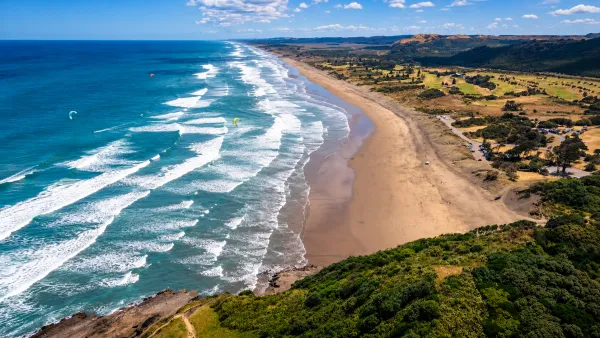
New Brighton Beach is one of the most accessible ocean kitesurfing locations in Christchurch, situated along the eastern coastline of New Zealand's South Island in the Canterbury region. Stretching along the shores of Pegasus Bay, this extensive sandy beach offers an exposed Pacific Ocean riding environment characterised by breaking waves, wind-driven chop and seasonal coastal sea breezes. Unlike the sheltered flat-water locations found around Christchurch's estuaries, New Brighton provides a more dynamic experience where ocean swell, tidal movement and changing wind conditions shape every session. Its long shoreline and convenient access from the city make it particularly appealing to intermediate and advanced kitesurfers looking for wave-oriented freeriding without travelling far from Christchurch.
The beach extends for several kilometres along a predominantly sandy coastline, providing a broad riding area with shifting sandbanks and multiple beach-break peaks. During smaller swells, the waves are generally manageable, producing rolling sections and short lines of whitewater suitable for intermediate riders developing their ocean skills. When larger swells reach Pegasus Bay, the beach can produce more powerful waves, steeper faces and challenging shorebreak. The predominantly sandy seabed is relatively forgiving compared with rocky or reef-based locations, although the constantly changing sandbanks influence where waves break and how they reform. Water conditions are rarely completely flat, with short wind-driven chop developing whenever the coastal breeze strengthens.
Wind conditions at New Brighton are strongly influenced by the coastal weather patterns of Canterbury and the development of Christchurch's characteristic northeasterly sea breeze. Northerly, north-northeasterly and northeasterly winds are among the most relevant directions for kitesurfing, often providing cross-onshore or side-onshore airflow along the beach. During warmer months, afternoon sea breezes can develop as the land heats up, sometimes building from relatively light conditions into more substantial winds later in the day. Southeasterly winds may also provide rideable conditions in selected circumstances, although they can generate more directly onshore airflow and stronger shorebreak. Northwesterly winds generally blow offshore along this coastline and can be hazardous, particularly when gusts are affected by the surrounding terrain.
The main kitesurfing season generally extends from October through March, covering late spring, summer and early autumn. During this period, northeasterly sea breezes provide many of the more comfortable riding opportunities, with wind speeds sometimes developing from around 12 knots into the high teens or low twenties. Stronger sessions are possible when regional weather systems reinforce the coastal airflow, although wind strength and reliability vary considerably from day to day. Autumn and winter can also produce suitable winds, but colder temperatures, unsettled weather and stronger frontal systems often make conditions more demanding. New Brighton is therefore best considered a seasonal sea-breeze location with additional year-round opportunities rather than a destination offering guaranteed daily wind.
Wave riding is one of New Brighton's main attractions. The open exposure to Pegasus Bay allows ocean swell to reach the shoreline, producing a range of beach-break conditions suitable for different riding styles. During smaller swells, directional-board riders can practise carving turns and develop confidence in breaking waves, while larger swells may create steeper sections suitable for more aggressive manoeuvres. Wave quality depends heavily on the interaction between swell direction, wave period, wind angle and the position of the sandbanks. Strong onshore winds can make the surf disorganised, producing closely spaced waves and difficult whitewater, while more favourable cross-shore conditions may provide cleaner faces and better opportunities for short down-the-line rides.
Twin-tip freeriding is also popular at New Brighton, particularly when the wind is sufficiently strong and the waves remain manageable. The combination of open water, rolling swell and short wind-driven chop provides opportunities for powered cruising, transitions and controlled jumps using the waves as natural ramps. During stronger winds, experienced riders can enjoy more energetic freeriding, although the constantly moving water makes technical freestyle more difficult than at sheltered lagoon spots. Hydrofoil kitesurfing may be possible beyond the breaking waves during smaller swells, but launching through surf and maintaining sufficient clearance from shallow sandbanks require experience. New Brighton is generally better suited to conventional twin-tip and directional-board riding than to dedicated flat-water freestyle or beginner foil progression.
Tides play an important role in determining the available launching space and the character of the waves. At lower tide, the beach often exposes a wider stretch of firm sand, providing more room for preparing equipment and maintaining separation from other beach users. Higher tides can significantly narrow the shoreline, bringing breaking waves closer to the dunes and reducing the space available for safe launching and landing. Wave behaviour also changes as the tide moves across the nearshore sandbanks. Some tidal stages produce relatively gentle rolling waves, while others create steeper sections and more powerful shorebreak. Although riding may be possible at different tide levels, mid-to-low tide can be preferable when additional beach space is needed, provided the wind and surf conditions remain suitable.
The predominantly sandy seabed makes New Brighton less hazardous than shallow reef breaks, but the exposed ocean environment still presents significant risks. Rip currents can develop around sandbank channels, particularly during larger swells, while powerful shorebreak can make entering and leaving the water difficult. Breaking waves may complicate kite relaunching, body dragging and equipment recovery, especially when strong winds generate disorganised surf. Riders should observe the wave pattern before launching, identify potential channels through the breaking waves and avoid entering conditions beyond their experience. Sudden changes in wind strength or direction can also make returning to shore more difficult, particularly when offshore components develop.
Launching and landing require careful attention because New Brighton is a popular public beach used by swimmers, surfers, walkers and other recreational visitors. The extensive shoreline can provide considerable space during quieter periods, but activity increases significantly during summer, weekends and public holidays. Areas around New Brighton Pier, surf lifesaving facilities and designated swimming zones can become particularly busy and should not be treated as unrestricted kite-launching areas. Riders must verify current Christchurch coastal regulations, any designated kitesurfing access arrangements and temporary restrictions before preparing equipment. Launching should only take place where there is sufficient unobstructed space, with generous separation from pedestrians, swimmers and other beach users.
The shared-use nature of New Brighton is an important part of planning a safe session. Surfers may be concentrated around the better wave peaks, while swimmers and families often occupy the shallower sections close to beach access points. Kitesurfers should avoid riding through crowded surf lineups, respect lifeguard-managed swimming areas and maintain appropriate distances from other water users. The long coastline may allow riders to spread out, but this does not eliminate the need to follow local rules and choose suitable launching locations. During organised events or particularly busy beach periods, some sections may be unsuitable for kitesurfing regardless of the wind conditions. Local knowledge is valuable for identifying appropriate areas and understanding how access arrangements change throughout the year.
New Brighton is generally best suited to intermediate and advanced kitesurfers who are comfortable riding in open water and managing breaking waves. Confident intermediate riders may enjoy the beach during smaller swells and moderate cross-onshore winds, when the surf is relatively manageable. Advanced riders can take advantage of stronger winds and larger waves for powered freeriding and directional-board sessions. Beginners should approach the location cautiously, as the combination of shorebreak, rip currents, changing tides and public beach activity makes it less suitable for initial instruction than a sheltered flat-water environment. Any beginner training should take place only under qualified supervision and where local regulations and conditions permit.
Water temperatures around Christchurch remain relatively cool throughout the year, making wetsuits an important part of the equipment for most sessions. During winter, sea temperatures can fall to approximately 9–12°C, while summer water temperatures are generally more comfortable, often reaching around 15–18°C. A full wetsuit is advisable during colder months, particularly when strong winds increase heat loss. Some riders may also prefer protective footwear, although the sandy seabed generally does not require reef-specific protection. Riders should remain alert to rapid weather changes, especially when southerly fronts move through Canterbury and bring stronger winds, colder air and deteriorating sea conditions.
Access to New Brighton Beach is straightforward from Christchurch, with Marine Parade running parallel to much of the coastline and public parking available near several beach access points. However, the beach is not a dedicated kitesurfing facility, and riders should not assume that professional instruction, equipment rental or dedicated rescue services will be available at the launch. Independent kitesurfers should check their equipment carefully, maintain reliable self-rescue skills and avoid offshore or excessively gusty conditions. Particular attention should be paid to the interaction between wind direction and the open coastline, as a shift in wind angle can quickly make returning to shore more difficult. Careful selection of the launching area and respect for other beach users are essential for maintaining safe access to this urban coastal environment.
For riders searching for kitesurfing at New Brighton Beach, wave kitesurfing near Christchurch or coastal kite spots in New Zealand's Canterbury region, this extensive Pacific shoreline offers an attractive combination of sandy beaches, seasonal northeasterly winds and varied ocean conditions. Its greatest strengths are the long riding area, opportunities for freeriding and wave riding, and convenient access from Christchurch. However, powerful shorebreak, shifting sandbanks, rip currents and reduced launching space at higher tides require careful preparation. For intermediate and advanced kitesurfers who select suitable wind and swell conditions and respect local access rules, New Brighton Beach can provide enjoyable and challenging sessions along one of the South Island's most accessible ocean coastlines.
Something missing or out of date at this spot? Suggest a correction
New Brighton Beach is best suited for
Spot profile
Travel spot
The typical kite travel destination, it is known for its great conditions, and kiters from around the world come here for their vacations.
Family spot
Located in an area that offers amenities for all the family and can provide good alternatives for everyone when the kiters are in the water.
Local spot
Maybe not be worth a real journey to reach this spot, but great if you live close by and it is a windy day. In the end, being out on the water feels great anywhere
Equipment
A freeride or wave-focused setup is ideal, with most riders using a medium twin-tip or a directional wave board depending on session goals. Kite sizes center around 8 to 12 meters for typical summer conditions, with larger kites useful on lighter days and smaller ones for off-season fronts or strong sea breezes. Wetsuits are needed outside the warmest periods; a spring suit or 3/2 full wetsuit works well from late spring through summer, while a thicker suit is smart in the cooler months. Booties help when the water drops cold or the shorebreak is particularly active, and a helmet is useful when rigging and launching around crowds or in heavier surf.
Wind Conditions
Main wind directions at New Brighton Beach
Windy days per month in New Brighton Beach
Wind Speed Range
From 12 to 25 Knots
Suggested sizes
8 - 9 mt
10 - 11 mt
12 - 13 mt
14 mt and above
Forecast on Windy.com
Kitesurfing Safety & Local Rules at New Brighton Beach
The main hazards at New Brighton Beach come from its exposed ocean conditions, including persistent shorebreak, shifting sandbanks and occasionally powerful waves. Stronger swells can make entering and leaving the water challenging, while breaking waves may complicate kite relaunching and board recovery. Rip currents can also develop along the coastline, particularly when the surf builds. Riders should be comfortable handling waves, chop and moving water before venturing out.
Wind conditions can strengthen throughout the day as the northeast sea breeze develops, sometimes creating more demanding conditions than expected at launch. Onshore and side-onshore winds increase the risk of being pushed back toward the beach during a loss of control. At high tide, the available sandy launching area becomes considerably narrower, reducing the distance from obstacles and other beach users. Launching at mid-to-low tide generally provides more room for safe kite handling.
New Brighton is a popular public beach, particularly during summer, with swimmers, surfers, walkers and families sharing the shoreline. Keep well clear of the pier, surf club activities and flagged swimming areas, and respect any local restrictions or organised events. Avoid flying kites over beachgoers or launching in crowded sections. The combination of ocean waves, changing winds and public beach traffic makes this spot better suited to intermediate and experienced riders.
Location
Closest City
Christchurch
How to get There
Drive from central Christchurch in about 20 minutes, following signs toward New Brighton and then along Marine Parade to the beach area. Christchurch Airport is the nearest major airport for flight access, with a short onward drive or taxi into the city and then east to the coast.
Access
Publicly accessible beach with no general admission fee. There is street parking and dedicated car parking along the coast and near the beach access points. Access is straightforward from Marine Parade and nearby streets, with public facilities and beach access paths in the New Brighton area.
No-Wind Days: What to Do Around New Brighton Beach
Beyond kitesurfing, New Brighton Beach offers an excellent combination of coastal recreation, family-friendly attractions and urban experiences on the eastern side of Christchurch, in the Canterbury region of New Zealand's South Island. Located along the shores of Pegasus Bay, approximately 20 minutes from central Christchurch by car, New Brighton is one of the city's most recognisable seaside suburbs. Its extensive sandy beach, iconic pier, oceanfront hot pools and relaxed coastal atmosphere make it an enjoyable destination for visitors of all ages. Unlike remote kitesurfing locations, New Brighton provides easy access to cafés, restaurants, parks, playgrounds and cultural attractions. For a kitesurfing trip with non-kiters or a family holiday in Canterbury, the area offers numerous opportunities to enjoy the coast and explore Christchurch, even when there is no wind.
The most famous landmark at New Brighton Beach is the New Brighton Pier, an impressive structure extending approximately 300 metres into the Pacific Ocean. The pier offers spectacular views along the coastline, with long sandy beaches stretching north and south towards the distant coastal landscape. It is a popular destination for walking, photography, sightseeing and recreational fishing, subject to local regulations and any temporary access restrictions. Visitors can watch surfers riding the waves, observe seabirds and admire the changing colours of the ocean throughout the day. Sunrise is particularly beautiful, when the morning light illuminates the pier and the surrounding coastline. The pier also provides an excellent viewpoint for appreciating the scale of Pegasus Bay and the distinctive character of Christchurch's eastern beaches.
New Brighton Beach itself is ideal for long coastal walks, beachcombing, photography and relaxing beside the ocean. The broad sandy shoreline provides plenty of space for families, walkers and visitors seeking a peaceful escape from the city. The beach is particularly attractive during the warmer months, when locals gather for picnics, beach games and outdoor recreation. Surfing and swimming are popular activities, although the exposed Pacific coastline can experience strong waves, rip currents and changing sandbanks. Swimming should only be considered in designated lifeguard-patrolled areas when patrols are operating, and visitors should always follow local safety advice. For those who prefer to remain on land, the beach offers beautiful scenery and excellent opportunities to enjoy Christchurch's coastal environment without entering the water.
One of New Brighton's most distinctive attractions is He Puna Taimoana, an oceanfront hot-pool complex located near the pier. These heated saltwater pools provide a relaxing experience overlooking the Pacific Ocean, making them particularly appealing after outdoor activities or during cooler weather. Visitors can enjoy warm bathing facilities while watching the changing ocean conditions, creating an enjoyable contrast to the exposed beach environment. The complex is popular with couples, families and non-kiting partners seeking a comfortable wellness experience. Advance booking may be advisable during weekends and school holidays, and visitors should check current opening hours and admission arrangements. Further information is available through the He Puna Taimoana official website.
For families travelling with children, the New Brighton beachfront offers several enjoyable recreational facilities. The New Brighton Beachside Playground, located near the pier, provides an attractive outdoor space where younger visitors can play while adults enjoy the surrounding coastal scenery. Nearby grassy reserves and picnic areas make it easy to organise a relaxed family outing, while the beach itself provides opportunities for sandcastle building and beach games away from the water. The surrounding neighbourhood also features parks and open spaces suitable for walking and cycling. New Brighton's family-friendly atmosphere is particularly noticeable during summer weekends and community events, when local residents and visitors gather along the waterfront to enjoy the beach and recreational facilities.
New Brighton's town centre offers a relaxed combination of cafés, bakeries, takeaway restaurants and independent shops. Visitors can enjoy breakfast or coffee before exploring the beach, stop for traditional New Zealand fish and chips or discover casual dining options around the village. The suburb has a distinctive community atmosphere, with local markets, creative initiatives and seasonal events contributing to its identity. The New Brighton Seaside Market is a popular local attraction when operating, bringing together stalls selling food, crafts and other products. Visitors interested in community life can also discover local art and cultural activities in the surrounding neighbourhood. The combination of seaside cafés, small shops and public spaces makes New Brighton an enjoyable place to explore on foot.
One of the most rewarding activities beyond the beach is exploring the nearby Ōtākaro/Avon River corridor and the Avon–Heathcote Estuary, known as Ihutai. This extensive tidal wetland is an important habitat for native and migratory birds, providing excellent opportunities for birdwatching and nature photography. Accessible walking and cycling routes around parts of the estuary allow visitors to discover tidal channels, mudflats and coastal vegetation while observing the changing landscape. The area supports various shorebirds and waterbirds, making it particularly attractive for nature lovers. Visitors should remain on designated paths, avoid disturbing wildlife and respect protected habitats. The estuary provides a peaceful contrast to the exposed ocean beach and offers an interesting introduction to Christchurch's coastal ecosystems.
South New Brighton Park, located a short distance south of the main New Brighton beachfront, is another excellent destination for families and outdoor enthusiasts. The park features extensive grassy areas, playgrounds, picnic facilities and walking paths, providing a comfortable environment for spending time outdoors. Its location near the estuary offers attractive views across the tidal landscape and opportunities to observe local birdlife. Families can enjoy picnics and outdoor games, while walkers and cyclists can explore the surrounding recreational areas. The park is particularly useful on days when the ocean beach is too windy or exposed for comfortable relaxation. Its peaceful atmosphere and convenient facilities make it an enjoyable addition to a day exploring Christchurch's eastern coastline.
For visitors interested in exploring more of Christchurch's coast, Sumner Beach is a beautiful destination located southeast of the city. This popular seaside suburb is known for its sandy beach, relaxed village atmosphere, cafés and dramatic coastal scenery. Visitors can enjoy beachfront walks, photography and exploring the surrounding headlands, while nearby viewpoints provide beautiful panoramas across the Pacific Ocean. The coastal landscape around Sumner differs from New Brighton's long, open shoreline, featuring rocky cliffs, sheltered sections and attractive bays. Swimming and surfing are popular when conditions are suitable, although visitors should remain aware of changing waves and currents. A day trip combining New Brighton and Sumner provides an excellent opportunity to experience two contrasting sections of Christchurch's coastline.
Christchurch city centre, located a short drive inland, offers an extensive selection of cultural attractions, shopping and entertainment. Visitors can explore the city's historic and contemporary architecture, discover independent cafés or enjoy the atmosphere around the Ōtākaro/Avon River. Riverside Market is particularly popular for food lovers, offering a wide variety of local produce, artisan products and international cuisine. The city also features theatres, art galleries, public sculptures and seasonal festivals. Christchurch's ongoing transformation following the Canterbury earthquakes has created a distinctive urban landscape combining restored heritage buildings with modern architecture. Further information about local attractions, events and experiences is available through ChristchurchNZ.
One of Christchurch's most beautiful attractions is the Christchurch Botanic Gardens, located within the extensive green spaces of Hagley Park. The gardens feature impressive collections of native and exotic plants, ornamental ponds, colourful flower displays and peaceful walking paths. Visitors can explore landscaped areas, admire seasonal blooms and enjoy relaxing walks beside the Avon River. Hagley Park itself provides excellent opportunities for cycling, jogging and picnicking, making it particularly attractive for families and outdoor enthusiasts. The gardens are especially beautiful during spring and summer, although their mature trees and landscaped grounds provide an enjoyable setting throughout the year. A visit can easily be combined with nearby museums, cafés and cultural attractions in central Christchurch.
For travellers interested in history, art and culture, Christchurch offers several fascinating attractions. The Christchurch Art Gallery Te Puna o Waiwhetū presents an impressive collection of New Zealand and international artworks, while the Canterbury Museum's collections explore the region's natural history, Māori heritage and Antarctic connections. The museum's historic building is undergoing redevelopment, so visitors should check current exhibition locations and opening arrangements. Another popular experience is the Christchurch Tram, which offers a scenic journey through central streets while introducing visitors to important landmarks and local history. Families may also enjoy the International Antarctic Centre near Christchurch Airport, where interactive exhibits explore Antarctica, polar exploration and the continent's extraordinary environment. These attractions provide excellent alternatives for rainy or windless days.
For nature lovers and more adventurous travellers, the Port Hills and Banks Peninsula offer spectacular landscapes within easy reach of New Brighton. The Port Hills rise above Christchurch and provide panoramic views across the Canterbury Plains, Lyttelton Harbour and the surrounding coastline. Numerous walking and cycling trails cross the volcanic landscape, offering routes for different fitness levels and interests. The historic port town of Lyttelton is also worth visiting for its waterfront atmosphere, cafés and harbour scenery. Farther along Banks Peninsula, Akaroa is famous for its picturesque harbour, French colonial influences and opportunities for marine wildlife excursions. Guided boat trips may provide opportunities to observe seabirds and Hector's dolphins, although sightings cannot be guaranteed. Information about protected areas, walking tracks and conservation requirements is available through the New Zealand Department of Conservation.
For anyone planning a kite trip to New Brighton Beach and wondering what else there is to do, Christchurch and the wider Canterbury region offer an outstanding combination of coastal recreation, natural attractions and cultural experiences. A no-wind day can include walking along New Brighton Pier, relaxing in the He Puna Taimoana hot pools, exploring local markets or enjoying the beachfront playgrounds and picnic areas. Families and non-kiting partners can discover the birdlife of the Ihutai estuary, explore Christchurch's Botanic Gardens or visit museums and galleries in the city centre. More adventurous visitors can hike the Port Hills, explore the coastal scenery around Sumner or take a day trip to Banks Peninsula. With its iconic pier, lively community atmosphere, convenient facilities and easy access to Christchurch's many attractions, New Brighton Beach is an excellent destination for combining kitesurfing with a varied and enjoyable holiday on New Zealand's South Island.
Other kitesurfing spots near New Brighton Beach

All kitesurfing spots in New Zealand
Last updated: