When choosing our kitesurfing equipment, we tend to spend quite some time comparing kite shapes, wind ranges, turning speeds, or the latest innovations in kite design. The control bar, on the other hand, often receives much less attention. After all, it's just a bar with a few lines attached to it, isn't it?
Well, not exactly.
The kitesurf control bar is probably the most important piece of equipment when it comes to managing the kite's power and, even more importantly, our safety. It allows us to steer the kite, regulate the pull it generates and, when things go wrong, disconnect ourselves from that power.
To understand why modern bars have become relatively sophisticated devices, it is worth going back to the origins of the sport, when things were quite different and safety was still largely left to the creativity of the rider.
From Homemade Bars to Modern Control Systems
At the dawn of kitesurfing, pioneers like Bill and Cory Roeseler were experimenting with rather unconventional equipment. Their KiteSki system, commercially introduced in 1994, featured a two-line kite controlled by a bar equipped with a reel mechanism. It was already capable of travelling upwind and even provided a basic water-relaunch solution.
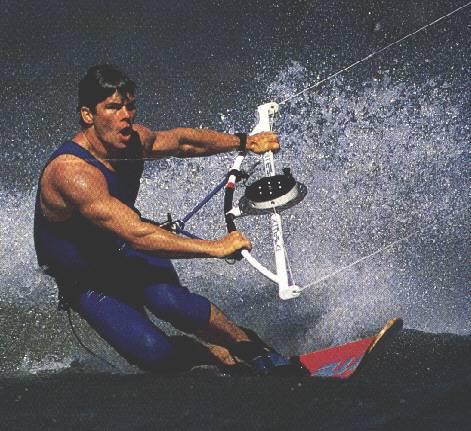
However, the evolution towards the kite bars we know today was far from straightforward.
The first generations of kitesurfing bars were often artisanal constructions, sometimes assembled with components borrowed from other sports. They were pretty basic devices, and reliable emergency release systems were not exactly their strongest feature.
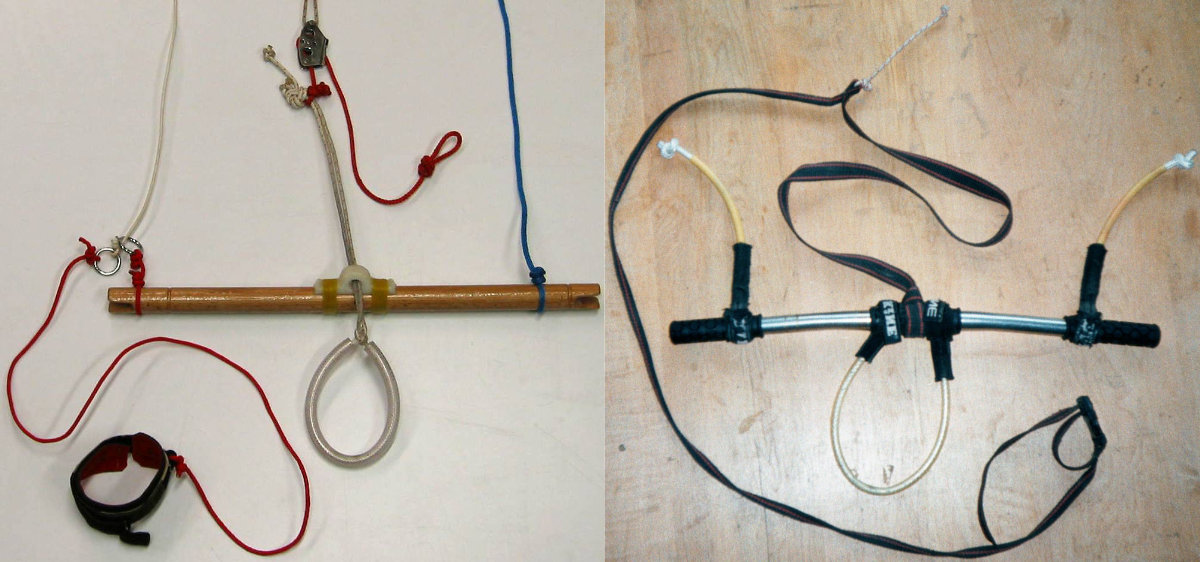
With the arrival of commercially manufactured four-line bars, things started to improve. The chicken loop allowed the rider to transfer the kite's pull to the harness while moving the bar along a central depower line to adjust power.
Unfortunately, several early systems still lacked an effective quick release. Once connected to the harness, getting rid of an uncontrollable kite could become a serious problem.
Some models offered an additional safety connection to a steering line, occasionally attached to the rider's wrist. Better than nothing, perhaps, but still quite far from what we would consider acceptable nowadays.
Another frustrating characteristic of those early C-kites was their difficulty in relaunching from the water.
When the kite crashed leading-edge down, the rider often had to swim towards it to remove tension from the lines, allowing the canopy to roll backwards and eventually rotate into a relaunchable position. Sometimes this operation had to be repeated several times before succeeding.
Not exactly the most entertaining part of a kitesurfing session.
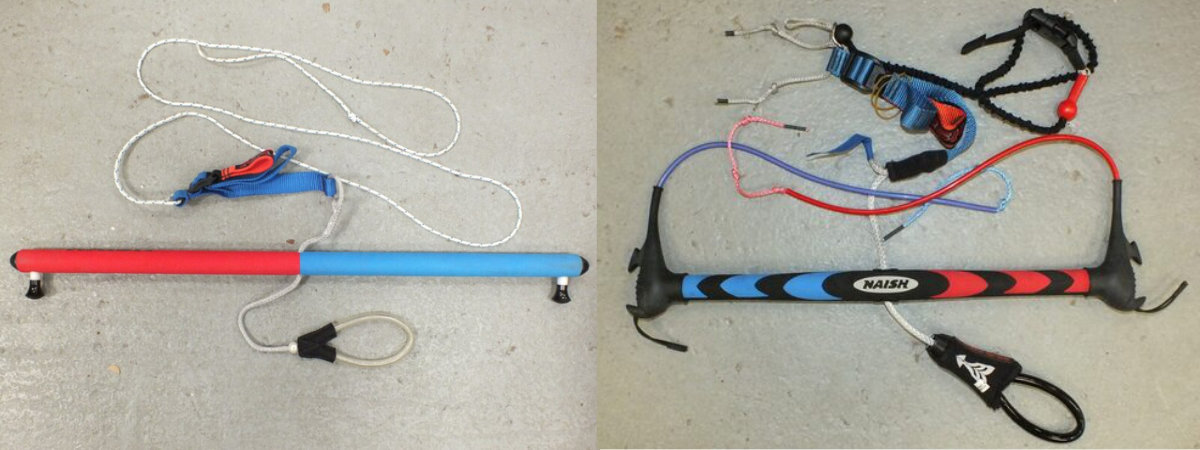
A significant improvement arrived in the early 2000s with the introduction of the fifth line. Connected near the centre of the leading edge, it could help roll a crashed C-kite into the correct position for relaunching and, on suitable designs, provide an effective emergency safety system.
The following introduction of Bow and Supported Leading Edge (SLE) kites brought another important change. Thanks to their flatter profiles and bridle systems, these kites could operate across a much broader range of angles of attack, requiring longer depower travel and allowing a considerably greater reduction in power.
From that point, bar development increasingly concentrated on improving reliability, ergonomics and emergency release mechanisms.
How Does a Kitesurf Control Bar Work?
The kite bar performs three fundamental functions during our session: steering the kite, regulating its aerodynamic power and transferring the generated forces to the rider.
Let's analyze them separately.
1. Steering the Kite
When we pull one side of the bar, we increase the tension on the corresponding rear line, which is connected close to the kite's wingtip.
This action changes the shape and aerodynamic loading of that side of the canopy. The affected wingtip generates additional resistance, behaving somewhat like an aerodynamic brake, while the opposite side continues advancing more freely.
The difference in forces produces a rotation, making the kite turn towards the side where we pulled the bar.
This explains why the width of the control bar influences steering responsiveness. A longer bar provides greater leverage and a bigger difference in rear-line travel for the same rotation of our hands.
Consequently, larger kites generally benefit from wider bars, while smaller and faster kites can become unnecessarily nervous when controlled with excessively wide ones.
2. Regulating Power Through the Angle of Attack
The second function is probably the most interesting from an aerodynamic point of view.
By moving the bar towards or away from our body, we change the relative tension between the front and rear lines and consequently the kite's angle of attack.
When we pull the bar in, the rear lines become relatively shorter, increasing the angle of attack and generally the power generated by the wing.
On the opposite, pushing the bar away reduces the angle of attack, allowing the kite to fly with less aerodynamic resistance and lower pull.
Of course, this behaviour has its limits.
Pulling the bar excessively doesn't necessarily produce more power. When the angle of attack becomes too large, the airflow can separate from the canopy and the kite starts to backstall, losing lift and potentially flying backwards.
We have discussed this phenomenon in more detail in What's a Stall of a Kite and How to Prevent It.
It is also important to understand that sheeting out does not guarantee the complete elimination of power. A kite moving rapidly through the power zone can still generate considerable pull, even when the bar is fully released.
3. Transferring the Kite's Pull to the Rider
The last function involves the structural connection between the kite and our body.
On a conventional four-line system, most of the kite's load is carried by the two front lines, transmitted through the central depower system and chicken loop to the harness.
The rear lines, connected to the ends of the bar, mainly regulate steering and the aerodynamic attitude of the kite.
This is why we can comfortably ride with relatively little effort from our arms: the harness carries most of the load, while our hands control the kite.
The Main Components of a Modern Kite Bar
Although manufacturers offer different solutions, most modern control bars share a similar arrangement.
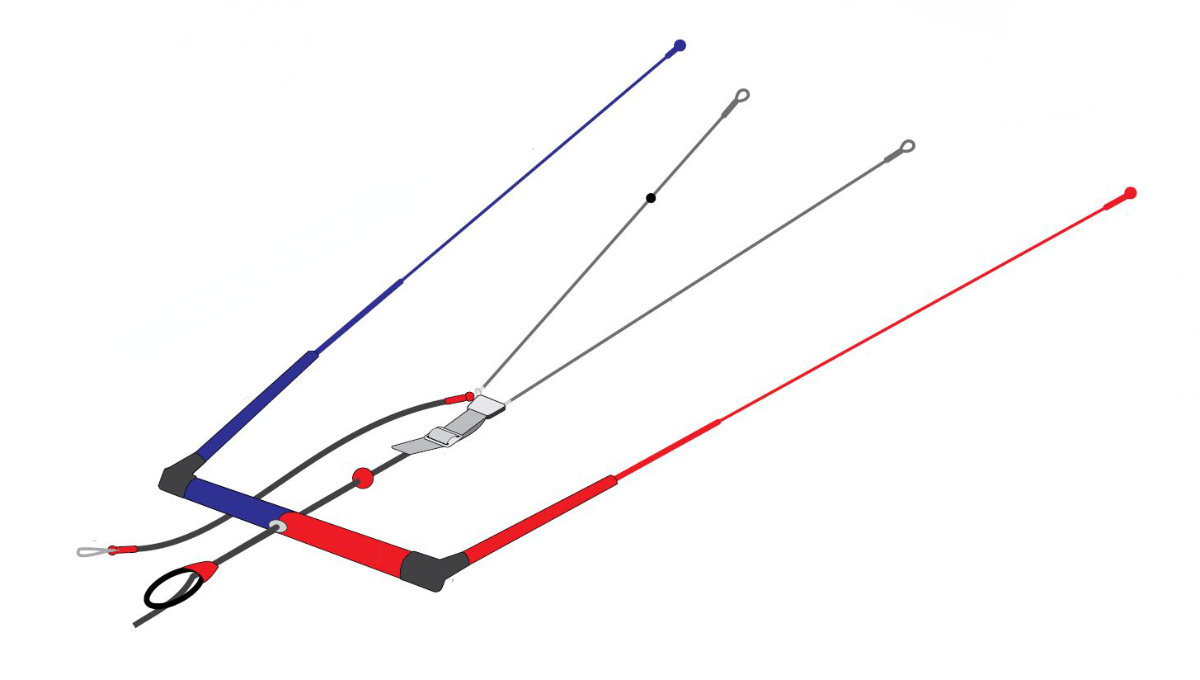
The bar itself is normally colour-coded to distinguish left from right, with shaped ends to wind the lines and floaters to keep it on the water's surface. Let's check its parts in detail:
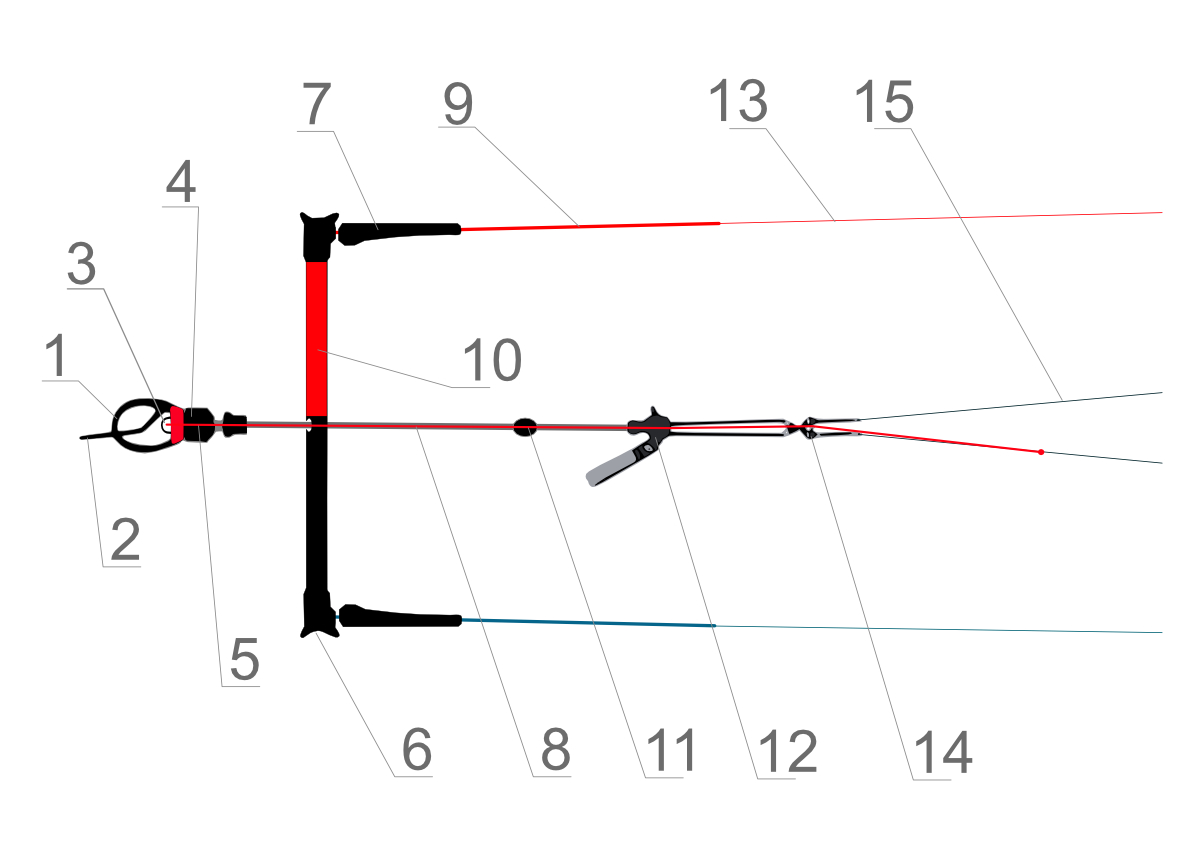
1. Chicken Loop: it connects the harness hook to the depower line and it can be detached or opened to depower the kite in case of emergency.
2. Chicken Loop Finger: it avoids the Chicken Loop to slip out of the harness hook.
3. Emergency line ring connector: it provides the connection for the kite leash to the emergency line.
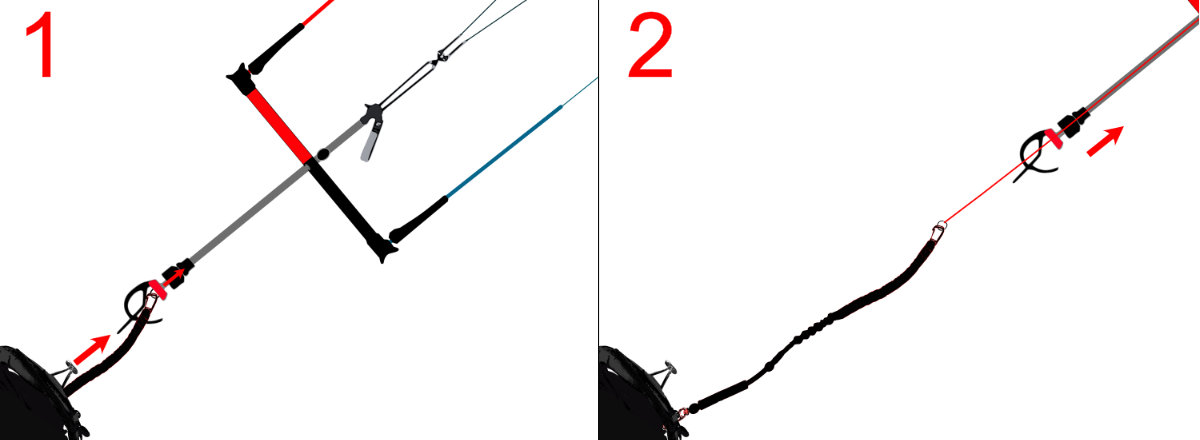
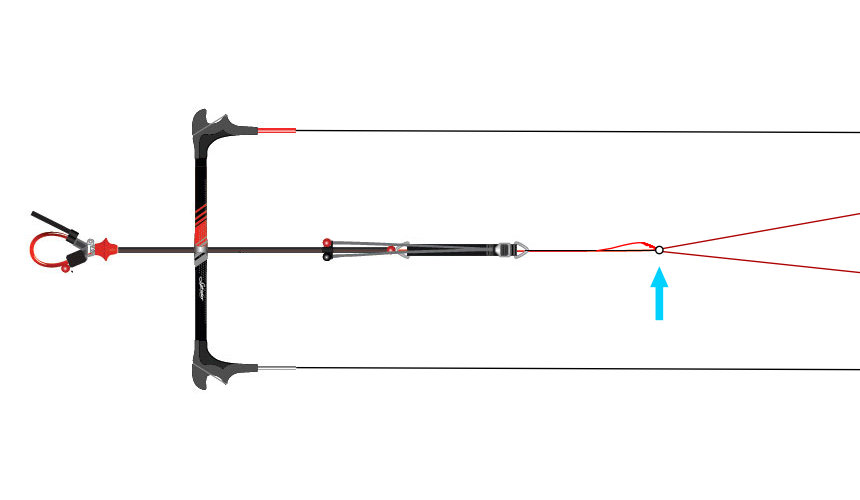
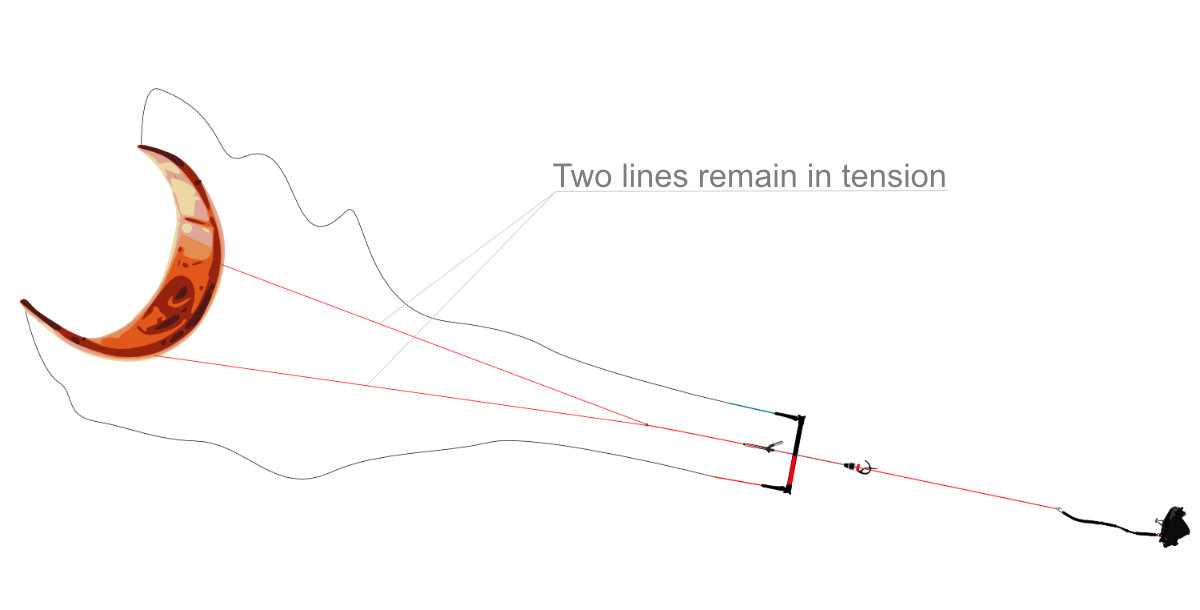
4. Quick Release: the mechanism that can be activated by pushing or pulling it and will instantly cut the power from the kite by opening or dethatching the Chicken Loop from the depower line. It will leave the kiter connected to the emergency line only (the only line holding the tension), while the bar slides towards the kite leaving the rest of the lines loose (you can see that here).
5. Emergency line: it connects the kite leash to a front line (4-line bars) or to the fifth line (5-line bars), to achieve the kite full depower by foiling it.
6. Lines Winding Posts: the end of the steering bar with a shaped concavity to orderly wrap the lines when not in use.
7. Floaters: soft rubber or foam elements that keep the bar floating and protect the rider from directly being in touch with the lines, when in tension.
8. The depower mainline: it connects the rider to the front lines and allows the bar to slide along it. This gives the possibility to change of angle of attack of the kite, by adjusting the ratio between the length of front and back lines.
9. The Pre-line: normally a rubber or plastic pipe that lets the line be taken with better comfort during the kite launch from the water, preventing the kiter from directly touching the line and getting injured by sudden tensions on it.
10. The color-coded Kite Control Bar: it lets the rider steer the kite in the desired direction and power-depower the kite according to its position along the depower mainline. The color code helps to know where the left hand should be positioned, very useful after complex tricks or after losing the grab from the bar.
11. The Stopper Ball: it lets the rider adjust to a minimum power level when the bar is not held in the hands (his element might not be present on all kitesurf bars).
12. The Depower Trim Adjustment: it is used to adjust the power of the kite. Similar to the movement of the kite bar along the depower line, it changes the length ratio between the front and back lines, affecting the kite’s angle of attack on the wind. This device provides a fixed adjustment to match the wind conditions to avoid extreme positions of the bar along the depower line. It helps to minimize or maximize the kite power according to the needs.
13. The Back Lines: they are attached close to the tips of the kite and are responsible for the direction and depower changes.
14. The Y Connector: it connects the front lines to the main depower line. It can vary in its position from very close to the depower trim to very close to the kite, the two cases are referred to as low Y and high Y line setup. This depends on the kite design and shape and it is mostly a choice of the single kite brand.
15. The Front Lines: they normally take a bigger part of the load from the kite and they tend to be the ones more subject to elongation after long periods of use or excessive tensions. The ratio between them and the back lines needs to be checked to assure the correct kite trimming.
The Three Levels of Safety in Modern Kitesurfing Bars
The most important improvement in the evolution of the control bar has undoubtedly been the development of its emergency systems.
Modern kitesurfing bars generally provide three levels of safety, progressively reducing the kite's pull and eventually allowing the rider to separate completely from it:
1. Let go off the bar (let go completely of the bar out of your hands).
2. Activate the Chicken Loop Quick Release.
3. Release the Kite Leash.
Let’s analyze the three moments in detail.
1. Let Go of the Bar
The first safety action is also the simplest: open your hands and let the bar go.
When the bar slides away along the depower line, the rear-line tension decreases and the kite moves towards its minimum-power configuration.
In many situations, this is enough to regain control.
In fact, one of the most common mistakes made by inexperienced riders is doing exactly the opposite. When losing balance or being unexpectedly pulled, their instinct is to grab the bar harder and pull it towards their body.
Unfortunately, this can increase the kite's power precisely when we would need to reduce it.
Learning to let go of the bar rather than instinctively pulling on it is therefore a fundamental part of becoming an independent kitesurfer.
Nevertheless, the kite might retain significant power, especially in strong winds or when there is a problem with the lines. If releasing the bar does not stop a dangerous situation, we must be prepared to activate the quick release immediately.
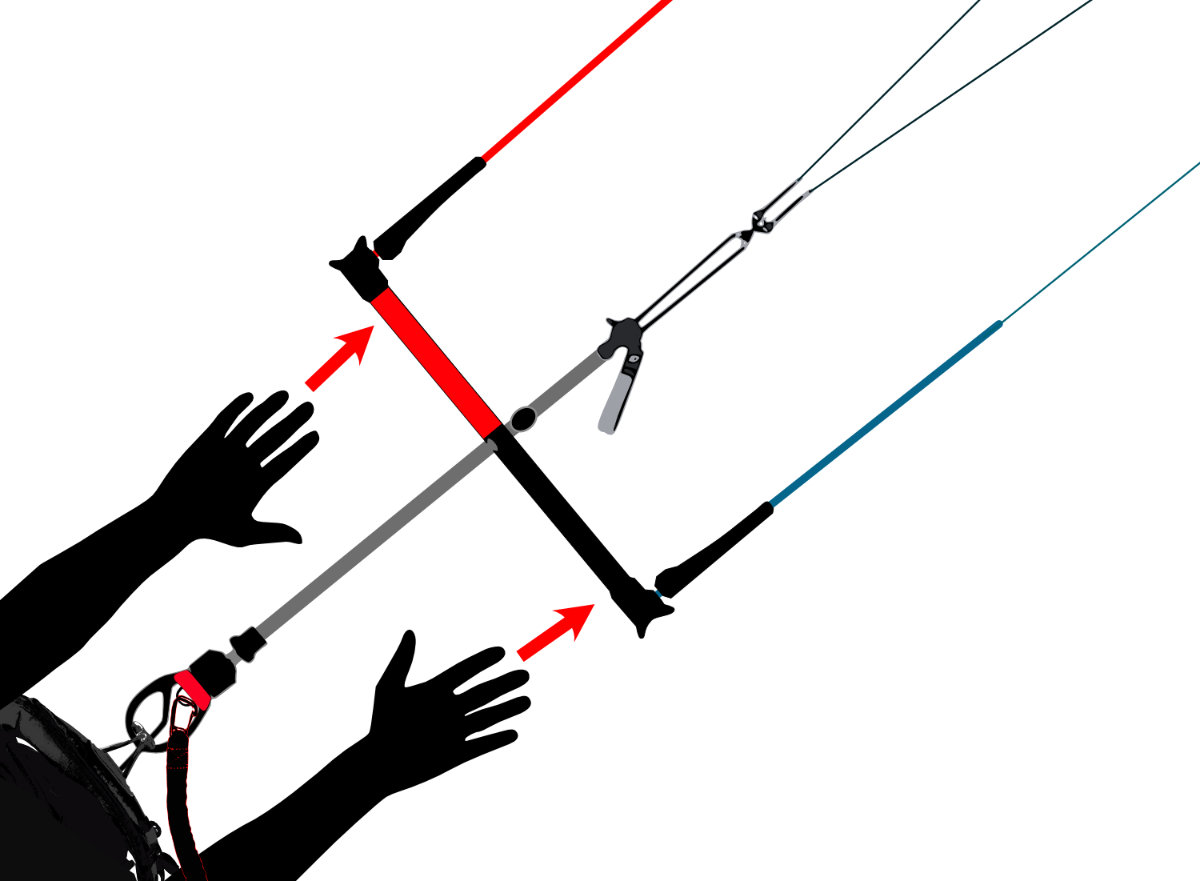
2. Activate the Chicken Loop Quick Release
This is the second step of the safety procedure related to the bars and you should implement it if the first step of letting go of the kite control bar was not enough to regain control of the situation.
The cases when we need to activate the quick release are way less than the times you need to simply let go of the bar, let’s make some examples (of course it is not an exhaustive list):
a. You let the bar go, but the kite is still pulling due to too strong wind and you can’t get back in control.
b. You tangled the kite into another kite, and you need to eliminate any pull to keep everyone safe.
c. You are on the beach, and you are launching in a gusty situation (maybe close to obstacles), and the kite stalls in the power zone with the danger of restarting on the next gust and dragging you on the beach...
When we activate the quick release the bar slides away from us and the kite will remain attached to us just by the emergency line, which normally keeps in tension just one line and completely foils the kite. For a detailed description of this just read the following paragraph.
It is worth mentioning that any kite brand provides its own interpretation of the quick release system and, especially if we are renting a kite or trying a friend’s one, it is very important to make sure we know exactly how that quick release works.
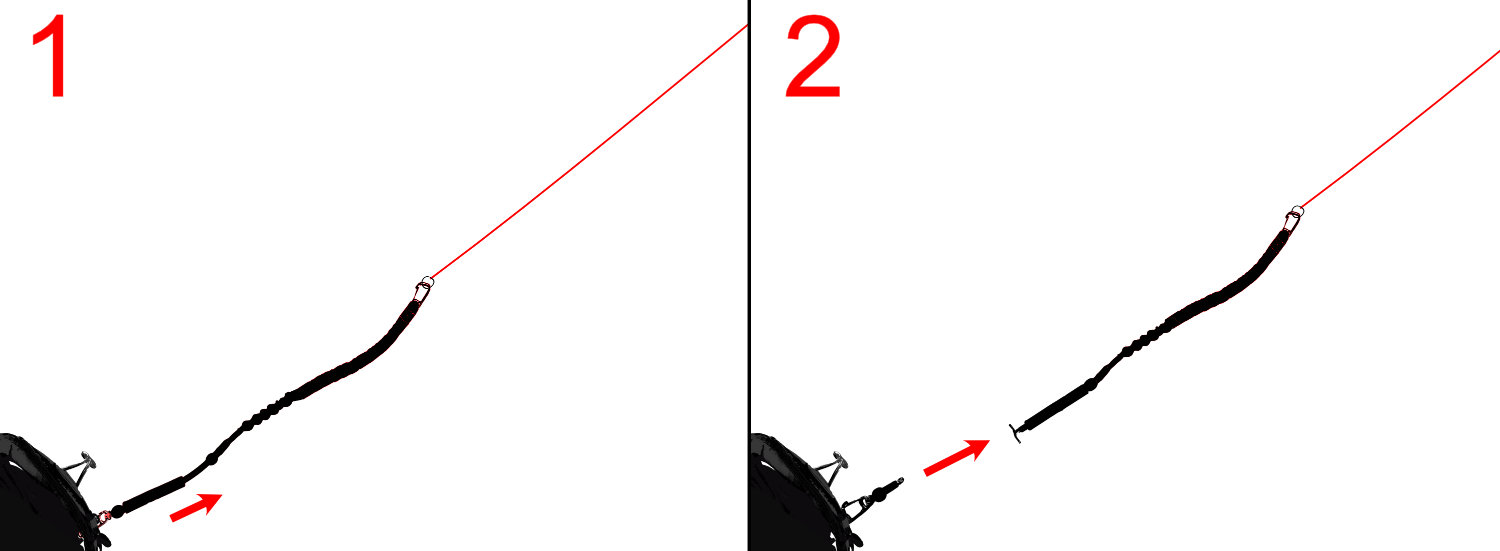
3. Release the Kite Leash
If the previous actions are not sufficient, the last resource is to completely sever us from the kite by activating the kite leash release. After you activated the bar quick release in fact, you were still attached to the kite by the emergency line and at this point, if the emergency is not over, you need to let go of completely the kite.
This can result in you losing the kite or having it crashed somewhere on the beach and broken, but even worse the kite uncontrolled could fly against other people putting them in danger, so it is really the last resource we have. Fortunately, it is quite rare when we need to use it, a couple of cases can come to mind could be:
a. You get in an offshore wind situation (maybe due to sudden changes in the weather, by the way, you should read this article on the topic) and you are unable to make it back to the beach. If you don’t separate yourself from the kite, you risk getting too far from the coast and get stranded in the sea.
b. Your kite gets tangled by a motorboat that does not realize they are dragging you and you risk drowning.
We rarely reach these extremes, but better be prepared.
The two added levels of safety
Some instructors and kite school standards nowadays refer to the five levels of safety in kitesurfing, they are not directly related to the kite bar, but it is worth mentioning them.
The first is the safety kitesurf hook knife (you can read in detail here). Yes, another option, is to cut the kite lines, especially if you got tangled in between them and the lines are in tension with the kite out of control.
The second is to release the harness directly. This might sound odd, and the only situation that seems applicable is when you can’t use any of the systems before and you are completely out of control. An example could be when you are surfing big wavers and you get caught in the washing machine and you can only feel your harness to get out of kite tension, but it seems more theoretical than realistic. If anyone has a better example, please write it in the comments below.
Said so, it seems worth deepening the bar quick release system functions and on what principle it is based.
Modern kite bar safety system: the principle on how the kite bar quick-release works.
The main concept of safety relative to the kitesurf bar is straightforward: to completely depower the kite you need to foil it (or sheet it out). That means having it positioned like a flag according to the wind direction.
The best way to do that is to lose the tension on all kite lines, but one. In normal conditions when the kite is held only by one line while the others are completely loose, you minimize (almost nullify) the kite’s pull.
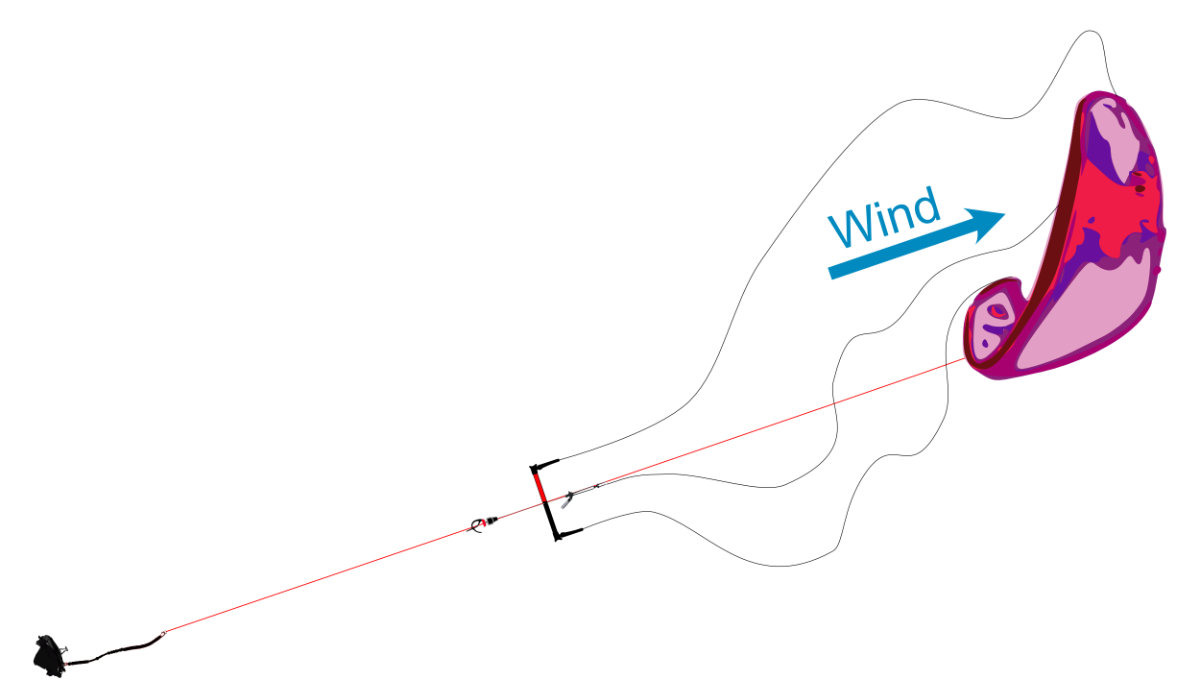
This is the fundamental concept on which the emergency quick-release is based on and, as said, from 2015 all major brands apply it in their design.
Nowadays any kite control bar, both 4 or 5 lines, following this principle has the emergency line connected to only one front line for the 4-lines kites and directly to the fifth line in case of 5-line kites.
The older 4-lines kite bars used to provide the safety leash connection to one front line through a re-ride safety ring that would allow the bar to slide along the line in tension and loosen the remaining. Often this kind of setup came with a stopper ball to prevent the bar to slide too much up to the kite, creating a huge mess on the twisted lines. Nevertheless, the principle of just one line in tension was respected with this solution.
An example of deviation from this concept used to be the Cabrinha IDS (Intelligent Depower System) present on kite bars from 2009 down to 2013. In this setup, the emergency line from the chicken loop was attached rigidly on both the front lines, with no re-ride system on any of them.
This would not follow the principle of one line in tension only, creating the possibility of generating significant power by the kite even after the activation of the emergency system. The concept was developed to avoid big tangling in the lines so the rider could easily restart the kite after the emergency was passed.
This was for sure ok for expert riders, who could have taken further proper actions in case of problems, but promoting it safe for beginners might have been a too big leap. Don’t misunderstand, Cabrinha kites are great and nowadays they are aligned with all the major brands in regards to safety. But that detail in the past could have been checked deeper.
Are kite control bars interchangeable?
In principle, yes. But there are some important distinctions.
The good news is that several manufacturers have progressively converged towards similar four-line arrangements and safety principles. As a result, certain combinations of bars and kites from different brands can work perfectly well together.
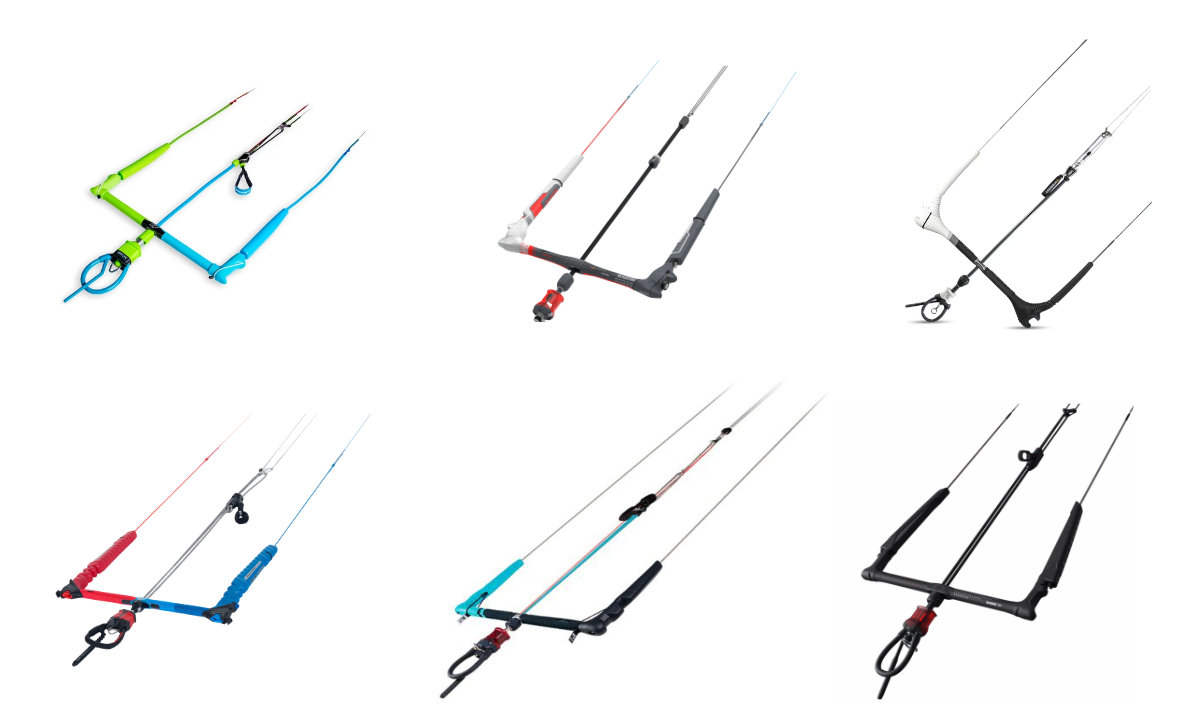
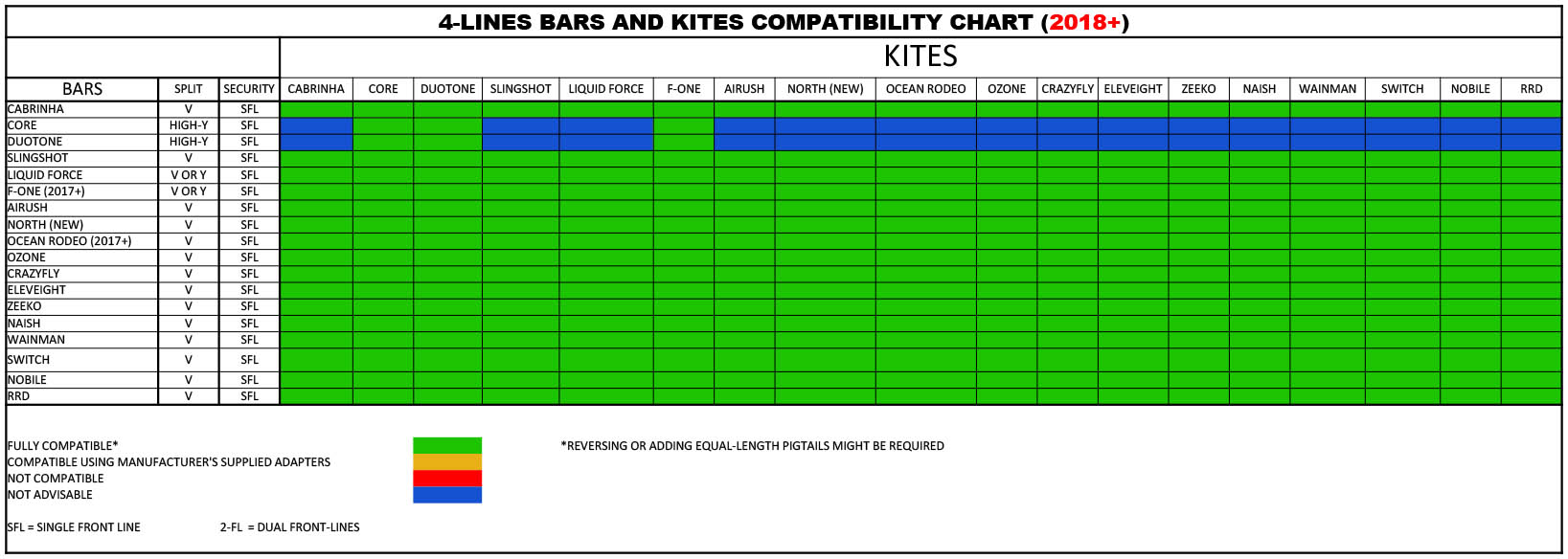
Some kitesurfing brands like Duotone or Core though tend to be more difficult to be interchangeable with other brands on the market.
What you need to look at when thinking to use different bar-kite brands are several elements:
1. The most obvious thing is 4-lines or 5-lines bars and kites: normally that influences the choice range, though several modern kites built to fly with 5 lines can be used with 4 lines. Here the biggest difference consists of the fact if the 5th line has a structural function and it is in tension all the time with the other front lines or if it only serves for safety and relaunch purposes. In the first case, the kite behavior can dramatically change, while in the second the change might have marginal effects.
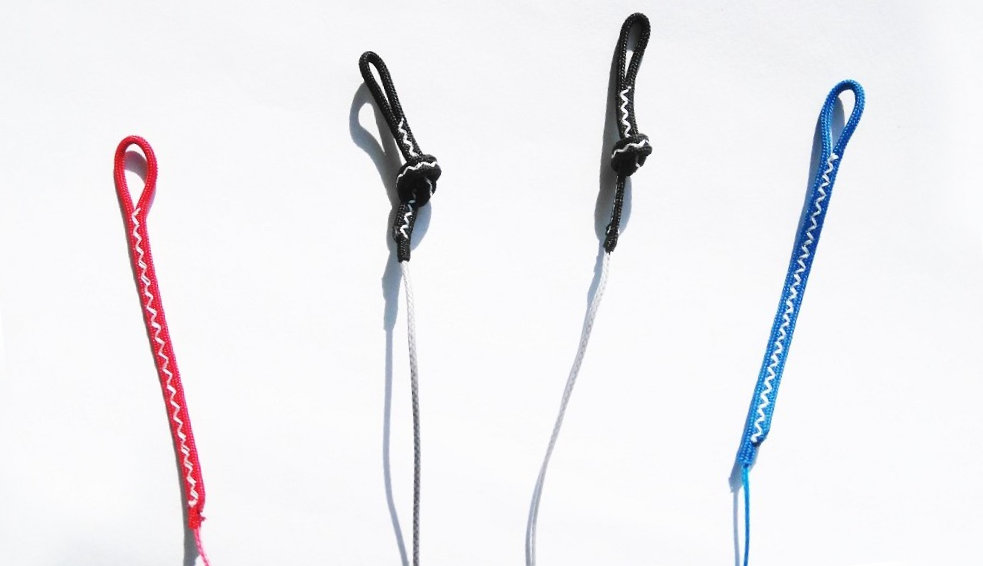
2. The pigtail connections: some brands have pigtails on the front lines and some on the back lines, to overcome that you need to invert them or make use of universal adapters.
3. The high Y or low Y split: the height where the front lines separate creates a different distribution of forces on the kite and every manufacturer can choose a different configuration. This must be taken in account when flying a kite because its performance can be dependent on that. The rule is flying a kite with a bar that has the correct Y height.
4. The trim: as said most of the brands tend to unify the standard with the easiest trim procedure. Normally to make sure your kite will fly properly you have to check that when the bar is set in a full power position (meaning the depower trim is in its longest configuration and the bar is completely pulled down on the depower line) all the lines, front and back, stretched should have the same length.
This is, of course, a fast rule for the first setup and it might not be good on all kite-bar combinations, so, after setting the kite, a test flight to check the trim is a must.
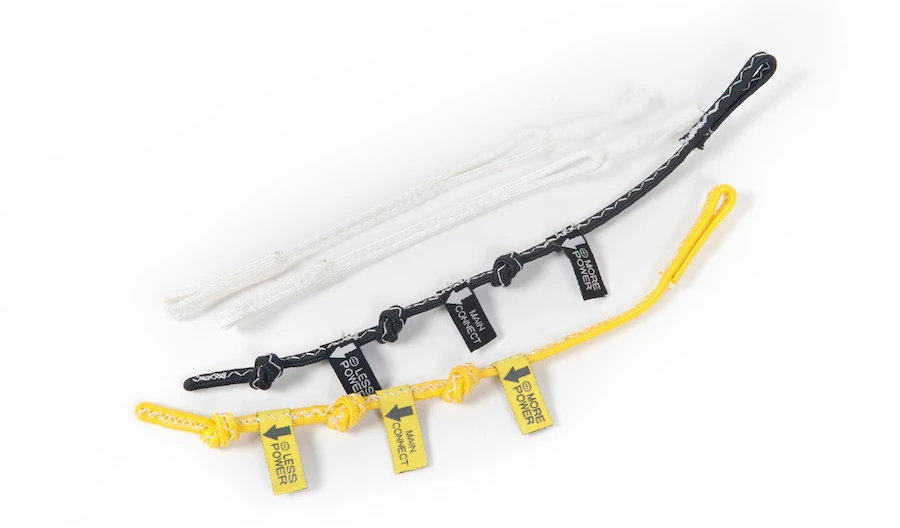
5. Adjustability: related to the trimming of the kite is the possibility to adjust it: brands might offer different number knots on their lines or kites to fine-tune it. If the kite bar doesn’t have all the adjustments available, some extra adapter might be needed too.
5. Old bars on new kites: that is normally not a good idea (of course depending on how old the bar kite can be). Safety systems especially can turn out to be outdated and incompatible with modern kites. The previous example of the 2009 IDS system of Cabrinha is related to this: it is not a good idea to use those bars even with new kites of the same brand.
Last note: when using a kite control bar with a different brand kite, the response and the feeling might change, you might have a quicker, slower response from the kite, or the bar might feel lighter or the opposite, with more pressure.
An interesting table of bar compatibility was found on kiteforum.com (thanks to Alexeyga for sharing it):
Recently the market has seen the birth of some universal kite bars producers who let you custom the parts of the bar you want to purchase to make it a good fit on your specific kite quiver. Such custom kite bars could be an extra option if you plan to have different brands in your kite collection.
Conclusion
Well, as said it was a long post. The kite control bar is a broad topic and a lot more should be covered: effects of the Y height on the kite behavior, how to properly trim the kite and the kite bar lines, the different connections to the harnesses available today on the market, and so on. So stay tuned for more on this topic and please comment below if you agree and even more if you disagree on what is written here. The best thing is to improve our mutual knowledge with every contribution.