
Kitesurfing in Jurien Bay
Jurien Bay · Australia
Been here? Want to go? Add it to your kite spot lists.
Create a free account to save it- Spot type Chop
- Rider level beginner
- Water Dark - Clear
- Beach Sand
- Crowd Some bystanders
- Tide effect None
Kitesurfing in Jurien Bay: Conditions, Wind & Season
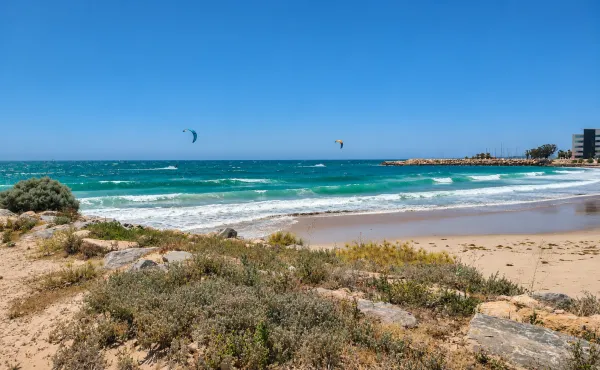
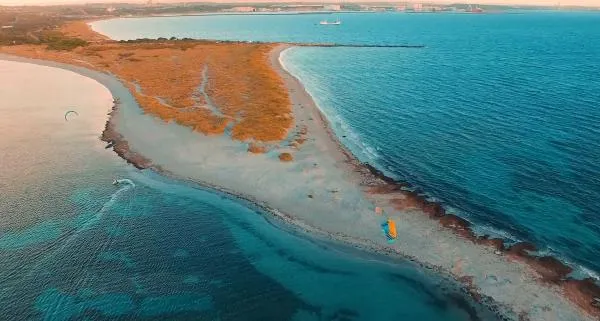
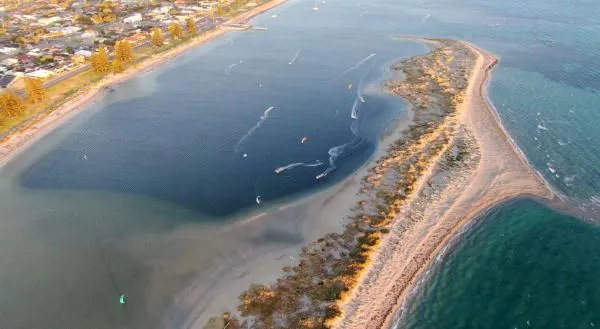
Jurien Bay is an attractive kitesurfing destination along Western Australia's Coral Coast, approximately 220 kilometres north of Perth. The broad bay benefits from the natural protection provided by offshore limestone reefs and small islands, which reduce the influence of incoming Indian Ocean swells and create relatively sheltered riding conditions. The sandy coastline adjacent to the township offers several potential launching areas, with predominantly flat to moderately choppy water extending across much of the bay. Compared with the more exposed wave-riding locations around Geraldton and other sections of Western Australia's coastline, Jurien Bay provides a generally more forgiving environment for freeriding, freestyle and skill progression. Its combination of dependable seasonal winds, accessible beaches and relatively protected water makes it an appealing stop on a kitesurfing trip along the Coral Coast.
The main kitesurfing season generally extends from November through March, although suitable conditions frequently occur during October and April. The prevailing southwesterly and south-southwesterly sea breezes typically develop during the afternoon, reinforced by the thermal effect generated by the temperature difference between the Australian mainland and the Indian Ocean. Wind speeds commonly range from 12 to 25 knots, although stronger afternoon sea breezes can occasionally exceed this range. Southwesterly winds generally provide favourable side-onshore to onshore conditions along the town's beachfront, while more southerly winds can produce different riding angles depending on the selected launch. Easterly winds are generally unsuitable because of their offshore component. During the cooler months, the regular thermal wind pattern becomes less dependable, with suitable riding conditions occurring more intermittently in association with passing weather systems.
Water conditions at Jurien Bay are predominantly flat to moderately choppy, particularly within the sections protected by the offshore reef system. The seabed consists of sandy areas interspersed with seagrass beds and limestone reef formations, while water depth generally increases progressively away from the beachfront. Tidal variations are relatively modest and do not usually impose significant restrictions on riding, although clearance over shallow reef formations remains an important consideration. The protected water is particularly well suited to freeriding, freestyle, transitions and general skill development. Wakestyle riders can find attractive conditions during lighter winds or in smoother sections of the bay, while stronger afternoon breezes provide opportunities for jumping and big air. Hydrofoiling is also well suited to the deeper, unobstructed sections, particularly during lighter wind conditions. Dedicated wave riding is less attractive within the sheltered bay, although more exposed sections beyond the protective reefs can experience substantial ocean swell.
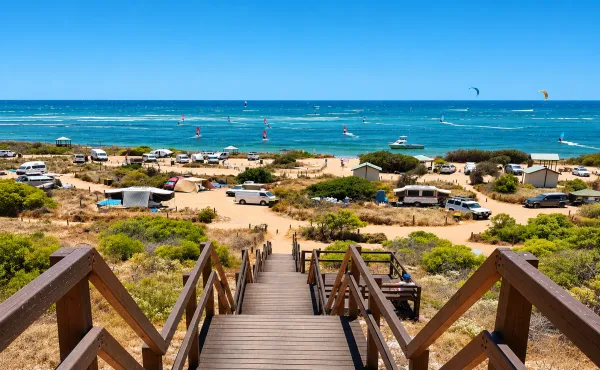
Access to Jurien Bay is straightforward via Indian Ocean Drive from Perth or from the northern Coral Coast. Public parking and established beach entrances are available along the town's waterfront, with sandy sections offering convenient opportunities for equipment preparation and launching. Riders should select areas with sufficient clearance from swimmers, fishing activities, jetties and other coastal infrastructure. The beach is generally less crowded than the major metropolitan kiteboarding locations around Perth, although visitor numbers increase considerably during summer weekends and holiday periods. Medium-sized freeride kites and conventional twin-tip boards are suitable for most typical sessions, while smaller kites are useful during stronger afternoon winds. A shorty or 3/2 mm wetsuit provides additional comfort during the main season, particularly during extended sessions in strong winds. Thicker wetsuits are recommended during the cooler months, and protective footwear may be useful when accessing unfamiliar rocky sections.
Although Jurien Bay offers relatively forgiving conditions, riders should remain aware of submerged limestone reefs, shallow sandbanks, recreational boat traffic and changing wind strength throughout the afternoon. The sheltered appearance of the bay should not be mistaken for an entirely obstacle-free or uniformly shallow riding environment. The surrounding waters form part of the Jurien Bay Marine Park, and riders must respect applicable conservation zones, wildlife protection requirements and local access restrictions. Selected sandy sections can provide suitable conditions for beginners under professional supervision, while independent riders will appreciate the extensive space available for practising manoeuvres and improving their technique. With its consistent summer sea breezes, relatively calm water and convenient beachfront access, Jurien Bay is a particularly rewarding destination for freeriding, freestyle, hydrofoiling and intermediate progression, offering a welcome alternative to the more demanding strong-wind and wave-kitesurfing locations elsewhere in Western Australia.
Something missing or out of date at this spot? Suggest a correction
This spot does not have a photo gallery yet.
Kited here? Add the first photos (free account, one minute).
Jurien Bay is best suited for
Spot profile
- Travel spotA proven kite destination with reliable conditions, worth a trip. Kiters fly in from all over the world for their kite holidays, and you will probably find schools, rentals and a lively kite scene nearby.
- Family spotEasy to visit with family and friends. Facilities are close by and non-kiters have plenty to do while you are on the water, so everyone enjoys the day, whether they kite or not.
- Local spotNot worth a long trip, but a great option if you live nearby and the wind is on. Ideal for a quick session after work or a spare afternoon, without planning a whole trip.
Equipment
Medium-size freeride kites in the 9-12m range are the most useful throughout the prime season at Jurien Bay, as winds are consistently moderate but rarely extreme. Warmer months allow for a shorty or spring wetsuit, but a full wetsuit is recommended for cooler days, especially outside of summer or if you're out for long sessions. Most riders go barefoot due to the sandy bottom, though some prefer booties for added comfort. Helmets and impact vests are a good call for newer riders or when the spot is busy. Hydrofoil boards are an option on sub-15 knot afternoons, but standard twin-tip gear is best suited for the conditions.
Wetsuit suggestion by month
- JanShorty24°
- FebShorty24°
- MarShorty24°
- AprShorty23°
- MayShorty21°
- Jun3/220°
- Jul3/218°
- Aug3/218°
- Sep3/219°
- OctShorty20°
- NovShorty21°
- DecShorty23°
- 3/2 3/2 mm
- Shorty Shorty or neoprene top
Based on the average sea temperature of each month. A guide for an average rider: if you feel the cold, go one step warmer.
Wind Conditions
Main wind directions
Windy days per month
Share of the days with more than 10 knots.
Wind speed range
11 - 19 knots
Wind strength on rideable days
- 7-11 kn61%
- 12-16 kn34%
- 17-22 kn5%
- 23-28 kn0%
- 29+ kn0%
Share of the daytime hours with 7+ knots.
Calculate your kite size
Estimate for a rider of your weight at Jurien Bay: kite size = weight / wind speed x 2.2, adjusted for the kite shape and aspect ratio. Board, skills and gusts change the ideal size.
Month by month at Jurien Bay
| Metric | Jan | Feb | Mar | Apr | May | Jun | Jul | Aug | Sep | Oct | Nov | Dec |
|---|---|---|---|---|---|---|---|---|---|---|---|---|
| Wind | ||||||||||||
| Rideable daysdays | 31 | 28 | 30.5 | 27 | 25.5 | 17 | 22 | 22.5 | 27 | 31 | 30 | 31 |
| Usable windhours | 256 | 223 | 224 | 184 | 166 | 126 | 164 | 169 | 194 | 237 | 242 | 256 |
| Average gustsknots | 27 | 25 | 22 | 19 | 18 | 17 | 19 | 19 | 20 | 23 | 24 | 26 |
| Temperature | ||||||||||||
| Air°C | 30 | 30 | 28 | 25 | 22 | 18 | 17 | 18 | 20 | 21 | 24 | 28 |
| Sea°C | 24 | 24 | 24 | 23 | 21 | 20 | 18 | 18 | 19 | 20 | 21 | 23 |
| Weather and sea | ||||||||||||
| Sunshinehours / day | 12.9 | 12.5 | 11.3 | 10.3 | 9.1 | 8.7 | 8.6 | 9.6 | 10.8 | 11.3 | 12.9 | 13.3 |
| Rainmm | 1 | 22 | 37 | 23 | 51 | 115 | 122 | 98 | 46 | 37 | 20 | 2 |
| Rainy daysdays | 0 | 1 | 4 | 4.5 | 8 | 11.5 | 13.5 | 13 | 8 | 6 | 4.5 | 1 |
| Wave heightm | 2 | 1.8 | 1.8 | 1.8 | 2 | 2.3 | 2.7 | 2.6 | 2.4 | 2.3 | 1.9 | 2 |
Typical monthly averages over several years, based on weather data: local thermal winds are usually stronger than shown, and sea temperature and waves are a regional estimate. A rideable day has at least 3 hours of 7+ knots between 10:00 and 18:00, usable wind counts those hours, a rainy day has 1 mm or more.
Wind and climate statistics: Weather data by Open-Meteo.com (CC BY 4.0), based on ERA5 data of the Copernicus Climate Change Service. A typical year, not a forecast.
Forecast on Windy.com
Kitesurfing Safety & Local Rules at Jurien Bay
The main hazards at Jurien Bay, on the Coral Coast of Western Australia, are increasing afternoon wind strength, variable water depth and recreational boat traffic. The prevailing south-southwesterly and southwesterly winds can strengthen considerably as thermal effects develop throughout the afternoon, potentially leaving riders overpowered if they select their kite size based on earlier, lighter conditions. Although the main launching area has a predominantly sandy seabed and relatively manageable water conditions, shifting sandbanks and occasional accumulations of seaweed can conceal unexpected changes in depth. Afternoon glare and increasing chop may also make floating debris, submerged markers and fishing lines difficult to identify. Riders should regularly reassess wind strength, inspect unfamiliar shallow sections and avoid attempting jumps or freestyle manoeuvres where water depth has not been established.
Jurien Bay is a popular destination for recreational boating, fishing, swimming and marine wildlife excursions, creating additional hazards around public jetties, boat ramps and navigation routes. Kitesurfers should maintain generous clearance from vessels, fishing lines and moored boats, particularly during weekends and holiday periods when maritime traffic increases. The surrounding Jurien Bay Marine Park also contains designated conservation and sanctuary zones, where specific environmental regulations may apply. Riders should consult current marine park zoning maps and local signage to identify any restrictions affecting launching, landing or navigation. Marine wildlife, including Australian sea lions and dolphins, should be given sufficient space, and deliberate approaches or disturbance must be avoided. As elsewhere along the Western Australian coastline, riders should remain aware of shark warnings and follow current advice from local authorities.
The proximity of Jurien Bay's launching areas to public recreational facilities means that swimmers, pedestrians and families may occupy sections of the beach normally used for equipment preparation. During busy periods, restricted launching space can increase the risk of crossed lines and accidental contact with bystanders, making assisted launching and landing preferable. Sudden weather changes, particularly during the spring and autumn transition periods, can introduce unexpected gusts and wind shifts that complicate returning to shore. Riders venturing farther into the bay should possess reliable self-rescue skills, identify alternative landing locations and inform someone ashore of their intended session. Local emergency and marine rescue services should never be considered a substitute for adequate preparation. Respecting marine park regulations, monitoring changing wind conditions and maintaining sufficient separation from other water users are essential for safe kitesurfing at Jurien Bay.
How to reach Jurien Bay
- Closest cityJurien Bay
- How to get thereDrive from Perth via Indian Ocean Drive, which is the main road access to Jurien Bay from the south. Flying is usually via Perth airport, then continuing by rental car or long-distance transfer to the coast.
- AccessThe spot is publicly reachable from the town of Jurien Bay and the surrounding coastal frontage. Access is generally straightforward by road, with the main approach being a drive from Perth up the west coast. There is no sign of special entry fee for the general bay access, but the marine park setting means normal public-area rules and any posted local restrictions should be respected.
No-Wind Days: What to Do Around Jurien Bay
Jurien Bay, situated approximately 220 kilometres north of Perth on Western Australia's Coral Coast, is a pleasant coastal town surrounded by turquoise waters, offshore islands and extensive areas of protected natural landscapes. Unlike some of the more isolated settlements along this stretch of coastline, Jurien Bay offers the conveniences of an established community without losing its relaxed seaside character. Its Mediterranean climate, beautiful beaches and remarkable marine wildlife make it an attractive destination for families, nature enthusiasts and travellers exploring Western Australia along the scenic Indian Ocean Drive.
The town's beachfront is particularly enjoyable for relaxed outdoor activities. Sandy beaches, grassy recreational areas, picnic facilities and playgrounds extend along the coastline, providing plenty of opportunities for families to spend time outdoors. The Jurien Bay Jetty is a popular gathering place for recreational fishing, photography and evening walks, with attractive views across the turquoise waters towards the offshore islands. During calm conditions, the sheltered sections of the bay are suitable for swimming, kayaking and stand-up paddleboarding, although visitors should always consider local currents, boat traffic and the presence of submerged reefs.
One of Jurien Bay's greatest attractions is its population of Australian sea lions, an endangered species inhabiting several offshore islands within the Jurien Bay Marine Park. Organised boat excursions offer opportunities to observe these remarkably curious animals and, under appropriate conditions and operator supervision, snorkel in their natural environment. Dolphins, seabirds and numerous fish species also inhabit the surrounding waters. The marine park protects an extensive system of limestone reefs, seagrass meadows and islands, creating a fascinating environment for underwater photography and guided snorkelling excursions. Wildlife encounters are never guaranteed, but exploring this protected stretch of coastline is undoubtedly one of the most rewarding experiences available in the area.
The Turquoise Way Trail provides an excellent opportunity to discover the coastline without a car. Extending approximately 14 kilometres from the Jurien Bay marina south towards the Hill River area, this paved coastal path passes through native vegetation and offers beautiful views of the Indian Ocean. Suitable for walking and cycling, the trail connects several beaches and recreational areas, allowing visitors to explore at their own pace. Early mornings are particularly pleasant for longer excursions, especially during the warmer summer months. The surrounding coastal vegetation also attracts numerous bird species, making the route interesting for nature lovers and photographers.
Approximately half an hour south of Jurien Bay lies one of Western Australia's most unusual natural landmarks: the Pinnacles Desert in Nambung National Park. Thousands of limestone formations rise from the yellow desert sands, creating an extraordinary landscape that appears almost otherworldly. Visitors can explore the formations by following designated walking trails or driving around the scenic circuit. Early morning and late afternoon visits are particularly rewarding for photography, when the low sunlight creates long shadows between the limestone pillars. Nearby Cervantes is also worth visiting for its seafood restaurants, coastal scenery and Lake Thetis, where ancient microbial formations known as stromatolites provide a fascinating insight into some of the earliest forms of life on Earth.
Nature enthusiasts should also explore Lesueur National Park, located a short drive inland from Jurien Bay. Despite its relatively modest size, the park protects an exceptionally diverse collection of native plant species, many of which are endemic to Western Australia. During the wildflower season, generally between August and November, the surrounding hills and heathlands become covered with colourful flowering plants, including banksias, orchids and numerous other native species. Scenic drives and walking trails allow visitors to discover this remarkable biodiversity, while the higher viewpoints provide extensive panoramas across the surrounding countryside. Farther north, Sandy Cape Recreation Park offers beautiful coastal scenery, sheltered bays and opportunities for camping, fishing and exploring the sand dunes.
For visitors looking for something considerably more adventurous, Jurien Bay is also known as a skydiving destination. Tandem jumps offer spectacular aerial views of the Indian Ocean, offshore islands, limestone reefs and the contrasting colours of the coastal landscape. Those who prefer keeping their feet firmly on the ground can explore neighbouring communities such as Green Head and Leeman, where quiet beaches, rocky headlands and small fishing settlements reveal a less developed side of the Coral Coast. Particularly attractive is Dynamite Bay in Green Head, a nearly circular sandy bay surrounded by rocky promontories that makes an enjoyable destination for a picnic or an afternoon of coastal exploration.
Accommodation in Jurien Bay ranges from caravan parks and camping facilities to motels, self-catering apartments and private holiday houses, making longer stays relatively easy to organise. The town has supermarkets, bakeries, cafés, restaurants and essential services, while locally caught seafood, particularly Western Australian rock lobster, is among the regional culinary highlights. Evenings are generally quiet, with casual dining, traditional Australian pubs and spectacular sunsets providing most of the entertainment. A rental car or campervan is recommended for discovering the surrounding national parks and coastal settlements, and longer excursions should be planned with sufficient drinking water and sun protection.
Jurien Bay is an excellent choice for a family kitesurfing holiday on Western Australia's Coral Coast, especially for travellers who appreciate natural attractions rather than busy entertainment districts. Non-kiting partners can discover Australian sea lions, cycle along the turquoise coastline, explore the extraordinary Pinnacles Desert or photograph seasonal wildflowers. With marine reserves, national parks and peaceful coastal communities all within easy reach, Jurien Bay provides plenty of reasons to extend a stay, regardless of the wind forecast.
Riders of Jurien Bay
Who calls Jurien Bay home, who is planning a trip and who has ridden it. Add yourself to meet them.
Nobody calls it home yet
Make it my home spotNobody on the way yet
I want to goBe the first to ride it
I have been hereUpcoming at Jurien Bay
Sessions, downwinders and meetups planned by the riders of Jurien Bay. Going too? Join them.
No session planned yet. Going out soon? Post it: the riders who follow Jurien Bay get a notification.
Other kitesurfing spots near Jurien Bay
All kitesurfing spots in Australia
Last updated: