
Kitesurfing in Yorkeys Knob
Cairns · Australia
Been here? Want to go? Add it to your kite spot lists.
Create a free account to save it- Spot type Chop
- Rider level intermediate
- Water Dark - Clear
- Beach Sand
- Crowd Seasonal crowd
- Tide effect Conditions vary
Kitesurfing in Yorkeys Knob: Conditions, Wind & Season
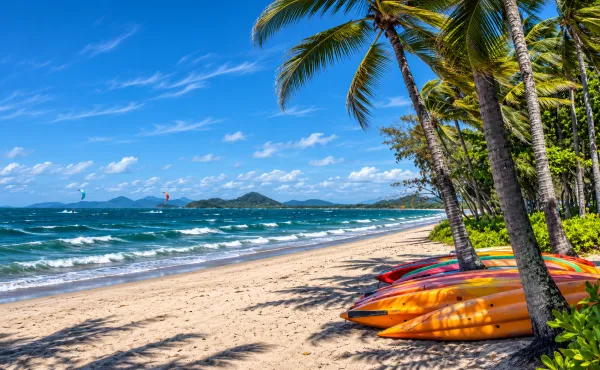
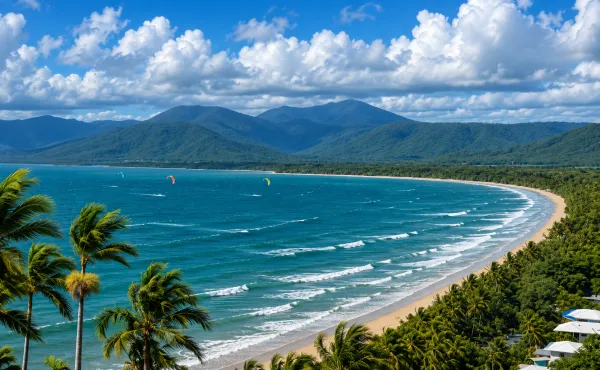
Yorkeys Knob is the principal kitesurfing beach in the Cairns area, located approximately 15 kilometres north of the city centre along the Coral Sea coastline of Far North Queensland, Australia. The spot is particularly appreciated for its reliable seasonal southeast trade winds, extensive sandy shoreline and convenient launching facilities. Kitesurfing activity is concentrated towards the southern end of Sims Esplanade, near Wattle Street, where a grassy rigging area and broad sandy beach provide comfortable space for preparing equipment. The coastline faces the Coral Sea, offering predominantly open-water conditions with moderate chop and occasional small breaking waves. Unlike a dedicated flat-water lagoon, Yorkeys Knob provides a varied riding environment influenced by wind strength, tidal changes and the coastal geography surrounding the Barron River estuary. Its combination of consistent seasonal winds and relatively straightforward beach access makes it a popular location for freeriding, bump-and-jump sessions and technical progression among both local and visiting kitesurfers.
The main kitesurfing season generally extends from May through November, when the prevailing southeast trade winds provide the most dependable riding conditions. Suitable winds can occasionally arrive as early as March or April and continue into December, although consistency outside the main season is considerably lower. Southeasterly and south-southeasterly winds are particularly favourable, providing side-onshore to sideshore conditions depending on their precise angle. Southerly winds can also produce enjoyable sessions, while occasional north-northeasterly breezes offer alternative riding opportunities. Southwesterly winds require particular caution because of their offshore component and potential turbulence from the surrounding land. During established trade-wind periods, wind speeds commonly range from 15 to 20 knots, with stronger afternoons occasionally reaching 25–30 knots. Medium-sized freeride kites are generally appropriate, while smaller equipment becomes useful during stronger trade-wind pulses. The tropical wet season brings less predictable winds, increased rainfall and frequent thunderstorms, making the cooler and drier months considerably more attractive for planning a kitesurfing trip to Yorkeys Knob.
Water conditions vary considerably throughout the tidal cycle. The main riding area features a predominantly sandy seabed with a gradual nearshore slope, moderate wind-generated chop and occasional shorebreak, particularly during higher tides and stronger winds. At lower tidal stages, exposed sandbars can reduce the available water depth while creating smoother sections in their sheltered vicinity. The coastline towards the Barron River mouth features additional sandbars and tidal channels, although the presence of strong currents and saltwater crocodiles makes the estuary unsuitable for casual exploration or beginner practice. The main beach is particularly well suited to twin-tip freeriding, powered cruising and jumping over small wind-generated ramps. Hydrofoiling is possible in sufficiently deep open-water sections, especially during lighter trade-wind days, although changing tidal depths require careful assessment. Freestyle manoeuvres can be practised where adequate depth and smoother water are available, but Yorkeys Knob is not a dedicated wakestyle or glass-flat freestyle destination. Wave-riding potential is relatively limited, with most sessions characterised by short-period chop rather than organised breaking surf.
Access is straightforward from Cairns via the Captain Cook Highway and Yorkeys Knob Road, with the journey generally taking around 15–20 minutes by car. The established kiteboarding area at the southern end of Sims Esplanade offers public parking, grassy rigging space and direct access to the sandy shoreline. The extensive beach generally provides sufficient room for launching and landing, although the main rigging area can become busy during favourable trade-wind afternoons and weekends. Local kiteboarding schools provide instruction, making the spot suitable for supervised beginners as well as independent intermediate and advanced riders. Equipment preparation should remain within appropriate areas, away from pedestrians, vegetation and other beach users. Water temperatures remain warm throughout the year, making boardshorts and a rash guard comfortable during much of the main riding season. A lightweight wetsuit may be useful during cooler or particularly windy winter sessions. Full-length stinger suits are strongly recommended during the marine stinger season, generally from October or November through May, in accordance with current local safety advice. Protective footwear may also be useful when walking across unfamiliar shallow sections containing shells or submerged debris.
The principal hazards at Yorkeys Knob include potentially dangerous marine stingers, saltwater crocodiles, changing tidal depths, shallow sandbars and occasional strong shorebreak. The proximity of the Barron River estuary is particularly important, as river mouths and surrounding coastal waterways are recognised crocodile habitats. Riders should avoid the estuary, respect crocodile warning signs and follow current marine safety recommendations. Dangerous jellyfish can also be present outside the main stinger season, so protective clothing and awareness of local warnings remain important throughout the year. Strong southeast trade winds can generate substantial chop, while tropical squalls may introduce sudden changes in wind strength and direction. Despite its spacious beach, adequate separation from other riders and beach users remains essential during busy periods. With its dependable seasonal trade winds, accessible sandy shoreline and established kiteboarding community, Yorkeys Knob remains one of the most practical kitesurfing locations in Far North Queensland. Its greatest appeal lies in consistent freeriding, bump-and-jump sessions, hydrofoiling and technical progression, rather than specialised flat-water freestyle or dedicated wave riding.
Something missing or out of date at this spot? Suggest a correction
This spot does not have a photo gallery yet.
Kited here? Add the first photos (free account, one minute).
Yorkeys Knob is best suited for
Spot profile
- Travel spotA proven kite destination with reliable conditions, worth a trip. Kiters fly in from all over the world for their kite holidays, and you will probably find schools, rentals and a lively kite scene nearby.
- Family spotEasy to visit with family and friends. Facilities are close by and non-kiters have plenty to do while you are on the water, so everyone enjoys the day, whether they kite or not.
- Local spotNot worth a long trip, but a great option if you live nearby and the wind is on. Ideal for a quick session after work or a spare afternoon, without planning a whole trip.
Equipment
A freeride or bump-and-jump board matched with a kite sized for the 15 to 20 knot range will cover most wind conditions. In spring and summer, when winds may power up to 25 knots, bring a smaller kite for stronger conditions, especially in the later season. Hydrofoils work well in the flatter stretches by the river mouth at suitable tides. Warm water means wetsuits are generally not needed, but a stinger suit is strongly advisable from October through May to protect against jellyfish. Booties are generally unnecessary on the main sandy launch, but are useful for occasional rough patches or shells near the waterline.
Wetsuit suggestion by month
- JanShorts30°
- FebShorts30°
- MarShorts29°
- AprShorts29°
- MayShorts26°
- JunShorts24°
- JulShorty24°
- AugShorty24°
- SepShorts25°
- OctShorts27°
- NovShorts29°
- DecShorts30°
- Shorty Shorty or neoprene top
- Shorts Boardshorts and lycra
Based on the average sea temperature of each month. A guide for an average rider: if you feel the cold, go one step warmer.
Wind Conditions
Main wind directions
Windy days per month
Share of the days with more than 10 knots.
Wind speed range
15 - 25 knots
Wind strength on rideable days
- 7-11 kn88%
- 12-16 kn12%
- 17-22 kn0%
- 23-28 kn0%
- 29+ kn0%
Share of the daytime hours with 7+ knots.
Calculate your kite size
Estimate for a rider of your weight at Yorkeys Knob: kite size = weight / wind speed x 2.2, adjusted for the kite shape and aspect ratio. Board, skills and gusts change the ideal size.
Month by month at Yorkeys Knob
| Metric | Jan | Feb | Mar | Apr | May | Jun | Jul | Aug | Sep | Oct | Nov | Dec |
|---|---|---|---|---|---|---|---|---|---|---|---|---|
| Wind | ||||||||||||
| Rideable daysdays | 14 | 12.5 | 17 | 21 | 26.5 | 23 | 23 | 26 | 24 | 23 | 19 | 16 |
| Usable windhours | 99 | 95 | 131 | 167 | 227 | 175 | 174 | 211 | 200 | 174 | 146 | 126 |
| Average gustsknots | 17 | 17 | 19 | 21 | 23 | 20 | 20 | 23 | 24 | 21 | 20 | 19 |
| Temperature | ||||||||||||
| Air°C | 29 | 28 | 28 | 27 | 25 | 24 | 23 | 24 | 25 | 28 | 29 | 28 |
| Sea°C | 30 | 30 | 29 | 29 | 26 | 24 | 24 | 24 | 25 | 27 | 29 | 30 |
| Weather and sea | ||||||||||||
| Sunshinehours / day | 9.4 | 9 | 9.6 | 9.9 | 10.2 | 10 | 10 | 10.3 | 11 | 11.7 | 11.5 | 10.2 |
| Rainmm | 452 | 334 | 258 | 258 | 62 | 30 | 58 | 32 | 38 | 29 | 62 | 444 |
| Rainy daysdays | 22 | 22 | 19 | 14.5 | 10 | 7.5 | 8 | 7 | 8.5 | 7.5 | 12 | 19 |
| Wave heightm | 0.5 | 0.6 | 0.6 | 0.7 | 0.8 | 0.7 | 0.8 | 0.8 | 0.8 | 0.6 | 0.6 | 0.6 |
Typical monthly averages over several years, based on weather data: local thermal winds are usually stronger than shown, and sea temperature and waves are a regional estimate. A rideable day has at least 3 hours of 7+ knots between 10:00 and 18:00, usable wind counts those hours, a rainy day has 1 mm or more.
Wind and climate statistics: Weather data by Open-Meteo.com (CC BY 4.0), based on ERA5 data of the Copernicus Climate Change Service. A typical year, not a forecast.
Forecast on Windy.com
Kitesurfing Safety & Local Rules at Yorkeys Knob
The main hazards at Yorkeys Knob, near Cairns in Far North Queensland, Australia, are variable shorebreak, shifting sandbanks and tidal currents around the Barron River mouth. Strong southeasterly trade winds, particularly during an incoming tide, can generate challenging shorebreak and considerable chop across the exposed riding area. These conditions require reliable kite control and careful timing when entering or leaving the water. Towards the Barron River mouth, shifting sandbanks and unpredictable currents can alter the location and extent of the flat-water riding sections. Riders should assess tidal conditions carefully, avoid jumping in insufficient water depth and remain alert to driftwood or other debris carried along the coastline. Saltwater crocodiles also inhabit the surrounding waterways, making it particularly important to avoid riding close to the river mouth and mangrove-lined areas.
Marine stingers represent a significant seasonal hazard at Yorkeys Knob, particularly between October and May, although dangerous jellyfish may be present outside this period. Box jellyfish and Irukandji can deliver potentially life-threatening stings, making a full-body stinger suit strongly recommended, even during relatively short sessions. Riders should follow current marine wildlife warnings and seek local advice before entering the water. Tropical thunderstorms and sudden squalls may also develop during the wet season, producing powerful gusts, rapid wind shifts and lightning hazards. Leave the water well before approaching thunderstorms arrive and avoid launching when weather conditions appear unstable. Strong tropical sunlight, heat and dehydration are additional concerns throughout the year, particularly during extended riding sessions.
The established rigging and launching area at the southern end of Sims Esplanade should be used to minimize conflicts with other beach users and ensure adequate space for equipment preparation. Yorkeys Knob can become relatively busy during the main trade wind season, with experienced riders, beginners, students and recreational beachgoers sharing the same coastal area. Maintain generous clearance from other water users, observe established kitesurfing right-of-way rules and avoid extending lines across pedestrian routes or crowded sections of the beach. Although the main launching area is relatively free of permanent physical obstacles, changing tides can deposit driftwood and other debris along the shoreline. Always inspect the rigging area, respect current signage and local guidance, and exercise particular caution when launching or landing during crowded periods.
How to reach Yorkeys Knob
- Closest cityCairns
- How to get thereYorkeys Knob is about 10 to 20 minutes north of Cairns by car, depending on traffic and your starting point in the city. The normal route is along the Captain Cook Highway, turning off at the signed Yorkeys Knob access, then proceeding to Sims Esplanade or Varley Street. The main rigging area is at the grass at the south end of Sims Esplanade near Wattle Street. From Cairns Airport, head north and follow the same directions. Public bus routes reach the suburb, but driving is the most practical method for anyone bringing kiteboarding equipment.
- AccessThe beach is publicly accessible, with the main kiting access point at the south end of Sims Esplanade near Wattle Street. Rigging is on grass just back from the sand. The area is reached easily by car from central Cairns without any special permits or private access requirements. Local parking is available near the launch, and amenities in the surrounding suburb make pre- and post-session logistics simple. No mention of access restrictions or daily usage fees.
No-Wind Days: What to Do Around Yorkeys Knob
Yorkeys Knob, located approximately 15 kilometres north of central Cairns, offers a pleasantly understated alternative to the more developed holiday destinations of tropical North Queensland. This small coastal suburb takes its unusual name from a local fisherman of Yorkshire origin, while the distinctive hill overlooking the coastline accounts for the second part of the name. Today, Yorkeys Knob retains a predominantly residential character, with tropical gardens, a marina, small restaurants and a long sandy beach. Its proximity to Cairns and the region's major natural attractions makes it an excellent base for visitors who appreciate a quieter coastal setting without sacrificing the convenience of a nearby city.
The beach itself is a pleasant destination for early morning walks, jogging, beachcombing and relaxing beneath the tropical trees. Grassy areas, shaded picnic spots and playground facilities along the foreshore make it particularly suitable for families spending a few hours outdoors. The views across the Coral Sea and towards the surrounding rainforest-covered mountains are especially attractive in the morning light. However, as elsewhere along the coast of Far North Queensland, marine stingers and saltwater crocodiles represent potential hazards. Swimming should only take place in designated areas when local authorities consider conditions suitable, and visitors should always respect posted warnings.
At the northern end of the suburb, Yorkeys Knob Marina and the local boating club provide a pleasant setting for waterfront dining and watching boats return from the Coral Sea. The atmosphere is considerably less commercial than that of the larger Cairns waterfront, making it an enjoyable place for a relaxed lunch or evening meal. Golf enthusiasts can also spend a few hours at the nearby Half Moon Bay Golf Club, where tropical vegetation and mountain views provide an attractive backdrop. Small cafés, takeaways and local shops cover everyday needs, while the neighbouring suburbs offer additional dining and shopping opportunities.
A short drive north brings visitors to Trinity Beach and Palm Cove, two of the most attractive seaside communities along Cairns' Northern Beaches. Trinity Beach has a relaxed residential atmosphere, with beachfront restaurants, picnic areas and walking paths, while Palm Cove is known for its beautiful palm-lined esplanade, boutique shops, spas and more sophisticated dining options. Both destinations are worth exploring, particularly for couples and families looking for a change of scenery. Continuing farther north along the Captain Cook Highway towards Port Douglas, the road winds between rainforest-covered mountains and the Coral Sea, providing some of the most beautiful coastal views in Queensland.
One of the advantages of staying in Yorkeys Knob is its proximity to the lower station of the Skyrail Rainforest Cableway at Smithfield. The cableway travels above the canopy of the ancient tropical rainforest towards the mountain village of Kuranda, with intermediate stops allowing visitors to explore the forest and enjoy spectacular views of Barron Gorge. Kuranda itself offers colourful markets, art galleries, wildlife attractions and small cafés surrounded by lush vegetation. Combining the cableway with the historic Kuranda Scenic Railway makes for a particularly memorable excursion, revealing two very different perspectives of the mountainous landscape behind Cairns.
No visit to this part of Australia would be complete without exploring the Great Barrier Reef. Numerous excursions depart from Cairns, offering snorkelling, scuba diving and glass-bottom boat tours to offshore reefs and tropical islands. Green Island and Fitzroy Island are particularly interesting options for families, combining marine exploration with beaches and walking opportunities. Visitors who prefer not to enter the water can still appreciate the extraordinary marine biodiversity through guided boat tours and underwater observation facilities offered by selected operators. Reef excursions are generally worth booking in advance during the main holiday season, particularly for larger groups.
For longer excursions, the Atherton Tablelands offer a fascinating contrast to the tropical coastline. Volcanic lakes, waterfalls, rainforest trails, coffee plantations and small agricultural communities characterise this elevated inland region. Lake Eacham, Millaa Millaa Falls and the enormous Curtain Fig Tree are among its best-known natural attractions. Alternatively, travelling north towards Mossman Gorge, the Daintree Rainforest and Cape Tribulation provides an opportunity to discover ancient rainforest ecosystems, Indigenous cultural heritage and remarkable wildlife. While the Daintree can be visited on a long day trip, spending a night in the region allows for a more relaxed exploration of its remote landscapes.
Cairns city centre is close enough to enjoy its attractions without having to stay in the middle of the tourist district. The Esplanade swimming lagoon, waterfront promenade, night markets, aquarium and Botanic Gardens offer excellent alternatives to beach activities. Accommodation in Yorkeys Knob consists mainly of holiday apartments, private rentals and smaller accommodation establishments, while Cairns and the neighbouring beach suburbs provide a much wider selection of hotels and resorts. Local bus services connect the Northern Beaches with Cairns, although renting a car is particularly useful for exploring the rainforest, inland attractions and more remote coastal destinations.
Yorkeys Knob is particularly appealing for a family kitesurfing holiday in the Cairns region because it offers the advantages of a tropical beach destination without the limitations of an isolated resort. Non-kiting partners can spend their days exploring the Great Barrier Reef, discovering the rainforest around Kuranda, enjoying the restaurants of Palm Cove or simply relaxing by the beach. The combination of a quiet coastal neighbourhood and easy access to some of Australia's most spectacular natural attractions makes Yorkeys Knob a comfortable and versatile destination, even when the wind takes a holiday of its own.
Riders of Yorkeys Knob
Who calls Yorkeys Knob home, who is planning a trip and who has ridden it. Add yourself to meet them.
Nobody calls it home yet
Make it my home spotNobody on the way yet
I want to goBe the first to ride it
I have been hereUpcoming at Yorkeys Knob
Sessions, downwinders and meetups planned by the riders of Yorkeys Knob. Going too? Join them.
No session planned yet. Going out soon? Post it: the riders who follow Yorkeys Knob get a notification.
Other kitesurfing spots near Yorkeys Knob
All kitesurfing spots in Australia
Last updated: