
Kitesurfing in Port Douglas
Cairns · Australia
Been here? Want to go? Add it to your kite spot lists.
Create a free account to save it- Spot type Flat
- Rider level beginner
- Water Dark - Clear
- Beach Sand
- Crowd Seasonal crowd
- Tide effect Conditions vary
Kitesurfing in Port Douglas: Conditions, Wind & Season
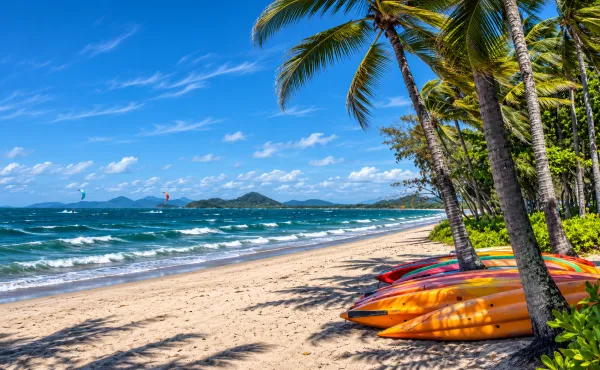
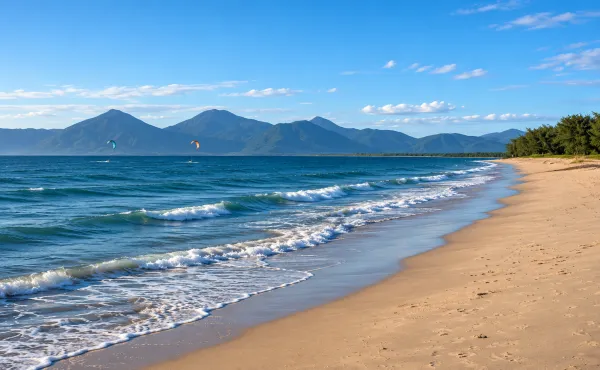
Port Douglas is an established tropical kitesurfing destination in Far North Queensland, Australia, located approximately 65 kilometres north of Cairns along the Coral Sea coastline. The main riding area is Four Mile Beach, an extensive sandy shoreline backed by tropical vegetation and partially sheltered from large ocean swells by the Great Barrier Reef. Kitesurfing activity is concentrated towards the southern end of the beach, where the broad sandy expanse generally provides ample space for preparing equipment, launching and landing. The riding environment combines shallow coastal water, small wind-generated chop and occasional flatter sections around exposed sandbars. Unlike the more demanding ocean beaches of southern Queensland, Port Douglas is primarily a freeride and progression destination, offering relatively manageable conditions for supervised beginners and intermediate riders. Established kiteboarding schools and local operators further contribute to its accessibility, making it one of the more practical locations for learning and developing kitesurfing skills in tropical northern Australia.
The main kitesurfing season generally extends from April or May through October or November, with the most dependable conditions occurring between May and October. During this period, the prevailing southeast trade winds provide relatively consistent side-onshore to onshore airflow along Four Mile Beach. August is typically among the windiest months, coinciding with the cooler and drier part of the Australian winter. Wind speeds frequently range from 12 to 18 knots, although established trade-wind patterns can produce enjoyable sessions between 15 and 25 knots, with occasional stronger days. Medium-to-large freeride kites are particularly useful during moderate conditions, while smaller equipment becomes appropriate during stronger trade-wind pulses. Hydrofoils and light-wind twin-tips can considerably extend the number of rideable days. From December through April, the tropical wet season brings higher humidity, increased rainfall, less predictable winds and a greater risk of thunderstorms and tropical cyclones. Although occasional sessions remain possible, the dry-season trade winds provide considerably more dependable conditions for planning a kitesurfing trip to Port Douglas.
Water conditions at Four Mile Beach are predominantly flat to moderately choppy, with the offshore reef system reducing the influence of large Pacific swells. The seabed consists mainly of sand, with a gradual nearshore slope and shifting sandbars that influence the riding conditions throughout the tidal cycle. During lower tides, shallow sandbars can create relatively smooth sections of water, particularly where their position reduces wind-generated chop. These areas are attractive for practising transitions, controlled freestyle manoeuvres and general board skills, provided sufficient water depth is available. Higher tides generally provide a larger uninterrupted riding area, although the water surface may become more disturbed as the wind strengthens. Kitesurfing is possible throughout much of the tidal cycle, but the most enjoyable conditions depend on the discipline and equipment being used. Conventional twin-tip freeriding is particularly well suited to the spot, while hydrofoiling is possible beyond the shallowest coastal sections. Stronger trade winds can generate small ramps for jumping, although Port Douglas is not a dedicated big-air, wakestyle or wave-riding destination. Its greatest advantage is the relatively forgiving water surface and extensive space available for relaxed cruising and technical progression.
Access to the main kiteboarding area is straightforward, with public beach access and parking available towards the southern end of Four Mile Beach, around the beach park near Barrier Street. The extensive sandy shoreline generally provides comfortable rigging space, although riders must respect designated launching areas, swimming zones and other beach users. Local kiteboarding schools offer professional instruction, and equipment hire or guided sessions may be available depending on the season and operator. The established local kiteboarding community can also provide useful information about tidal conditions, suitable launching positions and current marine safety warnings. Water temperatures remain warm throughout the year, making boardshorts and a rash guard comfortable during much of the dry season, while a shorty wetsuit may be useful during cooler or particularly windy winter sessions. Full-length stinger suits are strongly recommended when marine stinger warnings are in effect, particularly during the warmer months from November through May. Adequate sun protection is essential throughout the year because of the intense tropical ultraviolet exposure, even during overcast conditions.
The principal hazards at Port Douglas include marine stingers, saltwater crocodiles, shallow sandbars, changing tidal depths and sudden weather disturbances. Potentially dangerous jellyfish, including box jellyfish and Irukandji species, are particularly concerning during the warmer wet-season months, although their presence is not strictly limited to this period. Saltwater crocodiles inhabit the surrounding coastal waters and estuaries, and riders should avoid river and creek mouths, respect all crocodile warning signs and follow current local safety advice. Neither the popularity of Four Mile Beach nor its established kiteboarding activity guarantees the absence of dangerous marine wildlife. On stronger trade-wind days, increased chop and gusts can make launching and landing more demanding, while tropical squalls may cause sudden and dangerous changes in wind strength. Riders should also avoid jumping over shallow sandbars and maintain adequate separation from swimmers and other kitesurfers. With its extensive sandy beach, dependable seasonal southeast trade winds and established kiteboarding infrastructure, Port Douglas offers one of the most accessible kitesurfing environments in Far North Queensland. Its greatest appeal lies in relaxed freeriding, supervised learning, light-wind hydrofoiling and consistent technical progression in warm tropical waters during the productive Australian winter season.
Something missing or out of date at this spot? Suggest a correction
This spot does not have a photo gallery yet.
Kited here? Add the first photos (free account, one minute).
Port Douglas is best suited for
Spot profile
- Travel spotA proven kite destination with reliable conditions, worth a trip. Kiters fly in from all over the world for their kite holidays, and you will probably find schools, rentals and a lively kite scene nearby.
- Family spotEasy to visit with family and friends. Facilities are close by and non-kiters have plenty to do while you are on the water, so everyone enjoys the day, whether they kite or not.
- Local spotNot worth a long trip, but a great option if you live nearby and the wind is on. Ideal for a quick session after work or a spare afternoon, without planning a whole trip.
Equipment
A twin-tip is the most practical choice for most sessions in Port Douglas, with a medium-sized kite (typically 9-12m) ideal for the reliable wind in the dry season, and a larger kite on standby for lighter wind days. Those who prefer to ride a freeride or foil board will find that a smaller kite can work well on windier days, and a larger foil kite is a smart choice for the softer 12-15 knot range. During the stinger season, from roughly November to May, a full wetsuit or a stinger suit is recommended for protection, but in the main kiting season (cooler dry months), most riders feel comfortable in a shorty or even lightweight lycra. Booties usually aren't needed, since the sandy bottom is gentle, but a rash vest, helmet, and impact vest can be sensible, particularly for beginners or anyone taking lessons.
Wetsuit suggestion by month
- JanShorts31°
- FebShorts30°
- MarShorts29°
- AprShorts29°
- MayShorts26°
- JunShorts24°
- JulShorty24°
- AugShorty24°
- SepShorts25°
- OctShorts27°
- NovShorts29°
- DecShorts30°
- Shorty Shorty or neoprene top
- Shorts Boardshorts and lycra
Based on the average sea temperature of each month. A guide for an average rider: if you feel the cold, go one step warmer.
Wind Conditions
Main wind directions
Windy days per month
Share of the days with more than 10 knots.
Wind speed range
10 - 14 knots
Wind strength on rideable days
- 7-11 kn93%
- 12-16 kn7%
- 17-22 kn0%
- 23-28 kn0%
- 29+ kn0%
Share of the daytime hours with 7+ knots.
Calculate your kite size
Estimate for a rider of your weight at Port Douglas: kite size = weight / wind speed x 2.2, adjusted for the kite shape and aspect ratio. Board, skills and gusts change the ideal size.
Month by month at Port Douglas
| Metric | Jan | Feb | Mar | Apr | May | Jun | Jul | Aug | Sep | Oct | Nov | Dec |
|---|---|---|---|---|---|---|---|---|---|---|---|---|
| Wind | ||||||||||||
| Rideable daysdays | 6 | 7 | 11 | 16 | 22.5 | 13.5 | 13 | 18.5 | 18 | 11 | 9.5 | 9.5 |
| Usable windhours | 45 | 46 | 81 | 132 | 182 | 102 | 99 | 148 | 148 | 89 | 65 | 66 |
| Average gustsknots | 15 | 16 | 17 | 20 | 22 | 18 | 17 | 20 | 22 | 18 | 17 | 16 |
| Temperature | ||||||||||||
| Air°C | 29 | 28 | 28 | 27 | 25 | 24 | 23 | 24 | 25 | 27 | 28 | 28 |
| Sea°C | 31 | 30 | 29 | 29 | 26 | 24 | 24 | 24 | 25 | 27 | 29 | 30 |
| Weather and sea | ||||||||||||
| Sunshinehours / day | 9.3 | 8.9 | 9.4 | 9.7 | 9.9 | 9.6 | 9.7 | 10.3 | 10.9 | 11.7 | 11.5 | 10 |
| Rainmm | 580 | 380 | 392 | 348 | 129 | 80 | 125 | 86 | 111 | 72 | 126 | 565 |
| Rainy daysdays | 26 | 25 | 22.5 | 21.5 | 16 | 14 | 14 | 14 | 16.5 | 15 | 17 | 21 |
| Wave heightm | 0.5 | 0.6 | 0.6 | 0.8 | 0.9 | 0.8 | 0.8 | 0.8 | 0.8 | 0.6 | 0.6 | 0.6 |
Typical monthly averages over several years, based on weather data: local thermal winds are usually stronger than shown, and sea temperature and waves are a regional estimate. A rideable day has at least 3 hours of 7+ knots between 10:00 and 18:00, usable wind counts those hours, a rainy day has 1 mm or more.
Wind and climate statistics: Weather data by Open-Meteo.com (CC BY 4.0), based on ERA5 data of the Copernicus Climate Change Service. A typical year, not a forecast.
Forecast on Windy.com
Kitesurfing Safety & Local Rules at Port Douglas
The main hazards at Port Douglas, on the tropical coast of Far North Queensland, Australia, are associated with marine wildlife and seasonal environmental conditions. Marine stingers, including box jellyfish and Irukandji, pose a particularly serious risk during the warmer months, generally from November to May, although they may be present throughout the year. Their stings can cause severe pain and potentially life-threatening reactions, making a full-body stinger suit strongly recommended during the marine stinger season. Saltwater crocodiles also inhabit surrounding coastal waters, estuaries and waterways. Although encounters along Four Mile Beach are uncommon, their presence should never be underestimated. Avoid riding near creek mouths, mangroves and estuaries, respect crocodile warning signs and follow current advice from local authorities and kitesurfing operators.
Wind conditions at Port Douglas are generally favorable during the southeasterly trade wind season, but less consistent wind directions can introduce turbulence, unexpected gusts and sudden lulls. Tropical squalls and thunderstorms may also develop rapidly, particularly during the wet season, making continuous weather monitoring essential. Changing tides and shifting sandbanks can significantly alter water depth and the available launching space along Four Mile Beach. Previously rideable sections may become dangerously shallow as the tide retreats, increasing the risk of hard impacts during falls or unsuccessful jumps. Riders should inspect unfamiliar sections of the seabed, assess tidal conditions before launching and avoid riding in insufficient water depth. Intense tropical sunlight, high temperatures and dehydration are additional year-round concerns, particularly during extended sessions.
Four Mile Beach is a popular recreational destination shared with swimmers, tourists, families and pedestrians, especially during the peak holiday season. Kitesurfers should use the established rigging and launching areas towards the southern end of the beach, maintaining generous clearance from designated swimming zones and crowded shoreline sections. Avoid extending kite lines across public access routes or launching near unsuspecting beachgoers. Local kitesurfing schools and operators are valuable sources of information regarding current riding conditions, marine wildlife warnings and established safety practices. Always verify posted regulations and temporary restrictions before setting up equipment. Although Port Douglas generally offers accessible conditions for beginners and intermediate riders, responsible beach-sharing, appropriate protective clothing and awareness of tropical marine hazards remain essential for a safe session.
How to reach Port Douglas
- Closest cityCairns
- How to get therePort Douglas is about a 45-minute drive north of Cairns along the Captain Cook Highway. Most visitors fly into Cairns Airport first, then continue by rental car, transfer, or shuttle up the coast to Port Douglas.
- AccessFour Mile Beach is publicly accessible, and the main launch area is described as the southern end of the beach near the beach park, where parking and public toilets are available. Local schools and rentals operate from the area, which suggests normal beach access rather than a private-entry kitespot. No special access fee is indicated for the beach itself.
No-Wind Days: What to Do Around Port Douglas
Port Douglas, located approximately 65 kilometres north of Cairns along the tropical coast of Far North Queensland, enjoys a rather exceptional geographical position between two UNESCO World Heritage areas: the Great Barrier Reef and the Wet Tropics of Queensland. Few destinations in Australia offer such easy access to both spectacular coral reefs and ancient tropical rainforests. Despite its popularity as an international holiday destination, Port Douglas has retained much of its relaxed seaside village atmosphere, with palm-lined streets, attractive restaurants and beautiful coastal scenery. For families and non-kiting partners, the town provides an excellent base for discovering some of Australia's most extraordinary natural attractions.
Four Mile Beach is undoubtedly one of the town's greatest attractions. Its long crescent of golden sand, bordered by coconut palms and tropical vegetation, provides a beautiful setting for morning walks, jogging, sunbathing and photography. Unlike many developed resort destinations, much of the shoreline remains pleasantly natural, with buildings largely hidden behind the coastal vegetation. At the northern end of the beach, walking paths lead towards Flagstaff Hill, where elevated viewpoints offer spectacular panoramas of the coastline and the Coral Sea. Swimming is possible within designated areas when conditions permit, but visitors must remain aware of marine stingers and crocodile hazards. Always follow lifeguard instructions and local safety warnings, regardless of how inviting the water may appear.
Macrossan Street forms the commercial and social heart of Port Douglas, connecting Four Mile Beach with the town's waterfront. Its restaurants, cafés, boutiques, galleries and tropical gardens make it an enjoyable place to explore at a leisurely pace. Dining options range from casual Australian breakfasts and fresh seafood to sophisticated restaurants featuring regional produce and international cuisine. The nearby Sunday markets at Anzac Park offer an opportunity to discover locally produced crafts, tropical fruit, jewellery and artwork. The historic St Mary's by the Sea chapel, surrounded by palm trees and overlooking the waterfront, is another particularly picturesque landmark worth visiting.
The Great Barrier Reef is an obvious choice for a day away from the beach. Numerous excursions depart from the Crystalbrook Superyacht Marina towards the outer reef and the beautiful Low Isles, a small coral island group surrounded by shallow reef environments. Snorkelling, scuba diving and glass-bottom boat tours allow visitors to discover colourful coral formations, tropical fish, sea turtles and other marine species. The Low Isles are particularly attractive for families looking for a combination of island relaxation and underwater exploration, while outer reef excursions offer access to more extensive coral systems. Sunset sailing trips are another enjoyable alternative for those who simply want to appreciate the tropical coastline from the water.
Just a short drive inland from Port Douglas, Mossman Gorge provides a fascinating introduction to the ancient rainforests of Far North Queensland. Granite boulders, clear mountain streams and dense tropical vegetation create a landscape completely different from the nearby coastline. Walking trails lead through the rainforest, offering opportunities to observe native plants, butterflies and birds. The Mossman Gorge Cultural Centre also introduces visitors to the traditions and cultural heritage of the Eastern Kuku Yalanji people, the Traditional Owners of the area. Guided Dreamtime walks provide an interesting opportunity to understand the rainforest from an Indigenous perspective. Although the river may look inviting, strong currents and rapidly changing water levels can make swimming dangerous.
Farther north, the Daintree Rainforest and Cape Tribulation deserve a full day of exploration. This remarkable region contains some of the world's oldest surviving tropical rainforest ecosystems, with dense vegetation extending almost uninterrupted to the shores of the Coral Sea. After crossing the Daintree River by ferry, visitors can explore rainforest boardwalks, scenic viewpoints, secluded beaches and small tropical fruit farms. River cruises offer opportunities to observe saltwater crocodiles and other wildlife in their natural habitats, while lucky visitors may encounter the elusive southern cassowary. The extraordinary meeting of rainforest and reef makes Cape Tribulation one of the most distinctive landscapes in Australia.
Families interested in Australian wildlife can also visit Wildlife Habitat Port Douglas, where educational experiences introduce visitors to native animals such as koalas, kangaroos, cassowaries and tropical reptiles. For a different kind of outdoor recreation, the surrounding region offers mountain biking, guided fishing excursions, golf courses and scenic drives through sugarcane plantations and rural communities. The coastal road connecting Port Douglas with Cairns is particularly beautiful, winding between rainforest-covered mountains and the Coral Sea. Palm Cove makes an enjoyable stopping point along the way, with its attractive beachfront promenade and relaxed dining atmosphere.
Accommodation in Port Douglas ranges from affordable holiday apartments and small guesthouses to luxury tropical resorts, many featuring swimming pools, landscaped gardens and wellness facilities. The town is particularly suitable for longer stays, with supermarkets, pharmacies, restaurants and essential services readily available. Walking and cycling are practical around the town centre, although a rental car provides considerably more flexibility for exploring Mossman Gorge, the Daintree and the surrounding countryside. The dry season, generally between May and October, is particularly popular with visitors, offering more comfortable temperatures and lower humidity. Accommodation and reef excursions should be booked ahead during busy holiday periods.
Port Douglas is one of those destinations where a day without wind can easily become one of the highlights of the entire holiday. Exploring the Great Barrier Reef, walking through ancient rainforest, discovering Indigenous Australian culture or simply enjoying a long breakfast beneath the tropical palms are all excellent ways to spend time away from the water. For anyone planning a family kitesurfing holiday in Far North Queensland, Port Douglas offers a particularly rewarding combination of natural wonders, comfortable accommodation and activities that will keep non-kiting partners entertained throughout their stay.
Riders of Port Douglas
Who calls Port Douglas home, who is planning a trip and who has ridden it. Add yourself to meet them.
Nobody calls it home yet
Make it my home spotNobody on the way yet
I want to goBe the first to ride it
I have been hereUpcoming at Port Douglas
Sessions, downwinders and meetups planned by the riders of Port Douglas. Going too? Join them.
No session planned yet. Going out soon? Post it: the riders who follow Port Douglas get a notification.
Other kitesurfing spots near Port Douglas
All kitesurfing spots in Australia
Last updated: