
Kitesurfing in Parajuru
Parajuru · Brazil
- Spot type Flat
- Rider level intermediate
- Water Dark - Clear
- Beach Sand
- Crowd Few people
- Tide effect OK high tide
Kitesurfing in Parajuru: Conditions, Wind & Season
Parajuru is an attractive flat-water kitesurfing destination on the eastern coast of Ceará, northeastern Brazil, located in the municipality of Beberibe, approximately 120 kilometres southeast of Fortaleza. Known for its wide sandy beaches and extensive tidal lagoon, Parajuru offers a combination of sheltered water, reliable seasonal trade winds and spacious riding conditions. Unlike the more exposed Atlantic beaches along Ceará's coastline, the lagoon provides a relatively smooth surface that is particularly appealing for freeriding, freestyle and kitesurfing progression. Its open surroundings and generally uncrowded atmosphere make it an interesting alternative to the busier kiteboarding destinations west of Fortaleza.
The main kitesurfing season runs from July through December, when the prevailing easterly trade winds provide frequent opportunities for riding. Winds can arrive from the east, northeast and southeast, with conditions generally becoming more reliable during the second half of the year. The strongest and most consistent periods typically occur between August and November, when the regional trade-wind pattern is well established. Wind strength often increases throughout the morning and remains favourable during the afternoon, providing excellent opportunities for extended sessions. The open coastal landscape generally allows clean airflow across the lagoon, although local wind direction and strength should always be checked before launching.
The tidal lagoon is the defining feature of kitesurfing in Parajuru. Its shallow, relatively flat water creates favourable conditions for practising transitions, improving board control and performing freestyle manoeuvres without dealing with significant ocean swell. The sandy surroundings help maintain a smooth riding surface, particularly in sections protected from wind-generated chop. During stronger winds, small ripples and moderate chop can develop across more exposed areas, but the lagoon generally remains considerably flatter than the open Atlantic. This combination makes Parajuru particularly attractive to riders who prefer controlled freestyle and relaxed freeriding conditions.
Tides play a crucial role in determining the available riding area. As the tide rises, seawater fills the lagoon, increasing its depth and opening a much larger surface for kitesurfing. High tide generally provides the most extensive riding space, allowing riders to explore different sections without being restricted to narrow channels. As the tide falls, exposed sandbanks reduce the usable area, leaving a smaller section of water in the upper lagoon where riding may still be possible. The exact conditions depend on the tidal range and local sandbank formations, making tide tables an essential part of planning a session. Riders should avoid jumping in sections where the water becomes too shallow for safe landings.
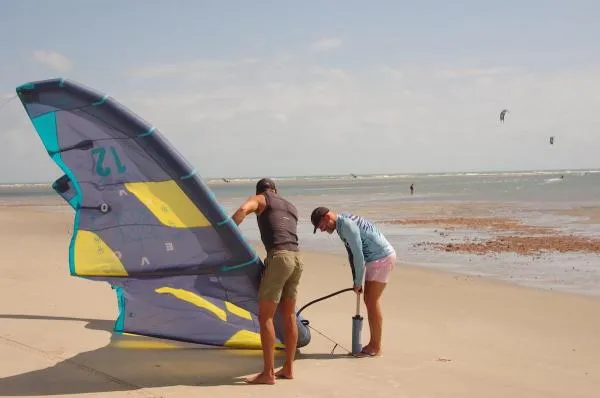
Launching and landing conditions are generally convenient thanks to the broad sandy areas surrounding the lagoon. The open beach provides space for preparing equipment and checking lines, although the available shoreline changes with the tide. Riders should choose launching points with sufficient clearance from vegetation, other kitesurfers and any temporary obstacles. During high tide, some sandy areas may become submerged, requiring a different launching position. Assisted launching and landing are recommended, particularly when the wind is strong. Although Parajuru is known for its relatively straightforward access to the water, conditions should always be assessed locally rather than assuming that every section is free from hazards.
Parajuru offers opportunities for different skill levels when the wind and water depth are appropriate. Beginners can benefit from shallow, sheltered conditions under professional supervision, while intermediate riders will appreciate the space available for improving upwind technique, transitions and controlled jumps. Advanced kitesurfers can enjoy powered freeriding and freestyle sessions, particularly when the lagoon is sufficiently full. The main safety considerations include changing water depths, exposed sandbanks, tidal currents near connecting channels and stronger winds during the peak season. Hydrofoil riders should be especially cautious, as shallow sections can make parts of the lagoon unsuitable for foiling even at higher water levels.
For anyone searching for kitesurfing in Parajuru, flat-water kiteboarding near Beberibe or alternative kitesurfing spots southeast of Fortaleza, this tidal lagoon offers an appealing combination of smooth water, reliable trade winds and generous sandy launching areas. Its greatest attraction is the opportunity to enjoy different flat-water conditions as the tide changes, from a smaller sheltered riding section at low tide to an expansive lagoon when the water rises. With favourable winds from July to December and a relatively relaxed riding environment, Parajuru is a rewarding destination for kitesurfers exploring Ceará's eastern coastline.
Something missing or out of date at this spot? Suggest a correction
Spot Gallery (5)


Parajuru is best suited for
Spot profile
- Travel spotA proven kite destination with reliable conditions, worth a trip. Kiters fly in from all over the world for their kite holidays, and you will probably find schools, rentals and a lively kite scene nearby.
- Family spotEasy to visit with family and friends. Facilities are close by and non-kiters have plenty to do while you are on the water, so everyone enjoys the day, whether they kite or not.
Equipment
Long Lycra, Caps and solar cream
Wind Conditions
Main wind directions
Windy days per month
Share of the days with more than 10 knots.
Wind speed range
10 - 28 knots
Calculate your kite size
Estimate for a rider of your weight at Parajuru: kite size = weight / wind speed x 2.2, adjusted for the kite shape and aspect ratio. Board, skills and gusts change the ideal size.
Forecast on Windy.com
Kitesurfing Safety & Local Rules at Parajuru
The main precaution at Parajuru, on Brazil's Ceará coast, is to respect local fishing activity. Fishermen may operate boats, handle nets or use fishing equipment in and around the lagoon, creating potential hazards for kitesurfers. Maintain a safe distance from fishing operations, watch for lines and other equipment in the water, and avoid obstructing access routes used by the local fishing community.
Tidal changes significantly affect the lagoon's available riding space and water depth. At high tide, the lagoon opens into a larger flat-water area, while low tide restricts riding to a smaller section farther inland. Shallow water and exposed sandbanks can increase the risk of injury during jumps or hard landings, so check the tide schedule and assess the depth before attempting powered manoeuvres.
Although Parajuru is generally free of major natural obstacles, the consistent trade winds can still create demanding conditions, particularly for less experienced riders. Choose an appropriate kite size, maintain sufficient downwind clearance and remain alert to other riders sharing the lagoon. Before launching, check locally for any fishing-related restrictions or areas that should be kept clear.
How to reach Parajuru
- Closest cityParajuru
- How to get thereDrive to Parajuru, from there are a few ways to enter to the beach/lagoon.
- AccessBy walk, park your car on the side and walk the last meter to the beach.
No-Wind Days: What to Do Around Parajuru
Surrounded by golden beaches, coconut palms and the peaceful landscapes of Ceará's eastern coastline, Parajuru is a traditional fishing village in the municipality of Beberibe, northeastern Brazil. Located approximately 120 kilometres southeast of Fortaleza, this quiet destination offers a more authentic and relaxed atmosphere than the region's larger tourist resorts. Its broad sandy coastline, nearby river estuary and welcoming local community make it particularly attractive for couples, families and non-kiting partners seeking tranquillity. Although entertainment options are relatively limited within the village itself, no-wind days provide opportunities to explore natural landscapes, discover traditional Brazilian coastal culture and visit some of Ceará's most beautiful beaches.
Parajuru's main attraction is its extensive sandy beach, where visitors can enjoy long walks, photography and peaceful afternoons overlooking the Atlantic Ocean. Traditional fishing boats, known locally as *jangadas*, are a familiar sight along the shoreline, reflecting the village's strong connection with the sea. The surrounding coconut groves and sandy landscapes create a picturesque setting, particularly during sunrise and late afternoon. Swimming conditions vary with tides, waves and currents, especially near the river mouth, so visitors should check local conditions before entering the water. The quieter stretches of beach are ideal for travellers who appreciate uncrowded coastal scenery.
The Pirangi River estuary is another interesting natural feature of the Parajuru area. Its tidal waterways, sandbanks and surrounding vegetation provide opportunities for nature photography, birdwatching and exploring the coastal environment. Depending on local conditions and operator availability, guided boat excursions or small-scale fishing trips may be arranged through local residents. These experiences offer a glimpse into the traditional livelihoods that have shaped the community for generations. Visitors should avoid navigating unfamiliar tidal channels independently, as currents and water depths can change considerably throughout the day.
For travellers interested in exploring farther afield, the famous beaches of Morro Branco and Praia das Fontes are among the most rewarding excursions in the Beberibe region. Morro Branco is particularly known for its colourful cliffs and the Labirinto das Falésias, a striking landscape of naturally eroded sandstone formations displaying shades of red, orange and yellow. Guided walks through authorised sections offer excellent opportunities for photography and learning about the area's geology. Nearby Praia das Fontes features additional cliffs, freshwater springs and beautiful coastal scenery. Visitors should respect local access restrictions and avoid unstable cliff edges, particularly after heavy rainfall.
The wider Beberibe coastline offers opportunities for guided buggy excursions through dunes, beaches and scenic viewpoints. Some itineraries include stops at freshwater lagoons or quieter coastal communities, depending on the route and seasonal conditions. These excursions provide an enjoyable alternative for visitors who want to discover more of Ceará's natural landscapes without spending the entire day at the beach. The town of Beberibe also offers markets, shops and restaurants, providing additional opportunities to experience everyday Brazilian life. For a livelier atmosphere, Canoa Quebrada, near Aracati, is another attractive destination, known for its dramatic reddish cliffs, restaurants and evening entertainment.
Food in Parajuru reflects its traditional fishing heritage, with small restaurants and local establishments serving fresh fish, shrimp and regional northeastern Brazilian dishes. Grilled seafood, rice, beans, cassava and tropical fruit juices are common choices, often enjoyed in informal beachfront settings. Dining options are relatively modest compared with larger tourist destinations, although some pousadas and guesthouses offer meals for their visitors. Nightlife is generally quiet, with evenings centred around relaxed dinners, small local bars and occasional community gatherings. Travellers seeking a wider selection of restaurants, live music or nightlife can explore Beberibe, Aracati or Canoa Quebrada.
Accommodation in Parajuru consists mainly of family-run pousadas, small guesthouses, boutique lodgings and private holiday rentals. Some properties offer swimming pools, tropical gardens and comfortable outdoor relaxation areas, while simpler establishments provide affordable options close to the beach. The village is particularly suitable for visitors who prefer peaceful surroundings and smaller accommodation rather than large resorts. Availability can be limited during popular holiday periods, so booking ahead is advisable. Travellers who require extensive shopping, entertainment or specialised services may prefer to plan occasional trips to Beberibe or larger nearby towns.
Parajuru is most conveniently reached by road from Fortaleza, which has the nearest major international airport. The journey generally takes around two to two and a half hours, depending on traffic and road conditions. A rental car is useful for exploring nearby beaches, visiting Morro Branco and Praia das Fontes, and reaching attractions outside the village. Private transfers may also be arranged, while public transport generally requires more planning. Within Parajuru itself, many local establishments and beach areas are accessible on foot, although services and shops are relatively limited. Visitors should bring essential supplies and confirm transportation arrangements in advance when planning longer excursions.
For travellers seeking a quiet Brazilian coastal escape with access to beautiful natural landscapes, Parajuru offers an appealing combination of tranquillity, traditional culture and outdoor exploration. During no-wind days, visitors can discover the Pirangi River estuary, walk along uncrowded beaches, explore the colourful cliffs of Morro Branco or enjoy fresh seafood in a traditional fishing village. Its relaxed atmosphere, intimate accommodation and proximity to the attractions of Beberibe make Parajuru particularly suitable for couples, families and non-kiting partners looking to experience the quieter side of Ceará's coastline.
Local Kitesurfing Schools
Following you can find links to the page of the kitesurfing schools which operate on this spot. From there you can contact them through our form or directly via email or phone (if it was provided by them on the page).
Other kitesurfing spots near Parajuru


All kitesurfing spots in Brazil
Last updated: