
Kitesurfing in Gili Air
Mataram · Indonesia
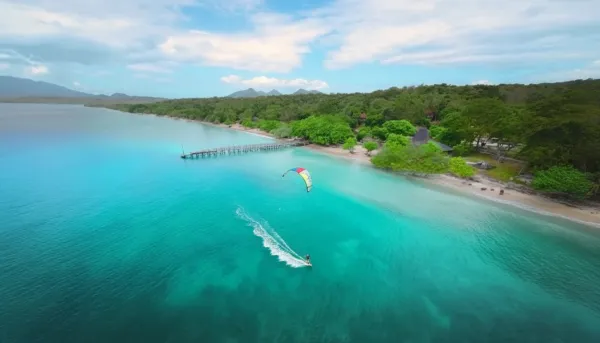
- Spot type Flat
- Rider level beginner
- Water Crystal Clear
- Beach Sand
- Crowd Seasonal crowd
- Tide effect Conditions vary
Kitesurfing in Gili Air: Conditions, Wind & Season
In Gili Air is one of those spots where the wind, water and island rhythm make riding easy to plan and enjoyable to execute. The kite beach on the west side faces the Lombok Strait and catches the thermal that builds reliably in the dry season. Winds usually start to firm up in the late morning but the best, cleanest breeze arrives in the afternoon as the land heats and the trade-wind pattern consolidates. The main season runs May through September, with July, August and September typically delivering the most steady sessions. Expect usable winds in the main season around 15 to 25 knots on most days with averages often reported in the high teens; peak days push beyond that and call for smaller kites. The dominant wind directions are from the South, South-Southwest and Southwest for the dry-season trade wind, and you can also get Northwest angles during the northwest monsoon window, which means the west-facing beach will give side-onshore to slightly cross-shore conditions depending on the day and launch point. For learners and cruisers that mix a few runs with beach time, those angles are forgiving and allow straightforward upwind work and transitions without being committed to heavy ocean swell.
The water state is one of the real selling points for me: generally shallow, sheltered and smooth with light chop rather than big open-ocean waves. That makes Gili Air a comfortable training ground for early board control, transitions and foil practice. The bottom is largely sandy but with reef influence out beyond the close-in sand, so your riding area and depth change with the tide. I always check the reef line before heading out — at low tide some coral heads edge closer to the surface and you want to avoid those. The typical set-up I use here is a freeride board or a light-wind twin-tip for the mid-range winds and a foil for lighter days. On strong season afternoons I switch to a smaller kite and harden up on the board choice to handle gusts. The sand launch area is normally wide enough to set up safely, but the island is small and popular so you do need to be mindful of swimmers, snorkel boats and local beach traffic near the boat landings.
Logistics are simple enough: fly into Lombok, drive to the north-coast harbor and take a fast boat over, or combine a Bali fast-boat crossing with local land transport if you’re coming from Bali. The island has no airport and no cars, so getting around is on foot, by bicycle or on a cidomo (horse cart). That lack of motor vehicles keeps the beachfront mellow and makes ferrying gear around easier than a busy mainland spot with traffic. Accommodation ranges from basic bungalows to boutique places along the shoreline; many operators and guesthouses will help with kit storage and local transfer timing so you can coordinate launch windows without wasting a day waiting for boats.
A few practical points from the seat-of-the-pants experience: always plan your main session for the afternoon when the thermal builds, check the tide charts and local reef channels, and ask a local instructor or rental shop where the deepest sand channel is on that day. Bring a small toolkit and spare valves if you can — rental kit is generally good but repair shops are limited and you don’t want a valve issue to end your trip early. Wear a shorty or thin spring suit on cooler mornings but you’ll mostly be in shorts and a rash vest; reef booties are optional but useful if you intend to edge close to coral or shallow spots. For safety, consider a helmet and impact vest around the reef fringes, use a quick-release leash, and avoid launching or landing near the main boat access points. Gili Air is a mellow island playground where sessions are often smooth and forgiving but a little local knowledge — tide, reef, launch zone — goes a long way to making your time on the water safe and relaxed.
Something missing or out of date at this spot? Suggest a correction
Gili Air is best suited for
Spot profile
Travel spot
The typical kite travel destination, it is known for its great conditions, and kiters from around the world come here for their vacations.
Family spot
Located in an area that offers amenities for all the family and can provide good alternatives for everyone when the kiters are in the water.
Equipment
Bring a medium kite quiver and a plan for the seasonal range: on most days a medium-size freeride kite in the 8–12m range will cover you, but be ready to step down to smaller sizes on the stronger July–September afternoons and carry a larger foil kite or a 12–15m if you’re light and the wind hangs around the low teens. A freeride or light-wind twin-tip handles the typical chop well and a hydrofoil is a very smart addition for lower-wind sessions and for upwind efficiency. For protection a shorty or thin spring suit is usually enough in these warm waters; booties are optional but recommended if you plan to ride near reefy shallow pockets. Use a helmet and impact vest if you are not fully confident around coral or in crowded launch zones. Bring a repair kit, spare pump and basic kite toolset because repair services can be limited on a small island.
Wind Conditions
Main wind directions at Gili Air
Windy days per month in Gili Air
Wind Speed Range
From 10 to 19 Knots
Suggested sizes
8 - 9 mt
10 - 11 mt
12 - 13 mt
14 mt and above
Forecast on Windy.com
Kitesurfing Safety & Local Rules at Gili Air
The key risks at Gili Air are straightforward but worth taking seriously every time you rig. Reef and shallow sections sit outside the sandy launch zones and can become hazards at low tide; coral heads can be hard and sharp, so a fall in the wrong spot is painful and can puncture boards. I always mark the deepest channel visually from shore or ask a local rider where the sand runs that day. Boat traffic is the other constant: snorkel and charter boats, slower public boats and the occasional fast transfer use the same shoreline corridors, so keep your ride area well clear of the landing points and be conservative when approaching the beach. Swimmers and snorkelers are common near the shore and coral gardens, especially on non-windy days, so maintain a respectful distance and avoid dropping kite lines over crowded areas.
Launch and landing mistakes are the most frequent cause of incidents here. The beach can look calm from a distance but cross-shore gusts combined with a shallow reef edge can put you in trouble if you launch into an exposed patch. Use a helper for launch where possible and don’t attempt to launch or land within the boat access zones. Tidal variation changes the available water fast; plan sessions around higher water if you need deeper channels to ride out to the main sand area. Emergency response is available through local centers and resorts but it is not the same as a busy mainland resort with professional rescue craft on standby. Carry a small communication plan — tell someone ashore when you go out, keep a charged phone or VHF in a dry pouch, and consider riding with a buddy or within sight of a kite school.
Respect local practice: avoid dragging boards over coral, don’t anchor in reefs, and follow simple launch protocols to prevent tangles with other riders. Finally, be mindful of changing weather. The thermal can build quickly and gust, and while the spot is generally predictable in season, a sudden shift in wind angle plus a crowded launch zone is a recipe for entanglement. Conservative gear choices and common-sense separation from swimmers, boats and reef will keep your sessions enjoyable and low risk.
Location
Closest City
Mataram
How to get There
Most visitors fly into Lombok International Airport and then continue by road to the north coast before taking a public boat or fast boat to Gili Air. From the airport, the drive to the harbor area is the main land transfer, and from there Gili Air is reached by boat because the island has no airport and no cars. Travelers coming from Bali usually combine a fast boat crossing with local land transport on arrival. Once on Gili Air, moving around is typically on foot, bicycle, or horse cart, which fits the island’s small size and relaxed pace.
Access
Gili Air is publicly accessible, but access to the island itself requires a boat transfer because it is offshore from Lombok and does not have road access from the mainland. Once on the island, the kite beach is reached from the public shoreline, with no special permit mentioned for normal recreational use. Depending on arrival point and boat schedules, visitors may need to organize a transfer from Lombok or Bali and then walk or cycle to the riding area.
No-Wind Days: What to Do Around Gili Air
Gili Air is a proper island rhythm experience and that matters when you plan a kite trip that isn’t just about consecutive big sessions. The island has a wide mix of non-wind activities that fill downtimes between the thermal build and the evening; snorkeling and diving operators run daily trips to nearby coral gardens and turtle cleaning stations, and many riders I know combine a morning snorkel with an afternoon kite session once the wind comes up. There are several dive shops with PADI courses and guided dives — good for bringing non-kiting friends or family who want something reliable to do on lighter days. The beaches themselves host a string of casual restaurants, smoothie shops and small beach bars that cater to kite crews: basic meals, fresh seafood, western breakfasts and strong coffee make it easy to manage food without long transfers. For longer stays choose accommodation close to the west shore to minimize gear carrying and maximize time on the water; many guesthouses will store gear or help with simple drying arrangements.
Transport on the island is deliberately simple: you’ll mostly walk, ride a rented bicycle or take a cidomo horse cart for heavier gear. There are no cars and no scooters by default on some parts of the island, which keeps the beach lanes calm and makes carrying boards and kites less hazardous than in a place with local motor traffic. Practical travel notes: fast boats and public boats operate from Lombok’s north harbors and from Bali; in high season pre-book your crossing and check luggage restrictions because boats can be busy and transfers leave on fixed schedules. The most reliable way to deal with gear is to coordinate with a kite school or guesthouse that offers a transfer package — they often meet you at the harbor and help with the final short boat transfer so your kit arrives intact.
On the services side, Gili Air has a compact but capable set of kite shops, instructors and occasional repair options. If you bring your own gear, carry spares for common failures — a valve, a pump and a basic repair kit — because while rental gear is plentiful, professional repairs and parts supply are limited on small islands. Cash is still king in many local businesses; bring Indonesian rupiah or plan to withdraw at the larger harbors or in Mataram where ATMs are more reliable. Power sockets are available in most accommodations but expect occasional outages; a small power bank for phones and cameras is helpful.
Family travelers will find Gili Air easier to manage than larger tourist hubs. Shallow water close to shore makes paddling and supervised swimming straightforward, and the island’s walkable scale is convenient for kids. Keep an eye on reef pockets and always supervise close-to-shore water play. Health and comfort notes: use reef-safe sunscreen to protect coral, pack mosquito repellent for evenings, and drink bottled or treated water when locals recommend it. Basic medical services are present but for more serious issues Lombok has larger clinics and hospitals — plan accordingly.
For social life, the island is quiet compared with its more bustling neighbor Gili Trawangan; evenings bring small live-music venues, sunset bars and relaxed dining rather than late-night clubbing. That suits many kite travellers who appreciate early starts and controlled evenings. Small shops cover basics and there are a few places to get a massage or yoga class if recovery after sessions is part of your routine. A popular local move is to hop over to Gili Meno or Gili Trawangan for a day trip to change scenery and check different snorkeling or dining choices.
Environmental respect goes beyond words here: avoid stepping on coral, do not anchor boats on reefs, and follow local guidelines for trash and recycling. Reef conservation is real around the Gilis and kiters who ride with care contribute to keeping those shallow gardens healthy for snorkeling and for the islanders who rely on them. Bottom line: Gili Air is an island that suits riders who want predictable thermal afternoons, shallow-water comfort, and an island life rhythm that makes kite sessions part of a broader holiday rather than the entire event. Plan around the wind window, protect your gear, keep clear of reef and boats, and the island will reward you with many straightforward sessions and good social downtime between rides.
Other kitesurfing spots near Gili Air

All kitesurfing spots in Indonesia
Last updated: