
Kitesurfing in Oreti Beach
Invercargill · New Zealand
- Spot type Wave
- Rider level intermediate
- Water Dark - Clear
- Beach Sand
- Crowd Few people
- Tide effect Conditions vary
Kitesurfing in Oreti Beach: Conditions, Wind & Season
Oreti Beach is an exposed ocean kitesurfing destination on the southern coast of New Zealand's South Island, near Invercargill in the Southland region. Stretching along the western side of Foveaux Strait, this extensive sandy beach offers consistent ocean swell, wide launching areas and challenging wind-driven conditions. Unlike sheltered lakes or flat-water lagoons, Oreti is primarily a wave-riding and open-water freeride location, where breaking surf, changing sandbanks and powerful coastal winds shape every session. Its broad shoreline and relatively uncrowded setting make it attractive to experienced kitesurfers seeking demanding ocean conditions without the restricted launching space found at many other South Island beaches.
The prevailing winds frequently include westerly and southwesterly components, while southeasterly winds can sometimes produce cleaner wave conditions when paired with swell arriving from the west or southwest. However, offshore or cross-offshore wind directions require particular caution because they can make returning to the beach difficult and increase the risk of drifting into open water. Spring and summer generally offer more comfortable opportunities for kitesurfing, although strong wind events can occur throughout the year as weather systems move across Southland. Wind speeds can exceed 20 knots during stronger conditions, often accompanied by significant gusts and rapid changes in direction. Riders should assess the actual wind angle at the launch and favour safe cross-shore or cross-onshore conditions rather than relying solely on the quality of the waves.
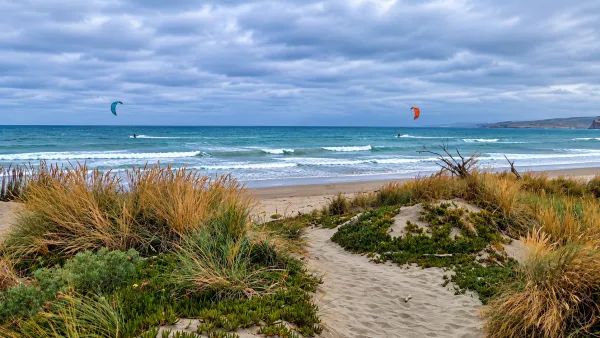
Water conditions at Oreti Beach are dominated by breaking ocean swell, with beach-break waves forming over shifting sandbanks along the exposed coastline. Depending on swell direction and tide, riders can encounter both left- and right-breaking waves, creating opportunities for directional wave riding, carving turns and occasional down-the-line sections. Stronger winds generate additional chop between the waves, making freeriding and jumping more physically demanding. The spot does not offer sheltered flat-water areas, and even moderate swell can produce challenging shorebreak near the waterline. Oreti is therefore better suited to wave riding and powered ocean freeriding than technical flat-water freestyle or beginner progression.
The extensive sandy shoreline provides generous space for preparing equipment, launching and landing when conditions are suitable. However, tidal movements significantly influence the position of breaking waves, the width of the exposed beach and the shape of nearshore sandbanks. Mid-tide can sometimes offer a useful balance between available launching space and wave quality, although suitable conditions may occur at other stages depending on swell and wind. At higher tides, waves can break closer to the beach, while lower tides may expose additional sandbanks and create more complicated shorebreak patterns. Riders should inspect the surf before launching and select an entry point away from strong rip currents or particularly powerful breaking sections.
Access to Oreti Beach is straightforward from Invercargill, with public parking and beach access available near the end of Dunns Road. The broad sandy frontage generally allows equipment to be carried directly to a suitable rigging area without negotiating rocks or narrow access paths. The beach is rarely crowded with kitesurfers, although surfers, windsurfers and other recreational users may be present, particularly during warmer periods. Riders should maintain adequate clearance from vehicles, pedestrians and other water users, especially when launching or landing in stronger winds. The open coastline offers little protection from sudden weather changes, making it important to identify safe landing areas before entering the water.
Oreti Beach is best suited to intermediate and advanced kitesurfers comfortable with breaking waves, gusty winds and exposed ocean conditions. Confident intermediate riders may enjoy freeriding during smaller swell and moderate cross-shore or cross-onshore winds, while advanced kiters can take advantage of stronger conditions for directional wave riding, jumping and powered cruising. Beginners should seek more sheltered locations with predictable water conditions and supervised instruction. A directional surfboard paired with a responsive wave kite is the preferred setup for dedicated wave sessions, while a freeride twin-tip is suitable for jumping and general ocean riding. Kite sizes around 7–12 m² may cover a range of moderate winds, with smaller sizes necessary during stronger conditions. A 5/4 mm wetsuit is recommended for much of the year, with neoprene boots, gloves and a hood providing additional protection during colder sessions.
The main hazards include powerful shorebreak, rip currents, shifting sandbanks, strong gusts and rapidly changing weather conditions. Larger swell can create difficult entry and exit conditions, while wind-driven chop may reduce control and visibility between breaking waves. Offshore and cross-offshore winds are particularly dangerous because equipment failure or loss of board control can result in rapid drift away from shore. Cold water further increases the consequences of prolonged immersion or unsuccessful self-rescue. Riders should monitor weather developments, avoid launching during unstable frontal conditions and maintain sufficient distance from other beach users. Selecting a safe wind direction and appropriate tidal window is essential for reducing risk.
Oreti Beach offers a distinctive combination of wide sandy launching areas, consistent ocean swell and powerful coastal winds along New Zealand's Southland coastline. Its exposed setting creates rewarding opportunities for wave riding, jumping and energetic freeriding, while the extensive beach provides flexibility when selecting a suitable launching position. Although changing weather, cold water and demanding surf conditions require experience and preparation, Oreti remains an appealing destination for capable kitesurfers seeking challenging ocean sessions close to Invercargill.
Something missing or out of date at this spot? Suggest a correction
Oreti Beach is best suited for
Spot profile
Travel spot
The typical kite travel destination, it is known for its great conditions, and kiters from around the world come here for their vacations.
Family spot
Located in an area that offers amenities for all the family and can provide good alternatives for everyone when the kiters are in the water.
Local spot
Maybe not be worth a real journey to reach this spot, but great if you live close by and it is a windy day. In the end, being out on the water feels great anywhere
Equipment
Kite sizes for Oreti Beach typically range from medium to small, with 7 to 11m kites often working best when the wind is strong, though larger sizes might be needed occasionally in lighter offshore conditions. Due to Southland's cold climate, a 5/4 or 4/3mm full wetsuit is advised from autumn through spring, and even summer often warrants a 3/2 full suit rather than a shorty. Waterproof boots are smart for colder water and for walking off the sand, especially through the transition months when the windchill bites. A surfboard or twintip is useful depending on whether you plan to ride waves or cruise, and a harness with an impact vest provides a comfort and safety boost in unpredictable surf.
Wind Conditions
Main wind directions at Oreti Beach
Windy days per month in Oreti Beach
Wind Speed Range
From 8 to 25 Knots
Suggested sizes
Forecast on Windy.com
Kitesurfing Safety & Local Rules at Oreti Beach
The main hazards at Oreti Beach, near Invercargill in New Zealand's Southland region, are strong, gusty winds and rapidly changing weather conditions. Passing frontal systems can produce sudden increases in wind strength, sometimes exceeding 25 knots, leaving riders overpowered or struggling to maintain control during launching and landing. Offshore and cross-offshore winds present additional risks, particularly when equipment failure or a dropped kite makes returning to shore difficult. Monitor weather forecasts closely, choose appropriate kite sizes and avoid launching when squalls or unstable wind conditions are approaching.
Oreti Beach is an exposed ocean break where powerful waves, shifting sandbanks and strong rip currents can create challenging riding conditions. Lateral currents may carry riders along the coastline, while outgoing tides and larger swells can make water starts, kite relaunching and self-rescue more difficult. Changing sandbars also affect wave behaviour, producing unexpected breaking sections and uneven conditions near shore. Shark sightings are occasionally reported along the wider Southland coastline, although encounters are uncommon. Maintain awareness of currents and surf conditions, identify safe exit points and avoid riding beyond your ability to manage heavy waves.
The beach is shared with swimmers, walkers and other recreational users, particularly near access points during summer and holiday periods. Although the wide sandy shoreline generally provides ample launching space, shifting tides, soft sand and sudden gusts can complicate kite handling. Keep rigging areas clear of pedestrians, maintain generous downwind clearance and inspect the beach for obstacles before launching. Riders should be comfortable with self-rescue procedures and remain alert to approaching weather fronts, as conditions can deteriorate rapidly. Conservative decisions and careful assessment of wind, waves and beach activity are essential for a safe session.
Location
Closest City
Invercargill
How to get There
Drive from Invercargill by taking Clyde Street/State Highway 1 south, turning right onto Tweed Street, then continuing on Stead Street and Dunns Road to the end where the car park gives public access. Flying into Invercargill Airport is also simple, with a short drive to Oreti Beach from there.
Access
Publicly accessible beach with direct car access at the end of Dunns Road near the Oreti Beach car park. No special permissions or private access required, and the wide sand makes for easy walk-on entry to the launch.
No-Wind Days: What to Do Around Oreti Beach
Stretching along the southern coast of New Zealand's South Island, Oreti Beach offers an impressive combination of wild coastal scenery and convenient access to Invercargill, Southland's largest city. Its vast sandy shoreline, open views across Foveaux Strait and relaxed atmosphere make it an attractive destination for nature lovers, photographers and families exploring the far south. Unlike more isolated coastal locations, Oreti Beach is only a short drive from urban amenities, allowing visitors to combine outdoor adventures with comfortable accommodation, restaurants and cultural attractions. During no-wind days, the surrounding region provides opportunities for beach walks, wildlife watching, scenic drives and discovering Southland's distinctive heritage.
Oreti Beach itself is one of the area's greatest attractions, extending for approximately 26 kilometres along the exposed coastline. Its broad, firm sand creates a spectacular setting for walking, jogging, photography and enjoying the open landscape. The beach is particularly beautiful during sunset, when changing light reflects across the wet sand and the distant horizon. Beachcombing and birdwatching are enjoyable activities, while the surrounding dunes provide an important natural habitat. Visitors should respect protected areas and avoid damaging coastal vegetation. Swimming requires caution because of cold water, strong currents and changing surf conditions, and visitors should follow local safety advice before entering the sea.
Invercargill, approximately 15 minutes away by car, offers a wide range of attractions for visitors spending time in the region. Queens Park is one of the city's highlights, featuring extensive gardens, walking paths, playgrounds and recreational areas. The city's heritage buildings and broad streets reflect its distinctive southern character, while local cafés, restaurants and shops provide comfortable alternatives during colder or rainy days. Invercargill also has a strong connection to New Zealand's transport and engineering history, with attractions such as Transport World showcasing impressive collections of vehicles and machinery.
For visitors interested in history and culture, Invercargill offers opportunities to discover Southland's heritage through galleries, exhibitions and historic landmarks. The city is associated with legendary motorcycle racer Burt Munro, whose achievements helped establish Invercargill's reputation among motorsport enthusiasts. Visitors can explore attractions connected to this history, as well as enjoy the city's contemporary dining scene and independent shops. Southland's relaxed atmosphere and welcoming character make Invercargill an enjoyable place to spend a day away from the beach, particularly when the weather is unsuitable for outdoor activities.
The wider Southland coastline offers excellent opportunities for scenic excursions and wildlife watching. Bluff, located approximately 25–30 minutes south of Invercargill, is famous for its maritime heritage, seafood and dramatic coastal views. Stirling Point marks the southern end of State Highway 1 and provides access to walking tracks overlooking Foveaux Strait. The Bluff Hill / Motupōhue area offers panoramic viewpoints across the coastline and surrounding islands. Visitors may also encounter seabirds and other coastal wildlife, although sightings depend on the season and local conditions. The combination of rugged scenery and maritime history makes Bluff a rewarding half-day excursion.
For a longer adventure, Stewart Island / Rakiura offers one of New Zealand's most remarkable wilderness experiences. Accessible by ferry from Bluff or by air from Invercargill, the island is known for its native forests, secluded beaches and exceptional birdlife. Visitors can enjoy guided nature walks, boat excursions and opportunities to observe native species, including kiwi, in suitable habitats. Rakiura National Park covers much of the island and provides walking routes through beautiful coastal and forest landscapes. An overnight stay is recommended for travellers wanting to explore beyond the main settlement of Oban, although day trips are also possible depending on transport schedules.
The surrounding countryside offers additional opportunities for exploring Southland's natural landscapes. Riverton, a historic coastal town west of Invercargill, is known for its attractive beaches, heritage attractions and relaxed waterfront atmosphere. Farther west, the Southern Scenic Route continues towards Te Waewae Bay and Fiordland, passing through farmland, small settlements and spectacular coastal scenery. Nature enthusiasts can also explore wetlands and reserves around Invercargill, where walking tracks and observation areas provide opportunities to discover native vegetation and birdlife. These excursions are particularly appealing for non-kiting partners seeking a variety of outdoor activities.
Accommodation and dining options are plentiful in Invercargill, with hotels, motels, holiday parks, guesthouses and self-catering apartments catering to different budgets. The city offers supermarkets, restaurants, cafés and essential services, making it a convenient base for longer stays. Oreti Beach is generally reached by car in around 15 minutes from central Invercargill, although travel times depend on the chosen access point. Parking and public facilities are available at established beach access areas, but visitors should check current local regulations, particularly regarding vehicle access and driving on the sand. Invercargill Airport provides domestic flight connections, while a rental car is recommended for exploring the wider Southland region.
With its enormous sandy shoreline, beautiful coastal scenery and convenient proximity to Invercargill, Oreti Beach offers plenty to enjoy beyond kitesurfing. Whether walking along the Tasman-facing coast, exploring Invercargill's gardens and heritage attractions, visiting Bluff or discovering the wildlife of Stewart Island, visitors will find a rewarding combination of nature and regional culture. Its accessible location and relaxed atmosphere make Oreti Beach an excellent choice for families, independent travellers and non-kiting partners looking to experience the distinctive landscapes and hospitality of New Zealand's far south.
Other kitesurfing spots near Oreti Beach
All kitesurfing spots in New Zealand
Last updated: