
Kitesurfing in Langebaan
Cape Town · South Africa
- Spot type Flat
- Rider level beginner
- Water Dark - Clear
- Beach Sand
- Crowd Seasonal crowd
- Tide effect Conditions vary
Kitesurfing in Langebaan: Conditions, Wind & Season
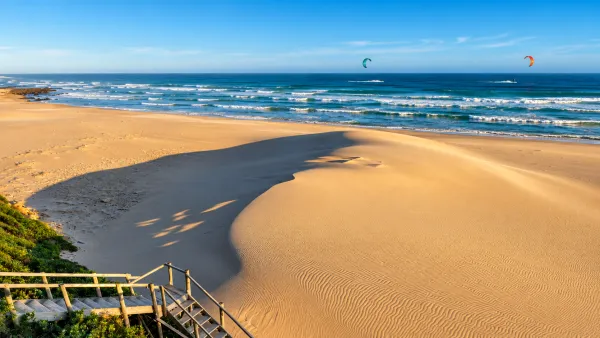
Langebaan is one of South Africa's most popular flat-water kitesurfing destinations, located on the Atlantic west coast approximately 120 kilometres north of Cape Town, alongside the spectacular Langebaan Lagoon and West Coast National Park. Renowned for its reliable summer winds, extensive shallow-water areas and accessible sandy beaches, Langebaan offers excellent conditions for freeriding, freestyle and skill progression. The lagoon is naturally protected from ocean swell, creating predominantly flat to moderately choppy water that appeals to beginners under supervision and experienced riders alike. The two best-known riding areas are Main Beach, close to Langebaan town, and Shark Bay, farther south along the lagoon, each offering slightly different conditions and launching characteristics.
The main kitesurfing season runs from October to March, with December and January generally delivering the strongest and most consistent winds. The prevailing south to southeasterly winds are associated with the South African summer weather pattern and frequently strengthen during the afternoon, producing excellent conditions for powered freeriding and freestyle. Wind speeds commonly range from 15 to 25 knots during favourable periods, occasionally exceeding 30 knots on particularly strong days. Wind direction and launching angles vary between Main Beach and Shark Bay, so riders should assess local conditions rather than assume the same wind orientation throughout the lagoon. Main Beach can become noticeably choppy when the wind strengthens, while Shark Bay often provides smoother, shallower water suitable for progression and controlled freestyle manoeuvres. Although summer offers the highest probability of rideable wind, conditions remain weather-dependent and lighter days are possible.
Water conditions are shaped by the lagoon's sheltered geography and changing tides. Main Beach provides extensive open-water space for freeriding, jumping and longer runs, with moderate chop developing during stronger winds. Shark Bay is particularly attractive for its shallow, relatively flat water, making it popular for practising water starts, transitions, upwind riding and technical freestyle. However, shallow sections can become unsuitable for jumping or high-speed riding, especially when the tide falls and sandbanks emerge. Tidal movements also influence water depth, launching space and currents in different parts of the lagoon. A freeride or freestyle twin-tip is the most versatile equipment choice, while hydrofoiling is possible in deeper sections but requires careful navigation around shallow sandbanks. The lagoon does not offer significant wave-riding conditions, making Langebaan primarily a flat-water destination.
Launching and landing are generally straightforward from the sandy beaches, with established kite schools, equipment rental facilities and accessible parking near the main riding areas. However, Langebaan becomes particularly busy during the summer holidays, when beginners, instructors, freeriders and freestyle enthusiasts share the water. Riders should respect designated launching areas, maintain adequate separation from other kiters and observe any local restrictions associated with the nearby protected lagoon environment. Beginners are best suited to supervised lessons in appropriate conditions, while intermediate and advanced riders can enjoy powered freeriding, jumping and freestyle during stronger winds. Kite sizes around 7–12 m² cover many moderate to strong summer sessions, with smaller kites sometimes necessary during powerful southeasterly wind events. Atlantic-influenced water temperatures remain relatively cool, so a 3/2 mm wetsuit is generally recommended during summer, while a 4/3 mm suit may provide additional comfort on colder days.
The main hazards include strong afternoon gusts, shallow sandbanks, changing tidal depth and congestion around popular launching areas. Although the lagoon is protected from ocean swell, stronger winds can generate challenging chop, particularly at Main Beach, while shallow sections around Shark Bay require caution during jumps and powered manoeuvres. Riders should also be aware of changing currents, other water users and the boundaries of permitted kitesurfing areas within the lagoon. With its reliable summer winds, extensive riding space and combination of sheltered flat water and established kite infrastructure, Langebaan remains one of the best destinations for kitesurfing near Cape Town. Its versatility makes it particularly appealing for progression, freestyle and freeriding, offering a more accessible alternative to the powerful ocean-wave conditions found along South Africa's exposed Atlantic coastline.
Something missing or out of date at this spot? Suggest a correction
Langebaan is best suited for
Spot profile
- Travel spotA proven kite destination with reliable conditions, worth a trip. Kiters fly in from all over the world for their kite holidays, and you will probably find schools, rentals and a lively kite scene nearby.
- Family spotEasy to visit with family and friends. Facilities are close by and non-kiters have plenty to do while you are on the water, so everyone enjoys the day, whether they kite or not.
- Local spotNot worth a long trip, but a great option if you live nearby and the wind is on. Ideal for a quick session after work or a spare afternoon, without planning a whole trip.
Equipment
Most riders at Langebaan use a twin-tip board due to the flat-water lagoon, with 9 to 12 m standard kites covering most wind days in season and smaller sizes for strong days. A 3/2 mm wetsuit is generally the norm to combat cooler water, while some switch to shorty or spring suits during hotter summer months. Booties are not essential because the launch is sandy, but thin neoprene shoes can be helpful if you prefer extra comfort, especially for long sessions or walking in shallow areas.
Wind Conditions
Main wind directions
Windy days per month
Share of the days with more than 10 knots.
Wind speed range
11 - 26 knots
Wind strength on rideable days
- 7-11 kn45%
- 12-16 kn33%
- 17-22 kn18%
- 23-28 kn4%
- 29+ kn0%
Share of the daytime hours with 7+ knots.
Calculate your kite size
Estimate for a rider of your weight at Langebaan: kite size = weight / wind speed x 2.2, adjusted for the kite shape and aspect ratio. Board, skills and gusts change the ideal size.
Month by month at Langebaan
| Metric | Jan | Feb | Mar | Apr | May | Jun | Jul | Aug | Sep | Oct | Nov | Dec |
|---|---|---|---|---|---|---|---|---|---|---|---|---|
| Wind | ||||||||||||
| Rideable daysdays | 31 | 28 | 30 | 28 | 26 | 26.5 | 26 | 27 | 29 | 31 | 30 | 31 |
| Usable windhours | 258 | 238 | 241 | 212 | 187 | 194 | 196 | 204 | 234 | 255 | 254 | 260 |
| Average gustsknots | 22 | 22 | 19 | 18 | 15 | 16 | 16 | 17 | 19 | 20 | 21 | 21 |
| Temperature | ||||||||||||
| Air°C | 21 | 20 | 20 | 18 | 16 | 16 | 15 | 15 | 16 | 17 | 18 | 18 |
| Sea°C | 15 | 15 | 16 | 14 | 14 | 14 | 14 | 14 | 14 | 15 | 14 | 14 |
| Weather and sea | ||||||||||||
| Sunshinehours / day | 13.2 | 12 | 10.7 | 9.8 | 8.8 | 7.9 | 8.3 | 9.2 | 10.3 | 11.9 | 12.3 | 12.8 |
| Rainmm | 5 | 6 | 24 | 20 | 39 | 83 | 85 | 46 | 23 | 14 | 14 | 19 |
| Rainy daysdays | 2 | 1.5 | 5 | 3 | 4.5 | 9 | 10 | 8 | 5.5 | 4 | 3 | 3 |
| Wave heightm | 1.9 | 1.9 | 1.9 | 1.9 | 2.4 | 2.4 | 2.6 | 2.6 | 2.3 | 2 | 2 | 1.9 |
Typical monthly averages over several years, based on weather data: local thermal winds are usually stronger than shown, and sea temperature and waves are a regional estimate. A rideable day has at least 3 hours of 7+ knots between 10:00 and 18:00, usable wind counts those hours, a rainy day has 1 mm or more.
Forecast on Windy.com
Kitesurfing Safety & Local Rules at Langebaan
The main hazards at Langebaan, on South Africa's west coast, are shallow lagoon sections, shifting sandbanks and changing tidal depths. At low tide, some areas become extremely shallow, increasing the risk of grounding, hard falls and equipment damage, particularly during jumps, freestyle manoeuvres or high-speed riding. Riders dragged across shallow sandbanks may also suffer abrasions or injuries. Water depth can change unexpectedly outside the main riding channels, so check tidal conditions carefully, maintain sufficient clearance from shallow areas and avoid powered tricks where the water is too shallow.
Langebaan is known for its strong southeasterly winds, which can become gusty and overpowering, particularly during peak season. Less experienced riders may struggle to maintain control or hold their position upwind, resulting in long downwind drifts and difficult returns. The lagoon can also become extremely busy with kite schools, beginners and experienced riders sharing the same water. Congested launching areas increase the risk of tangled lines, collisions and uncontrolled kite movements. Choose an appropriate kite size, maintain generous separation from other riders and respect the kitesurfing right-of-way rules at all times.
Parts of Langebaan Lagoon fall within protected areas associated with West Coast National Park, making compliance with local access restrictions and environmental regulations essential. Use established launching and rigging zones, respect wildlife-sensitive areas and follow posted instructions regarding beach access and parking. Swimmers, sailors and other recreational water users may also be present, requiring additional awareness near busy sections. Rescue assistance should not be assumed to be immediately available, so inspect equipment before launching, remain within your abilities and plan a safe return route. Respecting local regulations and choosing suitable wind and tide conditions are essential for a safe session.
How to reach Langebaan
- Closest cityCape Town
- How to get thereLangebaan is usually reached by driving from Cape Town: the spot is about 90 minutes to 1.5 hours north of the city, commonly via the R27 up the west coast. Travelers can also fly into Cape Town International Airport and then rent a car for the drive north. Local spot guides describe the town as easy to access by car, with the main beaches and lagoon areas close to the road and town center.
- AccessThe spot is publicly accessible, with easy drive-in access from town and from the main west-coast road network. Typical access is by regular road and then a short approach to the beach or lagoon edge; no special remote expedition setup is needed. Some launch zones may sit near park-managed areas, so normal beach access and local rules should be respected, but it is not described as a private or hard-to-reach spot.
No-Wind Days: What to Do Around Langebaan
Langebaan is much more than one of South Africa's best-known kitesurfing destinations. Situated along the shores of a spectacular turquoise lagoon, approximately 120 kilometres north of Cape Town, this relaxed West Coast town combines beautiful natural scenery, abundant wildlife and a welcoming holiday atmosphere. Its waterfront restaurants, comfortable accommodation and proximity to West Coast National Park make it particularly attractive for families, couples and non-kiting partners looking to enjoy a coastal holiday with plenty of activities beyond watersports.
Langebaan Lagoon is the centrepiece of the area, with its shallow turquoise waters, sandy beaches and beautiful views across the surrounding landscapes. When conditions are calm, visitors can enjoy swimming, stand-up paddleboarding, kayaking or simply relaxing along the shoreline. The lagoon is also popular for sailing and recreational boating, although designated activity areas and environmental restrictions must be respected. Families can spend time on the sandy beaches, while photographers will appreciate the changing colours of the water and the spectacular evening light over the West Coast landscape.
One of the region's greatest attractions is West Coast National Park, which surrounds much of the lagoon and protects a remarkable variety of coastal habitats. Visitors can explore scenic driving routes, enjoy designated walking trails and discover the park's rich birdlife, including flamingos, waders and other migratory species. The sheltered waters and salt marshes around the lagoon provide important feeding grounds for numerous birds, making the area especially rewarding for nature lovers and wildlife photographers. The park's quieter beaches, including Kraalbaai and the scenic areas around Postberg, offer beautiful alternatives to Langebaan's busier waterfront.
Between August and September, depending on seasonal rainfall, the surrounding West Coast landscapes can transform into an extraordinary display of wildflowers. The famous spring flower season attracts visitors from across South Africa, with colourful carpets of daisies and other indigenous flowers covering sections of the coastal vegetation. The Postberg section of West Coast National Park is particularly renowned for its seasonal displays and is generally accessible to visitors only during the designated flower season. This natural spectacle makes Langebaan an especially appealing destination for travellers interested in photography, botany and scenic exploration.
Langebaan town offers a pleasant selection of beachfront cafés, seafood restaurants, casual bars and local shops. Fresh fish, calamari and other West Coast seafood specialities are among the highlights of the local cuisine, while waterfront terraces provide inviting places to enjoy lunch or sunset drinks overlooking the lagoon. The town's relaxed atmosphere is especially enjoyable in summer, when visitors gather along the waterfront after a day outdoors. Nearby Club Mykonos offers additional restaurants and leisure facilities, while the wider area provides opportunities for fishing, boat excursions and coastal exploration.
For visitors interested in discovering more of South Africa's West Coast, the nearby fishing villages of Paternoster and Saldanha offer worthwhile excursions. Paternoster is particularly charming, with its traditional whitewashed cottages, seafood restaurants and beautiful Atlantic beaches. The Cape Columbine Nature Reserve, near Paternoster, features dramatic rocky coastline, walking opportunities and a historic lighthouse. Farther south, the West Coast Fossil Park provides an interesting glimpse into the region's prehistoric wildlife and landscapes, making it an appealing educational outing for families.
Accommodation in Langebaan ranges from affordable guesthouses and self-catering apartments to holiday villas and waterfront hotels, with options suitable for both short visits and extended stays. Supermarkets, pharmacies, restaurants and other essential services are available in town, making daily logistics straightforward. Langebaan is generally reached by road from Cape Town, with the journey taking around 90 minutes to two hours depending on traffic and the starting point. Having a rental car is particularly useful for exploring West Coast National Park, nearby villages and the surrounding nature reserves.
With its spectacular lagoon, seasonal wildflowers, abundant birdlife and relaxed coastal atmosphere, Langebaan offers plenty to enjoy beyond kitesurfing. Whether exploring West Coast National Park, photographing flamingos along the lagoon, discovering traditional fishing villages or simply enjoying fresh seafood beside the water, visitors will find an appealing combination of nature, outdoor recreation and coastal relaxation. Its comfortable facilities and proximity to Cape Town make Langebaan an excellent choice for a family kitesurfing holiday or a longer West Coast escape with non-kiting partners.
Other kitesurfing spots near Langebaan
All kitesurfing spots in South Africa
Last updated: