
Kitesurfing in Witsand
Swellendam · South Africa
- Spot type Flat
- Rider level beginner
- Water Dark - Clear
- Beach Sand
- Crowd Some bystanders
- Tide effect Conditions vary
Kitesurfing in Witsand: Conditions, Wind & Season
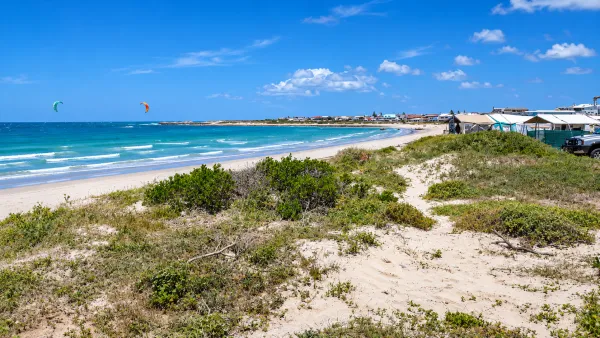
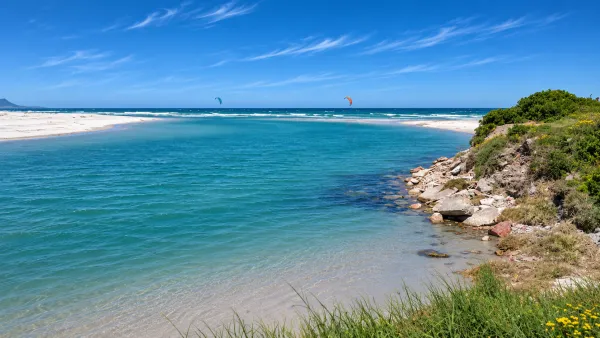
Witsand is one of South Africa's most attractive flat-water kitesurfing destinations, located at the mouth of the Breede River along the Western Cape's Overberg coastline, approximately 300 kilometres east of Cape Town. The spot is centred around the broad Breede River estuary, where extensive sandbanks, sandy beaches and protective dunes create a sheltered riding environment largely protected from Indian Ocean swell. Unlike the exposed wave beaches found along much of South Africa's southern coastline, Witsand offers predominantly flat to lightly choppy water, making it particularly appealing for freeriding, freestyle and skill progression. The combination of shallow sandy sections, open estuary water and seasonal southeasterly winds has established Witsand as a popular destination for riders seeking smooth water and long, uninterrupted runs.
The main kitesurfing season extends from October to March, with November through February generally offering the most frequent opportunities for reliable wind. The prevailing southeasterly winds, associated with the Western Cape's summer weather patterns, often strengthen during the afternoon and provide excellent conditions for powered freeriding and freestyle. Wind speeds commonly range from 14 to 20 knots during moderate sessions, although stronger days can exceed 25 knots when regional pressure systems intensify. Depending on the selected launching area and the shape of the estuary, the wind may arrive side-onshore, cross-shore or at a more challenging angle, making local assessment essential. Although the estuary is relatively sheltered from ocean swell, wind strength and gustiness can vary across the river mouth, particularly near dunes and shoreline features. Summer generally offers the most dependable riding conditions, while autumn and winter sessions are less predictable and more influenced by passing frontal systems.
Water conditions are strongly influenced by the Breede River's shifting sandbanks, tidal movements and freshwater outflow. At suitable tidal stages, extensive shallow sections provide smooth, relatively flat water ideal for practising transitions, controlled freestyle manoeuvres, upwind riding and relaxed cruising. More exposed parts of the estuary can develop moderate wind-driven chop, particularly during stronger southeasterly conditions. The predominantly sandy seabed is relatively forgiving, although shallow sandbanks can become hazardous for jumping or high-speed riding when water levels fall. Tidal currents may be significant near the river mouth, especially when strong river outflow combines with an outgoing tide. Hydrofoiling is possible in sufficiently deep sections, but riders must carefully assess water depth and avoid submerged sandbanks. On the ocean-facing side, breaking waves may provide occasional opportunities for experienced wave riders, although stronger currents and exposed surf make these areas considerably more demanding than the sheltered estuary.
Launching and landing generally take place from sandy sections along the estuary, where the beach and adjacent dunes provide convenient access to the water. The available rigging space changes with the tide, and higher water levels may narrow the shoreline or require riders to select alternative launching positions. Witsand can be suitable for beginners under professional supervision when wind, tide and current conditions are appropriate, while intermediate and advanced riders can take advantage of the flat water for freestyle, freeriding and jumping. However, the river mouth should not be treated as a completely hazard-free lagoon, and less experienced riders should avoid strong tidal currents or launching close to deeper channels. A freeride or freestyle twin-tip is the most versatile equipment choice, with kite sizes around 9–12 m² suitable for many moderate summer sessions and smaller sizes useful during stronger winds. Water temperatures are generally cool to mild, so a 3/2 mm wetsuit is recommended during warmer months, while a 4/3 mm suit may provide additional comfort during colder periods.
The main hazards include strong tidal currents, shifting sandbanks, changing water depth and potentially dangerous conditions near the Breede River mouth. Outgoing tides combined with river flow can create powerful currents, while shallow sections may become unsuitable for jumping or hydrofoiling as the water level drops. Stronger southeasterly winds can also generate chop and make self-rescue more difficult, particularly when wind and current act in opposing directions. Riders should check tidal predictions, identify safe launching areas and maintain sufficient distance from the main river channel and exposed ocean entrance. With its extensive sandy estuary, predominantly flat water and reliable summer wind opportunities, Witsand remains an excellent destination for kitesurfing along South Africa's Garden Route and Overberg region. Its combination of smooth-water freeriding, freestyle potential and varied tidal conditions makes it particularly rewarding for riders who understand the dynamics of an active river estuary.
Something missing or out of date at this spot? Suggest a correction
Witsand is best suited for
Spot profile
- Travel spotA proven kite destination with reliable conditions, worth a trip. Kiters fly in from all over the world for their kite holidays, and you will probably find schools, rentals and a lively kite scene nearby.
- Family spotEasy to visit with family and friends. Facilities are close by and non-kiters have plenty to do while you are on the water, so everyone enjoys the day, whether they kite or not.
Equipment
Bring a twin-tip for flat water sessions and consider a wave board for days you want to ride the ocean outside the estuary. Expect wind from about 14 to 30 knots, so take at least two kite sizes to cover lighter and stronger days. In the warmer months, a shorty or even boardies may be fine, but for spring or fall or when the wind is up, a 3/2 wetsuit is recommended. The main beach is sand, so booties are optional for extra comfort or protection, especially if you plan to explore rocky sections near the mouth.
Wind Conditions
Main wind directions
Windy days per month
Share of the days with more than 10 knots.
Wind speed range
11 - 23 knots
Wind strength on rideable days
- 7-11 kn53%
- 12-16 kn31%
- 17-22 kn15%
- 23-28 kn1%
- 29+ kn0%
Share of the daytime hours with 7+ knots.
Calculate your kite size
Estimate for a rider of your weight at Witsand: kite size = weight / wind speed x 2.2, adjusted for the kite shape and aspect ratio. Board, skills and gusts change the ideal size.
Month by month at Witsand
| Metric | Jan | Feb | Mar | Apr | May | Jun | Jul | Aug | Sep | Oct | Nov | Dec |
|---|---|---|---|---|---|---|---|---|---|---|---|---|
| Wind | ||||||||||||
| Rideable daysdays | 31 | 28 | 30 | 24 | 21.5 | 19 | 19.5 | 22 | 28.5 | 31 | 30 | 31 |
| Usable windhours | 263 | 234 | 240 | 177 | 145 | 142 | 144 | 165 | 213 | 248 | 250 | 266 |
| Average gustsknots | 26 | 25 | 23 | 20 | 17 | 17 | 17 | 19 | 22 | 25 | 26 | 26 |
| Temperature | ||||||||||||
| Air°C | 23 | 23 | 22 | 19 | 18 | 17 | 15 | 16 | 17 | 19 | 21 | 22 |
| Sea°C | 20 | 21 | 20 | 18 | 17 | 16 | 15 | 15 | 16 | 17 | 19 | 21 |
| Weather and sea | ||||||||||||
| Sunshinehours / day | 11.9 | 11.4 | 10.1 | 9.1 | 8.5 | 7.7 | 8.4 | 9.7 | 9.8 | 11 | 11.9 | 12.1 |
| Rainmm | 30 | 23 | 58 | 45 | 48 | 53 | 36 | 26 | 33 | 39 | 26 | 42 |
| Rainy daysdays | 8.5 | 7 | 9 | 7 | 6.5 | 8 | 7.5 | 6 | 6.5 | 8 | 5.5 | 9.5 |
| Wave heightm | 1.1 | 1.1 | 1.1 | 1.2 | 1.2 | 1.2 | 1.2 | 1.2 | 1.2 | 1.2 | 1.1 | 1.1 |
Typical monthly averages over several years, based on weather data: local thermal winds are usually stronger than shown, and sea temperature and waves are a regional estimate. A rideable day has at least 3 hours of 7+ knots between 10:00 and 18:00, usable wind counts those hours, a rainy day has 1 mm or more.
Forecast on Windy.com
Kitesurfing Safety & Local Rules at Witsand
The main hazards at Witsand, along South Africa's Garden Route, are changing tidal conditions, strong estuary currents and limited launching space at high tide. Rising water can significantly reduce the available sandy area, making rigging, launching and landing more difficult, particularly during strong winds or busy periods. At low tide, exposed mudflats, slippery sections and soft sand may create additional hazards for riders and equipment. The river-mouth channel can develop powerful currents during both incoming and outgoing tides, potentially carrying riders away from safer shallow-water areas. Check tidal conditions before launching, identify suitable rigging areas and avoid entering the main channel during periods of strong tidal flow.
The prevailing southeasterly winds are generally reliable, but occasional shifts toward offshore or cross-offshore directions can produce gustier conditions and increase the risk of drifting away from shore. On the ocean side, powerful shorebreak, rip currents and lateral currents become significant hazards when swell and wind strength increase. Rocks around some exposed coastal sections add further risk for riders venturing beyond the sheltered estuary. Larger waves can make kite relaunching, board recovery and returning to shore particularly challenging. The open-ocean sections are best suited to experienced kitesurfers, while all riders should monitor wind direction, tidal movement and changing surf conditions throughout their session.
Witsand is shared with swimmers, fishers, recreational boats and other beach users, particularly during summer and holiday periods. Limited launching space at higher tides increases the risk of tangled lines, collisions and accidental kite movements near bystanders. Keep rigging areas and access paths clear, maintain generous separation from swimmers and boats, and respect any temporary restrictions associated with local events or beach access. Dedicated rescue and lifeguard services should not be assumed to be available, making self-reliance especially important. Avoid riding alone in challenging conditions, inform someone of your plans and ensure you can safely return to shore without external assistance.
How to reach Witsand
- Closest citySwellendam
- How to get thereMost riders reach Witsand by driving from Cape Town, which is about a 3 to 4 hour drive depending on traffic and route. One commonly mentioned route is via the N2 and then the R322 turnoff toward Witsand; another note warns against taking the R324 to Witsand because that involves a pont/river crossing. The nearest airport commonly used is Cape Town International Airport (CPT), followed by a road transfer to the coast.
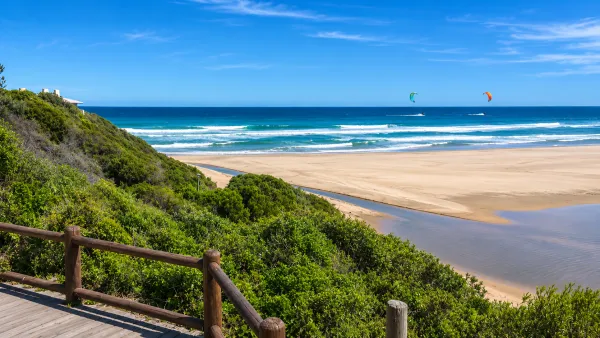
- AccessThe spot is publicly accessible through the beach and river-mouth area, with normal road access into Witsand and then beach access on foot. Some reports mention parking on the main road and walking down steps or over dune paths to rig on the beach. No consistent paid entry requirement was identified in the available information, but local conditions and access points may change with tide, road choice, or temporary events.
No-Wind Days: What to Do Around Witsand
Witsand is a peaceful coastal village along South Africa's Western Cape, situated where the Breede River meets the Indian Ocean. Known for its spectacular estuary, expansive sandy beaches and relaxed holiday atmosphere, this small destination offers a refreshing escape from the busier resorts of the Garden Route. Its combination of river activities, coastal wildlife and beautiful natural scenery makes Witsand particularly appealing for families, couples and non-kiting partners looking for a quiet holiday surrounded by nature.
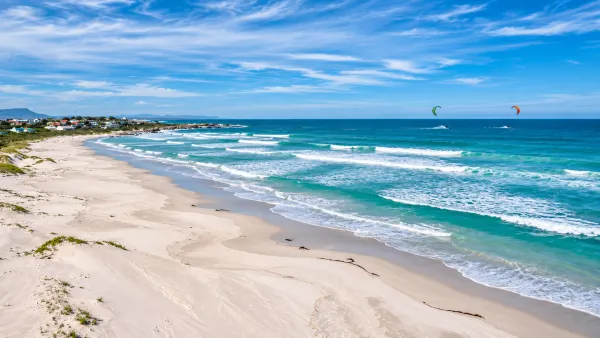
Witsand's long sandy beach is one of its greatest attractions, offering beautiful views across the Indian Ocean and plenty of space for walking, photography and relaxation. The surrounding dunes and coastal vegetation create an attractive natural landscape, while the quieter atmosphere makes the area ideal for visitors who appreciate uncrowded beaches. Swimming can be enjoyable in suitable conditions, although strong currents, changing tides and exposed surf require caution, particularly near the river mouth. Families should seek local advice about safer swimming areas and avoid entering the water where the river current meets the ocean swell.
The Breede River Estuary is the centrepiece of Witsand's outdoor activities. Its broad waterways, sheltered sections and surrounding wetlands provide opportunities for kayaking, stand-up paddleboarding, recreational boating and fishing. Guided river cruises and boat excursions may be available through local operators, offering a different perspective on the surrounding scenery. The estuary is also an important habitat for numerous bird species, including fish eagles, kingfishers, herons and other waterbirds, making it particularly rewarding for birdwatchers and photographers. Visitors should respect boating regulations, tidal conditions and sensitive wetland habitats.
One of Witsand's most remarkable natural attractions is its seasonal whale watching. The nearby coastline, particularly around San Sebastian Bay, is an important breeding and calving area for southern right whales, which visit South African waters during the winter and spring months. From approximately June to November, visitors may be able to observe whales from coastal viewpoints, with the best opportunities generally occurring during the peak season. Watching these enormous marine mammals from shore is an unforgettable experience, although sightings depend on natural conditions and are never guaranteed.
For visitors interested in exploring the surrounding Overberg region, the nearby De Hoop Nature Reserve is one of the most rewarding destinations. This protected area combines pristine coastal dunes, limestone landscapes, wetlands and rich fynbos vegetation, offering opportunities for hiking, birdwatching and wildlife photography. The reserve is particularly well known for its spectacular coastline and seasonal whale watching, while its inland habitats support antelope and numerous bird species. Access from Witsand requires a longer drive on regional roads, including unpaved sections, so visitors should allow sufficient time for the journey. Information about activities, access and conservation is available through the official De Hoop Nature Reserve website.
The surrounding countryside offers additional opportunities for scenic drives and discovering the smaller towns of the Overberg. Heidelberg, located inland along the N2 highway, provides a glimpse of rural Western Cape life, with historic buildings, local shops and agricultural landscapes. Farther west, Swellendam is known for its Cape Dutch architecture, restaurants and proximity to the Langeberg Mountains. These destinations offer pleasant excursions for visitors who want to combine a few days beside the ocean with cultural sightseeing and countryside exploration.
Witsand itself has a modest selection of restaurants, cafés and small shops, with fresh seafood and relaxed riverfront dining among the local highlights. Accommodation consists mainly of self-catering holiday homes, guesthouses, cottages and small lodges, making the village particularly suitable for independent travellers and families. Basic groceries and essential supplies are available locally, but larger shopping trips are best planned in nearby towns. A rental car is strongly recommended, as public transport is limited and many attractions are spread across the region. Visitors should also be aware that services and restaurant opening hours may be reduced outside the main holiday periods.
With its beautiful estuary, uncrowded beaches and exceptional whale-watching opportunities, Witsand offers plenty to enjoy beyond kitesurfing. Whether kayaking along the Breede River, watching southern right whales from the coast, exploring the landscapes of De Hoop Nature Reserve or simply enjoying a peaceful sunset beside the water, visitors will find an appealing combination of outdoor recreation and coastal relaxation. Its quiet village atmosphere makes Witsand an excellent choice for a family kitesurfing holiday or a longer escape with non-kiting partners.
Other kitesurfing spots near Witsand
All kitesurfing spots in South Africa
Last updated: