
Kitesurfing in Struisbaai Main Beach
Bredasdorp · South Africa
- Spot type Wave
- Rider level beginner
- Water Crystal Clear
- Beach Sand
- Crowd Seasonal crowd
- Tide effect Conditions vary
Kitesurfing in Struisbaai Main Beach: Conditions, Wind & Season
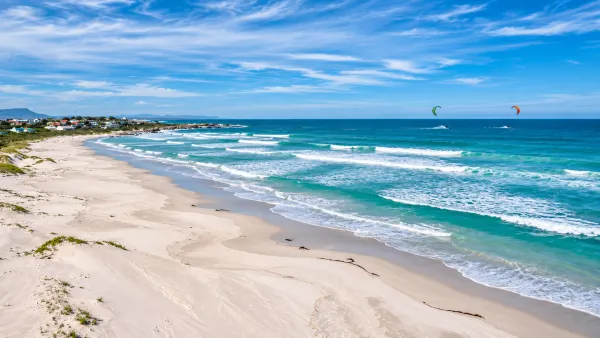
Struisbaai Main Beach is one of the most versatile kitesurfing locations along South Africa's Overberg coast, situated near Cape Agulhas at the southern tip of the African continent, approximately 200 kilometres southeast of Cape Town. Renowned for its extensive white-sand shoreline, clear water and varied riding conditions, Struisbaai offers a combination of sheltered freeriding areas, moderate chop and more exposed waves farther offshore. The gently sloping sandy beach provides convenient launching and landing opportunities, while the curved shape of the bay creates different water conditions depending on wind direction and riding location. This versatility makes Struisbaai attractive to intermediate riders seeking progression and experienced kitesurfers interested in freeriding, freestyle and occasional wave sessions.
The main kitesurfing season runs from October to March, with November through February generally providing the most frequent opportunities for suitable wind. Easterly and southeasterly winds are particularly relevant during the warmer months, often strengthening through the afternoon and producing enjoyable conditions for freeriding and jumping. Wind speeds commonly range from 15 to 25 knots during favourable summer weather patterns, although stronger gusts can occur. Southwesterly winds may also provide rideable conditions, but airflow can become less consistent in certain sections of the bay because of the surrounding coastline and local shelter. Wind direction should therefore be assessed carefully before selecting a launching area, as conditions can vary noticeably between the central beach, the harbour side and the more exposed sections. Autumn and spring may also deliver good sessions, although wind reliability is generally lower than during the peak summer months.
Water conditions at Struisbaai vary considerably across the bay. Closer to shore, the curved coastline and partial reef protection can create relatively flat to lightly choppy water, particularly in sheltered sections near the harbour. These areas are attractive for practising transitions, controlled freestyle and relaxed freeriding when sufficient space and safe wind angles are available. Farther offshore, incoming swell can produce more pronounced chop and breaking waves, offering opportunities for directional wave riding when wind and swell align. The predominantly sandy seabed makes water entry relatively straightforward, although isolated reef formations and submerged obstacles may be present away from the main beach. Tides influence the available launching space, with higher water levels significantly narrowing parts of the shoreline and bringing waves closer to the beach. Riders should select their preferred area according to the combination of wind direction, tide and desired riding conditions rather than assuming the entire bay offers the same water state.
Launching and landing generally take place directly from the broad sandy beach, with parking and public access available along the beachfront road and promenade. A nearby grassy area may also be used for preparing equipment, although kites should only be launched where sufficient clearance from pedestrians, vehicles and other obstacles is available. Struisbaai is suitable for intermediate riders and advanced kitesurfers, while beginners should only enter the water under professional supervision during appropriate wind and tide conditions. The beach can become busy during summer holidays, making it important to maintain separation from swimmers and other recreational users. A freeride twin-tip is the most versatile equipment choice for flat-water and choppy sessions, while a directional surfboard is preferable for waves farther offshore. Kite sizes around 9–12 m² cover many moderate summer conditions, with smaller sizes required during stronger winds. Water temperatures are generally around 15–19°C, so a 3/2 mm wetsuit is recommended during warmer months, while a 4/3 mm suit may provide additional comfort during colder periods.
The main hazards include changing wind direction, stronger gusts, reduced launching space at high tide and breaking waves in exposed sections of the bay. Although the sandy shoreline is relatively forgiving, offshore reef features, localised currents and the proximity of harbour infrastructure require careful navigation. Riders should avoid launching close to crowded beachfront areas, maintain adequate clearance from other water users and assess the wind angle before entering more sheltered sections where returning to shore may become difficult. When the summer easterly or southeasterly winds align with suitable tides, Struisbaai Main Beach offers an excellent combination of accessible sandy launching areas, enjoyable freeriding and occasional wave-riding opportunities. Its varied water conditions and reliable seasonal wind make it a rewarding kitesurfing destination along South Africa's Cape Agulhas coastline.
Something missing or out of date at this spot? Suggest a correction
Struisbaai Main Beach is best suited for
Spot profile
- Travel spotA proven kite destination with reliable conditions, worth a trip. Kiters fly in from all over the world for their kite holidays, and you will probably find schools, rentals and a lively kite scene nearby.
- Family spotEasy to visit with family and friends. Facilities are close by and non-kiters have plenty to do while you are on the water, so everyone enjoys the day, whether they kite or not.
- Local spotNot worth a long trip, but a great option if you live nearby and the wind is on. Ideal for a quick session after work or a spare afternoon, without planning a whole trip.
Equipment
For Struisbaai Main Beach, most riders choose a twin-tip as the main board for its versatility in both flat and choppier water. On days with stronger winds or more pronounced swell, a smaller freeride or wave-specific directional board is useful, especially for those looking to maximize turns on open faces. A good selection of kite sizes helps cover the wind range, with midsize kites (around 9 to 12m) suiting the typical 15 to 25 knot days, though lighter or heavier options might be needed in rare conditions. Wetsuit choice is seasonal: a 3/2 is comfortable for most of the windy months, while a thicker 4/3/2 is recommended through winter. In peak summer, sessions in boardshorts and a rash vest are common for locals, but cooler days see most opting for shorties or full suits due to the 15 to 19°C water temperature. Booties are usually unnecessary as both the beach and bottom are sandy, but some may prefer light shoes for comfort or on colder days.
Wind Conditions
Main wind directions
Windy days per month
Share of the days with more than 10 knots.
Wind speed range
11 - 26 knots
Wind strength on rideable days
- 7-11 kn38%
- 12-16 kn35%
- 17-22 kn22%
- 23-28 kn5%
- 29+ kn0%
Share of the daytime hours with 7+ knots.
Calculate your kite size
Estimate for a rider of your weight at Struisbaai Main Beach: kite size = weight / wind speed x 2.2, adjusted for the kite shape and aspect ratio. Board, skills and gusts change the ideal size.
Month by month at Struisbaai Main Beach
| Metric | Jan | Feb | Mar | Apr | May | Jun | Jul | Aug | Sep | Oct | Nov | Dec |
|---|---|---|---|---|---|---|---|---|---|---|---|---|
| Wind | ||||||||||||
| Rideable daysdays | 31 | 28 | 30.5 | 27.5 | 27.5 | 22.5 | 25.5 | 26 | 29 | 30.5 | 30 | 31 |
| Usable windhours | 271 | 243 | 258 | 219 | 205 | 176 | 202 | 211 | 238 | 259 | 261 | 271 |
| Average gustsknots | 26 | 24 | 24 | 21 | 19 | 18 | 20 | 22 | 24 | 26 | 26 | 26 |
| Temperature | ||||||||||||
| Air°C | 23 | 23 | 22 | 19 | 18 | 16 | 15 | 16 | 17 | 19 | 21 | 22 |
| Sea°C | 20 | 21 | 19 | 18 | 17 | 16 | 15 | 15 | 15 | 17 | 19 | 20 |
| Weather and sea | ||||||||||||
| Sunshinehours / day | 12.2 | 11.6 | 9.6 | 9.1 | 8.5 | 7.5 | 8.2 | 9.4 | 9.8 | 11 | 12.1 | 11.9 |
| Rainmm | 23 | 23 | 53 | 37 | 53 | 80 | 53 | 40 | 44 | 38 | 25 | 41 |
| Rainy daysdays | 10 | 7 | 9.5 | 7 | 7 | 10 | 10 | 8 | 6.5 | 8 | 6.5 | 9.5 |
| Wave heightm | 2 | 2.1 | 2.1 | 2.2 | 2.5 | 2.7 | 2.8 | 2.8 | 2.6 | 2.2 | 2.1 | 2.1 |
Typical monthly averages over several years, based on weather data: local thermal winds are usually stronger than shown, and sea temperature and waves are a regional estimate. A rideable day has at least 3 hours of 7+ knots between 10:00 and 18:00, usable wind counts those hours, a rainy day has 1 mm or more.
Forecast on Windy.com
Kitesurfing Safety & Local Rules at Struisbaai Main Beach
The main hazards at Struisbaai Main Beach, on South Africa's southern coast, are changing tidal conditions and the significant reduction in launching space at high tide. As the water advances across the beach, the available dry sand can become narrow, increasing the risk of tangled lines, crowded rigging areas and equipment being reached by incoming water. Launching and landing may become more difficult when several riders share the limited space. Check tide tables carefully, position equipment well above the advancing waterline and maintain sufficient clearance from other kites and beach users.
Southwesterly winds can become gusty along the main beach, creating unpredictable kite behaviour during launching, landing and riding close to shore. Wind conditions are often cleaner farther along the bay toward the point or harbour side, although water conditions may differ. Beyond the sheltered inner bay, larger swells and powerful breaking waves can develop, particularly around the outer reef. The transition into exposed water may be abrupt, with strong whitewater and currents complicating kite relaunching and returning to shore. Monitor wind and swell conditions carefully, and avoid venturing into the outer break unless confident in handling waves and changing currents.
Although the predominantly sandy bottom makes Struisbaai relatively forgiving, strong currents, shifting waterlines and crowded launching areas still require attention. Beginners should remain within sheltered sections and avoid riding when gusty winds or larger swells make returning difficult. Keep rigging areas organised, avoid leaving unattended equipment near the water and respect other beach users. When high tide restricts launching space or wind conditions become turbulent, consider moving to a more suitable section of the bay after assessing local conditions. Careful planning around tides, wind direction and available beach space is essential for a safe session.
How to reach Struisbaai Main Beach
- Closest cityBredasdorp
- How to get thereMost spot guides describe access by car. From Cape Town, the drive is about 200 to 300 km depending on route and starting point, usually heading east or southeast toward the Overberg and then into Struisbaai. A common route uses the N2 toward Somerset West, then the R44 and coastal roads through the region. Flights do not land at Struisbaai; fly into Cape Town International Airport and continue by rental car, which is the easiest way to reach the spot and best when carrying kitesurf gear.
- AccessThe beach is publicly accessible and reached directly from Struisbaai town by car and then a short walk to the sand. Spot descriptions mention parking near the main beach or promenade area with easy access to rigging zones, including a grassy area by the promenade. Some sources also mention rigging near the harbor side after parking close to the wooden walkway. No special permit or paid access requirement was noted in local spot guides.
No-Wind Days: What to Do Around Struisbaai Main Beach
Struisbaai is one of South Africa's most charming coastal towns, located in the Overberg region of the Western Cape, just a few kilometres from Cape Agulhas, the southernmost point of the African continent. Famous for its long white sandy beach, colourful fishing harbour and relaxed seaside atmosphere, Struisbaai offers plenty to enjoy beyond kitesurfing. Its combination of natural beauty, comfortable accommodation and nearby attractions makes it particularly appealing for families, couples and non-kiting partners looking for a peaceful coastal holiday.
Struisbaai's main attraction is its magnificent sandy beach, stretching for approximately 14 kilometres along the coastline. The broad shoreline is ideal for long walks, jogging, photography and relaxing beside the ocean. Swimming, bodyboarding and kayaking can be enjoyable in suitable conditions, particularly around more sheltered sections of the bay, although visitors should remain aware of currents, waves and changing tides. The beach's generous open spaces and relatively uncrowded atmosphere make it especially attractive for families seeking a quieter alternative to South Africa's larger seaside resorts.
Just a short drive away, Cape Agulhas marks the southernmost point of Africa and the officially recognised geographical meeting point of the Atlantic and Indian Oceans. Visitors can photograph the famous southernmost-tip monument, explore the rugged coastline and discover the historic Cape Agulhas Lighthouse, one of South Africa's oldest working lighthouses. The lighthouse museum and surrounding viewpoints offer fascinating insights into the region's maritime history, while the nearby rocky shores provide beautiful scenery for photography and coastal walks. The dramatic landscape makes this one of the most memorable excursions from Struisbaai.
The surrounding Agulhas National Park protects a remarkable landscape of coastal plains, wetlands, indigenous fynbos vegetation and historic shipwreck sites. Visitors can enjoy nature walks, birdwatching and scenic drives through this distinctive part of the Cape Floristic Region. Seasonal wildflowers add colour to the landscape, while the area's wetlands and coastal habitats support numerous bird species. The park also contains the remains of the Meisho Maru shipwreck, a popular photographic landmark along the coast. Information about the park, walking routes and visitor facilities is available through the official Agulhas National Park website.
Struisbaai's small fishing harbour is another highlight of the town. Colourful fishing boats, local fishermen and the daily rhythm of the harbour provide a glimpse into the area's maritime traditions. The harbour is also known for its resident stingrays, which can sometimes be observed swimming in the shallow water, although sightings are not guaranteed. Visitors should observe these wild animals from a respectful distance and avoid touching or feeding them. Fresh seafood is an important part of the local food culture, with restaurants serving fish, calamari and other coastal specialities.
For visitors interested in exploring farther afield, the nearby village of L'Agulhas offers additional coastal walks, restaurants and viewpoints. The wider Overberg region is known for its rolling farmland, fynbos landscapes and small historic towns. Bredasdorp, a short drive inland, provides a broader range of shops and services, along with the Shipwreck Museum, which explores the maritime history of this notoriously challenging coastline. Nature lovers can also discover the wetlands around De Mond Nature Reserve, where birdwatching, walking trails and peaceful estuary scenery provide a pleasant alternative to the beach.
Struisbaai offers a good selection of guesthouses, self-catering apartments, holiday cottages and small accommodation establishments, many within easy reach of the beach. Restaurants, cafés, supermarkets and essential services are available in town, while nearby Bredasdorp provides additional shopping and facilities. A rental car is the most practical way to explore Cape Agulhas and the surrounding Overberg region, as public transport options are limited. The town retains a relaxed atmosphere throughout much of the year, although it becomes noticeably busier during South African school holidays and the summer season.
With its spectacular beach, historic lighthouse, fascinating maritime heritage and beautiful natural surroundings, Struisbaai offers a rewarding holiday experience beyond kitesurfing. Whether standing at the southernmost point of Africa, exploring the landscapes of Agulhas National Park, watching fishing boats return to the harbour or enjoying a peaceful sunset walk along the sand, visitors will find an appealing combination of nature, culture and coastal relaxation. Its welcoming atmosphere and convenient facilities make Struisbaai an excellent choice for a family kitesurfing holiday or a longer escape with non-kiting partners.
Other kitesurfing spots near Struisbaai Main Beach
All kitesurfing spots in South Africa
Last updated: