
Kitesurfing in Jersey Shore
Atlantic City · United States Of America
Been here? Want to go? Add it to your kite spot lists.
Create a free account to save it- Spot type Wave
- Rider level intermediate
- Water Dark - Clear
- Beach Sand
- Crowd Seasonal crowd
- Tide effect Conditions vary
Kitesurfing in Jersey Shore: Conditions, Wind & Season
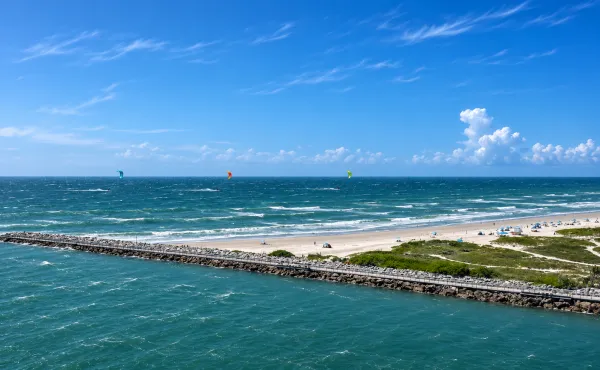
The Jersey Shore is one of the most extensive and varied kitesurfing regions on the Atlantic coast of the United States, stretching approximately 225 kilometres from Sandy Hook in northern New Jersey to Cape May at the southern tip of the state. Rather than a single kiteboarding spot, the coastline encompasses numerous sandy beaches, barrier islands, tidal inlets and protected bays, each offering different riding conditions. The Atlantic-facing beaches are characterised by open-ocean exposure, breaking waves and wind-generated chop, making them particularly attractive for freeriding and recreational wave riding. In contrast, the sheltered waters behind the barrier islands can provide flatter conditions suitable for freestyle and technical progression. This diversity allows experienced riders to select locations according to wind direction, swell and personal preferences, although launching regulations and access restrictions vary considerably between coastal municipalities. The Jersey Shore is therefore best approached as a collection of individual kitesurfing locations rather than one continuous, unrestricted riding area.
The most favourable kitesurfing seasons are generally spring and autumn, when passing weather systems produce frequent periods of stronger wind along the New Jersey coastline. Northeasterly and east-northeasterly winds associated with Atlantic low-pressure systems can generate powerful sessions, often accompanied by substantial ocean swell and challenging shorebreak. Southerly and southwesterly winds become more common during warmer months, occasionally strengthened by afternoon sea-breeze circulation. Westerly and northwesterly winds frequently follow cold fronts, although these directions can create offshore conditions along the Atlantic-facing beaches and are better assessed at appropriately exposed bay locations. During favourable weather patterns, wind speeds commonly range from 15 to 25 knots, with stronger frontal systems occasionally producing considerably more demanding conditions. Summer offers warmer temperatures and occasional thermal breezes, but wind consistency can be lower and beach access more restricted because of the swimming season. Winter can deliver powerful winds and impressive waves, although freezing air temperatures, cold water and limited rescue options make these sessions suitable only for experienced and properly equipped riders.
Water conditions vary significantly along the Jersey Shore. Open Atlantic beaches generally feature a sandy seabed, gradually sloping nearshore sections and shifting sandbars that influence wave formation and shorebreak intensity. Moderate winds produce choppy freeride conditions, while stronger weather systems and incoming Atlantic swell can generate substantial breaking waves suitable for experienced directional-board riders. Popular coastal areas around Asbury Park, Point Pleasant, Seaside Heights, Long Beach Island, Atlantic City, Ocean City, Wildwood and Cape May offer different combinations of beach exposure and access, although not every beach permits kiteboarding. Protected back bays and tidal lagoons can provide considerably smoother water, particularly when surrounding barrier islands reduce the available wind fetch. These flatter environments are attractive for twin-tip freeriding, freestyle practice and occasional hydrofoiling, provided sufficient water depth is available. However, shallow sandbars, tidal currents, navigation channels and submerged structures can create additional hazards. The wide variety of conditions makes equipment selection important, with freeride twin-tips suitable for general sessions, directional surfboards preferable in larger waves and hydrofoils useful in appropriate deeper-water locations.
Access to the Jersey Shore is generally straightforward through the coastal road network, although parking, beach entry and kiteboarding permissions are regulated individually by each municipality. Many oceanfront beaches are backed by dunes, boardwalks or residential developments, which can restrict the available space for preparing equipment and launching safely. During the summer swimming season, beach badge requirements, designated bathing areas and local watersports restrictions may significantly limit where and when kitesurfing is permitted. Some locations offer more accessible launching outside the main tourist season, while others maintain specific restrictions throughout the year. Riders should always confirm current regulations with the relevant municipality before visiting rather than assuming that a public beach is automatically available for kiteboarding. Broad sandy sections can provide comfortable rigging areas during quieter periods, but narrow access corridors, fishing activity and crowded shorelines may complicate launching and landing. Water temperatures vary dramatically throughout the year: a 3/2 mm wetsuit may be sufficient during warmer summer conditions, while a 4/3 mm or 5/4 mm wetsuit is generally more appropriate during spring and autumn. Winter sessions require substantially heavier thermal protection, including a thick hooded wetsuit, gloves and boots.
The principal hazards along the Jersey Shore include powerful shorebreak, rip currents, shifting sandbars, submerged rocks, fishing lines and the proximity of jetties or coastal protection structures. Tidal inlets can produce particularly strong currents and turbulent water, especially where incoming swell interacts with outgoing tidal flow. Offshore winds following cold fronts can make returning to the beach difficult, while sudden weather changes may introduce dangerous gusts or rapidly increasing wave heights. During summer, swimmers and other beach users create additional restrictions, making adequate separation and strict compliance with local access rules essential. Beginners should favour properly authorised, sheltered locations with professional supervision rather than attempting independent sessions on exposed ocean beaches. With its extensive sandy coastline, varied Atlantic conditions and numerous protected back bays, the Jersey Shore offers a diverse kitesurfing environment within easy reach of New York City and Philadelphia. Its greatest strength lies in the opportunity to choose between open-ocean freeriding, wave riding and flatter sheltered-water sessions according to the prevailing wind and weather conditions, particularly during the productive spring and autumn seasons.
Something missing or out of date at this spot? Suggest a correction
This spot does not have a photo gallery yet.
Kited here? Add the first photos (free account, one minute).
Jersey Shore is best suited for
Spot profile
- Travel spotA proven kite destination with reliable conditions, worth a trip. Kiters fly in from all over the world for their kite holidays, and you will probably find schools, rentals and a lively kite scene nearby.
- Family spotEasy to visit with family and friends. Facilities are close by and non-kiters have plenty to do while you are on the water, so everyone enjoys the day, whether they kite or not.
- Local spotNot worth a long trip, but a great option if you live nearby and the wind is on. Ideal for a quick session after work or a spare afternoon, without planning a whole trip.
Equipment
A kite quiver spanning roughly 9 to 14 m is recommended to cover the average wind range, with smaller kites needed for strong frontal or winter winds and a larger kite for lighter summer sea breezes. During spring and autumn, a full wetsuit is appropriate to handle the cooler water temperatures. The warmest summer days may allow a shorty or thin full wetsuit, although many still prefer extra coverage for chilly wind or long sessions. When riding in winter, a thick cold-season wetsuit with hood, gloves, and boots is necessary. Neoprene boots are helpful around jetties, shells and rough launches, and a visible safety vest, pump leash, and sand-suited pump are sensible extras.
Wetsuit suggestion by month
- Jan6/55°
- Feb6/55°
- Mar6/57°
- Apr5/411°
- May4/316°
- JunShorty21°
- JulShorts24°
- AugShorty24°
- SepShorty23°
- Oct3/219°
- Nov5/413°
- Dec6/57°
- 6/5 6/5 mm or drysuit, hood, boots, gloves
- 5/4 5/4 mm with boots
- 4/3 4/3 mm
- 3/2 3/2 mm
- Shorty Shorty or neoprene top
- Shorts Boardshorts and lycra
Based on the average sea temperature of each month. In the months with air under 10 °C add a hood and a windproof layer for the wind chill. A guide for an average rider: if you feel the cold, go one step warmer.
Wind Conditions
Main wind directions
Windy days per month
Share of the days with more than 10 knots.
Wind speed range
10 - 20 knots
Wind strength on rideable days
- 7-11 kn74%
- 12-16 kn22%
- 17-22 kn4%
- 23-28 kn0%
- 29+ kn0%
Share of the daytime hours with 7+ knots.
Calculate your kite size
Estimate for a rider of your weight at Jersey Shore: kite size = weight / wind speed x 2.2, adjusted for the kite shape and aspect ratio. Board, skills and gusts change the ideal size.
Month by month at Jersey Shore
| Metric | Jan | Feb | Mar | Apr | May | Jun | Jul | Aug | Sep | Oct | Nov | Dec |
|---|---|---|---|---|---|---|---|---|---|---|---|---|
| Wind | ||||||||||||
| Rideable daysdays | 22.5 | 23 | 27 | 26.5 | 26 | 25.5 | 23 | 23.5 | 23 | 21.5 | 20.5 | 19 |
| Usable windhours | 176 | 168 | 209 | 199 | 190 | 191 | 156 | 161 | 170 | 160 | 157 | 147 |
| Average gustsknots | 19 | 19 | 21 | 21 | 19 | 19 | 17 | 17 | 18 | 18 | 18 | 17 |
| Temperature | ||||||||||||
| Air°C | 4 | 6 | 11 | 15 | 19 | 25 | 28 | 27 | 23 | 18 | 12 | 7 |
| Sea°C | 5 | 5 | 7 | 11 | 16 | 21 | 24 | 24 | 23 | 19 | 13 | 7 |
| Weather and sea | ||||||||||||
| Sunshinehours / day | 6.4 | 6.8 | 8.5 | 9.5 | 10.1 | 11.5 | 12 | 10.8 | 9.5 | 8.8 | 7.9 | 6.2 |
| Rainmm | 96 | 93 | 124 | 95 | 106 | 64 | 109 | 97 | 109 | 89 | 61 | 109 |
| Rainy daysdays | 9 | 10.5 | 9 | 9 | 10.5 | 9.5 | 15 | 13 | 10 | 7 | 7 | 9.5 |
| Wave heightm | 0.8 | 0.8 | 0.9 | 0.8 | 0.8 | 0.7 | 0.7 | 0.7 | 0.9 | 0.9 | 0.7 | 0.8 |
Typical monthly averages over several years, based on weather data: local thermal winds are usually stronger than shown, and sea temperature and waves are a regional estimate. A rideable day has at least 3 hours of 7+ knots between 10:00 and 18:00, usable wind counts those hours, a rainy day has 1 mm or more.
Wind and climate statistics: Weather data by Open-Meteo.com (CC BY 4.0), based on ERA5 data of the Copernicus Climate Change Service. A typical year, not a forecast.
Forecast on Windy.com
Kitesurfing Safety & Local Rules at Jersey Shore
The main hazards along the Jersey Shore, on New Jersey's Atlantic Coast, are powerful shorebreak, strong rip currents and rapidly changing ocean conditions. Storm-driven swells and nor'easters can produce heavy breaking waves, making water entry, kite relaunching and returning to shore particularly challenging. Rip currents and lateral water movement may carry riders away from their intended landing areas, while shifting sandbars create unpredictable breaking sections and sudden changes in water depth. Jetties, groynes, submerged rocks and other coastal structures present additional collision hazards, especially near inlets and engineered shorelines. Beach replenishment projects and severe storms can also alter the position of sandbanks and underwater obstacles. Always inspect the intended riding area and carefully assess wind, swell and tidal conditions before launching.
Crowded beaches and seasonal restrictions create further challenges, particularly during the summer months when swimmers, families, surfers and anglers occupy much of the shoreline. Fishing lines, designated swimming areas, lifeguard stations and coastal structures can significantly reduce the space available for safe launching and landing. Many municipalities prohibit or restrict kitesurfing during peak bathing hours, while others impose seasonal access rules or designated launching areas. Beach badges or daily passes may also be required for access to certain municipal beaches. Riders should never assume that an apparently empty beach is automatically open to kitesurfing, even outside the main tourist season. Maintain generous clearance from swimmers and fishing activities, avoid launching near crowded boardwalk sections and verify local regulations before visiting.
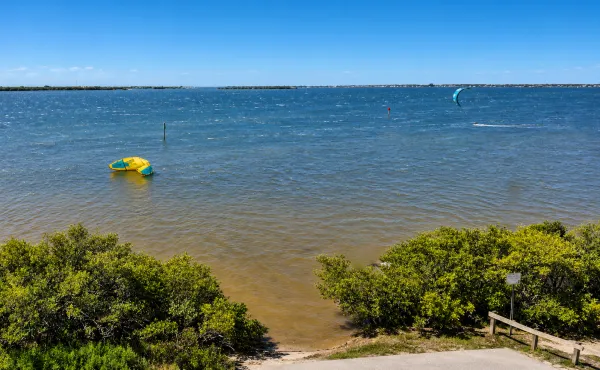
Winter kitesurfing along the Jersey Shore introduces additional risks from extremely cold water, low air temperatures and powerful Atlantic weather systems. Prolonged exposure following equipment failure can quickly lead to cold shock, fatigue or hypothermia, while lifeguard coverage and rescue assistance are often reduced or unavailable outside the summer season. Sudden wind shifts, strong currents and heavy surf can make self-rescue particularly demanding, even for experienced riders. Appropriate thermal protection, reliable safety equipment and a clear emergency plan are essential. When ocean conditions are unsuitable or beach access is restricted, a permitted bayside launching area may offer a more sheltered alternative, although shallow water, currents and local regulations must still be considered. Always confirm the rules for the specific beach and municipality, as restrictions vary considerably along the New Jersey coastline.
How to reach Jersey Shore
- Closest cityAtlantic City, New Jersey
- How to get thereThe Jersey Shore is best reached by car because the spot spans more than 100 miles and dozens of towns. From New York City, drive south on the Garden State Parkway or New Jersey Turnpike, then use local roads to access beaches like Sandy Hook, Asbury Park, or Long Branch. From Philadelphia, Interstate 76 or the Atlantic City Expressway connects to central and southern shore towns. Newark Liberty International and Philadelphia International airports are the main air hubs, with Atlantic City International serving the southern end but handling fewer flights. The exact route depends on the specific launch selected for the session.
- AccessThere is no unified access policy for the Jersey Shore since the coast crosses over 40 municipalities and numerous public agencies. In principle, access is possible at most places, yet each town manages its beaches separately. Many popular oceanfronts charge for daily or seasonal beach badges, particularly from Memorial Day through Labor Day; only badge holders may be admitted in summer at some locations. A number of southern beaches and select bay spots still offer free entry, but local parking rules, lifeguard presence, boardwalk restrictions, and kite prohibitions differ. State parks, county parks, federal areas, and municipal beaches each have their own schedules, fees, and regulations, which can change year by year. The only reliable approach is to identify the exact town and access point in advance and check with the local beach office, park authority, or a regional kite school for up-to-date information about permission, permitted hours, and safe launch zones. Riders cannot assume that a visibly open beach is available for kiting.
No-Wind Days: What to Do Around Jersey Shore
The Jersey Shore, stretching along the Atlantic coast of New Jersey, is one of the most famous seaside holiday regions in the United States. With more than 200 kilometres of coastline, the area offers an extraordinary variety of experiences, from lively boardwalks and traditional amusement parks to quiet fishing villages, historic lighthouses and protected natural landscapes. Although the Jersey Shore is particularly popular during the summer months, its attractions extend well beyond the beach season. For families and non-kiting partners, the combination of coastal recreation, entertainment, wildlife and fascinating local history makes this part of the American East Coast an excellent destination for a varied holiday.
One of the most characteristic features of the Jersey Shore is its traditional boardwalk culture. Towns such as Seaside Heights, Point Pleasant Beach, Ocean City and Wildwood have developed around long wooden promenades lined with restaurants, ice-cream parlours, amusement rides, souvenir shops and classic American arcades. Seaside Heights is particularly popular with families thanks to its amusement attractions, miniature golf courses and Breakwater Beach Waterpark. Point Pleasant Beach offers a similar atmosphere, with Jenkinson's Boardwalk providing entertainment, an aquarium and seasonal attractions. Wildwood is famous for its enormous sandy beaches and colourful seaside amusements, while Ocean City maintains a particularly family-oriented atmosphere with its traditional boardwalk and numerous recreational activities.
Atlantic City offers a completely different experience, combining its historic oceanfront boardwalk with large hotels, casinos, entertainment venues and a lively nightlife scene. Visitors can enjoy shopping, restaurants, concerts and cultural events throughout the year, making it one of the more active destinations outside the summer beach season. The city's famous boardwalk stretches for several kilometres along the Atlantic coastline, providing excellent opportunities for walking and sightseeing. Nearby beaches offer swimming and sunbathing during the warmer months, while the surrounding coastal communities provide quieter alternatives for visitors who prefer a more relaxed atmosphere. Atlantic City is particularly interesting for travellers who want to combine a traditional seaside holiday with urban entertainment.
Farther south, Cape May is one of the most beautiful and historically distinctive towns along the Jersey Shore. Famous for its remarkably preserved Victorian architecture, colourful wooden houses and elegant streets, Cape May offers a charming alternative to the busier resort towns farther north. Visitors can explore independent boutiques, art galleries, cafés and historic neighbourhoods, or enjoy a leisurely walk along the beachfront promenade. The Cape May MAC organisation provides information about historic attractions, tours and the Cape May Lighthouse, which offers panoramic views across the surrounding coastline. The region is also renowned for birdwatching, particularly during the spring and autumn migrations, when large numbers of birds travel along the Atlantic Flyway.
Long Beach Island, commonly known as LBI, offers a more relaxed coastal atmosphere, with traditional beach communities, family holiday homes and attractive stretches of sandy shoreline. The northern end of the island is home to Barnegat Lighthouse State Park, where the historic lighthouse overlooks Barnegat Inlet and the surrounding coastal landscape. Walking paths, fishing areas and wildlife observation opportunities make the park an enjoyable destination for a quieter afternoon. The island's villages offer seafood restaurants, cafés, small shops and seasonal attractions, while the sheltered waters of Barnegat Bay are popular for kayaking, stand-up paddleboarding, sailing and recreational fishing. Long Beach Island is particularly suitable for families who prefer a slower pace without sacrificing access to essential services.
At the northern end of the Jersey Shore, Sandy Hook provides one of the region's most interesting natural and historical environments. Part of Gateway National Recreation Area, this narrow peninsula features extensive sandy beaches, maritime forests, salt marshes and important wildlife habitats. Visitors can explore cycling and walking trails, observe migratory birds or discover the historic Sandy Hook Lighthouse, one of the oldest surviving lighthouses in the United States. The surrounding landscape offers impressive views across the entrance to New York Harbor, while the historic military buildings of Fort Hancock provide an additional connection to the area's past. Sandy Hook is particularly appealing for nature lovers and visitors who want to escape the more commercial atmosphere of the traditional boardwalk towns.
Asbury Park has developed a distinctive cultural identity through its long association with music, art and entertainment. Its famous boardwalk combines restaurants, shops and historic seaside architecture, while venues such as the Stone Pony have played an important role in the history of American rock music. The town's creative atmosphere is reflected in its murals, galleries, independent businesses and lively events calendar. Beyond the main resort towns, the Jersey Shore also offers excellent opportunities for outdoor recreation, including surfing, fishing, sailing, cycling and wildlife photography. Seasonal boat excursions provide opportunities to observe dolphins and migrating whales, while the coastal bays and estuaries support a wide variety of birds and marine species.
Accommodation along the Jersey Shore ranges from traditional family motels and beachfront hotels to historic guesthouses, holiday apartments, private rental houses and seasonal campgrounds. Restaurants are abundant in the larger resort towns, with fresh seafood, pizza, American diners and the inevitable boardwalk snacks forming an important part of the local holiday experience. A car is useful for exploring several destinations along the coastline, although some towns are accessible by public transport from New York City or Philadelphia. Summer weekends and public holidays can bring considerable traffic, expensive accommodation and crowded beaches, while spring and autumn generally offer a quieter atmosphere. Visitors should also remember that many beaches require seasonal access badges and that lifeguard services, attractions and restaurants may operate on reduced schedules outside the main summer season.
What makes the Jersey Shore particularly attractive for a family kitesurfing holiday is the extraordinary variety of destinations and activities spread along its coastline. Whether enjoying the amusement rides of Seaside Heights, discovering Cape May's Victorian architecture, cycling through Sandy Hook or exploring the quieter communities of Long Beach Island, there is always something interesting to do when the wind disappears. From lively summer entertainment to peaceful coastal nature reserves, the Jersey Shore offers enough diversity to satisfy both dedicated beach enthusiasts and non-kiting partners looking for a memorable East Coast holiday.
Riders of Jersey Shore
Who calls Jersey Shore home, who is planning a trip and who has ridden it. Add yourself to meet them.
Nobody calls it home yet
Make it my home spotNobody on the way yet
I want to goBe the first to ride it
I have been hereUpcoming at Jersey Shore
Sessions, downwinders and meetups planned by the riders of Jersey Shore. Going too? Join them.
No session planned yet. Going out soon? Post it: the riders who follow Jersey Shore get a notification.
Other kitesurfing spots near Jersey Shore
All kitesurfing spots in United States Of America
Last updated: