
Kitesurfing in Waquoit Bay
Falmouth · United States Of America
Been here? Want to go? Add it to your kite spot lists.
Create a free account to save it- Spot type Flat
- Rider level beginner
- Water Dark - Clear
- Beach Sand
- Crowd Seasonal crowd
- Tide effect Conditions vary
Kitesurfing in Waquoit Bay: Conditions, Wind & Season
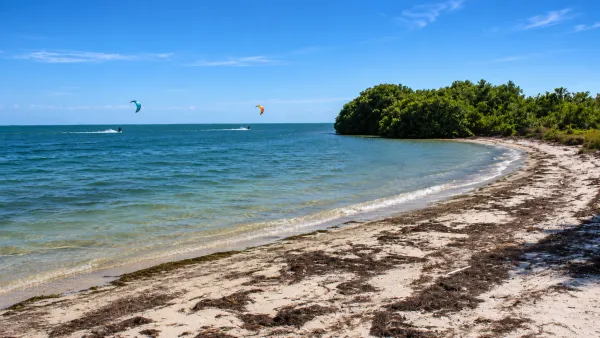
Waquoit Bay is a sheltered saltwater kitesurfing location on the southern coast of Cape Cod, Massachusetts, United States, situated between Falmouth and Mashpee and connected to Nantucket Sound through a narrow tidal inlet. The bay is characterised by extensive shallow-water areas, sandy and muddy flats, seagrass beds and a largely undeveloped shoreline. Unlike the more exposed kitesurfing beaches along Cape Cod, Waquoit Bay offers relatively protected water with limited wave action, making it potentially attractive for relaxed freeriding, basic manoeuvres and technical progression. However, the surrounding land, vegetation and irregular shoreline significantly influence wind quality, while environmental protection regulations restrict access to several sections of the bay. Its sheltered geography should therefore not be mistaken for an unrestricted or consistently beginner-friendly kiteboarding environment.
Southerly and southwesterly winds generally provide the most favourable kitesurfing conditions, benefiting from the prevailing summer airflow across Nantucket Sound. During warmer months, afternoon sea breezes can occasionally strengthen sufficiently to produce enjoyable freeride sessions. However, the enclosed geography of Waquoit Bay makes wind considerably less predictable than along the nearby open coastline. Trees, coastal vegetation and surrounding land can create wind shadows, turbulence and sudden variations in wind strength, even when regional forecasts indicate favourable conditions. Stronger weather systems during spring, autumn and winter may produce more powerful winds, although frontal gusts and colder temperatures increase the difficulty of riding. The practical kitesurfing season generally extends from April through October, with late June to mid-September offering the most comfortable temperatures. Riders should pay particular attention to actual wind observations inside the bay rather than relying exclusively on forecasts for the broader Cape Cod area.
Water conditions are the main attraction of Waquoit Bay. With an average depth of less than one metre, the bay contains extensive shallow sections interrupted by deeper tidal channels reaching approximately three metres. The protected setting generally produces flat to lightly choppy water, although stronger winds can generate short waves across the more exposed central sections. At low tide, emerging sandbars and mudflats reduce the available riding area considerably, while higher water levels provide additional depth and greater freedom of movement. The seabed consists of sand, mud, seagrass and scattered shellfish beds, including oyster shells that can cause cuts or equipment damage. A freeride twin-tip or larger light-wind board is particularly suitable for the prevailing conditions, allowing riders to practise transitions, controlled turns and upwind technique. Hydrofoiling is considerably more restricted because of the shallow seabed and is practical only in sufficiently deep areas away from active navigation channels. The bay offers little opportunity for dedicated wave riding or big-air sessions.
Launching around Waquoit Bay requires careful planning, as sandy shoreline sections are generally small and much of the surrounding waterfront falls within the Waquoit Bay National Estuarine Research Reserve or other protected areas. Public beach access does not necessarily imply permission to launch a kite, and riders should confirm current regulations and authorised launching locations before visiting. Online kite spot markers may indicate locations where kiteboarding is restricted or prohibited. During busy summer weekends, the limited available beach space can become particularly challenging for preparing equipment and managing lines. Although the shallow water may provide favourable conditions for supervised beginner progression, inconsistent winds and restricted launching areas require reliable kite control. Water temperatures are most comfortable during July and August, when a shorty or lightweight wetsuit may be sufficient. A full 3/2 mm or 4/3 mm wetsuit is generally advisable during spring and autumn, depending on water temperature and weather conditions.
The principal hazards at Waquoit Bay include gusty and inconsistent winds, extremely shallow sections, oyster beds, submerged obstacles and tidal currents near the inlet connecting the bay with Nantucket Sound. Recreational boats and marked navigation channels introduce additional challenges, particularly during the summer sailing season. Riders must respect protected shellfish beds, sensitive seagrass habitats and any environmental restrictions affecting shoreline access. Sudden wind drops can complicate relaunching and returning to the original launching location, while low tides may leave large sections of the bay unsuitable for riding. With its sheltered water, extensive shallows and proximity to Falmouth and Mashpee, Waquoit Bay represents an interesting local alternative for kitesurfing on Cape Cod. Rather than a reliable standalone kiteboarding destination, it is best appreciated for occasional flat-water freeriding and relaxed technical practice when wind, tide and permitted access conditions align.
Something missing or out of date at this spot? Suggest a correction
This spot does not have a photo gallery yet.
Kited here? Add the first photos (free account, one minute).
Waquoit Bay is best suited for
Spot profile
- Family spotEasy to visit with family and friends. Facilities are close by and non-kiters have plenty to do while you are on the water, so everyone enjoys the day, whether they kite or not.
- Local spotNot worth a long trip, but a great option if you live nearby and the wind is on. Ideal for a quick session after work or a spare afternoon, without planning a whole trip.
Equipment
A practical kite quiver runs from roughly 9 to 14 meters, adjusted for rider weight and wind. Gusty and occasionally strong pulses demand a smaller kite on some days, but oversizing is risky as sudden wind shifts are typical. In spring and fall, a full wetsuit is recommended, while summer may be comfortable in a thinner wetsuit depending on conditions and personal tolerance. Booties offer protection from shells and uneven bottom, and a helmet or impact vest plus a reliable safety leash add recommended confidence in gusty, shallow water.
Wetsuit suggestion by month
- Jan6/54°
- Feb6/53°
- Mar6/55°
- Apr6/59°
- May4/314°
- Jun3/220°
- JulShorts25°
- AugShorts25°
- SepShorty22°
- Oct4/317°
- Nov5/411°
- Dec6/56°
- 6/5 6/5 mm or drysuit, hood, boots, gloves
- 5/4 5/4 mm with boots
- 4/3 4/3 mm
- 3/2 3/2 mm
- Shorty Shorty or neoprene top
- Shorts Boardshorts and lycra
Based on the average sea temperature of each month. In the months with air under 10 °C add a hood and a windproof layer for the wind chill. A guide for an average rider: if you feel the cold, go one step warmer.
Wind Conditions
Main wind directions
Windy days per month
Share of the days with more than 10 knots.
Wind speed range
11 - 23 knots
Wind strength on rideable days
- 7-11 kn58%
- 12-16 kn31%
- 17-22 kn10%
- 23-28 kn1%
- 29+ kn0%
Share of the daytime hours with 7+ knots.
Calculate your kite size
Estimate for a rider of your weight at Waquoit Bay: kite size = weight / wind speed x 2.2, adjusted for the kite shape and aspect ratio. Board, skills and gusts change the ideal size.
Month by month at Waquoit Bay
| Metric | Jan | Feb | Mar | Apr | May | Jun | Jul | Aug | Sep | Oct | Nov | Dec |
|---|---|---|---|---|---|---|---|---|---|---|---|---|
| Wind | ||||||||||||
| Rideable daysdays | 24 | 25 | 27 | 26.5 | 28.5 | 25 | 27 | 24.5 | 23 | 23.5 | 25.5 | 24 |
| Usable windhours | 198 | 192 | 219 | 210 | 218 | 194 | 190 | 183 | 179 | 194 | 201 | 195 |
| Average gustsknots | 22 | 23 | 24 | 23 | 22 | 20 | 20 | 20 | 20 | 21 | 21 | 21 |
| Temperature | ||||||||||||
| Air°C | 2 | 3 | 7 | 11 | 15 | 21 | 25 | 24 | 21 | 16 | 10 | 5 |
| Sea°C | 4 | 3 | 5 | 9 | 14 | 20 | 25 | 25 | 22 | 17 | 11 | 6 |
| Weather and sea | ||||||||||||
| Sunshinehours / day | 5.8 | 6.4 | 7.9 | 9.1 | 10.1 | 11.5 | 11.4 | 11.1 | 9.3 | 8.1 | 7.3 | 5.8 |
| Rainmm | 132 | 104 | 119 | 96 | 116 | 78 | 92 | 74 | 113 | 134 | 68 | 110 |
| Rainy daysdays | 12 | 9.5 | 11 | 10.5 | 11.5 | 10 | 11.5 | 10 | 9 | 8.5 | 8.5 | 10.5 |
| Wave heightm | 0.7 | 0.6 | 0.7 | 0.6 | 0.5 | 0.4 | 0.4 | 0.4 | 0.5 | 0.6 | 0.6 | 0.7 |
Typical monthly averages over several years, based on weather data: local thermal winds are usually stronger than shown, and sea temperature and waves are a regional estimate. A rideable day has at least 3 hours of 7+ knots between 10:00 and 18:00, usable wind counts those hours, a rainy day has 1 mm or more.
Wind and climate statistics: Weather data by Open-Meteo.com (CC BY 4.0), based on ERA5 data of the Copernicus Climate Change Service. A typical year, not a forecast.
Forecast on Windy.com
Kitesurfing Safety & Local Rules at Waquoit Bay
The main hazards at Waquoit Bay, near Falmouth on Cape Cod, Massachusetts, are extremely shallow water, uneven seabed conditions and submerged obstacles. With an average depth of less than three feet, much of the bay offers little protection against hard impacts during falls or unsuccessful jumps. Mud bars, oyster beds and scattered sharp shells can cause cuts and puncture wounds, making protective footwear strongly recommended. Abrupt changes in water depth around sandbanks and channels require particular attention, even when the surface appears perfectly flat. Hydrofoiling is especially hazardous across the shallow flats and should be limited to carefully inspected areas with sufficient underwater clearance. Avoid riding over seagrass beds and sensitive shellfish habitats.
Wind conditions at Waquoit Bay can become unpredictable due to surrounding woodland and irregular shoreline features, which generate turbulent airflow, sudden gusts and unexpected lulls. Limited launching and landing space further increases the risk of tangled lines, collisions and accidental kite drops, particularly during busy periods. Marked navigation channels present additional hazards, with recreational motorboats approaching at considerable speed, especially during summer weekends. Riders should remain outside these channels and never cross in front of approaching vessels. Stronger currents within deeper channels can also complicate board recovery and self-rescue. Despite the sheltered appearance of the bay, riders should carefully assess wind consistency, water depth and available landing options before launching.
Waquoit Bay encompasses environmentally sensitive areas managed by the Waquoit Bay National Estuarine Research Reserve, where shoreline access and recreational activities are subject to specific restrictions. Certain sections are closed to public access, and unauthorized launching or landing may result in fines or removal from the area. Riders must respect protected habitats, designated access routes, posted boundaries and seasonal restrictions. Always verify current reserve regulations before visiting, as not every accessible stretch of shoreline is necessarily suitable or authorized for kitesurfing. Maintain generous clearance from other water users, avoid disturbing wildlife and resist the temptation to underestimate local hazards simply because the water is calm and shallow.
How to reach Waquoit Bay
- Closest cityFalmouth, Massachusetts
- How to get thereThe bay is about 75 miles south of Boston, accessible by car from Falmouth or Mashpee. From Boston Logan International Airport, take Massachusetts Route 3 then Route 28 to Cape Cod. From Rhode Island T.F. Green International Airport, use Route 195 and local Cape roads. White's Landing and South Cape Beach are publicly listed access points, but not all shoreline areas are open for kitesurfing, and South Cape Beach charges seasonal vehicle entry (usually USD 12 for residents, USD 40 for non-residents). Always confirm local rules and parking before arrival.
- AccessAccess to Waquoit Bay is variable and not consistently public. The Waquoit Bay National Estuarine Research Reserve restricts general waterfront access, limiting use to research, education, and licensed shellfishers for most of its property. Public alternatives exist at White's Landing and South Cape Beach, but neither confirms that all mapped or online launch points are available or legal for kitesurfing. South Cape Beach typically applies seasonal parking fees, and smaller sandy access points may have irregular or limited parking, especially at busy times. Always check current Massachusetts, town, and reserve rules before launching and use only confirmed public beaches or legally permitted launches, which may include those operated by local kite schools. Ignoring these restrictions risks fines or gear confiscation. Do not assume access simply because a map pin or online marker is present.
No-Wind Days: What to Do Around Waquoit Bay
Waquoit Bay, situated between Falmouth and Mashpee on the southern coast of Cape Cod, Massachusetts, offers a particularly attractive combination of coastal scenery, unspoiled nature and traditional New England summer life. With its sheltered estuary, extensive salt marshes, wooded islands and nearby ocean-facing beaches, the area provides plenty of opportunities for outdoor recreation. The surrounding communities, with their historic architecture, charming harbours and excellent seafood restaurants, make Waquoit Bay an enjoyable destination for families and non-kiting partners.
South Cape Beach State Park is one of the area's main attractions, featuring a long stretch of sandy shoreline overlooking Nantucket Sound. Backed by dunes, salt ponds and coastal vegetation, the beach retains a pleasantly natural character compared to some of Cape Cod's more developed seaside destinations. Swimming, sunbathing, beachcombing and long walks along the shoreline are popular activities, while the surrounding landscape provides excellent opportunities for nature photography. On clear days, Martha's Vineyard can be seen across the sound. During the busy summer months, arriving early is advisable, as parking areas can fill up quickly.
The Waquoit Bay National Estuarine Research Reserve protects a fascinating ecosystem of salt marshes, freshwater ponds, woodlands and tidal waterways. Visitors can explore designated walking trails, discover the ecological importance of estuaries and learn about the relationship between coastal environments and marine life. Birdwatching is particularly rewarding, with ospreys, great blue herons, egrets and numerous migratory species inhabiting the reserve. Environmental education programmes and guided activities are periodically organised, offering an interesting experience for children and adults alike.
Kayaking and stand-up paddleboarding are excellent ways to explore the quieter corners of Waquoit Bay. The estuary's winding waterways, sheltered coves and marsh-lined shores offer a completely different perspective of Cape Cod's natural landscape. One particularly interesting destination is Washburn Island, an undeveloped island accessible only by water. Its sandy beaches, coastal ponds and pine-oak woodlands offer a refreshing escape from the busier mainland. Primitive camping is also possible on the island, although advance reservations are advisable, and visitors must bring their own drinking water, food and essential supplies. Insect repellent is particularly useful during the warmer months.
Cycling is another excellent way to discover this part of Cape Cod. The Shining Sea Bikeway, running for approximately 10.7 miles between North Falmouth and Woods Hole, passes through woodland, salt marshes, cranberry-growing landscapes and beautiful sections of coastline. Built largely along a former railway route, the trail is relatively gentle and particularly suitable for recreational cyclists and families. Bicycle rental shops operate in the Falmouth area, making it easy to organise a half-day or full-day excursion with stops at beaches, cafés and scenic viewpoints.
The nearby village of Woods Hole is well worth visiting for its interesting maritime and scientific heritage. Home to internationally recognised oceanographic research institutions, the village combines a working harbour with traditional New England architecture, waterfront restaurants and marine science attractions. The Nobska Lighthouse, overlooking Vineyard Sound, offers one of the area's most picturesque coastal views. Woods Hole is also a departure point for ferries to Martha's Vineyard, where visitors can spend a day exploring historic villages, colourful gingerbread cottages, beaches and charming waterfront communities.
Falmouth itself offers an appealing town centre with historic buildings, independent boutiques, traditional inns and numerous restaurants. Local seafood is naturally a highlight, with lobster rolls, clam chowder, fried clams and freshly caught fish featuring prominently on menus. Nearby Mashpee Commons offers additional shopping, dining and entertainment, while visitors interested in the region's indigenous heritage can explore the history and traditions of the Mashpee Wampanoag people. Accommodation throughout Falmouth, East Falmouth and Mashpee ranges from modest guesthouses and motels to traditional Cape Cod cottages and spacious family holiday rentals.
For those willing to venture farther along the peninsula, the Cape Cod National Seashore protects an extraordinary stretch of Atlantic coastline characterised by towering dunes, historic lighthouses, freshwater ponds and extensive sandy beaches. Its walking trails and scenic viewpoints offer a different experience from the sheltered waters of Waquoit Bay, while the surrounding coastal towns provide opportunities to discover more of Cape Cod's maritime character. Summer traffic can be considerable, so longer excursions are best planned around the busiest travel periods.
Waquoit Bay is an excellent example of how much a family kitesurfing holiday on Cape Cod can offer away from the water. Between exploring salt marshes, cycling through coastal villages, visiting Martha's Vineyard and enjoying a traditional New England lobster dinner, there is little reason to worry about an occasional windless day. The area's blend of protected natural landscapes, maritime traditions and relaxed seaside living makes it particularly rewarding for groups travelling with non-kiting companions.
Riders of Waquoit Bay
Who calls Waquoit Bay home, who is planning a trip and who has ridden it. Add yourself to meet them.
Nobody calls it home yet
Make it my home spotNobody on the way yet
I want to goBe the first to ride it
I have been hereUpcoming at Waquoit Bay
Sessions, downwinders and meetups planned by the riders of Waquoit Bay. Going too? Join them.
No session planned yet. Going out soon? Post it: the riders who follow Waquoit Bay get a notification.
Other kitesurfing spots near Waquoit Bay

All kitesurfing spots in United States Of America
Last updated: