
Kitesurfing in Maui Kite Beach
Kahului · United States Of America
Been here? Want to go? Add it to your kite spot lists.
Create a free account to save it- Spot type Chop
- Rider level beginner
- Water Dark - Clear
- Beach Sand
- Crowd Seasonal crowd
- Tide effect None
Kitesurfing in Maui Kite Beach: Conditions, Wind & Season
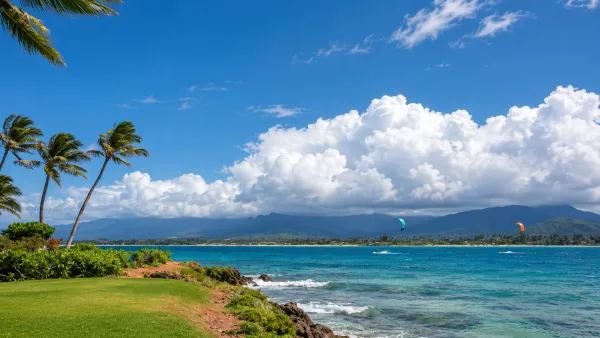
Maui Kite Beach is one of Hawaii's most established kitesurfing destinations, located at the western end of Kanaha Beach Park on Maui's northern coastline, just a few minutes from Kahului Airport. Commonly known simply as Kite Beach, the area includes several recognised riding sections, including Teach Beach and the more advanced Pro Beach area. Its combination of reliable trade winds, sandy launching areas and varied ocean conditions has made it a central location for kitesurfing on Maui. Unlike sheltered flat-water lagoons, Kite Beach offers a mixture of wind-driven chop, small breaking waves and more demanding reef breaks farther offshore. The inner riding areas provide opportunities for controlled freeriding and skill progression, while the outer reef attracts experienced riders seeking wave conditions. The spot's convenient access and established kiteboarding community make it particularly appealing to visiting kitesurfers looking for regular sessions along Maui's famous north shore.
The main kitesurfing season runs from May to October, when the northeasterly trade winds reach their greatest consistency, although suitable conditions can occur throughout the year. During the peak summer months, winds commonly range from 15 to 25 knots, with stronger afternoons occasionally exceeding 30 knots. The prevailing northeast to east-northeast trades generally approach the beach at a side-onshore angle, creating favourable conditions for long freeride runs and powered sessions across the bay. Wind strength often increases during the late morning and afternoon as the trade-wind flow develops, although local terrain effects can produce gusts and variations in direction. Winter conditions are generally less predictable, with interruptions to the trade winds and occasional stronger weather systems bringing changing wind directions and larger ocean swells. Riders should check local forecasts carefully, particularly when unusual wind directions or stronger surf are expected.
Water conditions at Maui Kite Beach vary considerably between the sheltered inner sections and the exposed outer reef. Close to shore, the water is typically choppy with small breaking waves, offering suitable conditions for freeriding, transitions and improving board control. Farther offshore, reef formations influence wave shape and create more organised breaking sections when Pacific swell reaches the north shore. During smaller swell periods, intermediate riders can enjoy manageable ocean conditions, while larger winter swells can transform the outer reef into a challenging wave-riding environment suitable only for experienced kitesurfers. The seabed consists of sand near the main beach, with coral and rocky reef sections farther out. Water depth changes around the reef, making it important to identify shallow areas before attempting jumps or riding directional boards through breaking waves. A freeride twin-tip is the most versatile choice for everyday conditions, while a directional surfboard is particularly rewarding when the outer reef produces clean, rideable waves.
Launching and landing take place from designated sandy sections of Kanaha Beach Park, with parking available near the principal beach access points. Although the beach provides convenient equipment preparation space, the popularity of the location means that launching areas can become crowded during favourable wind conditions. Kite Beach is suitable for intermediate riders and supervised beginner progression in appropriately selected conditions, while the outer reef requires considerably more experience. Local kiteboarding regulations are particularly important because of the proximity to Kahului Airport. Kiteboarding is subject to designated operating areas and time restrictions, including the established prohibition on launching before 11:00 a.m. Riders should verify current rules and any temporary restrictions before entering the water. Kite sizes around 7–12 m² are commonly used during the trade-wind season, depending on wind strength and rider weight. Water temperatures generally remain around 23–27°C, making boardshorts and a rash guard sufficient for many sessions, although a lightweight wetsuit can provide additional comfort and protection.
The main hazards include shallow coral reefs, changing ocean swell, strong trade-wind gusts, crowded launching areas and the restrictions associated with nearby airport operations. Riders should maintain adequate clearance from the reef, particularly during lower water levels or larger wave conditions, and avoid entering breaking sections beyond their experience. Stronger winds and offshore currents can complicate equipment recovery, while congestion near the beach requires careful launching and landing procedures. Respecting designated kiteboarding zones, local right-of-way rules and the daily operating restrictions is essential to maintaining safe access. With its reliable summer trade winds, convenient sandy beach and progression from moderate inner-water conditions to challenging reef waves, Maui Kite Beach remains one of the defining kitesurfing locations in Hawaii. Its combination of accessible freeriding, established kiteboarding infrastructure and genuine wave-riding potential makes it a favourite among intermediate and advanced riders exploring Maui's north shore.
Something missing or out of date at this spot? Suggest a correction
This spot does not have a photo gallery yet.
Kited here? Add the first photos (free account, one minute).
Maui Kite Beach is best suited for
Spot profile
- Travel spotA proven kite destination with reliable conditions, worth a trip. Kiters fly in from all over the world for their kite holidays, and you will probably find schools, rentals and a lively kite scene nearby.
- Family spotEasy to visit with family and friends. Facilities are close by and non-kiters have plenty to do while you are on the water, so everyone enjoys the day, whether they kite or not.
- Local spotNot worth a long trip, but a great option if you live nearby and the wind is on. Ideal for a quick session after work or a spare afternoon, without planning a whole trip.
Equipment
A medium kite suits most days on the typical Maui trade winds, with kite sizes in the 9 to 12 meter range working well for average riders and a smaller, high-wind option (such as 7 or 8 meters) recommended in the summer highs. The water stays warm throughout the year, so most riders feel comfortable in boardshorts or a thin spring suit, though a shorty wetsuit can be useful for windier or overcast days or early morning sessions. Reef booties are well worth bringing, especially if planning to venture outside the lagoon or ride where reef exposure is a risk, as the outer area has sharper coral bottoms.
Wind Conditions
Main wind directions
Windy days per month
Share of the days with more than 10 knots.
Wind speed range
12 - 22 knots
Wind strength on rideable days
- 7-11 kn23%
- 12-16 kn40%
- 17-22 kn36%
- 23-28 kn1%
- 29+ kn0%
Share of the daytime hours with 7+ knots.
Calculate your kite size
Estimate for a rider of your weight at Maui Kite Beach: kite size = weight / wind speed x 2.2, adjusted for the kite shape and aspect ratio. Board, skills and gusts change the ideal size.
Month by month at Maui Kite Beach
| Metric | Jan | Feb | Mar | Apr | May | Jun | Jul | Aug | Sep | Oct | Nov | Dec |
|---|---|---|---|---|---|---|---|---|---|---|---|---|
| Wind | ||||||||||||
| Rideable daysdays | 20.5 | 22.5 | 25.5 | 26.5 | 29 | 30 | 31 | 30.5 | 29.5 | 28.5 | 25.5 | 24 |
| Usable windhours | 157 | 178 | 211 | 219 | 254 | 269 | 279 | 269 | 258 | 236 | 211 | 192 |
| Average gustsknots | 20 | 24 | 25 | 27 | 29 | 32 | 35 | 32 | 30 | 27 | 25 | 23 |
| Temperature | ||||||||||||
| Air°C | 25 | 25 | 26 | 26 | 27 | 28 | 28 | 28 | 28 | 28 | 27 | 26 |
| Sea°C | 25 | 25 | 25 | 25 | 25 | 26 | 26 | 27 | 27 | 27 | 26 | 26 |
| Weather and sea | ||||||||||||
| Sunshinehours / day | 10.1 | 10.4 | 10.5 | 11.3 | 12.1 | 12.8 | 12.8 | 12.4 | 11.7 | 10.9 | 10 | 9.6 |
| Rainmm | 52 | 43 | 53 | 50 | 9 | 4 | 9 | 17 | 5 | 31 | 42 | 59 |
| Rainy daysdays | 7.5 | 7 | 9.5 | 8 | 2.5 | 1 | 2 | 3 | 2 | 4 | 6.5 | 7 |
| Wave heightm | 0.7 | 0.7 | 0.6 | 0.7 | 0.7 | 0.7 | 0.6 | 0.7 | 0.6 | 0.6 | 0.6 | 0.6 |
Typical monthly averages over several years, based on weather data: local thermal winds are usually stronger than shown, and sea temperature and waves are a regional estimate. A rideable day has at least 3 hours of 7+ knots between 10:00 and 18:00, usable wind counts those hours, a rainy day has 1 mm or more.
Forecast on Windy.com
Kitesurfing Safety & Local Rules at Maui Kite Beach
The main hazards at Maui Kite Beach, within Kanaha Beach Park near Kahului Airport, are shallow coral reefs, changing wave conditions and strict local kitesurfing regulations. The inside riding area generally offers relatively sheltered water, but short, choppy waves and occasional gusts can still challenge inexperienced riders. Farther offshore, exposed reef sections create significantly greater risks, particularly when larger swells produce powerful breaking waves. Shallow coral formations can cause serious cuts, foot injuries and equipment damage during falls or unsuccessful kite relaunches. Avoid riding over shallow reef, maintain adequate water depth for jumping and consider protective reef footwear when entering unfamiliar areas.
Wind conditions can become gusty, particularly around the launching area, while stronger trade winds may generate increasingly challenging chop and wave conditions. Beyond the reef, deeper water and stronger currents can complicate board recovery, kite relaunching and self-rescue. Riders who lose control near shallow coral risk being dragged across sharp underwater obstacles, while equipment failures farther offshore may make returning to the beach difficult. Assess wind strength, swell and reef conditions before launching, remain within your experience level and avoid venturing beyond the sheltered riding area without reliable self-rescue skills. Return to shore promptly if wind conditions deteriorate or equipment problems develop.
Maui Kite Beach is subject to important restrictions because of its proximity to Kahului Airport. Kiteboarding is prohibited before 11:00 a.m., and riders must use the designated launching, landing and riding areas while remaining clear of the restricted airport approach corridor extending offshore from the runway. Entering prohibited areas may create aviation safety risks and lead to enforcement action. The beach can also become crowded with beginners, instructors and experienced riders, particularly during weekends and peak season. Maintain generous clearance during launching and landing, respect right-of-way rules and avoid crossing other riders' lines. Always check current park signage and local regulations before riding, as compliance is essential for both personal safety and continued access to the spot.
How to reach Maui Kite Beach
- Closest cityKahului
- How to get thereThe spot is on the west end of Kanaha Beach Park, just west of Kahului Airport, so the easiest access is by car or rental pickup from Kahului. It is only a few minutes from the airport, and visitors commonly drive to the western parking area at Kanaha Beach Park. Travelers arriving from other islands or the mainland usually fly into Kahului Airport first, then take a short drive to the beach.
- AccessThe spot is publicly accessible through Kanaha Beach Park, with parking close to the beach. Access is regulated by local kiteboarding rules, including the no-kiteboarding-before-11am rule and designated riding zones. There is no indication of a special fee specifically for the kite area in the available information.
No-Wind Days: What to Do Around Maui Kite Beach
Maui Kite Beach, located within Kanaha Beach Park on the island's beautiful northern coastline, offers much more than one of Hawaii's best-known kitesurfing locations. Just minutes from Kahului and its international airport, this tropical beach combines golden sand, turquoise Pacific waters and spectacular views of the West Maui Mountains with convenient access to the island's main attractions. Its relaxed atmosphere, nearby restaurants and excellent opportunities for outdoor exploration make it particularly appealing for families, couples and non-kiting partners looking to experience Maui beyond kitesurfing.
Kanaha Beach Park is a destination in its own right, with long sandy stretches, shaded grassy areas, picnic tables and beautiful views across the northern coastline. The park provides a pleasant setting for beach walks, photography, relaxing beneath the trees or watching the colourful activity on the water. Its natural surroundings are particularly attractive during the quieter morning hours, before the afternoon trade winds become stronger. Swimming and snorkelling may be possible in suitable areas when conditions are calm, although currents, reef formations and changing surf require caution. Visitors should respect designated watersports zones and avoid swimming near active launching areas.
The nearby town of Pāʻia is one of Maui's most charming coastal communities, known for its colourful wooden buildings, independent boutiques, cafés and relaxed surf culture. Located a short drive east of Kanaha, Pāʻia offers an enjoyable place to spend a morning exploring local shops, tasting Hawaiian cuisine or enjoying a leisurely lunch. Fresh poke, fish tacos, tropical fruit, locally roasted coffee and traditional Hawaiian plate lunches are among the island's culinary highlights. The town also provides access to several beautiful North Shore beaches, including Baldwin Beach, which is popular for walking, photography and relaxing beside the ocean when conditions permit.
Continuing east along Maui's North Shore leads to Hoʻokipa Beach Park, one of Hawaii's most famous surfing and windsurfing locations. The elevated viewpoints provide spectacular opportunities to watch experienced surfers tackle powerful Pacific waves, particularly during the winter swell season. Hoʻokipa is also known for Hawaiian green sea turtles, which sometimes rest on the beach. Visitors should observe these protected animals from a respectful distance and never touch, feed or disturb them. The combination of dramatic ocean scenery, wildlife and traditional Hawaiian surf culture makes Hoʻokipa one of the most rewarding short excursions from Maui Kite Beach.
For visitors interested in exploring Maui's tropical interior, ʻĪao Valley State Monument offers a completely different landscape from the exposed northern coastline. Located inland from Wailuku, this lush valley is famous for its steep green mountains, tropical vegetation and the distinctive ʻĪao Needle rock formation. Short walking paths and scenic viewpoints provide opportunities to appreciate the island's volcanic geography and cultural history. The valley is also an important site in Hawaiian history, making it a rewarding destination for visitors interested in the island's heritage. Advance reservations are generally required for non-Hawaii residents, and information about access and opening hours is available through the official ʻĪao Valley State Monument reservation website.
Maui's famous Road to Hāna offers another unforgettable experience for visitors with a full day available. This scenic coastal route winds through lush rainforest, dramatic cliffs, tropical valleys and small Hawaiian communities, with opportunities to discover waterfalls, botanical landscapes and spectacular ocean viewpoints. The journey is best enjoyed slowly, with time to appreciate the scenery and respect local access restrictions. Some attractions require advance reservations, while narrow roads, limited parking and rapidly changing weather conditions demand careful planning. Visitors should avoid entering private property or stopping in prohibited areas and consider a guided tour if they prefer not to drive the winding route themselves.
For a different perspective on the island, Haleakalā National Park offers extraordinary volcanic landscapes and panoramic views from the summit of Maui's massive shield volcano. The high-altitude environment contrasts dramatically with the tropical coastline, with hiking trails crossing volcanic terrain and native alpine ecosystems. Sunrise visits are particularly famous, although reservations are required for vehicles entering the summit district during designated early-morning hours. Sunset can also be spectacular, while the park's clear skies provide excellent opportunities for stargazing when conditions permit. Visitors should bring warm clothing, as temperatures near the summit can be surprisingly cold. Information about park access, reservations and hiking routes is available through the official Haleakalā National Park website.
Kahului provides the practical side of a Maui holiday, with supermarkets, shopping centres, restaurants, rental car agencies and other essential services located close to Kanaha Beach Park. Accommodation in the immediate area is relatively limited compared with Maui's major resort destinations, but hotels and vacation rentals can be found around Kahului, Wailuku and the surrounding communities. Visitors seeking a more traditional resort atmosphere can explore the beaches and accommodation areas of South Maui or West Maui, although travel times vary with traffic. A rental car is strongly recommended for exploring the island, and visitors should book accommodation and vehicles well in advance during busy holiday periods. Short-term rental regulations should also be checked when choosing privately advertised accommodation.
With its beautiful tropical coastline, colourful North Shore villages and easy access to Maui's remarkable natural attractions, Maui Kite Beach offers plenty to enjoy beyond kitesurfing. Whether exploring the cafés of Pāʻia, watching surfers and sea turtles at Hoʻokipa, discovering the lush landscapes of ʻĪao Valley or driving through the volcanic scenery of Haleakalā National Park, visitors will find an exceptional combination of outdoor adventure and Hawaiian island culture. Its convenient location and relaxed atmosphere make Kanaha an excellent base for a family kitesurfing holiday or a longer Maui escape with non-kiting partners.
Other kitesurfing spots near Maui Kite Beach
All kitesurfing spots in United States Of America
Last updated: