
Kitesurfing in Gold Coast
Gold Coast · Australia
Been here? Want to go? Add it to your kite spot lists.
Create a free account to save it- Spot type Wave
- Rider level intermediate
- Water Dark - Clear
- Beach Sand
- Crowd Seasonal crowd
- Tide effect Conditions vary
Kitesurfing in Gold Coast: Conditions, Wind & Season
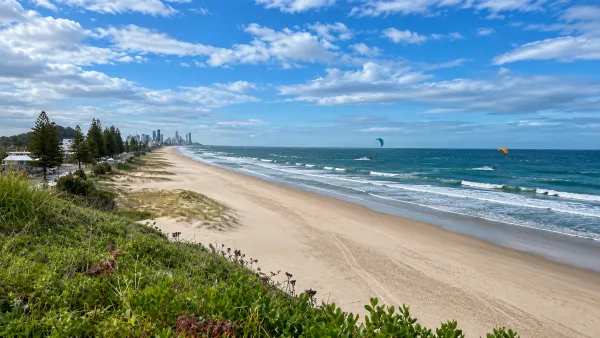
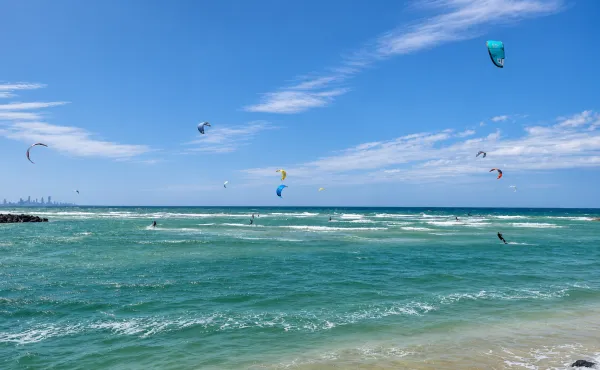
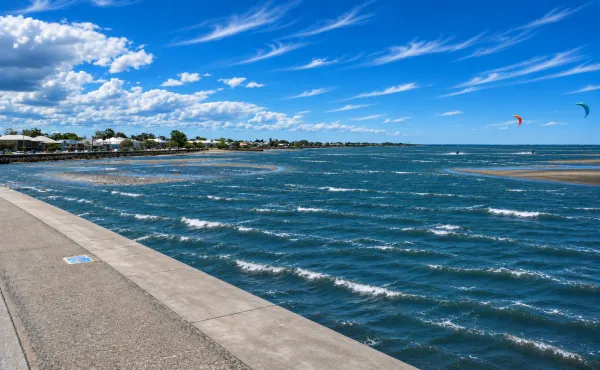
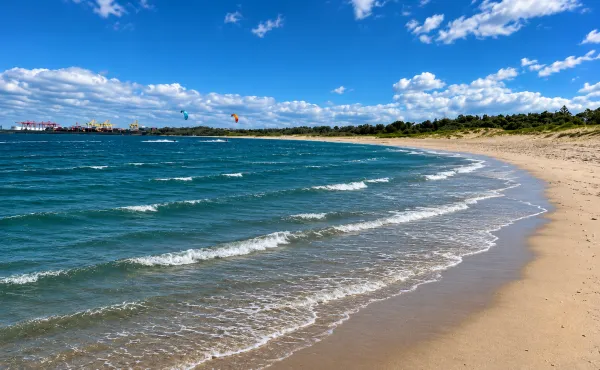
The Gold Coast is one of Queensland's most versatile and accessible kitesurfing regions, stretching along the southeastern coastline of Australia, approximately 70 kilometres south of Brisbane. Its main attraction for kiteboarders is the Gold Coast Broadwater, an extensive sheltered waterway separated from the Pacific Ocean by South Stradbroke Island and The Spit. Numerous shallow sandbanks, protected channels and sandy foreshore areas create favourable conditions for freeriding, freestyle and skill progression. Established kiteboarding locations include KFC at Len Fox Park, Shearwater Park, Runaway Bay, The Spit and several launching areas around Southport and Labrador. Beyond the sheltered Broadwater, the ocean-facing coastline offers considerably different riding conditions, with established wave-kitesurfing locations around Main Beach, Burleigh Heads and Currumbin. This combination makes the Gold Coast particularly attractive to riders looking for a variety of conditions within a relatively compact geographical area.
The main kitesurfing season generally extends from October through March, although suitable riding conditions frequently occur between August and April. Northerly and northeasterly afternoon sea breezes are particularly common during spring and summer, while easterly and southeasterly winds associated with regional trade-wind patterns provide additional riding opportunities. Typical wind speeds range from approximately 15 to 25 knots, with stronger conditions developing during passing weather systems and southerly changes. The orientation of the Broadwater allows riders to select different launching locations according to the prevailing wind direction, although buildings, trees and coastal infrastructure can generate localised turbulence. Westerly winds are generally less favourable, particularly along the ocean-facing beaches, where they create potentially dangerous offshore conditions. Winter sessions are possible but tend to be less predictable, with suitable winds occurring more intermittently than during the warmer months.
Water conditions within the Gold Coast Broadwater are predominantly flat to moderately choppy, with extensive sandy shallows and shifting sandbanks providing protection from wind-generated waves. Tidal variations significantly influence the available riding area, particularly around KFC, Shearwater Park and other shallow-water locations. Lower tides expose extensive sandbanks and can create exceptionally smooth water immediately downwind of them, although insufficient depth may restrict riding and jumping. Higher tides generally increase the usable water area but can introduce additional chop as the protective sandbanks become submerged. Deeper channels provide opportunities for hydrofoiling, although strong tidal currents, recreational boat traffic and navigation markers require careful attention. Freeriding, freestyle and wakestyle are particularly well suited to the sheltered Broadwater, while stronger winds provide excellent big-air opportunities wherever sufficient depth and downwind clearance are available. Riders seeking proper wave conditions can explore the ocean-facing beaches, where Pacific Ocean swells produce everything from manageable beach breaks to powerful surf.
Access to the main kiteboarding locations is generally straightforward, with public parking, established foreshore parks and sandy beach entrances distributed throughout Southport, Labrador and Runaway Bay. Several popular launches feature grassy rigging areas adjacent to the water, making equipment preparation particularly convenient. Local kiteboarding schools and specialist equipment shops operate throughout the region, providing instruction, equipment advice and repair services. Selected sheltered areas can offer suitable learning conditions under professional supervision, although tidal currents, boat traffic and fixed obstacles make some locations inappropriate for beginners. Medium-sized freeride kites and twin-tip boards cover most typical summer conditions, while larger kites or hydrofoil equipment can extend riding opportunities during lighter winds. Boardshorts and a rash guard are generally comfortable during summer, with a shorty or 3/2 mm wetsuit providing additional protection during the cooler months. Crowds tend to increase during summer weekends and school holidays, particularly around the established launching parks and popular shallow-water sections.
The principal hazards around the Gold Coast include strong tidal currents, shallow sandbanks, busy navigation channels, submerged obstacles and the considerable number of recreational water users. Particular caution is required near the Gold Coast Seaway, where tidal flows, ocean swell and vessel traffic can create challenging conditions. Downwinders through the Broadwater require careful route planning to avoid navigation channels, restricted areas and unsuitable landing locations. Along the ocean-facing beaches, shorebreak, rip currents and crowded surfing areas introduce additional challenges. Riders must respect flagged swimming zones, designated launching areas and any applicable local maritime or aviation-related restrictions. With its extensive sheltered waterways, favourable seasonal sea breezes and immediate access to Pacific Ocean waves, the Gold Coast ranks among Australia's most diverse urban kitesurfing destinations. Its greatest strengths lie in flat-water freeriding, freestyle, hydrofoiling and technical progression, complemented by excellent wave-riding and big-air opportunities along the more exposed sections of the Queensland coastline.
Something missing or out of date at this spot? Suggest a correction
This spot does not have a photo gallery yet.
Kited here? Add the first photos (free account, one minute).
Gold Coast is best suited for
Spot profile
- Travel spotA proven kite destination with reliable conditions, worth a trip. Kiters fly in from all over the world for their kite holidays, and you will probably find schools, rentals and a lively kite scene nearby.
- Family spotEasy to visit with family and friends. Facilities are close by and non-kiters have plenty to do while you are on the water, so everyone enjoys the day, whether they kite or not.
- Local spotNot worth a long trip, but a great option if you live nearby and the wind is on. Ideal for a quick session after work or a spare afternoon, without planning a whole trip.
Equipment
A medium-sized kite is usually the best match for average Gold Coast wind, with smaller or larger sizes depending on actual conditions each day. Wetsuits are rarely necessary during the warmer months (October through April), when boardshorts, rash vests, or spring suits are usually enough; cooler months may call for a thin wetsuit or shorty to stay comfortable. Most riders rely on a twin-tip freeride board, swapping to a smaller board when chop builds, while a hydrofoil can make sense during lighter wind spells. Footwear is generally optional—barefoot is common on the sandy and grassy rigging areas—but booties may help if you expect to launch from rough, rocky, or shell-strewn patches.
Wetsuit suggestion by month
- JanShorts26°
- FebShorts26°
- MarShorts26°
- AprShorts25°
- MayShorty23°
- JunShorty21°
- JulShorty20°
- AugShorty21°
- SepShorty21°
- OctShorty22°
- NovShorty23°
- DecShorts24°
- Shorty Shorty or neoprene top
- Shorts Boardshorts and lycra
Based on the average sea temperature of each month. A guide for an average rider: if you feel the cold, go one step warmer.
Wind Conditions
Main wind directions
Windy days per month
Share of the days with more than 10 knots.
Wind speed range
10 - 18 knots
Wind strength on rideable days
- 7-11 kn83%
- 12-16 kn16%
- 17-22 kn1%
- 23-28 kn0%
- 29+ kn0%
Share of the daytime hours with 7+ knots.
Calculate your kite size
Estimate for a rider of your weight at Gold Coast: kite size = weight / wind speed x 2.2, adjusted for the kite shape and aspect ratio. Board, skills and gusts change the ideal size.
Month by month at Gold Coast
| Metric | Jan | Feb | Mar | Apr | May | Jun | Jul | Aug | Sep | Oct | Nov | Dec |
|---|---|---|---|---|---|---|---|---|---|---|---|---|
| Wind | ||||||||||||
| Rideable daysdays | 25 | 23 | 23.5 | 20 | 19 | 13 | 16.5 | 21.5 | 26 | 26 | 26 | 27 |
| Usable windhours | 186 | 175 | 174 | 151 | 150 | 90 | 118 | 146 | 179 | 187 | 178 | 190 |
| Average gustsknots | 19 | 20 | 19 | 17 | 16 | 14 | 15 | 16 | 19 | 19 | 19 | 20 |
| Temperature | ||||||||||||
| Air°C | 26 | 26 | 25 | 23 | 21 | 19 | 19 | 20 | 22 | 24 | 24 | 26 |
| Sea°C | 26 | 26 | 26 | 25 | 23 | 21 | 20 | 21 | 21 | 22 | 23 | 24 |
| Weather and sea | ||||||||||||
| Sunshinehours / day | 11.1 | 10.6 | 9.1 | 9.7 | 8.9 | 9 | 8.7 | 9.7 | 10.6 | 10.8 | 10.2 | 11.6 |
| Rainmm | 135 | 165 | 309 | 132 | 146 | 27 | 65 | 58 | 48 | 99 | 147 | 117 |
| Rainy daysdays | 19.5 | 16 | 19 | 13 | 11 | 4.5 | 8.5 | 7 | 7 | 9.5 | 15 | 14 |
| Wave heightm | 1.4 | 1.5 | 1.6 | 1.5 | 1.5 | 1 | 1.2 | 1.3 | 1.2 | 1.3 | 1.1 | 1.2 |
Typical monthly averages over several years, based on weather data: local thermal winds are usually stronger than shown, and sea temperature and waves are a regional estimate. A rideable day has at least 3 hours of 7+ knots between 10:00 and 18:00, usable wind counts those hours, a rainy day has 1 mm or more.
Wind and climate statistics: Weather data by Open-Meteo.com (CC BY 4.0), based on ERA5 data of the Copernicus Climate Change Service. A typical year, not a forecast.
Forecast on Windy.com
Kitesurfing Safety & Local Rules at Gold Coast
The main hazards along Queensland's Gold Coast, Australia, vary between the sheltered waters of the Broadwater and the exposed ocean beaches. Within the Broadwater and adjoining lagoons, shifting sandbanks and significant tidal variations can rapidly alter water depth, turning previously rideable sections into dangerously shallow flats. Unexpected groundings, fin strikes and hard impacts against the sandy seabed are particular concerns during jumps or high-speed manoeuvres. Tidal channels can generate strong currents, especially around waterway entrances and areas where multiple channels converge, complicating board recovery and self-rescue. Recreational boat traffic increases considerably during weekends and holiday periods, particularly near marinas, boat ramps and established navigation channels. Kitesurfers should maintain generous clearance from vessels, respect navigation rules and avoid riding across busy boating routes.
The ocean-facing beaches of the Gold Coast present different challenges, including shorebreak, breaking waves, rip currents and variable coastal wind conditions. Even relatively moderate swell can produce challenging water entry and exit conditions, particularly when stronger onshore winds coincide with an incoming tide. A dropped kite caught in breaking waves can generate considerable line tension, potentially dragging the rider or damaging equipment. Reliable kite control, appropriate wave-riding experience and well-developed self-rescue skills are therefore important when venturing beyond the sheltered waterways. Riders should assess the strength and direction of currents before launching, identify alternative exit points and maintain sufficient clearance from rocky headlands and occupied surfing areas. Sudden weather changes and approaching thunderstorms may further complicate conditions, particularly during the warmer months.
The Gold Coast's heavily developed waterfront is shared with swimmers, surfers, fishermen, paddleboarders, cyclists and pedestrians, making responsible beach-sharing essential. Many established launching areas are located beside popular public parks and promenades, where restricted space and unexpected pedestrian movements increase the risks associated with kite handling. Assisted launching and landing are strongly recommended during busy periods. Kitesurfers must remain outside flagged swimming areas and observe the applicable lateral and offshore exclusion distances, which should be confirmed with current signage and surf lifesaving personnel rather than relying on a single separation distance for every beach. Additional aviation-related restrictions may apply near Gold Coast Airport in Coolangatta. Always verify current local regulations, respect designated riding boundaries and avoid launching when insufficient unobstructed space is available. Responsible riding practices are fundamental to preserving kitesurfing access throughout the Gold Coast.
How to reach Gold Coast
- Closest cityGold Coast
- How to get thereThe main launch areas are reached by car through the Gold Coast’s coastal road network, including Marine Parade for some Broadwater access points such as Len Fox Park. For visitors coming from further away, the easiest flight option is Gold Coast Airport, though some spots are also within practical driving distance from Brisbane. Public access is common at parks and foreshore areas, but riders should avoid the no-go areas near flagged swimming beaches and any restricted airport zones.
- AccessMost of the useful kitesurfing access on the Gold Coast is publicly reachable from parks, foreshore roads, and beachside reserve areas, with no special permit needed for normal recreational use in the main kiting zones. Access can be regulated by local exclusion zones, especially near flagged swimming beaches and around airport-controlled areas, so the practical requirement is choosing an approved launch rather than paying an entry fee. Some launches are especially convenient because they have grassy rigging areas and nearby parking.
No-Wind Days: What to Do Around Gold Coast
Stretching along the southeastern coast of Queensland, the Gold Coast is one of Australia's most diverse seaside holiday destinations. Its famous skyline, extensive sandy beaches and subtropical climate have made it an internationally recognised tourist region, but there is considerably more to discover than the high-rise buildings of Surfers Paradise. Sheltered waterways, coastal nature reserves, lively neighbourhoods and a surprisingly wild mountainous hinterland provide an impressive variety of experiences. The northern Gold Coast, particularly around Southport, Labrador and Runaway Bay, offers a more relaxed environment while remaining conveniently connected to the region's major attractions.
The Broadwater is one of the most distinctive features of the northern Gold Coast. This extensive sheltered waterway, separated from the Pacific Ocean by South Stradbroke Island and the Spit, provides numerous opportunities for outdoor recreation. Broadwater Parklands in Southport is particularly attractive for families, with extensive grassy areas, playgrounds, picnic facilities, walking paths and a children's water play area. Farther north, the waterfront around Labrador and Runaway Bay offers quieter surroundings, fishing opportunities and pleasant views across the water. Kayaking and stand-up paddleboarding are popular ways to explore sheltered sections of the Broadwater, although tidal currents and recreational boat traffic require appropriate caution.
The ocean-facing coastline offers an almost continuous succession of sandy beaches, stretching from the Spit in the north to Coolangatta near the New South Wales border. Surfers Paradise is undoubtedly the most recognisable, with its impressive urban skyline and lively beachfront promenade. Broadbeach combines attractive parklands with excellent restaurants and shopping opportunities, while the southern beaches around Burleigh Heads, Palm Beach and Currumbin retain a more relaxed coastal character. Walking and cycling along the beachfront is an enjoyable way to discover the differences between these neighbourhoods. The Pacific Ocean can produce powerful surf and dangerous rip currents, so visitors should always swim between the red and yellow flags at patrolled beaches.
Families looking for entertainment away from the beach will find some of Australia's best-known theme parks within the Gold Coast region. Sea World combines marine animal presentations with amusement rides, while Warner Bros. Movie World and Dreamworld offer roller coasters, themed attractions and entertainment for different age groups. Wet'n'Wild provides an alternative for particularly hot days, with swimming pools and numerous water slides. Visitors more interested in Australian wildlife can head south to Currumbin Wildlife Sanctuary, where koalas, kangaroos, wombats and other native species can be observed in landscaped natural surroundings. The variety of attractions makes it relatively easy to organise activities suitable for children of different ages.
For a less commercial experience, the Spit and South Stradbroke Island reveal another side of the Gold Coast. The Spit features coastal vegetation, walking paths, fishing areas and relatively undeveloped ocean beaches, despite its proximity to the city. South Stradbroke Island offers an even greater sense of isolation, with sandy tracks, native woodland, extensive beaches and opportunities to observe wallabies and coastal birdlife. Accessible by boat, the island makes an interesting excursion for visitors who appreciate natural surroundings and quieter landscapes. Organised cruises along the Gold Coast's waterways provide another enjoyable perspective on the region, passing marinas, waterfront neighbourhoods and sheltered natural areas.
Perhaps the greatest surprise for first-time visitors is how quickly the coastal landscape changes when travelling inland. Springbrook and Lamington National Parks protect extensive areas of ancient subtropical rainforest, forming part of the UNESCO-listed Gondwana Rainforests of Australia. Waterfalls, deep valleys, mountain viewpoints and forest walking trails provide a spectacular contrast to the urban coastline. Natural Bridge in Springbrook National Park is particularly impressive, with a waterfall flowing through a naturally formed rock arch into a cave inhabited by glow-worms. Lamington National Park offers more extensive hiking opportunities, while Tamborine Mountain combines rainforest walks, botanical gardens, artisan shops, wineries and local food producers. The cooler mountain environment is particularly welcome during the warmer Queensland summer months.
The Gold Coast's food and shopping scene is as varied as its landscapes. Southport offers an interesting selection of Asian restaurants, particularly around its Chinatown precinct, while Main Beach and Marina Mirage feature waterfront dining and more upmarket establishments. Surfers Paradise is the centre of the region's nightlife, with bars, restaurants and entertainment venues, whereas Broadbeach offers a somewhat more sophisticated dining atmosphere. Independent cafés, weekend markets and local food producers are scattered throughout the coastal suburbs. Art and culture enthusiasts can also visit HOTA, the Home of the Arts, which hosts exhibitions, performances, outdoor events and cultural activities in a landscaped precinct beside the Nerang River.
Accommodation is available across virtually every budget, from holiday parks and simple motels to self-catering apartments, beachfront hotels and extensive family resorts. Staying around Southport, Labrador or Runaway Bay can be particularly convenient for visitors who prefer quieter surroundings and easy access to the Broadwater. The G:link light rail connects Southport with Main Beach, Surfers Paradise and Broadbeach, reducing the need for a car when exploring the central coastal districts. A rental vehicle remains useful for visiting the hinterland, northern suburbs and more remote natural attractions. Brisbane is also within reach for a longer day trip, offering additional museums, botanical gardens, riverside walks and urban entertainment.
For anyone planning a family kitesurfing holiday in Queensland, the Gold Coast is an unusually versatile destination. Non-kiting partners can choose between wildlife encounters, rainforest hikes, shopping, cultural attractions and relaxing afternoons beside the ocean, while children have an almost endless selection of recreational activities. The combination of subtropical nature, modern infrastructure and Australian beach culture means that different interests can easily coexist within the same holiday. In fact, with so much to discover between the Pacific coastline and the mountainous hinterland, a few days without wind might be rather welcome.
Riders of Gold Coast
Who calls Gold Coast home, who is planning a trip and who has ridden it. Add yourself to meet them.
Nobody calls it home yet
Make it my home spotNobody on the way yet
I want to goBe the first to ride it
I have been hereUpcoming at Gold Coast
Sessions, downwinders and meetups planned by the riders of Gold Coast. Going too? Join them.
No session planned yet. Going out soon? Post it: the riders who follow Gold Coast get a notification.
Other kitesurfing spots near Gold Coast
All kitesurfing spots in Australia
Last updated: