
Kitesurfing in Currumbin
Gold Coast · Australia
Been here? Want to go? Add it to your kite spot lists.
Create a free account to save it- Spot type Wave
- Rider level intermediate
- Water Dark - Clear
- Beach Sand
- Crowd Seasonal crowd
- Tide effect Conditions vary
Kitesurfing in Currumbin: Conditions, Wind & Season
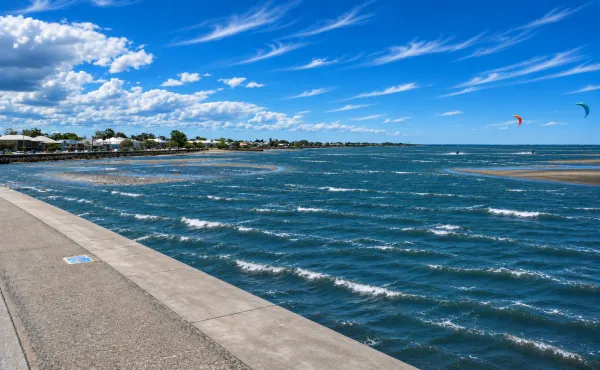
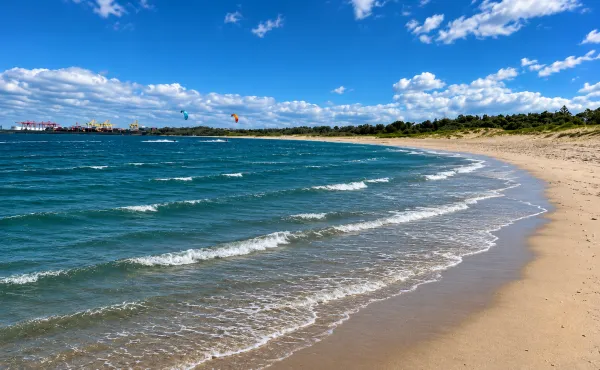
Currumbin is one of the most versatile kitesurfing locations on the southern Gold Coast of Queensland, Australia, approximately 20 kilometres south of Surfers Paradise. The spot combines two distinctly different riding environments: the sheltered waters of Currumbin Creek and the exposed ocean conditions around Currumbin Alley and the adjacent beaches. Inside the estuary, shifting sandbanks and shallow channels can create relatively flat water, while the creek entrance and ocean-facing coastline offer breaking waves generated by Pacific Ocean swells. This combination makes Currumbin particularly attractive to experienced riders looking to alternate between freestyle, freeriding and directional wave riding. However, the compact launching areas, strong tidal currents and numerous fixed obstacles make the location considerably more technical than its sheltered appearance might suggest.
The main kitesurfing season generally extends from September through March, with particularly favourable conditions between September and January, when northerly and northeasterly sea breezes become increasingly consistent. North, north-northeast and northeast winds are the preferred directions, providing suitable exposure across different sections of the creek and surrounding coastline. North-northwesterly and northwesterly winds may be usable in selected sheltered areas but can introduce considerable turbulence and unsafe offshore conditions along the ocean-facing beach. Typical wind speeds range from approximately 14 to 20 knots, although stronger weather systems can produce conditions reaching 25–30 knots. Medium-to-large freeride and wave kites are generally appropriate during regular sea-breeze sessions, while smaller equipment becomes necessary on stronger days. Tropical low-pressure systems and offshore cyclones can generate substantial ocean swells, but their associated winds, currents and weather disturbances may make conditions unsuitable for kitesurfing.
Water conditions at Currumbin are strongly influenced by the tidal cycle, incoming ocean swell and the constantly changing configuration of the estuary's sandbanks. Inside the creek, sheltered sections can provide relatively smooth water suitable for controlled freestyle manoeuvres, transitions and technical freeriding. During lower tides, extensive sandbanks become exposed, reducing the available riding area and creating potentially dangerous shallow sections. Higher tides generally increase the usable water depth, although strong tidal flows can significantly affect riding conditions and equipment recovery. Around Currumbin Alley, incoming ocean swell interacts with the outgoing or incoming tidal current, producing breaking waves and occasionally turbulent water. Directional surfboards are particularly well suited to the ocean-facing sections, while twin-tip riders can enjoy freeriding, freestyle and jumping where sufficient depth and clearance are available. Hydrofoiling is possible in deeper sections, although the narrow channels, submerged sandbanks and presence of other water users considerably restrict suitable riding areas. The possibility of accessing both flat water and waves is Currumbin's defining characteristic, but moving between these environments requires careful assessment of the creek entrance and prevailing conditions.
Access to the main riding area is relatively straightforward, with parking and public foreshore access available near the northern side of Currumbin Creek and around Palm Beach. Sandy launching areas are available, although their size varies considerably with the tide and the number of people using the shoreline. The creek is particularly popular with paddleboarders, swimmers and other recreational water users, while Currumbin Alley attracts substantial numbers of surfers during favourable swell conditions. Riders must carefully select an appropriate launching position and maintain generous separation from designated swimming areas, surf lifesaving flags and crowded surfing lineups. Current Gold Coast kiteboarding regulations and exclusion distances should be checked before launching. The limited rigging space and proximity of fixed obstacles make Currumbin unsuitable for beginners or riders without reliable kite control and upwind ability. Boardshorts and a rash guard are generally comfortable during summer, while a shorty or 3/2 mm wetsuit provides additional protection during cooler months. Protective footwear may be useful near rocky sections and artificial stone walls.
The principal hazards at Currumbin include strong tidal currents, rocky retaining walls, submerged sandbanks, breaking waves and the proximity of the bridge crossing the creek. Losing control or drifting downwind inside the estuary can quickly bring riders dangerously close to fixed structures, particularly when wind direction and tidal flow combine unfavourably. The creek entrance requires particular caution during outgoing tides and substantial ocean swells, when opposing currents and breaking waves can create difficult and unpredictable conditions. Crowded surfing areas and restricted launching space further increase the importance of maintaining adequate safety distances. Riders should be confident in water relaunching, body dragging, equipment recovery and self-rescue before attempting sessions here. With its distinctive combination of sheltered estuary water, ocean waves and favourable seasonal northeasterly sea breezes, Currumbin offers one of the more varied kitesurfing environments on Queensland's Gold Coast. Its greatest strengths lie in directional wave riding, technical freeriding and flat-water freestyle, provided experienced riders carefully coordinate their sessions with the wind, tide, swell and local access restrictions.
Something missing or out of date at this spot? Suggest a correction
This spot does not have a photo gallery yet.
Kited here? Add the first photos (free account, one minute).
Currumbin is best suited for
Spot profile
- Travel spotA proven kite destination with reliable conditions, worth a trip. Kiters fly in from all over the world for their kite holidays, and you will probably find schools, rentals and a lively kite scene nearby.
- Family spotEasy to visit with family and friends. Facilities are close by and non-kiters have plenty to do while you are on the water, so everyone enjoys the day, whether they kite or not.
- Local spotNot worth a long trip, but a great option if you live nearby and the wind is on. Ideal for a quick session after work or a spare afternoon, without planning a whole trip.
Equipment
A medium-sized freeride or wave kite is ideal for most regular sessions at Currumbin, with smaller kites on hand for days when the wind spikes during summer cyclones, and larger kites suited to lighter wind, especially inside the creek. A wave board is well-matched for the point and alley surf in strong or choppy ocean conditions, while a foil board can be perfect for the shallow, flatter water inside the creek when wind drops. Wetsuits are rarely essential in the warm season, but a shorty or thin spring suit is recommended during cooler months or for longer water time. Booties are generally not necessary thanks to the sandy beach entry, but those concerned about shells or rocks in the entrance or along creek banks may prefer them, especially at lower tide.
Wetsuit suggestion by month
- JanShorts25°
- FebShorts26°
- MarShorts26°
- AprShorts25°
- MayShorty23°
- JunShorty22°
- JulShorty21°
- AugShorty21°
- SepShorty21°
- OctShorty22°
- NovShorty22°
- DecShorty24°
- Shorty Shorty or neoprene top
- Shorts Boardshorts and lycra
Based on the average sea temperature of each month. A guide for an average rider: if you feel the cold, go one step warmer.
Wind Conditions
Main wind directions
Windy days per month
Share of the days with more than 10 knots.
Wind speed range
10 - 18 knots
Wind strength on rideable days
- 7-11 kn89%
- 12-16 kn10%
- 17-22 kn1%
- 23-28 kn0%
- 29+ kn0%
Share of the daytime hours with 7+ knots.
Calculate your kite size
Estimate for a rider of your weight at Currumbin: kite size = weight / wind speed x 2.2, adjusted for the kite shape and aspect ratio. Board, skills and gusts change the ideal size.
Month by month at Currumbin
| Metric | Jan | Feb | Mar | Apr | May | Jun | Jul | Aug | Sep | Oct | Nov | Dec |
|---|---|---|---|---|---|---|---|---|---|---|---|---|
| Wind | ||||||||||||
| Rideable daysdays | 21 | 19 | 19 | 17.5 | 18 | 10 | 14 | 18.5 | 22 | 22.5 | 21 | 22.5 |
| Usable windhours | 145 | 143 | 142 | 127 | 133 | 70 | 103 | 130 | 159 | 167 | 153 | 166 |
| Average gustsknots | 19 | 20 | 19 | 18 | 17 | 14 | 16 | 17 | 20 | 20 | 19 | 20 |
| Temperature | ||||||||||||
| Air°C | 26 | 26 | 25 | 23 | 21 | 19 | 18 | 20 | 21 | 23 | 24 | 26 |
| Sea°C | 25 | 26 | 26 | 25 | 23 | 22 | 21 | 21 | 21 | 22 | 22 | 24 |
| Weather and sea | ||||||||||||
| Sunshinehours / day | 11 | 10.6 | 9 | 9.7 | 8.8 | 9 | 8.7 | 9.7 | 10.6 | 10.9 | 10.2 | 11.7 |
| Rainmm | 171 | 177 | 360 | 136 | 146 | 30 | 74 | 67 | 55 | 115 | 151 | 116 |
| Rainy daysdays | 22 | 18.5 | 19.5 | 15 | 12.5 | 5.5 | 7 | 7.5 | 7 | 12.5 | 16 | 16 |
| Wave heightm | 1.4 | 1.5 | 1.6 | 1.5 | 1.5 | 1 | 1.2 | 1.3 | 1.2 | 1.3 | 1.1 | 1.2 |
Typical monthly averages over several years, based on weather data: local thermal winds are usually stronger than shown, and sea temperature and waves are a regional estimate. A rideable day has at least 3 hours of 7+ knots between 10:00 and 18:00, usable wind counts those hours, a rainy day has 1 mm or more.
Wind and climate statistics: Weather data by Open-Meteo.com (CC BY 4.0), based on ERA5 data of the Copernicus Climate Change Service. A typical year, not a forecast.
Forecast on Windy.com
Kitesurfing Safety & Local Rules at Currumbin
The main hazards at Currumbin, on Queensland's Gold Coast, Australia, are restricted launching space, strong tidal currents and the proximity of hard shoreline obstacles. The launching area on the northern side of Currumbin Creek bridge offers limited room for equipment preparation and kite handling, particularly during higher tides and busy periods. Stone retaining walls, rocky banks and the bridge itself can become serious hazards when positioned downwind of riders during launching or recovery. Sudden gusts or poorly controlled kite movements could result in hard impacts against these structures. Assisted launching and landing are strongly recommended, and riders should never attempt to launch without sufficient unobstructed downwind clearance. The narrow creek mouth can also generate powerful tidal currents, complicating board recovery and self-rescue, particularly when an outgoing tide carries riders towards the open ocean.
The interaction between tidal flows, ocean swell and variable wind conditions makes Currumbin a relatively demanding kitesurfing location. Currents around the creek entrance and Currumbin Alley can change considerably throughout a session, while breaking waves may further complicate navigation and equipment recovery. Summer weather systems can introduce sudden gusts, wind shifts and approaching thunderstorms, requiring continuous assessment of prevailing conditions. Although the creek has a predominantly sandy bottom, scattered shells, rocks and submerged debris may be present, particularly near the banks and following heavy rainfall. Reduced underwater visibility makes these obstacles difficult to identify, so riders should exercise caution when walking through unfamiliar shallow sections. Before launching, assess the direction and strength of tidal currents, identify suitable alternative exit points and consider the consequences of equipment failure near the creek entrance.
Currumbin Creek and its adjoining beaches are extensively shared with surfers, swimmers, paddleboarders, dog walkers and other recreational users. Currumbin Alley is particularly popular with surfers, making collisions and equipment entanglement significant concerns during favorable swell conditions. Local safety guidance specifies a minimum separation of 60 metres on either side of flagged swimming areas, with the exclusion zone extending 500 metres offshore. Riders should confirm these boundaries with current signage and surf lifesaving personnel before launching. Maintain generous clearance from surfing lineups, avoid extending kite lines across pedestrian routes and postpone launching whenever the available space becomes insufficient. The combination of confined launching areas, tidal currents, nearby infrastructure and intensive recreational traffic makes Currumbin better suited to confident, independent kitesurfers with reliable kite control and well-developed self-rescue skills.
How to reach Currumbin
- Closest cityGold Coast
- How to get thereCurrumbin is on the Gold Coast in southern Queensland, just north of Coolangatta. Driving is the easiest option if you are already in southeast Queensland or northern New South Wales, with direct road access via the Gold Coast Highway area. For air travel, the nearest major airport is Brisbane, about 115 km away from the spot, while Gold Coast Airport at Coolangatta is the most convenient airport for reaching Currumbin quickly by car or taxi.
- AccessCurrumbin is publicly accessible and does not appear to require a special entry fee for normal beach use. The practical launch area most often mentioned is near the north side of the Currumbin Creek bridge, with easy sand access and nearby parking. Access is however regulated by beach-use rules around swimming flags and no-kite zones, so riders need to stay clear of designated swimming areas.
No-Wind Days: What to Do Around Currumbin
Currumbin, located towards the southern end of Queensland's Gold Coast, offers a refreshing contrast to the high-rise developments and busy entertainment districts farther north. Here, the coastline is characterised by sandy beaches, rocky headlands, sheltered waterways and residential streets surrounded by tropical vegetation. Despite its proximity to some of Australia's most popular tourist attractions, Currumbin retains a relaxed coastal village atmosphere, deeply connected to the country's surfing and outdoor culture. Its combination of natural landscapes, wildlife attractions and excellent local amenities makes it particularly appealing to families and travellers who prefer an active but unhurried holiday.
Currumbin Beach is one of the most picturesque stretches of coastline on the southern Gold Coast. The distinctive Elephant Rock, rising above the southern end of the beach, provides an excellent viewpoint overlooking the Pacific Ocean and the surrounding coastline. At the opposite end, Currumbin Rock and the entrance to Currumbin Creek create another attractive coastal landmark. Walking along the beachfront is particularly enjoyable in the early morning, when surfers head into the water and local cafés begin serving breakfast. During the annual humpback whale migration, generally between June and November, the elevated coastal viewpoints can also offer excellent opportunities to observe these remarkable marine mammals. Swimming should be limited to patrolled areas between the red and yellow flags.
Currumbin Creek provides a completely different recreational environment from the exposed ocean beaches. Its tidal waterways extend inland through residential neighbourhoods, mangroves and green parklands, creating attractive conditions for kayaking and stand-up paddleboarding when tides and currents are suitable. Equipment hire is available through local operators, making these activities accessible to visitors travelling without their own gear. The sandy banks and surrounding recreational areas are particularly popular with families, offering opportunities for picnics, fishing and relaxing beside the water. However, the creek entrance can experience strong tidal currents and boat traffic, so visitors should exercise caution when swimming or paddling near the ocean.
For families travelling with children, the Currumbin Wildlife Sanctuary is undoubtedly one of the area's greatest attractions. Established in 1947, the sanctuary has developed into an important centre for Australian wildlife conservation and rehabilitation. Visitors can discover native species such as koalas, kangaroos, wombats, crocodiles and cassowaries while learning about the challenges facing Australia's unique ecosystems. The colourful rainbow lorikeets are particularly associated with the sanctuary's history, and their feeding sessions remain a popular attraction. Walking through the landscaped grounds can easily occupy several hours, making the sanctuary an excellent alternative to a day at the beach.
Following Currumbin Creek inland leads to the beautiful Currumbin Valley, where the coastal suburbs gradually give way to rolling green hills, rainforest vegetation and rural properties. The Currumbin Rock Pools are a well-known natural attraction, with freshwater flowing between rocky formations surrounded by lush vegetation. Farther inland, the Mount Cougal section of Springbrook National Park offers rainforest walks, waterfalls and the remains of a historic sawmill, providing an interesting glimpse into the region's former timber industry. These destinations are particularly enjoyable for nature photography and short hiking excursions. Freshwater swimming conditions can change rapidly after rainfall, and visitors should be aware of submerged rocks, slippery surfaces and strong currents.
Currumbin's local food scene reflects the relaxed lifestyle of the southern Gold Coast. Small cafés, bakeries, beachfront restaurants and independent businesses offer everything from speciality coffee and creative breakfasts to fresh seafood and contemporary Australian cuisine. The neighbouring suburb of Palm Beach provides additional dining options, while Tugun retains a quieter village atmosphere with attractive beaches and local shops. Art enthusiasts visiting during September may also have the opportunity to experience the annual SWELL Sculpture Festival, which transforms Currumbin Beach into an open-air exhibition featuring sculptures by Australian and international artists. Seasonal markets and community events further contribute to the area's creative identity.
A short journey south brings visitors to Coolangatta and the border between Queensland and New South Wales. The coastal walking paths around Kirra Beach, Greenmount and Point Danger offer spectacular ocean views, while the famous Snapper Rocks provides an opportunity to watch some of Australia's most accomplished surfers. Across the state border, the Tweed Coast reveals another attractive landscape of quiet beaches, river estuaries and small coastal communities. Kingscliff is particularly enjoyable for its relaxed waterfront atmosphere, restaurants and cycling paths, while the Tweed Valley farther inland offers scenic countryside, local food producers and creative rural communities. These destinations make excellent half-day or full-day excursions from Currumbin.
Accommodation around Currumbin ranges from holiday apartments and private beach houses to smaller hotels and family-oriented properties, with additional options available in Palm Beach, Tugun and Coolangatta. The proximity of Gold Coast Airport makes the area particularly convenient for visitors arriving by air. Public buses connect the southern coastal suburbs with the wider Gold Coast, although a rental car is useful for exploring the hinterland and Tweed region. Visitors looking for more conventional entertainment can easily travel north towards Broadbeach and Surfers Paradise, where shopping centres, restaurants, entertainment venues and the region's famous theme parks provide additional activities. Staying in Currumbin, however, allows visitors to enjoy these attractions without necessarily spending their entire holiday in the busiest tourist districts.
Currumbin is particularly well suited to a family kitesurfing holiday on the Gold Coast because of the diversity of activities available practically on its doorstep. Non-kiting partners can explore Australian wildlife, paddle along sheltered waterways, discover rainforest trails or simply enjoy the excellent local cafés and beautiful coastal scenery. With the Currumbin Valley, the Tweed Coast and the attractions of the wider Gold Coast all within reach, there is little need to organise an elaborate itinerary in advance. Sometimes, a windless day is simply the perfect opportunity to discover the quieter and more natural side of one of Australia's busiest coastal holiday regions.
Riders of Currumbin
Who calls Currumbin home, who is planning a trip and who has ridden it. Add yourself to meet them.
Nobody calls it home yet
Make it my home spotNobody on the way yet
I want to goBe the first to ride it
I have been hereUpcoming at Currumbin
Sessions, downwinders and meetups planned by the riders of Currumbin. Going too? Join them.
No session planned yet. Going out soon? Post it: the riders who follow Currumbin get a notification.
Other kitesurfing spots near Currumbin
All kitesurfing spots in Australia
Last updated: