
Kitesurfing in Botany Bay
Sydney · Australia
Been here? Want to go? Add it to your kite spot lists.
Create a free account to save it- Spot type Flat
- Rider level beginner
- Water Dark - Clear
- Beach Sand
- Crowd Seasonal crowd
- Tide effect Conditions vary
Kitesurfing in Botany Bay: Conditions, Wind & Season
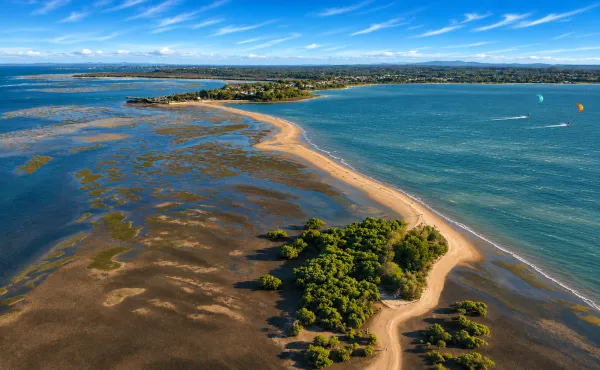
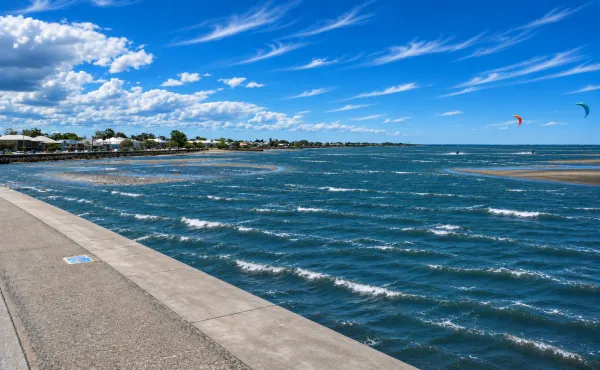
Botany Bay is one of Sydney's most established kitesurfing destinations, situated approximately 15 kilometres south of the city centre in New South Wales, Australia. The extensive bay offers several riding locations along its western and southern shores, particularly around Brighton-Le-Sands, Monterey, Ramsgate Beach, Dolls Point and Kurnell. Its sheltered geography significantly reduces the influence of Pacific Ocean swells, creating predominantly flat to moderately choppy water suitable for a wide range of riding abilities. Sandy beaches and relatively shallow coastal sections provide favourable conditions for supervised beginners, while deeper open-water areas attract experienced freeriders and hydrofoil enthusiasts. However, each launching location has distinct characteristics regarding wind exposure, available space and local restrictions. The proximity of Sydney Airport also introduces important operational limitations, making the selection of an appropriate and authorised kiteboarding area essential.
The main kitesurfing season extends from November through March, when Sydney's characteristic northeasterly sea breezes provide the most dependable riding opportunities. These winds typically develop during the late morning and strengthen throughout the afternoon, frequently reaching approximately 15–25 knots during favourable summer weather patterns. Northeasterly winds are particularly suitable for sections of the western shoreline, while easterly and southeasterly winds provide additional opportunities depending on the selected launch. Southerly winds associated with passing weather systems can produce considerably stronger sessions, although sudden wind increases and changes in direction require particular attention. The extensive surface of Botany Bay allows relatively clean airflow across exposed sections, but buildings, vegetation and industrial infrastructure can generate local turbulence near certain beaches. Westerly winds are generally unsuitable along the western shoreline because of their offshore orientation. Although kitesurfing is possible throughout the year, the warmer months offer the most attractive combination of reliable sea breezes, comfortable temperatures and extended daylight hours.
Water conditions vary considerably around Botany Bay according to wind direction, tidal height and local coastal geography. Sheltered nearshore sections feature predominantly sandy seabeds and relatively smooth water, providing favourable conditions for practising waterstarts, transitions, upwind riding and controlled freestyle manoeuvres. Farther offshore, stronger winds generate moderate chop and small ramps suitable for bump-and-jump sessions. Most established locations are rideable throughout much of the tidal cycle, although lower tides can expose sandbanks and reduce the usable water depth, while higher tides may considerably narrow certain launching beaches. Dolls Point offers additional variety because of its proximity to the entrance of the Georges River, where sandbanks and tidal currents influence the riding conditions. Freeriding is the most versatile discipline throughout the bay, while freestyle and wakestyle benefit from the smoother protected sections when sufficient water depth is available. Hydrofoiling is particularly attractive in deeper areas during lighter sea breezes, and stronger summer winds can provide enjoyable big-air conditions. Dedicated wave riding remains limited because of the bay's protection from significant ocean swell.
Access to the main kiteboarding locations is relatively straightforward, with public parking and beach access available along sections of the Grand Parade and around the southern shoreline. Several locations offer sandy or grassy areas for preparing equipment, although the available launching space varies considerably with the tide and the number of beach users. Established kiteboarding schools and equipment specialists operate around Botany Bay, providing professional instruction and support for visiting riders. The busiest periods generally coincide with favourable summer afternoon sea breezes, weekends and school holidays, when certain launching areas can become crowded. Particular attention must be paid to aviation-related restrictions near Sydney Airport, as well as designated swimming areas, maritime infrastructure and local kiteboarding regulations. Riders should confirm the current permitted launching and riding boundaries before entering the water rather than assuming that every publicly accessible beach allows kiteboarding. A shorty or 3/2 mm wetsuit is generally suitable during summer, while a 4/3 mm wetsuit may be preferable during the cooler months.
The principal hazards at Botany Bay include restricted airspace, commercial and recreational vessel traffic, tidal currents, shallow sandbanks and sudden changes in wind conditions. The bay accommodates major airport and port infrastructure, making it particularly important to remain outside restricted areas, navigation channels and shipping routes. Strong tidal currents can develop around the Georges River entrance and other narrow coastal passages, potentially complicating equipment recovery or self-rescue. Summer southerly changes, locally known as southerly busters, can introduce abrupt and substantial increases in wind strength, sometimes accompanied by thunderstorms. Riders should also avoid jumping over shallow sandbanks and maintain adequate separation from swimmers, other kitesurfers and fixed coastal obstacles. With its dependable summer sea breezes, varied riding environments and convenient access from metropolitan Sydney, Botany Bay remains one of the most versatile kitesurfing destinations in New South Wales. Its greatest strengths lie in supervised learning, freeriding, freestyle progression and hydrofoiling, with different sections of the bay offering opportunities to adapt sessions to changing wind and tidal conditions.
Something missing or out of date at this spot? Suggest a correction
This spot does not have a photo gallery yet.
Kited here? Add the first photos (free account, one minute).
Botany Bay is best suited for
Spot profile
- Travel spotA proven kite destination with reliable conditions, worth a trip. Kiters fly in from all over the world for their kite holidays, and you will probably find schools, rentals and a lively kite scene nearby.
- Family spotEasy to visit with family and friends. Facilities are close by and non-kiters have plenty to do while you are on the water, so everyone enjoys the day, whether they kite or not.
- Local spotNot worth a long trip, but a great option if you live nearby and the wind is on. Ideal for a quick session after work or a spare afternoon, without planning a whole trip.
Equipment
A normal freeride kite and board setup is well suited to Botany Bay, with kite sizes typically chosen for the moderate, steady bay winds found on most rideable days. During the November to March main season a shorty wetsuit is comfortable for the majority of sessions, though on the very hottest afternoons some ride in boardshorts or thin layers. Outside these times, especially from April through October, a full wetsuit is the better choice to stay warm in cooler water and steady sea breezes. The launch areas tend to be sandy and forgiving, so booties are rarely needed, though they can be useful for rougher or weedier entrances. A twin-tip board is the main choice for most kiters, making the most of the flat water, while foil boards are also seen thanks to the smooth bay surface and ease of setup. Kites in the medium to larger range provide the most session days as winds often sit on the lighter side, but as always it pays to select for the day's breeze, since gusty or off-pattern winds can call for adjustment.
Wetsuit suggestion by month
- JanShorty22°
- FebShorty23°
- MarShorty23°
- AprShorty22°
- MayShorty21°
- Jun3/220°
- Jul3/218°
- Aug3/218°
- Sep3/219°
- Oct3/219°
- Nov3/220°
- DecShorty21°
- 3/2 3/2 mm
- Shorty Shorty or neoprene top
Based on the average sea temperature of each month. A guide for an average rider: if you feel the cold, go one step warmer.
Wind Conditions
Main wind directions
Windy days per month
Share of the days with more than 10 knots.
Wind speed range
10 - 20 knots
Wind strength on rideable days
- 7-11 kn70%
- 12-16 kn26%
- 17-22 kn4%
- 23-28 kn0%
- 29+ kn0%
Share of the daytime hours with 7+ knots.
Calculate your kite size
Estimate for a rider of your weight at Botany Bay: kite size = weight / wind speed x 2.2, adjusted for the kite shape and aspect ratio. Board, skills and gusts change the ideal size.
Month by month at Botany Bay
| Metric | Jan | Feb | Mar | Apr | May | Jun | Jul | Aug | Sep | Oct | Nov | Dec |
|---|---|---|---|---|---|---|---|---|---|---|---|---|
| Wind | ||||||||||||
| Rideable daysdays | 29 | 25.5 | 24.5 | 18 | 16 | 17 | 19.5 | 20 | 24.5 | 28 | 28 | 29 |
| Usable windhours | 212 | 178 | 171 | 127 | 115 | 126 | 148 | 139 | 171 | 189 | 194 | 202 |
| Average gustsknots | 20 | 19 | 18 | 16 | 15 | 15 | 17 | 16 | 19 | 20 | 20 | 21 |
| Temperature | ||||||||||||
| Air°C | 25 | 25 | 24 | 21 | 18 | 15 | 15 | 17 | 20 | 21 | 22 | 24 |
| Sea°C | 22 | 23 | 23 | 22 | 21 | 20 | 18 | 18 | 19 | 19 | 20 | 21 |
| Weather and sea | ||||||||||||
| Sunshinehours / day | 10.8 | 10.3 | 9.3 | 9.4 | 8.4 | 8.4 | 8.5 | 8.9 | 10.3 | 10.4 | 10.5 | 11.7 |
| Rainmm | 108 | 106 | 157 | 112 | 103 | 51 | 97 | 82 | 61 | 73 | 89 | 64 |
| Rainy daysdays | 15 | 14 | 14.5 | 12 | 11 | 7.5 | 8 | 8.5 | 7.5 | 11.5 | 12.5 | 9 |
| Wave heightm | 1.4 | 1.4 | 1.5 | 1.6 | 1.5 | 1.3 | 1.5 | 1.3 | 1.3 | 1.4 | 1.2 | 1.3 |
Typical monthly averages over several years, based on weather data: local thermal winds are usually stronger than shown, and sea temperature and waves are a regional estimate. A rideable day has at least 3 hours of 7+ knots between 10:00 and 18:00, usable wind counts those hours, a rainy day has 1 mm or more.
Wind and climate statistics: Weather data by Open-Meteo.com (CC BY 4.0), based on ERA5 data of the Copernicus Climate Change Service. A typical year, not a forecast.
Forecast on Windy.com
Kitesurfing Safety & Local Rules at Botany Bay
The most significant safety consideration at Botany Bay, in Sydney, New South Wales, Australia, is its proximity to Sydney Airport and the associated aviation restrictions. Kitesurfing is prohibited north of President Avenue along the western shoreline, where kite operations could interfere with airport activities. Entering restricted areas may result in substantial fines and legal consequences, making strict compliance with established exclusion zones essential. Riders must familiarize themselves with current aviation restrictions, local signage and permitted launching locations before entering the water. Particular attention should be paid to downwind drift, as equipment failure or an unexpected change in wind direction could carry a rider towards restricted waters. Always maintain a generous safety margin from exclusion boundaries rather than treating them as the outer limit of the riding area.
Although Botany Bay is relatively sheltered from ocean swell, wind conditions can vary considerably depending on direction and the surrounding urban environment. Northeasterly winds generally provide the cleanest and most consistent conditions, while southerly and southwesterly winds can introduce gusts, turbulence and unexpected lulls at certain locations. Buildings, trees and other shoreline obstacles may further disrupt airflow around launching areas, making kite control more challenging. Changing tides can expose shallow sections, while submerged debris and driftwood may become additional hazards, particularly following storms. Recreational boats, commercial vessels and other maritime traffic also operate throughout the bay. Riders should maintain generous clearance from navigation channels, avoid crossing the paths of approaching vessels and possess reliable self-rescue skills before venturing farther offshore.
Botany Bay's metropolitan setting means that its beaches are frequently shared with swimmers, families, pedestrians and other recreational water users, particularly during summer afternoons and weekends. Crowded shoreline sections can significantly reduce the space available for safe rigging, launching and landing, increasing the likelihood of accidental contact with kite lines or uncontrolled equipment. Always select an unobstructed launching area, maintain adequate clearance from bystanders and avoid flying kites over occupied sections of the beach. On the water, observe established kitesurfing right-of-way rules and remain alert to swimmers, paddleboarders and other water users. Visiting riders should confirm current council regulations and aviation exclusion boundaries with the relevant authorities or local kitesurfing operators. Responsible beach-sharing and strict adherence to airport-related restrictions are fundamental to preserving continued kitesurfing access throughout Botany Bay.
How to reach Botany Bay
- Closest citySydney
- How to get thereDrive from Sydney is straightforward, with the bay reached by road from the inner city and suburbs in roughly 20 to 40 minutes depending on the launch chosen and traffic. Public transport is also possible for some access points, including train and bus combinations to Rockdale and nearby beach suburbs. For visitors coming from farther away, Sydney Airport is very close to the bay, so flying into Sydney is the easiest option before continuing by car, rideshare, or public transport.
- AccessPublic access is available at several launch areas, with some beach parking and some public transport access. Certain points can be reached by train to Rockdale and then bus, or by city bus routes, while drivers can park near the beach at selected access roads. Access is regulated in the sense that kiting is limited by airport-related exclusion rules in parts of the bay, so the spot is not open for free riding everywhere along the shoreline.
No-Wind Days: What to Do Around Botany Bay
Botany Bay, located just south of central Sydney in New South Wales, offers an interesting combination of coastal recreation, Australian history and metropolitan convenience. Although the bay is closely associated with Sydney Airport and the city's maritime infrastructure, its western shoreline is home to pleasant sandy beaches, waterfront parks and relaxed residential neighbourhoods. Unlike the internationally famous beaches of Bondi and Manly, the communities surrounding Botany Bay have a more local character, with multicultural restaurants, independent cafés and recreational areas frequented mainly by Sydney residents. For visitors looking to combine a seaside holiday with the attractions of Australia's largest metropolitan area, the location is particularly convenient.
Brighton-Le-Sands is one of the most attractive destinations along the western shore of Botany Bay. Its sandy beach and waterfront promenade provide an enjoyable setting for walking, jogging, cycling and relaxing beside the water. The surrounding neighbourhood is particularly well known for its Mediterranean and Middle Eastern culinary influences, with Greek restaurants, Lebanese bakeries, seafood establishments and casual cafés offering plenty of variety. Watching aircraft approach Sydney Airport across the bay is another surprisingly popular pastime, particularly for aviation enthusiasts and photographers. Families can enjoy the nearby playgrounds, picnic areas and beach facilities, although swimming should always be subject to local conditions and water quality advisories, especially following heavy rainfall.
The coastline extending south from Brighton-Le-Sands towards Monterey, Ramsgate Beach and Dolls Point is particularly suitable for leisurely exploration. Shared walking and cycling paths connect several waterfront parks and residential communities, allowing visitors to discover different sections of the bay without needing to drive. Cook Park stretches along much of this shoreline, providing shaded picnic areas, playgrounds and attractive views across the water. Farther south, Sans Souci and the shores of the Georges River offer additional opportunities for recreational fishing, waterfront dining and observing the numerous sailing boats that use the surrounding waterways. The relatively flat terrain makes this part of Sydney particularly enjoyable for recreational cyclists and families with children.
Botany Bay also occupies an important place in Australian history. On its southern headland, the Kurnell Peninsula is associated with the arrival of Captain James Cook and the Endeavour expedition in 1770, an event that had profound consequences for Australia's Indigenous population. Today, the area forms part of Kamay Botany Bay National Park, where visitors can explore coastal walking trails, historic monuments and interpretive displays presenting both Aboriginal and European perspectives on these events. The surrounding sandstone cliffs, native vegetation and ocean viewpoints offer a fascinating contrast to the developed western shoreline of the bay. During the annual humpback whale migration, the exposed coastal headlands can also provide excellent opportunities for whale watching.
Nature lovers should consider spending a day in the Royal National Park, located south of Botany Bay. Established in 1879, it is one of the world's oldest national parks and protects an impressive variety of landscapes, including eucalyptus forests, freshwater streams, coastal heathland, secluded beaches and dramatic sandstone cliffs. Walking trails range from relatively short excursions to demanding coastal hikes, with Wattamolla, Audley and Bundeena among the most popular destinations. Visitors can enjoy birdwatching, photography, picnicking and kayaking in suitable areas. The park is particularly attractive during spring, when native wildflowers bring additional colour to the coastal landscape. Some coastal attractions require careful planning around tides, weather and track conditions.
Of course, one of the greatest advantages of staying around Botany Bay is having Sydney itself within easy reach. The Sydney Opera House, Harbour Bridge, Royal Botanic Garden and historic Rocks district are obvious starting points for discovering the city. Taking a public ferry from Circular Quay towards Manly provides spectacular harbour views without the expense of a dedicated sightseeing cruise. The Art Gallery of New South Wales, Australian Museum and Australian National Maritime Museum offer excellent cultural alternatives, particularly during rainy days. Sydney's diverse neighbourhoods, restaurants, markets and entertainment venues provide enough variety to fill several days without repeating the same experience.
Visitors interested in exploring Sydney's more famous ocean beaches can organise an excursion to Bondi, Bronte and Coogee. The Bondi to Coogee coastal walk is one of the city's most rewarding outdoor experiences, following approximately six kilometres of sandstone cliffs, sandy beaches, ocean pools and waterfront parks. Along the route, visitors can stop for coffee, enjoy panoramic views of the Pacific Ocean or spend time relaxing at one of the smaller beaches. Unlike the relatively sheltered waters of Botany Bay, these ocean-facing beaches can experience powerful surf and rip currents, so swimming between the designated patrol flags is essential. For families, the coastal parks and numerous cafés make it easy to enjoy the excursion at a comfortable pace.
Accommodation around Botany Bay ranges from holiday apartments and smaller motels to beachfront hotels in Brighton-Le-Sands and larger establishments around Mascot and Sydney Airport. The nearby suburbs of Rockdale and Kogarah provide supermarkets, shopping facilities and a wide selection of multicultural restaurants. Public buses connect the coastal neighbourhoods with nearby railway stations, making excursions into central Sydney possible without a rental car. However, having a vehicle provides greater flexibility for visiting Kurnell, the Royal National Park and more distant coastal attractions. During summer weekends and public holidays, the waterfront can become particularly busy, while aircraft noise is worth considering when choosing accommodation close to the airport.
Botany Bay is particularly suitable for a family kitesurfing holiday in Sydney because it offers far more than a conventional beach destination. A windless morning can be spent cycling along the foreshore, followed by lunch in Brighton-Le-Sands and an afternoon discovering Sydney Harbour. Alternatively, the national parks and coastal walking trails south of the city provide opportunities to escape the urban environment altogether. For non-kiting partners, the combination of Australian history, natural landscapes, multicultural cuisine and world-famous urban attractions makes Botany Bay a versatile destination where the time spent away from the water can be just as rewarding as the riding itself.
Riders of Botany Bay
Who calls Botany Bay home, who is planning a trip and who has ridden it. Add yourself to meet them.
Nobody calls it home yet
Make it my home spotNobody on the way yet
I want to goBe the first to ride it
I have been hereUpcoming at Botany Bay
Sessions, downwinders and meetups planned by the riders of Botany Bay. Going too? Join them.
No session planned yet. Going out soon? Post it: the riders who follow Botany Bay get a notification.
Other kitesurfing spots near Botany Bay
All kitesurfing spots in Australia
Last updated: