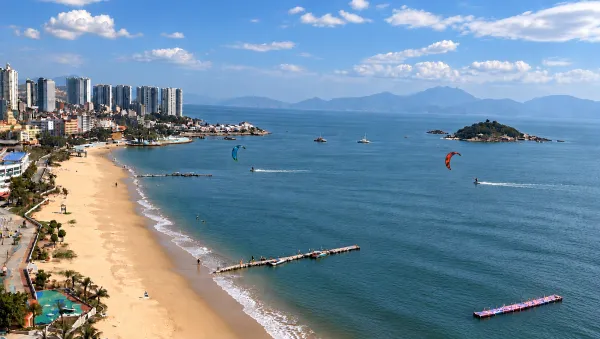
Kitesurfing in Xiamen Beach
Xiamen - China
Spot Type
Chop
Water
Dark - Clear
Beach
Sand
Rider Level
beginner
Spot characteristics
Spot Type
Chop
Rider Skill
beginner
Crowd
Seasonal Crowd
Beach Type
Sand
Water Quality
Dark - Clear
Tide Influence
All tide levels with different conditions (chop - flat - wave)
Kitesurfing in Xiamen Beach: Conditions, Wind & Season
Xiamen Beach, commonly associated with the Hai Yun Tai (海韵台) beachfront, is an accessible coastal kitesurfing location in Xiamen, Fujian Province, on the southeastern coast of China. Situated along the Taiwan Strait, the spot combines sandy beaches, sheltered coastal waters and the convenience of a modern seaside city. Unlike more remote kitesurfing destinations in Fujian, Xiamen offers the possibility of enjoying a session close to hotels, restaurants, public transport and urban attractions. The surrounding coastline features long stretches of sand, landscaped promenades and developed recreational areas, making it an appealing option for riders who want to combine kitesurfing in Xiamen with a broader holiday in southern China.
Wind conditions are influenced by the seasonal monsoon patterns of the Taiwan Strait. Northeasterly winds become more frequent from autumn through winter, particularly between September and January, while spring can also provide useful riding opportunities. During the warmer months, southeasterly winds and local thermal effects occasionally generate lighter sessions, although their strength and consistency vary considerably. The surrounding coastline, buildings and headlands can influence wind quality, making some directions gustier or less effective than at fully exposed beaches. Afternoon sessions can be particularly productive when local heating strengthens the coastal breeze, but the timing and reliability of the wind depend on the weather rather than following a fixed daily schedule.
Water conditions at Hai Yun Tai are generally characterised by small chop and occasional wind-driven waves rather than powerful ocean swell. The relatively sheltered coastal setting can provide manageable conditions for freeriding, practising transitions and improving board control, especially when the wind is moderate. Although the water is not perfectly flat, the absence of consistently large breaking waves makes it less demanding than many exposed wave spots along China's southeastern coastline. Twin-tip boards are well suited to the typical conditions, while larger boards or hydrofoils may be useful during lighter wind periods where water depth and local restrictions allow. The predominantly sandy seabed offers relatively straightforward water access, although depth, currents and chop can change with the tide and weather.
Xiamen Beach is particularly attractive to intermediate riders who appreciate accessible coastal sessions without travelling far from the city. Less experienced kiters may find the smaller waves and moderate wind manageable under suitable supervision, but the urban setting introduces important practical limitations. Hai Yun Tai is part of a popular public beachfront used by swimmers, walkers and other visitors, especially during weekends, summer holidays and major Chinese festivals. Available space for launching and landing can therefore be limited despite the broad sandy shoreline. Riders should confirm that kitesurfing is permitted at their intended launch point, respect any designated swimming zones and avoid setting up near crowded promenades or recreational areas.
The main challenges are related to variable wind, shared beach use and the changing coastal environment. Winds can become uneven when approaching across developed areas or nearby headlands, while stronger northeast conditions may produce more substantial chop and shorebreak. Tidal changes influence water depth and the available beach width, and riders should remain aware of any local currents, marine traffic and restricted areas. Tropical storms and typhoons can also affect Fujian during the warmer months, bringing dangerous gusts and rapidly deteriorating sea conditions. Such weather systems should never be treated as opportunities for ordinary recreational kitesurfing. Summer water temperatures are generally comfortable with minimal thermal protection, while a wetsuit is advisable during the cooler autumn and winter months.
One of the greatest advantages of kitesurfing near Hai Yun Tai is the surrounding infrastructure. Xiamen is a major coastal city with an international airport, railway connections, hotels, restaurants and extensive public transport. The beachfront is easily reached from central Xiamen, making it practical to check the conditions and take advantage of suitable wind windows without committing to a full-day excursion. When the wind is absent, visitors can explore the city's famous coastal attractions, including Gulangyu Island, the historic streets around Zhongshan Road, the scenic Huandao Road coastline and the nearby university district. These activities make Xiamen particularly suitable for a kitesurfing trip with non-kiters, couples or families who want a mix of watersports, sightseeing and city life.
Xiamen is one of the main urban centres of southern Fujian, with Quanzhou to the northeast and Zhangzhou to the west providing additional regional connections. Its location on the Taiwan Strait places it within a coastline strongly influenced by seasonal monsoon winds, offering several potential riding areas for those exploring kitesurfing in Fujian Province. For riders searching for kite spots near Xiamen, accessible kitesurfing in southeastern China or a convenient beach destination with plenty to do away from the water, Hai Yun Tai offers an appealing combination of manageable chop, seasonal wind and excellent city amenities. It is not a destination for guaranteed daily sessions or world-class waves, but for independent riders who can adapt to local conditions and beach access rules, it can provide enjoyable freeriding opportunities alongside one of China's most interesting coastal cities.
Xiamen Beach is best suited for
Spot profile
Travel spot
The typical kite travel destination, it is known for its great conditions, and kiters from around the world come here for their vacations.
Family spot
Located in an area that offers amenities for all the family and can provide good alternatives for everyone when the kiters are in the water.
Local spot
Maybe not be worth a real journey to reach this spot, but great if you live close by and it is a windy day. In the end, being out on the water feels great anywhere
Equipment
A freeride setup with a medium twin tip board and a 12 m kite is the most versatile choice for Xiamen Beach's average wind conditions. Bring smaller kites like 7 m, 8 m, or 9 m for winter NE flows or typhoon sessions, as wind can occasionally exceed 20 knots. For the lighter summer thermals, consider a larger kite if you weigh above average. In hot months, boardshorts will be enough, but a shorty or thin wetsuit can add comfort on windier or cloudier days. From autumn through winter into early spring, a full wetsuit is required, and in the coldest months, a thicker suit is advisable. Booties are not standard kit as the beach is sandy, but a thin pair is useful for those who want extra protection during rigging or walking over mixed surface areas.
Wind Conditions
Main wind directions at Xiamen Beach
Windy days per month in Xiamen Beach
Wind Speed Range
From 10 to 25 Knots
Suggested sizes
8 - 9 mt
10 - 11 mt
12 - 13 mt
Forecast on Windy.com
Kitesurfing Safety & Local Rules at Xiamen Beach
The main hazards at Xiamen Beach come from its sheltered bay location and variable wind conditions. Wind can be lighter, gustier and less consistent than forecast, particularly outside the main afternoon wind window. Buildings and surrounding coastal features may create turbulence and sudden wind shifts, making launching, staying upwind and returning to shore more challenging. Strong winds and approaching typhoons can produce dangerous gusts, so always check the forecast and avoid riding during severe weather.
Xiamen Beach is located in a busy urban area, where swimmers, tourists and other beach users can significantly reduce available launching and landing space. Coastal ferries, small boats and jet skis may also operate in parts of the bay, requiring constant awareness when riding farther offshore. Keep kite lines clear of pedestrians, respect swimming areas and maintain a safe distance from marine traffic.
The main launch area is generally sandy, without major reefs or rocky obstacles, but stronger winds can create steep chop and more demanding water conditions. Tidal changes may also affect water depth and suitable launching areas. Beach access and kitesurfing activities can be subject to temporary restrictions during holidays, public events or adverse weather, so check local regulations and coordinate with local kitesurfing operators before setting up.
Location
Closest City
Xiamen
How to get There
Fly into Xiamen-Gaoqi Airport (XMN), which is about 10 km from the spot, then reach Hai Yun Tai / Xiamen Beach by taxi, ride-hailing, or city bus. A local reference notes bus connections such as lines 29 and 47 to nearby seaside and university areas, making the spot easy to reach without a car. Driving from within Xiamen is straightforward because the beach is in the urban coastal zone, close to major hotels and resort areas.
Access
Public beach access is implied, but the spot may be subject to local regulation and the need to check whether kitesurfing is allowed at the time. It is easy to reach from the city, with airport, bus, and road access nearby. No specific entry fee is clearly confirmed in the available spot details, but riders should verify local rules and any club or permit requirements before kiting.
No-Wind Days: What to Do Around Xiamen Beach
Xiamen Beach is an excellent destination for travellers who want to combine kitesurfing with the attractions of one of China's most appealing coastal cities. Located along the southeastern coast of Fujian Province, Xiamen offers a rare combination of sandy beaches, waterfront promenades, historic neighbourhoods, tropical gardens and a lively food scene. The kitesurfing area around Hai Yun Tai, on the eastern side of Xiamen Island, is conveniently positioned for exploring the city without long transfers. For a kitesurfing trip with non-kiters or a family holiday in Fujian, this makes Xiamen particularly attractive, as there is plenty to discover even when the wind refuses to cooperate.
The most obvious alternative to kitesurfing is exploring Xiamen's beautiful coastal promenade and the scenic Huandao Road, also known as the Island Ring Road. This route follows much of the island's southeastern coastline, passing sandy beaches, rocky viewpoints, landscaped parks and waterfront cafés. Cycling is particularly popular, with dedicated sections and paths providing attractive views over the Taiwan Strait. The beaches around Huangcuo and Zengcuo'an are pleasant places for walking, photography or relaxing beside the sea, while sunrise is especially beautiful along this east-facing coast. Swimming should be limited to designated areas when local conditions and beach regulations permit.
One of Xiamen's most famous attractions is Gulangyu Island, a UNESCO World Heritage Site located a short ferry ride from the main island. Known for its historic architecture, narrow pedestrian streets and unusual blend of Chinese and Western influences, Gulangyu feels completely different from the modern waterfront districts of Xiamen. Visitors can wander among colonial-era villas, gardens, small museums and traditional shops, or climb Sunlight Rock for panoramic views over the island and city skyline. The absence of ordinary private-car traffic contributes to its relaxed atmosphere, making it an excellent full-day excursion for couples, families and non-kiting partners. Ferry tickets should be arranged through authorised channels, particularly during weekends and Chinese public holidays.
Another worthwhile stop is Nanputuo Temple, one of the most important Buddhist temples in southern Fujian. Situated at the foot of Wulao Mountain near Xiamen University, the temple complex features traditional halls, courtyards, incense burners and beautifully landscaped grounds. Visitors can explore the architecture, observe local religious traditions and enjoy the peaceful setting before continuing towards the nearby university district. The surrounding hills offer walking opportunities and elevated views, although some paths involve steps and can be demanding in hot, humid weather. Combining Nanputuo Temple with the nearby waterfront and university neighbourhood makes a rewarding half-day excursion.
For travellers interested in local culture and food, Zengcuo'an is one of the most convenient places to explore near the kitesurfing beaches. Once a traditional fishing village, the neighbourhood has developed into a lively area of narrow lanes, small restaurants, cafés, souvenir shops and local snack stalls. It is especially enjoyable in the late afternoon or evening, when visitors gather to sample Fujian specialities and explore the streets. Although the area can become crowded during holidays, its atmosphere offers an entertaining contrast to the open coastline and makes it an easy outing after a morning at the beach.
Xiamen's historic urban districts provide another fascinating alternative when the wind disappears. Zhongshan Road Pedestrian Street is known for its distinctive arcade buildings, shops, restaurants and lively evening atmosphere. The surrounding streets reflect the city's long history as an international trading port, with architecture influenced by southern Chinese traditions and overseas connections. Visitors can spend several hours exploring markets, sampling street food and discovering smaller lanes away from the main shopping street. For a more relaxed experience, nearby waterfront areas offer views across the harbour towards Gulangyu Island, particularly attractive after sunset.
Nature lovers should consider visiting the Xiamen Botanical Garden, also known as Wanshi Botanical Garden. Located among the hills in the southern part of the city, the garden contains extensive collections of tropical and subtropical plants, including palms, succulents, cacti and ornamental species. Its famous tropical rainforest area, with mist drifting through dense vegetation at scheduled times, is especially popular with photographers. The garden's varied paths and landscapes provide a peaceful escape from the urban coastline, making it a good option for families, couples and anyone wanting to spend a few hours surrounded by greenery.
For a different perspective on Xiamen's geography, head towards the coastal parks and wetlands around Wuyuan Bay in the northeastern part of the island. The area combines landscaped waterfront paths, modern architecture, bridges and sheltered waters, offering opportunities for walking, cycling and photography. The Wuyuan Bay Wetland Park provides a greener environment with boardwalks, vegetation and birdlife, while the surrounding district has cafés and restaurants overlooking the water. It is particularly suitable for a relaxed afternoon with a non-kiting partner or family, especially when the main kite beach is exposed to uncomfortable wind or rougher sea conditions.
Food is an essential part of the Xiamen experience. The city is famous for its Minnan, or southern Fujian, cuisine, which features seafood, noodles, soups and a wide range of distinctive local snacks. Specialities include *shacha mian*, a rich noodle soup flavoured with a savoury satay-style sauce, oyster omelettes, spring rolls and various seafood dishes. Local markets, small neighbourhood restaurants and traditional food streets offer opportunities to explore the region's culinary traditions beyond the international menus found in larger hotels. A leisurely seafood dinner followed by a waterfront walk is an excellent way to finish a day after kitesurfing or sightseeing.
Families and mixed groups will appreciate how easy it is to organise different activities without leaving Xiamen Island. While kiters wait for suitable afternoon wind, non-riders can explore botanical gardens, museums, shopping districts, beaches or cafés using taxis and public transport. The city's developed infrastructure also makes rainy days easier to manage, with indoor attractions, restaurants and shopping centres available throughout the urban area. For a family kitesurfing holiday in southeastern China, this flexibility is a major advantage over remote coastal destinations where everyone depends on the same weather conditions and limited facilities.
For anyone planning a kite trip to Fujian and wondering what else there is to do, Xiamen Beach offers one of the most complete combinations of kitesurfing and city sightseeing on China's southeastern coast. A windless day can include cycling along Huandao Road, exploring the historic streets of Gulangyu Island, visiting Nanputuo Temple, discovering the Botanical Garden or enjoying local seafood in Zengcuo'an. With its attractive coastline, rich cultural heritage and extensive activities for a non-kiting partner or family, Xiamen is much more than a convenient urban kite spot: it is a destination worth exploring in its own right.