
Kitesurfing in Pingtan
Fuzhou · China
- Spot type Wave
- Rider level intermediate
- Water Dark - Clear
- Beach Sand
- Crowd Seasonal crowd
- Tide effect Conditions vary
Kitesurfing in Pingtan: Conditions, Wind & Season
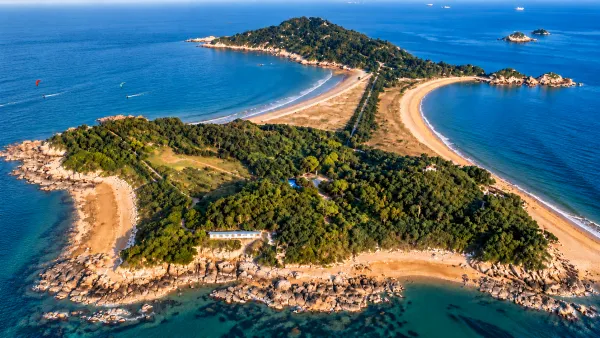
Pingtan, also known as Haitan Island, lies off the coast of Fujian Province at the entrance to the Taiwan Strait and has become one of the leading destinations for kitesurfing in China. Located near Fuzhou and directly exposed to the powerful winds funnelling through the Taiwan Strait, the island offers significantly stronger and more frequent wind than many beaches along the nearby mainland coast. Long sandy beaches, multiple riding locations and a growing watersports scene have helped establish Pingtan as an important Chinese kiteboarding destination, regularly attracting local riders, international visitors and major kiteboarding competitions.
One of Pingtan's greatest advantages is its long wind season. The northeast monsoon provides strong and frequent wind from roughly late September through the winter, while southeasterly winds create another useful riding period during the warmer months. June through September can produce particularly good conditions at some locations around the island, while autumn brings increasingly powerful northeast winds. Wind strength commonly reaches the range needed for comfortably powered riding and can become considerably stronger when monsoon systems intensify, making Pingtan one of the most wind-reliable places for kitesurfing in Fujian and southeastern China.
Longfengtou Beach, close to Pingtan Town, is one of the island's best-known kite locations and provides a broad sandy shoreline with plenty of room for preparing, launching and landing equipment. It also benefits from easy access to accommodation, restaurants and local watersports facilities. However, Pingtan is not a single-spot destination. Beaches including Liushui, Changjiang'ao and Tannan Bay provide alternative conditions depending on the season and wind direction, allowing riders to move around the island in search of the best combination of wind and water state.
This variety is one of the main attractions of kitesurfing in Pingtan. Depending on the beach, tide and wind direction, riders can encounter everything from relatively smooth freeride water to lively chop and proper waves. More protected sections are useful for progression and freestyle, while exposed beaches facing the Taiwan Strait can develop substantial swell during stronger northeast monsoon conditions. Tides also influence the shape of the beach, currents and water texture, so checking local conditions before choosing where to ride is important, particularly for visitors unfamiliar with the island.
Intermediate and advanced riders will generally get the most from Pingtan's stronger conditions, especially during the northeast monsoon when wind and waves can become demanding. Beginners can still find suitable conditions at more protected beaches and can take advantage of local kite schools and instruction, but should avoid heading onto exposed water without supervision. Wind strength and sea state can change during the day, and the combination of strong monsoon wind, currents and open-water exposure means that even apparently straightforward sandy beaches deserve appropriate caution.
Pingtan's established kite scene makes travelling with or without equipment relatively straightforward. Kite centres, schools and seasonal watersports operations provide lessons and other services, while the island's growing tourism infrastructure offers hotels, restaurants and convenient access to the main beaches. Peak wind periods and competition events can bring significant numbers of riders to the most popular launches, but the size of the island and number of alternative beaches usually provide opportunities to escape the busiest areas.
Fuzhou is the nearest major mainland city and transport hub, while Pingtan itself combines modern development with fishing villages, rocky coastline and the distinctive scenery of the Taiwan Strait. For riders planning a kitesurfing trip to China, the ability to explore several beaches and different riding styles without leaving the island makes Pingtan particularly appealing. With its strong monsoon cycle, extensive sandy coastline and unusually high wind reliability, Pingtan stands out as one of the most important destinations for kitesurfing in Fujian, the Taiwan Strait and southeastern China.
Something missing or out of date at this spot? Suggest a correction
Pingtan is best suited for
Spot profile
Travel spot
The typical kite travel destination, it is known for its great conditions, and kiters from around the world come here for their vacations.
Family spot
Located in an area that offers amenities for all the family and can provide good alternatives for everyone when the kiters are in the water.
Local spot
Maybe not be worth a real journey to reach this spot, but great if you live close by and it is a windy day. In the end, being out on the water feels great anywhere
Equipment
A freeride or wave kite setup is standard at Pingtan, with riders generally sizing down compared to mainland spots due to the stronger average wind. Most sessions call for smaller kites and boards that can handle gusts and chop, especially in the main season. For wave beaches, choose a surfboard or directional board with solid control and straps. Twin tips are fine for flat-water or learner-friendly sections like Liushui and Red Rock. Foil kites and boards can be useful in lighter or smoother spells, with local centers equipped to support foil riding. In terms of wetsuits, a shorty or 3/2mm full suit will be appropriate during the northeast monsoon months when the water and air are coolest, while summer and southeast wind months might allow for lighter suits or boardshorts on warm days. Booties are optional given the sandy main launches but can be handy for wave spots with rockier entries, depending on personal comfort.
Wind Conditions
Main wind directions at Pingtan
Windy days per month in Pingtan
Wind Speed Range
From 12 to 25 Knots
Suggested sizes
Forecast on Windy.com
Kitesurfing Safety & Local Rules at Pingtan
The main hazard at Pingtan is the strength and variability of the wind, particularly during the northeast monsoon. Conditions can change rapidly, with strong gusts and occasional squalls turning a manageable session into an overpowered one within a short time. Choose your kite size conservatively, monitor conditions before launching and be prepared to return to shore if the wind begins to increase or becomes unstable.
Sea conditions can also change considerably during a session. Increasing wind or a change in swell can quickly transform relatively manageable water into heavy chop or waves, while currents and wind-driven drift can make self-rescue more difficult. Different beaches around Pingtan work with different wind directions, so do not assume that every launch is safe on a given day. Local knowledge is particularly valuable when deciding where to ride.
The main sandy beaches generally provide good launching and landing space, but areas around kite schools can become crowded with lessons and other riders. Competitions or organised activities may also temporarily affect access to certain sections. Respect local zones and restrictions, maintain plenty of space when launching and landing, and beginners should preferably ride under supervision until they are confident handling Pingtan's stronger and more variable conditions.
Location
Closest City
Fuzhou
How to get There
The usual access is by flight to Fuzhou, then about 1h 30 min by taxi to Pingtan. It is also reachable from Xiamen by car in about 2h 30 min, or by bus and train combinations via Fuqing. Local notes also mention bus services from Xiamen to Pingtan and a taxi option for direct travel.
Access
Public beach access is available at the main riding areas, especially around Longfengtou, but some specific launch zones may be organized around local kite schools or clubs. The spot is not described as a fully restricted private site, although riders should expect that some beaches or sections may be used by organized kite centers and may have spot-specific local arrangements.
No-Wind Days: What to Do Around Pingtan
Pingtan works particularly well for a kitesurfing trip with non-kiters or family because the island has enough scenery and local culture to fill several days away from the water. Located off the coast of Fujian near Fuzhou, Pingtan combines long beaches with rocky headlands, fishing villages, wind farms and an increasingly accessible coastal road network. When the wind does not cooperate, exploring the island is easy, and most excursions still keep you close enough to the kite beaches to return if conditions improve later in the day.
One of the best no-wind excursions is the northern coastal route through Beigang and towards Changjiang'ao. Beigang is known for its distinctive traditional stone houses, built from local granite to withstand Pingtan's powerful winds and salt-laden coastal weather. Many of these houses still form part of a living fishing village, while cafés and small creative businesses have appeared among the older buildings. From Beigang, the coastal road continues through some of the island's most photogenic scenery, with the East China Sea on one side and hills, villages and wind turbines on the other.
Continue north towards Changjiang'ao, where rows of wind turbines line the coastline behind a broad beach. It is particularly attractive towards sunset, when the turbines, fishing boats and shallow water create one of Pingtan's characteristic landscapes. Cycling or driving this section of the island makes an excellent relaxed day for a non-kiting partner, and there are plenty of opportunities to stop for coastal walks, photography and local food along the way.
Another worthwhile excursion is Xianrenjing, or the Fairy Well, in the Donghai Fairyland area. Here erosion by the East China Sea has created dramatic cliffs, caves and deep rock formations along the coast. The scenery is much rougher than Pingtan's sandy kite beaches, particularly when swell is running, and walking around the viewpoints provides a completely different perspective on the island's exposed geography. Combined with Beigang and the northern coastal road, it makes an excellent full-day circuit when the kite forecast is completely flat.
At the southern end of the island, the 68 Nautical Miles Scenic Area at Houyan is another of Pingtan's distinctive attractions. The area takes its name from its position roughly 68 nautical miles from Taiwan and spreads across Houyan, Yanhuo and Xianshan islands. Rugged rocks, enormous boulders and exposed coastal scenery make this more of a sightseeing and walking destination than a beach day, and its geographical position overlooking the Taiwan Strait gives it a character quite unlike the kite beaches elsewhere on Pingtan.
If you want a slower day, simply explore Pingtan's beaches and fishing villages. Tannan Bay provides another long stretch of sand on the southern side of the island, while small villages scattered around the coast offer seafood restaurants and a glimpse of everyday island life. Fresh fish, shellfish, seaweed and Fujian-style seafood dishes are naturally a major part of the local food scene, so a windless afternoon can easily become a coastal drive interrupted by a long seafood lunch.
One of Pingtan's most unusual natural attractions appears after dark. During suitable conditions, microscopic bioluminescent organisms can produce the locally famous “Blue Tears”, creating electric-blue flashes along the shoreline as waves break or the water is disturbed. The phenomenon is seasonal and unpredictable, so it should never be treated as guaranteed, but catching a strong display can become one of the most memorable experiences of a trip to Pingtan. Local information is useful because sightings can shift between different beaches from one night to another.
Families also have the advantage of Longfengtou's developed beachfront and the facilities around Pingtan town. A quiet day can involve swimming, walking the beach, cycling or simply using the cafés and restaurants around the main tourist areas, while more adventurous family members explore the island by scooter or car. This makes Pingtan much easier for mixed groups than a remote kite camp where a non-kiting partner has little to do once everyone else launches.
For anyone planning a kite trip to Fujian and wondering what else there is to do, Pingtan offers a surprisingly complete coastal holiday. A no-wind day can take you through stone villages and windmill-lined coastal roads in the north, dramatic sea-eroded landscapes and beaches during the afternoon, followed by seafood and perhaps a search for the Blue Tears after dark. That combination of reliable kite infrastructure, distinctive island scenery and activities for non-kiters makes Pingtan a strong option for couples, families and groups who want their kitesurfing trip to China to offer more than time on the water.
Other kitesurfing spots near Pingtan





All kitesurfing spots in China
Last updated: