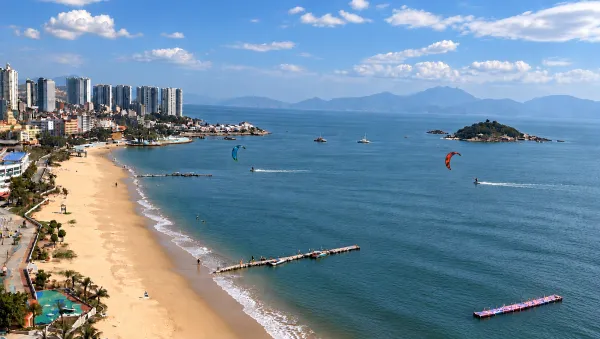
Kitesurfing in Kinmen
Kinmen City - China
Spot Type
Flat
Water
Dark - Clear
Beach
Sand
Rider Level
intermediate
Spot characteristics
Spot Type
Flat
Rider Skill
intermediate
Crowd
Few people on the spot
Beach Type
Sand
Water Quality
Dark - Clear
Tide Influence
Rideable with low tide
Kitesurfing in Kinmen: Conditions, Wind & Season
Kinmen, also known as Quemoy, is an island group in the Taiwan Strait, situated just off the coast of Xiamen in Fujian Province, mainland China, but administered by Taiwan (Republic of China). This distinctive geographical position makes Kinmen an interesting destination for kitesurfers looking to explore a quieter and less commercialised part of the Taiwan Strait. The islands feature sandy beaches, sheltered coastal sections and exposed shorelines, offering a variety of potential riding conditions depending on wind direction and tide. Unlike the more established kitesurfing destinations in Taiwan or mainland China, Kinmen offers a relaxed atmosphere where watersports can be combined with cultural sightseeing, coastal exploration and traditional island life.
Wind conditions around Kinmen are strongly influenced by the seasonal monsoons of the Taiwan Strait. Northeasterly winds become more frequent and stronger during autumn and winter, while warmer months bring more variable southerly and southwesterly breezes. Late summer and autumn can provide enjoyable riding opportunities, although wind reliability changes throughout the year and depends on the exposure of the chosen beach. The northeast monsoon can generate particularly energetic conditions along exposed coastlines, while sheltered areas may experience lighter or gustier wind. Riders should therefore select their launch according to the day's forecast, prioritising side-onshore or cross-onshore conditions and avoiding offshore winds without reliable rescue support.
Water conditions vary between the different beaches and coastal sections of Kinmen. Some sheltered areas offer relatively flat water and manageable chop, making them suitable for freeriding, practising transitions and relaxed cruising. More exposed shorelines can develop short wind-driven waves and rougher water, especially during stronger monsoon conditions. Sandy beaches provide practical launching opportunities where sufficient space is available, although the seabed is not uniformly sandy across the islands. Rocky sections, tidal flats and occasional submerged obstacles require attention, particularly at low tide. Tidal range and currents in the Taiwan Strait can also be significant, so riders should never assume that shallow water or calm-looking conditions guarantee an easy return to shore.
Kinmen is generally better suited to independent intermediate riders who are comfortable evaluating unfamiliar launch sites and adapting to changing conditions. The islands do not have the extensive kite schools, rental facilities or organised rescue services found at major international kite destinations. Launching areas may be relatively narrow, and local beach use, fishing activity and coastal restrictions can limit access. Kinmen also has a distinctive military history, and certain coastal areas may remain restricted or subject to specific regulations. Before launching, kiters should verify that watersports are permitted, avoid harbour approaches and fishing zones, and remain aware of maritime traffic and any security-related boundaries.
One of Kinmen's main attractions is its peaceful atmosphere. Beaches are often considerably less crowded than those near major coastal cities, allowing riders to enjoy quiet sessions when suitable conditions develop. The island's road network makes it relatively easy to explore different coastal areas by car or scooter, although equipment transport and access to individual beaches should be considered when planning a session. Visitors should arrive with their own equipment and be prepared for limited kite-specific services. Summer conditions are generally warm enough for lightweight watersports clothing, while spring and autumn may require additional protection. During the cooler and windier winter monsoon, a full wetsuit is usually the more comfortable option.
Away from the water, Kinmen offers an unusually rich combination of history, culture and coastal scenery. The islands are famous for their traditional Fujian-style villages, historic fortifications, military tunnels and preserved architecture. Visitors can explore Kinmen National Park, the traditional settlement of Shanhou, the historic streets of Jincheng and the island's many coastal viewpoints. Local seafood, traditional snacks and the region's famous kaoliang liquor add another dimension to the experience. These attractions make Kinmen particularly appealing for a kitesurfing trip with non-kiters, couples or families, as sightseeing and cultural activities can easily fill days when the wind is unsuitable.
Jincheng and Jinning are among the main settlements on Greater Kinmen, while Xiamen is the nearest major mainland city across the water. The islands can be reached by air from Taiwan and through eligible ferry connections, subject to current travel and entry requirements. For riders exploring kitesurfing in the Taiwan Strait, alternative kite spots near Xiamen or less crowded island destinations in East Asia, Kinmen offers an interesting combination of seasonal monsoon winds, sheltered freeride opportunities and distinctive local culture. It is not a destination for guaranteed flat water or daily strong wind, but for experienced, self-sufficient kiters who enjoy discovering new coastlines and combining watersports with exploration, Kinmen provides a memorable alternative to more conventional beach resorts.
Kinmen is best suited for
Spot profile
Travel spot
The typical kite travel destination, it is known for its great conditions, and kiters from around the world come here for their vacations.
Family spot
Located in an area that offers amenities for all the family and can provide good alternatives for everyone when the kiters are in the water.
Local spot
Maybe not be worth a real journey to reach this spot, but great if you live close by and it is a windy day. In the end, being out on the water feels great anywhere
Equipment
A standard freeride setup works best here, with twin-tip boards ideal for flat water and kite sizes generally ranging from 9 to 12 meters for average riders depending on body weight and wind strength on the day. During the warmer season, a shorty or spring wetsuit is usually sufficient, but as water and air temperatures drop, a full wetsuit becomes the better choice for comfort. While reef shoes are not specifically required based on typical conditions, it's a smart precaution if the launch area looks rough or the sand has patches of rock or uneven ground.
Wind Conditions
Main wind directions at Kinmen
Windy days per month in Kinmen
Wind Speed Range
From 14 to 25 Knots
Suggested sizes
8 - 9 mt
10 - 11 mt
12 - 13 mt
Forecast on Windy.com
Kitesurfing Safety & Local Rules at Kinmen
The main hazards at Kinmen come from variable wind conditions and sudden changes in direction. Strong winds can alternate with lighter periods, while unexpected shifts from side-onshore to offshore winds can quickly carry riders away from the island. Offshore conditions are particularly dangerous due to the exposed surrounding waters and potentially difficult rescue. Always check the forecast, monitor wind direction and avoid launching when the wind is blowing offshore.
Launch areas can be relatively narrow or constrained by surrounding beach activity, requiring extra care during setup, launching and landing. Fishermen, small boats and beachgoers may be present, particularly near harbors and popular coastal areas. Maintain sufficient distance from other users, avoid launching near obstacles or busy access points and follow any local restrictions or designated kitesurfing areas.
Tidal changes can affect beach width and water depth, with shallow sections and sandbars becoming exposed at lower tides. Uneven sand, shoreline debris and occasional obstacles may also complicate launching or returning to shore. Inspect unfamiliar areas before riding, allow enough space for safe landings and avoid venturing too far offshore without reliable rescue support or local knowledge.
Location
Closest City
Kinmen City
How to get There
Kinmen is reached by flight or ferry-style island travel depending on the wider trip plan; for most visitors, the simplest route is to fly into Kinmen Airport and then continue by road to the beach or riding area. Once on the island, driving or taking local transport is the practical way to move between the airport, town, and kite launch areas.
Access
The spot appears to be publicly reachable as part of the island’s beach network, with access handled through normal road travel rather than a special permit system. There is no strong sign in the available spot data of a private-only launch, but local shoreline conditions and any on-site restrictions should still be checked once on the island before setting up.
No-Wind Days: What to Do Around Kinmen
Kinmen is one of the most fascinating destinations in the Taiwan Strait for travellers who want to combine kitesurfing with history, traditional architecture and a slower style of island exploration. Administered by Taiwan and situated just off the coast of mainland China's Fujian Province, Kinmen has a distinctive cultural identity shaped by centuries of maritime trade and decades of military confrontation. Unlike conventional beach resorts, the island offers preserved villages, historic fortifications, quiet coastal landscapes and local food traditions. For a kitesurfing trip with non-kiters or family, this makes Kinmen particularly rewarding, as even several windless days can be filled with sightseeing and cultural experiences.
One of the island's most impressive attractions is Kinmen National Park, which protects important natural landscapes, traditional settlements and historic military sites across the island. Rather than being a single wilderness area, the park encompasses several distinct zones where visitors can discover coastal forests, granite hills, old villages and defensive installations. Its visitor centres and walking routes provide an excellent introduction to Kinmen's unusual history, while the relatively short distances between attractions make it easy to organise several stops during a relaxed day of exploration.
Shanhou Folk Culture Village is one of Kinmen's architectural highlights. This beautifully preserved settlement consists of traditional southern Fujian-style houses arranged around courtyards and narrow lanes, with decorative roofs, carved details and symmetrical building layouts. Constructed during the late nineteenth century with wealth accumulated by overseas Kinmen merchants, the village provides a fascinating glimpse into the island's historical connections with Southeast Asia. Walking through Shanhou feels like stepping into another era, and its traditional architecture makes it particularly attractive for photography and travellers interested in Chinese cultural heritage.
Kinmen's military history is equally compelling, and the island contains an extraordinary concentration of tunnels, bunkers and coastal fortifications. One of the most memorable attractions is the Zhaishan Tunnel, an underground waterway excavated through solid granite during the Cold War to shelter military supply boats. Visitors can walk through sections of the tunnel and see the dramatic underground channels, making it one of Kinmen's most distinctive historical sites. Another worthwhile stop is the Guningtou Battle Museum, which explains the events of the 1949 Battle of Guningtou and the island's strategic importance during the conflict between Nationalist and Communist forces.
For panoramic views and a deeper understanding of Kinmen's geography, head towards Mount Taiwu, the island's highest peak. The surrounding landscape combines forested slopes, military history, temples and viewpoints across the Taiwan Strait. Walking routes around the mountain offer opportunities for exercise and photography, while the famous Kinmen stone inscriptions and religious sites add cultural interest along the way. On clear days, parts of the nearby mainland Chinese coastline are visible across the water, providing a striking reminder of Kinmen's unusual geographical and political position.
The island's traditional settlements are also worth exploring beyond Shanhou. Shuitou Village is particularly famous for its elegant historic houses, ancestral halls and distinctive buildings influenced by overseas Chinese architectural traditions. The Deyue Tower, constructed as a defensive watchtower, is one of the village's most recognisable landmarks. Nearby, the Kinmen Folk Culture Village and other preserved settlements reveal the island's traditional building techniques and strong family and clan heritage. Visiting these communities by scooter or car allows travellers to discover quiet lanes, temples and old houses at their own pace, making an enjoyable alternative to spending the entire day at the beach.
Nature lovers will find plenty to enjoy along Kinmen's coastline and wetlands. The island is an important stopover for migratory birds, and its tidal flats, lakes and coastal habitats attract numerous species throughout the year. The Cihu wetlands are particularly well known for birdwatching, including wintering waterbirds and occasional sightings of Eurasian spoonbills and other coastal species. Coastal walks also reveal sandy beaches, rocky shores, old military observation posts and views across the Taiwan Strait. Some coastal areas retain military restrictions or historical hazards, so visitors should remain on established paths and respect warning signs rather than exploring abandoned fortifications or remote beaches independently.
Food is another highlight of a visit to Kinmen. The island is famous for its distinctive local specialities, including oyster omelettes, oyster noodles, beef dishes and traditional pastries. Kinmen's sorghum liquor, known as *Kaoliang*, is also an important part of its culinary identity and local economy. Exploring markets and family-run restaurants around Jincheng and other settlements offers opportunities to sample regional dishes in a relaxed atmosphere. For a non-kiting partner, combining traditional village sightseeing with local food stops can easily become one of the most enjoyable parts of the trip.
Families and mixed groups will appreciate Kinmen's manageable scale and relatively quiet atmosphere. Rather than relying on large resorts or organised entertainment, the island encourages independent exploration through short drives, village walks, museums and nature outings. Historic sites such as Zhaishan Tunnel and the military museums can be particularly engaging for older children, while traditional villages and coastal viewpoints offer gentler activities for all ages. Accommodation ranges from conventional hotels to guesthouses in restored historic buildings, allowing visitors to experience the island's architectural heritage as part of their stay.
For anyone planning a kite trip to Kinmen and wondering what else there is to do, the island offers a remarkable combination of kitesurfing, military history, traditional Fujianese culture and natural scenery. A no-wind day can include the underground waterways of Zhaishan Tunnel, the historic streets of Shanhou and Shuitou, a walk through Kinmen National Park or a seafood dinner in Jincheng. With its preserved villages, quiet beaches and wide range of activities for a non-kiting partner or family, Kinmen is a destination where exploring the island can be just as memorable as the time spent on the water.