Kitesurfing in Tobia Island
Safaga - Egypt
Spot Type
Flat
Water
Crystal Clear
Beach
Sand
Rider Level
intermediate
Spot characteristics
Spot Type
Flat
Rider Skill
intermediate
Crowd
Occasional Bystanders
Beach Type
Sand
Water Quality
Crystal Clear
Tide Influence
Tide independent
Kitesurfing in Tobia Island: Conditions, Wind & Season
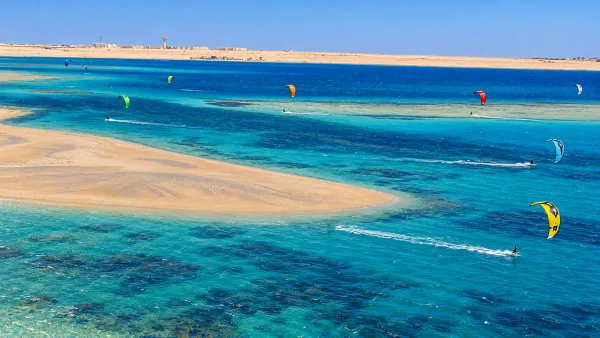
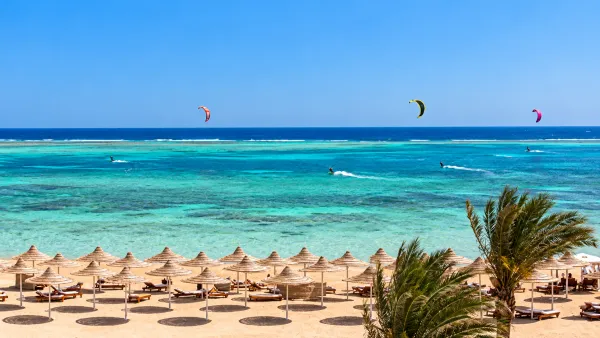
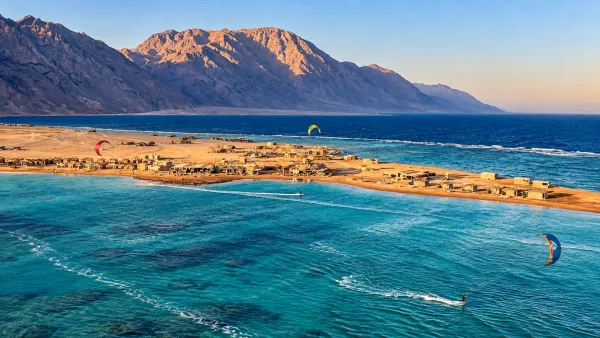
Tobia Island is one of the most distinctive kitesurfing locations in Egypt's Red Sea, situated offshore from Safaga and close to the popular kitesurfing area of Soma Bay. Known for its white sandy beaches, crystal-clear turquoise water and exposed wind conditions, the island offers an attractive alternative to the mainland kite stations. Unlike conventional beach-based spots, Tobia Island is generally reached by boat, making kitesurfing here a more specialised experience that requires advance organisation and appropriate safety support. The surrounding shallow-water areas and natural reef formations create opportunities for flat-water freeriding, while the island's exposed position allows riders to take advantage of the prevailing northerly winds of the Red Sea.
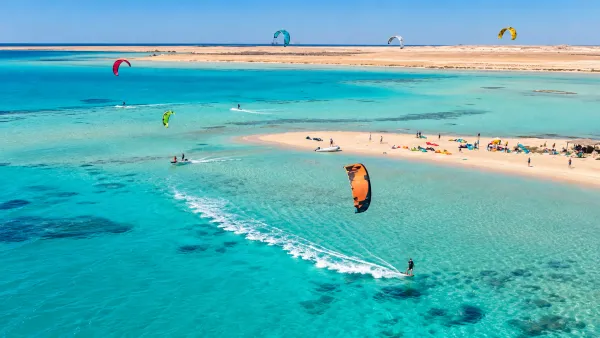
The riding environment around Tobia Island consists of sandy shallows, reef-protected sections and deeper open-water areas. The island and surrounding reef formations provide some shelter from larger waves, creating relatively smooth conditions in selected locations. During moderate winds, the protected sections can offer flat or lightly rippled water, particularly where sandbanks and reef structures reduce the influence of open-sea chop. Farther from these sheltered areas, the water becomes deeper and more exposed, with short wind-driven waves developing as the wind strengthens. The exact riding conditions depend on the chosen location around the island, as water depth, reef distribution and wind exposure can vary considerably over relatively short distances.
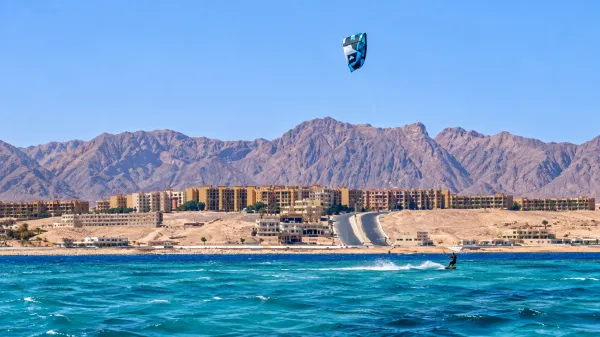
Tobia Island benefits from the predominantly northerly and northwesterly winds that characterise the Safaga and Soma Bay region. These winds are influenced by regional pressure patterns, the surrounding desert mountains and the orientation of the Red Sea coastline. The island's offshore position can provide relatively unobstructed airflow, with fewer buildings and coastal features capable of creating wind shadows. As a result, conditions may feel cleaner and occasionally stronger than at some mainland launching beaches. However, the wind angle changes around the island, and areas that are side-shore in one location may become offshore or directly onshore elsewhere. Riders should therefore assess the conditions carefully and follow the guidance of their accompanying kite centre or support boat.
The main kitesurfing season generally extends from spring through autumn, with particularly attractive conditions between May and September. During favourable summer periods, wind speeds commonly reach approximately 20 to 25 knots, although lighter sessions and stronger episodes are possible. Occasional powerful northerly winds can produce considerably more demanding conditions, requiring smaller kites and greater experience. Spring and autumn often provide enjoyable riding opportunities with more moderate temperatures, while winter kitesurfing remains possible when suitable weather systems develop. Wind reliability generally decreases outside the main season, and boat excursions should always be planned according to the forecast and actual sea conditions rather than assuming that the island will be rideable every day.
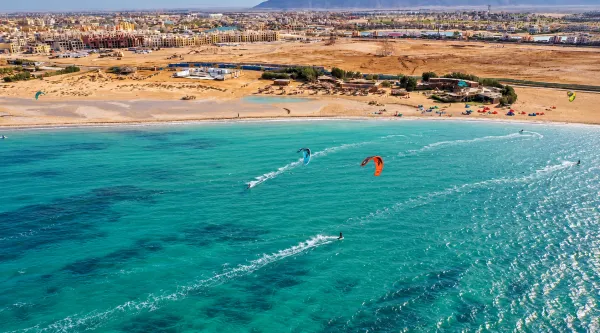
One of Tobia Island's main attractions is the combination of clear water and relatively smooth riding surfaces. In protected sandy sections, the shallow seabed can provide favourable conditions for practising transitions, improving upwind technique and enjoying relaxed freeriding. More experienced riders can take advantage of the open surroundings for longer tacks, powered cruising and controlled freestyle manoeuvres where sufficient water depth is available. However, the island should not be regarded as a uniformly shallow, obstacle-free lagoon. Coral reefs, isolated coral heads and rapidly changing depths are present around the surrounding marine environment, making local knowledge essential when selecting a safe riding area.
Tides can influence the available water depth around Tobia Island, particularly over shallow sandbanks and reef flats. At lower water levels, some sections may become too shallow for safe riding, while higher water can provide easier access across selected sandy areas. Riders should pay particular attention to submerged reef formations, which can be difficult to judge accurately even in clear water. The shallow sections may be suitable for twin-tip freeriding when sufficient depth is available, but powered jumps and freestyle manoeuvres should never be attempted over exposed or submerged reef structures. Protective footwear may be useful in appropriate sandy access areas, although walking on living coral should always be avoided.
Hydrofoil kitesurfing is possible in the deeper waters surrounding Tobia Island, provided that suitable routes are identified and sufficient clearance from reefs and sandbanks is maintained. The relatively unobstructed wind can create attractive conditions for longer foil runs, particularly during lighter or moderate wind periods. However, the shallow reef environment makes navigation more demanding than in an open, sandy bay, and foil riders should avoid approaching unfamiliar underwater formations. In stronger winds, the more exposed sections can develop significant short-period chop, increasing the technical difficulty of hydrofoiling and freeriding. Wave kitesurfing is generally not the principal attraction, as the protected areas are better suited to flat-water disciplines than to riding substantial breaking waves.
Access to Tobia Island is generally organised by boat from the Safaga or Soma Bay area, often through established kitesurfing schools or watersports operators. Transfer times depend on the departure point, weather conditions and the particular island or sandbank being visited. Because the location is offshore and lacks the infrastructure of a mainland kite station, riders should arrange suitable boat support and confirm that launching and kitesurfing are permitted at the intended location. Equipment preparation, launching and landing procedures may differ from those at conventional beaches, especially when space is limited or the boat must remain offshore. Organised excursions should include clear communication with the support crew, an agreed riding area and appropriate rescue arrangements.
Tobia Island is particularly appealing to intermediate and advanced kitesurfers who are comfortable riding independently and maintaining upwind control. The offshore setting requires reliable kite handling, self-rescue knowledge and the ability to manage changing wind and water conditions. Although some sheltered sections may appear suitable for beginners, the absence of immediate mainland access and the presence of surrounding reefs make professional supervision essential for less experienced riders. Independent kitesurfers should never rely solely on the apparent proximity of the island to the mainland, as equipment failure, wind changes or fatigue can create serious difficulties when riding offshore. A reliable support boat is an important part of any properly organised session.
The surrounding marine environment is ecologically sensitive, with coral reefs, sandy islands and protected coastal habitats forming part of the wider Red Sea ecosystem. Access to particular beaches, sandbanks or reef areas may be regulated, and some locations may not permit unrestricted landing or watersports activities. Riders should follow local environmental rules, avoid launching near sensitive habitats and maintain safe distances from coral formations. Boat traffic is another consideration, particularly where excursion vessels, snorkelling boats or other recreational craft operate around the island. Kitesurfing routes should be planned to avoid navigation channels, anchored vessels and areas used by swimmers or snorkellers.
For riders searching for kitesurfing at Tobia Island, offshore kite spots near Safaga or flat-water kitesurfing destinations around Soma Bay, this distinctive Red Sea location offers an attractive combination of seasonal northerly winds, turquoise water and spacious riding opportunities. Its greatest strengths are the exposed wind conditions, sheltered sandy sections and the possibility of enjoying freeriding away from the main mainland kite beaches. However, the offshore location, surrounding coral reefs, changing water depths and dependence on boat support require careful preparation. With suitable conditions, local guidance and organised rescue arrangements, Tobia Island can provide a memorable kitesurfing experience for confident riders exploring Egypt's Red Sea coast.
Tobia Island is best suited for
Spot profile
Travel spot
The typical kite travel destination, it is known for its great conditions, and kiters from around the world come here for their vacations.
Family spot
Located in an area that offers amenities for all the family and can provide good alternatives for everyone when the kiters are in the water.
Equipment
A standard setup is a medium-to-small kite (7 to 12m depending on weight) for most summer days, with twintip boards being ideal for the flat-water conditions; lighter wind days suit larger kites or hydrofoil setups, and a directional board is suitable for smooth sessions. In the hot months, lycra tops, boardshorts or a thin rash vest are generally all that's needed, while from late autumn until early spring, a shorty or light 2mm wetsuit adds comfort for longer rides. Booties are optional, as the bottom is clean sand, but very shallow areas might warrant light neoprene shoes for anyone nervous about fin strikes or walking equipment back upwind.
Wind Conditions
Main wind directions at Tobia Island
Windy days per month in Tobia Island
Wind Speed Range
From 12 to 40 Knots
Suggested sizes
7 mt and below
8 - 9 mt
10 - 11 mt
12 - 13 mt
Forecast on Windy.com
Kitesurfing Safety & Local Rules at Tobia Island
The main hazards at Tobia Island come from extremely shallow water and exposed sandbanks. Falling or landing hard in shallow sections can cause injuries, particularly during jumps and powered manoeuvres. Boards, fins and hydrofoils may strike the bottom, especially near low-water areas. Always check water depth before riding and avoid jumping or foiling in unfamiliar shallow sections.
Wind conditions can become stronger and gustier during winter, with sudden changes in wind strength making kite control more demanding. Launching and landing require particular attention, especially when shallow water leaves little room for mistakes. Respect designated riding zones and follow instructions from local guides or kite school staff to avoid collisions and unsafe areas.
Tobia Island is generally accessed by boat through organised kitesurfing excursions, making reliable return transport and rescue arrangements essential. There are no independent rescue or medical facilities on the island, so riders must remain with their group and follow the scheduled return procedures. Bring sufficient drinking water, sun protection and basic supplies, and avoid riding without organised support or a clear emergency plan.
Location
Closest City
Safaga
How to get There
Fly to Hurghada Airport, then drive south to Safaga and continue by boat or organized transfer to Tobia Island. Spot guides describe the island as about 60 km from Hurghada Airport and reachable from Safaga in roughly 20 to 30 minutes by boat; some centers in the Safaga area also arrange transfers directly from the airport or from their beachfront bases.
Access
The island is publicly reachable in practice through organized kite centers, but it is not a simple walk-in mainland beach. Access is usually by boat, downwind trip, or an arranged excursion from Safaga or nearby Soma Bay centers, and some operators use it as a regular day-trip spot. No fixed public beach fee was clearly stated in the available spot descriptions, but transport and support are typically handled through local kite schools or surf centers.
No-Wind Days: What to Do Around Tobia Island
Beyond kitesurfing, Tobia Island offers an exceptional opportunity to discover the natural beauty of Egypt's Red Sea coast. Located offshore from Safaga, near the resort peninsula of Soma Bay and south of Hurghada, this small sandy island is surrounded by crystal-clear turquoise waters and spectacular marine scenery. Unlike the developed beaches of the mainland, Tobia Island has no permanent tourist infrastructure, restaurants or accommodation, making it a destination primarily for organised boat excursions. Its appeal lies in the simplicity of the landscape, the beautiful colours of the sea and the feeling of being surrounded by nature. For a kitesurfing trip with non-kiters or a family holiday in the Safaga region, the island can be combined with the extensive recreational facilities and sightseeing opportunities available along the nearby mainland coast.
One of the most enjoyable activities around Tobia Island is snorkelling in the clear waters of the Red Sea. The surrounding marine environment features colourful tropical fish, coral formations and a variety of other marine species. Organised boat excursions may include stops at suitable snorkelling locations, allowing visitors to discover the underwater world with experienced guides. The contrast between the pale sand, turquoise shallows and deeper blue water makes the area particularly attractive for underwater photography. Snorkelling conditions depend on wind, currents and the chosen location, so visitors should follow their guide's instructions and avoid entering unfamiliar reef areas independently. Protecting the fragile marine environment is essential, particularly by avoiding contact with coral and maintaining a respectful distance from wildlife.
For visitors who prefer a relaxing experience, an organised boat trip around Tobia Island provides an opportunity to admire the beautiful coastal scenery without participating in watersports. Depending on the operator and local access arrangements, excursions may include time on permitted sandy areas, swimming stops or opportunities to photograph the surrounding seascape. The island's remote atmosphere makes it particularly appealing for travellers who enjoy peaceful natural settings and beautiful panoramic views. However, there is little or no natural shade, and visitors should bring adequate drinking water, sun protection and any essential personal items. Landing arrangements and permitted activities may vary according to environmental regulations and sea conditions, so excursions should always be organised through reputable local operators.
The nearby resort peninsula of Soma Bay offers a completely different experience, with upscale hotels, sandy beaches, restaurants and extensive leisure facilities. Visitors can enjoy swimming pools, spa treatments, fitness centres and beachfront relaxation, while selected resorts offer golf and other recreational activities. Soma Bay is particularly attractive for couples and non-kiting partners who appreciate comfortable accommodation and organised services. Its golf facilities provide spectacular views of the Red Sea and surrounding desert mountains, while the peninsula's wellness centres offer massages, hydrotherapy and relaxation programmes. Access to individual resort facilities may be restricted to hotel guests or require advance booking. Additional information about accommodation and recreational activities is available through the official Soma Bay website.
For diving enthusiasts, the wider Safaga and Soma Bay region offers some of the most celebrated underwater destinations in Egypt. Offshore reefs such as Panorama Reef, Abu Kafan and Middle Reef are known for their impressive coral formations, reef walls and rich marine biodiversity. Numerous diving centres organise guided excursions for certified divers, while beginners can participate in supervised introductory experiences at suitable locations. The Red Sea's clear water and colourful marine life make diving one of the most rewarding alternatives to kitesurfing on calmer days. Some excursions also provide snorkelling opportunities for non-divers, allowing groups with different interests to enjoy the marine environment together. Visitors should choose responsible operators who respect marine protection rules and provide appropriate safety equipment.
The nearby town of Safaga offers an opportunity to experience a quieter and more traditional side of Egypt's Red Sea coast. Unlike the larger tourist centres farther north, Safaga remains a working port town with local shops, cafés and simple restaurants. Visitors can explore its everyday atmosphere, enjoy traditional Egyptian cuisine or relax at one of the beachfront hotels along the surrounding coastline. The town is particularly appealing for travellers who prefer a peaceful environment rather than extensive nightlife and shopping. Local restaurants often serve grilled fish, seafood, kofta, rice dishes and traditional Egyptian specialities. Safaga also provides access to diving centres, boat operators and transport services, making it a convenient base for excursions to Tobia Island and the surrounding reefs.
For visitors interested in desert adventures, the Eastern Desert surrounding Safaga offers spectacular scenery and opportunities for guided exploration. The landscape is characterised by rugged mountains, rocky valleys and extensive open plains, creating a dramatic contrast to the turquoise waters of the Red Sea. Organised excursions can include jeep safaris, quad-bike tours, camel rides and visits to desert camps. Some tours offer traditional meals, cultural presentations and opportunities for stargazing beneath the clear desert sky. The mountains are particularly beautiful during sunset, when the changing light highlights their colours and geological formations. Visitors should choose experienced operators who follow appropriate safety procedures and respect local communities and fragile desert habitats.
For families travelling with children, the mainland resorts around Soma Bay and Safaga provide a comfortable holiday environment. Many hotels feature swimming pools, sandy beaches, playgrounds and family-friendly restaurants, while selected properties offer children's clubs and organised entertainment. These facilities allow non-kiting partners and younger visitors to enjoy their holiday independently while other family members participate in watersports excursions. Boat trips around Tobia Island may also appeal to families, although suitability depends on children's ages, swimming abilities, weather conditions and the operator's safety arrangements. Because the island itself has no facilities or emergency services, families should choose organised excursions carefully and ensure that suitable shade, drinking water and safety equipment are available.
For visitors looking for shopping, entertainment and a livelier atmosphere, Hurghada is an excellent excursion from the Safaga region. Located farther north along the Red Sea coast, this major resort city offers a modern marina, shopping centres, traditional markets and numerous restaurants. Hurghada Marina is particularly pleasant for an evening walk, with waterfront cafés and restaurants overlooking the harbour. The older El Dahar district provides a more traditional Egyptian atmosphere, while the city's beaches and organised excursions offer additional recreational opportunities. Boat trips to the Giftun Islands are another popular attraction, combining beautiful sandy beaches with snorkelling in the surrounding protected marine environment. Hurghada is especially convenient for visitors who want to complement a quiet beach holiday with a wider selection of activities and services.
For travellers interested in ancient Egyptian history, the Safaga region is also a possible starting point for an excursion to Luxor. Located inland along the Nile River, Luxor is home to some of Egypt's most extraordinary archaeological monuments, including Karnak Temple, Luxor Temple, the Valley of the Kings and the Temple of Hatshepsut. The journey across the Eastern Desert offers dramatic scenery before reaching the fertile Nile Valley and its remarkable historical sites. Because travelling to Luxor requires several hours each way, an overnight excursion is often preferable to a rushed day trip. Visitors can learn more about Egypt's ancient monuments through the official Egyptian monuments website. General travel information about the Red Sea coast and other destinations is available through the official Egyptian tourism website.
For anyone planning a kite trip to Tobia Island and wondering what else there is to do, Egypt's Red Sea coast offers an outstanding combination of marine adventures, desert landscapes and comfortable resort facilities. A no-wind day can include snorkelling around colourful coral reefs, joining a diving excursion, relaxing at a Soma Bay spa, exploring the town of Safaga or enjoying a guided sunset safari in the Eastern Desert. Longer excursions can take visitors to Hurghada for shopping and entertainment or to Luxor for an unforgettable cultural experience. With its spectacular natural setting, proximity to well-equipped resorts and numerous activities for a non-kiting partner or family, Tobia Island is an attractive destination for combining an unforgettable offshore kitesurfing experience with a varied and relaxing holiday on Egypt's Red Sea coast.