
Kitesurfing in Cheltenham Beach
Auckland · New Zealand
- Spot type Flat
- Rider level beginner
- Water Dark - Clear
- Beach Sand
- Crowd Seasonal crowd
- Tide effect Conditions vary
Kitesurfing in Cheltenham Beach: Conditions, Wind & Season
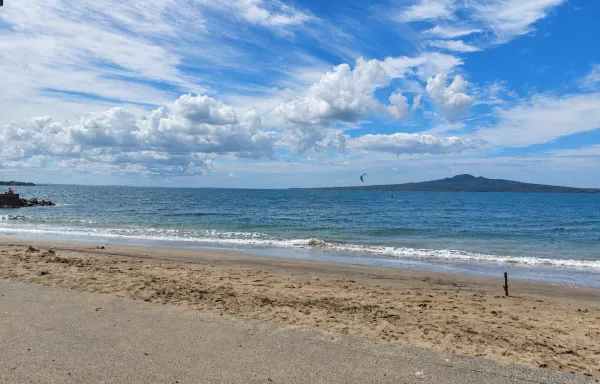
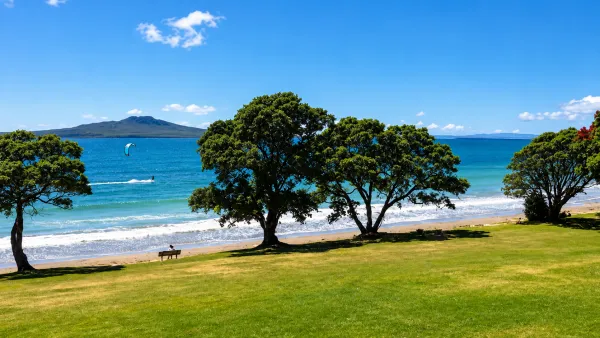
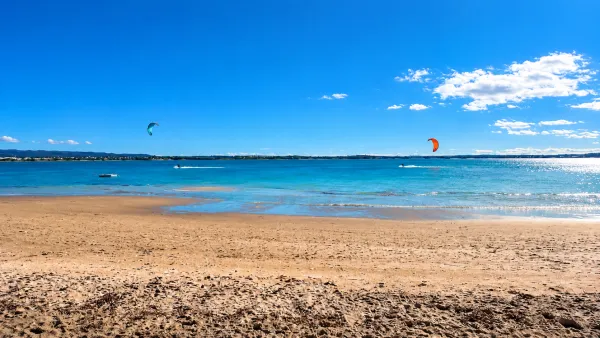
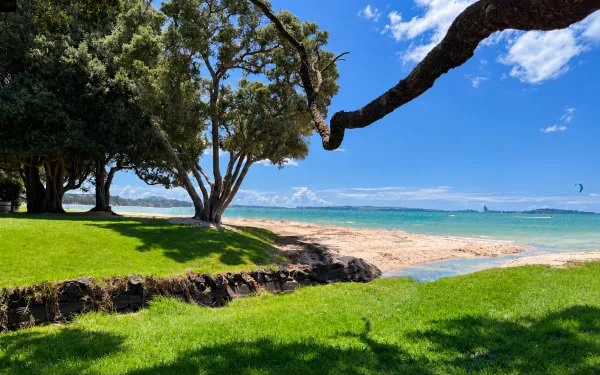
Cheltenham Beach is a sheltered coastal kitesurfing location in Devonport, on Auckland's North Shore, New Zealand. Situated along the eastern side of the Devonport Peninsula, overlooking the entrance to Waitematā Harbour and the Hauraki Gulf, this sandy beach offers relatively flat water, shallow nearshore areas and convenient access from central Auckland. Unlike the region's exposed ocean beaches, Cheltenham is primarily suited to relaxed freeriding, practising transitions and controlled freestyle manoeuvres. Its sheltered setting and limited wave action make the water appealing to progressing riders, although tidal changes and the popularity of the beach can make launching considerably more demanding than the riding conditions suggest.
The most favourable kitesurfing conditions generally occur with easterly and northeasterly winds, particularly NE, NNE, ENE and E. These directions can provide suitable cross-shore or cross-onshore airflow depending on the precise launching position. Spring and summer offer opportunities for afternoon sea breezes, while suitable wind conditions can also develop during other seasons. Wind strength and consistency vary with local weather patterns, and surrounding terrain may influence airflow near the shoreline. Riders should check the wind direction carefully before launching, as changes in angle can create less favourable conditions or make returning to the beach difficult.
Water conditions at Cheltenham Beach are predominantly flat to lightly choppy, with the sheltered geography limiting exposure to significant ocean swell. During moderate winds, the relatively smooth water provides enjoyable conditions for freeriding, improving upwind technique and practising basic freestyle manoeuvres. Stronger winds can generate short-period chop across the bay, although breaking waves are generally limited. The predominantly sandy seabed and shallow nearshore sections make water entry relatively straightforward when sufficient beach space is available. Cheltenham is not a wave-riding destination, and its main attraction is the opportunity to enjoy controlled flat-water sessions close to Auckland.
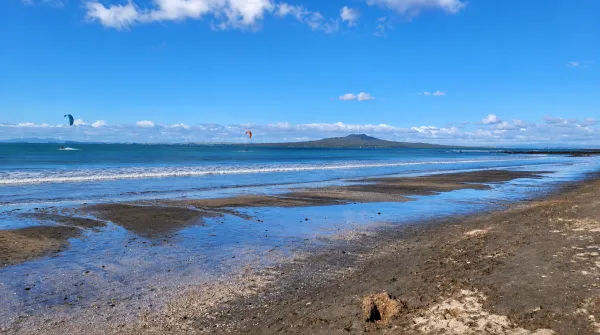
Tides have a significant influence on the suitability of Cheltenham Beach for kitesurfing. At high tide, much of the sandy shoreline can become submerged, leaving very limited space for preparing equipment, launching and landing. Mid-tide conditions may provide a more practical balance between available beach width and accessible water depth. At low tide, extensive sand can become exposed, creating more room for rigging but potentially requiring a longer walk to reach sufficiently deep water. The ideal tidal window therefore depends on both the wind conditions and the available launching space. Riders should avoid launching when the remaining beach is too narrow to maintain safe clearance from obstacles and other users.
Access is straightforward through Devonport, with residential streets leading towards the beachfront and roadside parking available nearby. The beach can also be reached from central Auckland via the Devonport ferry, followed by a walk or short local transfer. Although the sandy shoreline may appear suitable for launching, Cheltenham is a popular recreational beach used by swimmers, families, paddleboarders and other visitors. During summer weekends and holiday periods, the available space can become heavily occupied, particularly near swimming areas and the offshore pontoon. Kitesurfers should maintain generous separation from beachgoers and check current local rules before setting up, as access and safe launching opportunities may be restricted during busy periods.
Cheltenham Beach can offer suitable water conditions for beginner progression under professional supervision, but the limited launching space and frequent presence of swimmers make it less appropriate for independent beginners. Intermediate riders can enjoy freeriding, transitions and controlled jumps when the beach is sufficiently clear, while experienced kitesurfers may appreciate convenient flat-water sessions during suitable easterly winds. A freeride twin-tip board is the most practical equipment choice, although hydrofoiling may be possible in deeper sections with adequate clearance from swimmers and other water users. A 3/2 mm wetsuit is generally suitable during warmer months, while a 4/3 mm wetsuit provides additional comfort during cooler periods.
The main hazards at Cheltenham Beach are associated with restricted launching space, tidal changes, swimmers and other recreational users rather than powerful surf. High tide can leave insufficient room for safe kite handling, while crowded summer conditions may make launching inappropriate altogether. Riders should remain well clear of swimming areas, the pontoon and nearby vessels, particularly when entering or returning to shore. Wind shifts and localised turbulence may also affect kite control close to the beach. Even when the water appears calm, maintaining adequate separation from people and shoreline obstacles is essential, and riders should choose another location when safe launching conditions cannot be maintained.
Cheltenham Beach offers an accessible combination of sheltered water, favourable easterly winds and convenient urban kitesurfing along Auckland's North Shore. Its greatest attraction is the opportunity to enjoy relaxed freeriding and progression sessions without the stronger swell and shorebreak found at exposed coastal locations. However, successful sessions depend heavily on tidal timing, wind direction and the availability of sufficient space away from swimmers. For intermediate and experienced kitesurfers who can manage these constraints, Cheltenham provides an enjoyable flat-water option within easy reach of central Auckland.
Something missing or out of date at this spot? Suggest a correction
Cheltenham Beach is best suited for
Spot profile
Family spot
Located in an area that offers amenities for all the family and can provide good alternatives for everyone when the kiters are in the water.
Local spot
Maybe not be worth a real journey to reach this spot, but great if you live close by and it is a windy day. In the end, being out on the water feels great anywhere
Equipment
A freeride or light-wind twin-tip kiteboard is a good fit, with kite sizes selected for moderate Auckland winds typically between 10 and 18 knots. In summer months, boardshorts or a shorty wetsuit may be enough for many riders, but a 3/2 or 4/3 mm full suit is usual from mid-autumn through spring because the water cools down and sessions can stay comfortable with more warmth. Booties are helpful if launching or landing during low tide when more rocks or slippery surfaces are exposed at either end of the beach. A helmet and impact vest are recommended for beginners since the spot is commonly used for teaching. A kite with easy relaunch characteristics and a longer leash are smart for this sheltered, sometimes gusty zone.
Wind Conditions
Main wind directions at Cheltenham Beach
Windy days per month in Cheltenham Beach
Wind Speed Range
From 10 to 18 Knots
Suggested sizes
10 - 11 mt
12 - 13 mt
14 mt and above
Forecast on Windy.com
Kitesurfing Safety & Local Rules at Cheltenham Beach
The main hazard at Cheltenham Beach, on Auckland's North Shore, is the limited launching and landing space caused by tidal changes. At high tide, the sandy beach can become extremely narrow, leaving little clearance from seawalls, walkways and other beach users. At low tide, extensive shallow flats provide more rigging space but may require a long walk before reaching sufficient depth for safe water starts. Slippery or muddy sections can make carrying equipment difficult, while rocky areas at both ends of the beach create additional risks during uncontrolled launches or downwind drift. Check tide conditions carefully and avoid launching when insufficient space is available.
Cheltenham Beach is a popular swimming and family destination, particularly during summer weekends and holidays. Swimmers, children and other visitors frequently occupy the shoreline and surrounding swimming areas, including the popular pontoon. Kite lines, uncontrolled launches and accidental kite drops can pose serious risks to people nearby. Maintain several kite-line lengths of clearance from swimmers, avoid designated bathing areas and never launch or land within reach of bystanders. Crowded periods should be avoided entirely, as the limited beach width leaves little margin for error.
Although the sheltered bay generally offers manageable water conditions, the combination of shallow flats, nearby rocks and heavy recreational use requires careful judgement. There are no dedicated kitesurfing rescue facilities, making personal responsibility and reliable self-rescue skills particularly important. Respect local beach etiquette, keep equipment away from public access routes and avoid riding close to the swimming pontoon or populated shoreline. Maintaining good relations with the local community is essential, and sessions should not proceed whenever tidal conditions or beach congestion prevent safe separation from other users.
Location
Closest City
Auckland
How to get There
Cheltenham Beach is publicly reachable by road in Devonport. From central Auckland, the usual route is to take the passenger ferry to Devonport, then continue by local bus, taxi, or a short drive or walk to the beach. By car, access is via Devonport’s residential streets with roadside parking near the reserve entrances.
Access
The beach is publicly accessible and free to enter. There are several entrance points via Cheltenham Road, Matai Road, Arawa Avenue, and Macky Avenue in Devonport, with parking available on residential streets. There is no dedicated lot for kiters or large vehicles, and the reserve is managed as a public beach area shared with non-kiting recreation.
No-Wind Days: What to Do Around Cheltenham Beach
Located on Auckland's picturesque North Shore, Cheltenham Beach combines a peaceful sandy shoreline with the historic charm of nearby Devonport. Overlooking the Hauraki Gulf and surrounded by leafy residential streets, volcanic headlands and attractive heritage buildings, the area offers an appealing balance of seaside relaxation and city exploration. Its proximity to cafés, restaurants, walking trails and Auckland's ferry network makes it particularly suitable for families and non-kiting partners. During no-wind days, visitors can explore historic military sites, discover Devonport's village atmosphere or enjoy spectacular views across Auckland Harbour.
Cheltenham Beach itself is one of Devonport's most attractive coastal locations, with a gently sloping sandy shoreline and beautiful views towards Rangitoto Island. The beach is popular for swimming, picnics, paddleboarding and relaxed walks along the water. Its relatively sheltered setting makes it appealing for families, although tides, wind and local water conditions should always be considered before swimming. The surrounding residential neighbourhood offers a peaceful atmosphere, while nearby green spaces provide pleasant places to relax beneath the trees or enjoy a picnic overlooking the gulf.
One of the area's greatest attractions is Maungauika/North Head, the historic volcanic headland rising immediately south of Cheltenham Beach. This remarkable reserve combines beautiful coastal scenery with fascinating military history, including former gun emplacements, defensive structures and underground tunnels. Walking tracks lead around the headland and towards elevated viewpoints offering panoramic views of Rangitoto Island, the Hauraki Gulf and Auckland's skyline. Visitors can explore accessible historic features and enjoy the surrounding natural landscape, although some tunnels or sections may be temporarily restricted. The headland is particularly beautiful during the late afternoon, when the changing light illuminates the harbour and nearby islands.
Devonport village is another highlight, located within walking distance of Cheltenham Beach. Known for its Victorian and Edwardian architecture, independent boutiques, art galleries and welcoming cafés, Devonport has a distinctive character that sets it apart from Auckland's busier urban districts. Visitors can browse local shops, enjoy coffee in a heritage building or explore the waterfront promenade overlooking Waitematā Harbour. The village also has a selection of restaurants and casual eateries, making it an excellent place for lunch or a relaxed evening meal after spending time at the beach.
For visitors interested in history and culture, the Devonport area offers several worthwhile attractions. The Torpedo Bay Navy Museum, located near North Head, explores New Zealand's naval history through exhibitions, artefacts and maritime displays. Nearby, Takarunga/Mount Victoria provides another excellent viewpoint across Auckland and the surrounding islands. The short climb to the summit rewards visitors with sweeping views of the city skyline, harbour and volcanic landscape. Devonport's historic streets and waterfront buildings also provide plenty of opportunities for photography and leisurely exploration.
Auckland's city centre is easily accessible from Devonport by passenger ferry, making Cheltenham an excellent base for combining beach activities with urban sightseeing. The ferry journey across Waitematā Harbour offers beautiful views of the Auckland skyline and waterfront. Once in the city, visitors can explore the Viaduct Harbour, Wynyard Quarter, Auckland Art Gallery or the restaurants and shopping areas around the central waterfront. Families may enjoy the New Zealand Maritime Museum or other city attractions, while travellers with additional time can arrange excursions to islands in the Hauraki Gulf. Ferry schedules and connections should be checked in advance, particularly during evenings and weekends.
The wider North Shore offers additional beaches and coastal destinations worth exploring. Narrow Neck Beach, located north of Cheltenham, provides a broad sandy shoreline and recreational spaces, while Takapuna Beach offers a livelier atmosphere with beachfront cafés, restaurants and beautiful views towards Rangitoto Island. The surrounding coastline features walking routes, parks and scenic viewpoints that are particularly enjoyable during calm weather. These neighbouring destinations make it easy to combine several coastal stops in a single day without travelling far from Devonport.
Accommodation around Cheltenham Beach and Devonport includes boutique guesthouses, holiday homes, self-catering apartments and selected small hotels, while central Auckland provides a much wider choice of accommodation. Devonport's cafés, bakeries, restaurants and local shops cover most everyday needs, although larger supermarkets and shopping centres are available elsewhere on the North Shore. Cheltenham Beach is approximately 20–30 minutes by car from central Auckland outside heavy traffic, while the ferry from downtown Auckland to Devonport generally takes around 12 minutes, followed by a pleasant walk of approximately 20–25 minutes to the beach. Public transport and cycling are practical alternatives for visitors travelling without bulky equipment.
With its beautiful beach, historic volcanic headlands and charming village atmosphere, Cheltenham Beach offers plenty to enjoy beyond kitesurfing. Whether exploring the military tunnels of North Head, discovering Devonport's heritage streets, taking a ferry across Auckland Harbour or relaxing beside the Hauraki Gulf, visitors will find an appealing combination of coastal recreation and cultural experiences. Its walkable surroundings and convenient access to Auckland make Cheltenham Beach an excellent choice for a family kitesurfing holiday or a relaxed day out with non-kiting partners.
Other kitesurfing spots near Cheltenham Beach
All kitesurfing spots in New Zealand
Last updated: