
Kitesurfing in Crandon Park
Miami · United States Of America
Been here? Want to go? Add it to your kite spot lists.
Create a free account to save it- Spot type Flat
- Rider level expert
- Water Dark - Clear
- Beach Sand
- Crowd Seasonal crowd
- Tide effect Conditions vary
Kitesurfing in Crandon Park: Conditions, Wind & Season
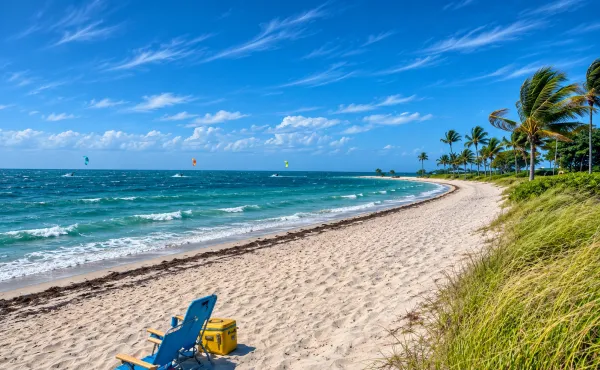
Crandon Park is one of the best-known kitesurfing locations in the Miami area, situated on the Atlantic-facing eastern coast of Key Biscayne, Florida, United States. The park features an extensive sandy beach overlooking the shallow turquoise waters of the Atlantic Ocean, where offshore sandbars and reef formations help reduce the influence of larger ocean swells. These natural conditions create predominantly flat to lightly choppy water close to shore, making Crandon Park particularly attractive for freeriding, hydrofoiling and technical progression. Unlike the more exposed ocean beaches of Miami Beach, the protected shallows offer relatively smooth riding conditions, although stronger winds can generate noticeable chop farther offshore. However, despite its inviting appearance, Crandon Park is not an unrestricted kiteboarding beach. Kitesurfing activity is confined to a designated operating area, with specific access requirements, rider qualifications and safety regulations intended to protect both kiteboarders and other beach users.
The main kitesurfing season generally extends from November through April, when prevailing easterly winds and passing cold fronts provide the most frequent riding opportunities along the South Florida coastline. Easterly, east-northeasterly, northeasterly and southeasterly winds are particularly favourable, producing relatively clean airflow across the Atlantic-facing beach. During suitable winter conditions, wind speeds commonly range from 15 to 20 knots, with stronger frontal passages occasionally producing winds exceeding 25 knots. These seasonal patterns can provide several consecutive days of enjoyable riding, although consistency varies considerably between weather systems. Summer generally brings lighter and less predictable winds, with occasional southeasterly or southerly breezes providing additional opportunities. Thunderstorms, sudden squalls and tropical disturbances become important considerations during the warmer months. Westerly, northwesterly and southwesterly winds are generally unsuitable because they cross Key Biscayne before reaching the beach, creating turbulence and potentially dangerous offshore conditions. Checking current wind observations and short-term forecasts is essential before planning a session.
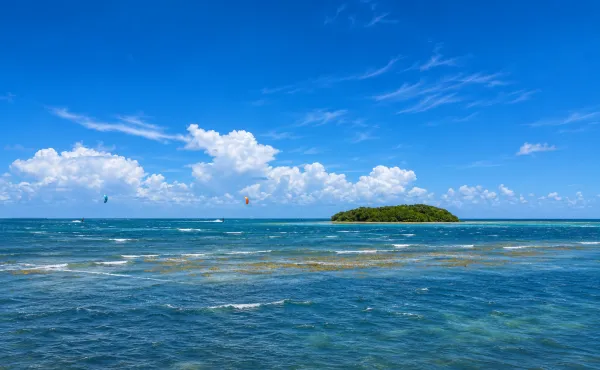
Water conditions at Crandon Park are predominantly flat to moderately choppy, with extensive shallow sections extending offshore. The seabed consists mainly of sand, with occasional seagrass patches, shells and harder submerged formations. Water depth changes with the tide, and shallow sandbars can become particularly restrictive during low-water periods. The relatively smooth surface is well suited to freeride twin-tips, larger light-wind boards and controlled freestyle manoeuvres. Hydrofoiling is also possible in deeper sections, although riders must carefully assess mast clearance and remain alert to submerged obstacles. Stronger easterly winds can generate short-period chop and small breaking waves, but Crandon Park is not a dedicated wave-riding destination. Although the shallow water may appear suitable for beginners, the combination of restricted access, crowded beach conditions and local operating requirements makes independent riding more appropriate for qualified intermediate and advanced kitesurfers. Jumping and powered freestyle manoeuvres should only be attempted where permitted and with sufficient water depth and separation from other riders.
Access is through Crandon Park on Key Biscayne, with paid parking and public beach facilities available near the designated kiteboarding area. Launching and landing are controlled through an authorised operating corridor, traditionally managed by a local kiteboarding concession or operator. Riders may be required to register, demonstrate an appropriate skill level or present recognised certification before entering the water. Local rules have also included restrictions on the number of simultaneous riders, operating hours linked to lifeguard coverage and minimum offshore distances of approximately 600 feet (183 metres), except when entering or leaving the water. These requirements should be verified with the current operator or park authorities before visiting, as access arrangements and specific boundaries may change. Kitesurfers must remain clear of designated swimming areas, lifeguard zones and environmentally sensitive sections near Bear Cut Preserve. The sandy beach provides space for equipment preparation within the authorised corridor, although weekends and holidays can considerably increase congestion. Water temperatures remain comfortable throughout most of the year, allowing boardshorts and a rash guard during warmer months, while a shorty or lightweight wetsuit may be useful during cooler winter frontal passages.
The principal hazards at Crandon Park include shallow sandbars, submerged hard-bottom sections, strong frontal gusts, restricted launching space and the presence of numerous swimmers and other beach users. Offshore wind components can make returning to shore difficult, while sudden weather changes may create dangerous conditions even during otherwise favourable sessions. Riders must respect the designated kiteboarding boundaries, maintain adequate separation from protected habitats and avoid entering swimming areas or restricted sections of the coastline. Failure to follow local regulations can jeopardise both individual access and the continued availability of the spot for the wider kiteboarding community. With its extensive sandy beach, sheltered Atlantic shallows and favourable winter winds, Crandon Park offers one of the most attractive regulated flat-water kitesurfing environments around Miami. Its greatest appeal lies in relaxed freeriding, hydrofoiling and technical progression in warm subtropical waters, provided riders meet the access requirements and respect the strict operating rules that distinguish this location from other South Florida kiteboarding spots.
Something missing or out of date at this spot? Suggest a correction
This spot does not have a photo gallery yet.
Kited here? Add the first photos (free account, one minute).
Crandon Park is best suited for
Spot profile
- Travel spotA proven kite destination with reliable conditions, worth a trip. Kiters fly in from all over the world for their kite holidays, and you will probably find schools, rentals and a lively kite scene nearby.
- Family spotEasy to visit with family and friends. Facilities are close by and non-kiters have plenty to do while you are on the water, so everyone enjoys the day, whether they kite or not.
- Local spotNot worth a long trip, but a great option if you live nearby and the wind is on. Ideal for a quick session after work or a spare afternoon, without planning a whole trip.
Equipment
A practical kite quiver covers approximately 7–17 m, with 9–14 m kites suitable for most common conditions during the main wind season, smaller kites (down to 7 m) advised for strong winter fronts, and larger kites or a foil useful during light summer days. The water is usually warm enough for a rash guard or shorty in most months, but from December through March a thin full wetsuit is often more comfortable, especially during cold fronts. The beach launch is sandy, so footwear is not normally needed, but lightweight neoprene shoes can be useful for sensitive feet or exploring less familiar beach sections.
Wetsuit suggestion by month
- JanShorty23°
- FebShorts24°
- MarShorts25°
- AprShorts26°
- MayShorts29°
- JunShorts30°
- JulShorts32°
- AugShorts32°
- SepShorts31°
- OctShorts28°
- NovShorts26°
- DecShorts25°
- Shorty Shorty or neoprene top
- Shorts Boardshorts and lycra
Based on the average sea temperature of each month. A guide for an average rider: if you feel the cold, go one step warmer.
Wind Conditions
Main wind directions
Windy days per month
Share of the days with more than 10 knots.
Wind speed range
10 - 19 knots
Wind strength on rideable days
- 7-11 kn76%
- 12-16 kn22%
- 17-22 kn2%
- 23-28 kn0%
- 29+ kn0%
Share of the daytime hours with 7+ knots.
Calculate your kite size
Estimate for a rider of your weight at Crandon Park: kite size = weight / wind speed x 2.2, adjusted for the kite shape and aspect ratio. Board, skills and gusts change the ideal size.
Month by month at Crandon Park
| Metric | Jan | Feb | Mar | Apr | May | Jun | Jul | Aug | Sep | Oct | Nov | Dec |
|---|---|---|---|---|---|---|---|---|---|---|---|---|
| Wind | ||||||||||||
| Rideable daysdays | 22.5 | 23 | 28.5 | 27.5 | 25.5 | 20 | 19 | 18.5 | 11.5 | 21 | 20.5 | 21 |
| Usable windhours | 175 | 177 | 222 | 217 | 188 | 144 | 134 | 136 | 82 | 158 | 163 | 165 |
| Average gustsknots | 18 | 19 | 21 | 21 | 19 | 17 | 16 | 17 | 15 | 18 | 18 | 18 |
| Temperature | ||||||||||||
| Air°C | 23 | 24 | 26 | 27 | 29 | 29 | 30 | 30 | 29 | 28 | 26 | 24 |
| Sea°C | 23 | 24 | 25 | 26 | 29 | 30 | 32 | 32 | 31 | 28 | 26 | 25 |
| Weather and sea | ||||||||||||
| Sunshinehours / day | 9.1 | 10.2 | 10.6 | 11.8 | 12.4 | 10.5 | 11.4 | 11.3 | 9.6 | 9.7 | 9.1 | 8.7 |
| Rainmm | 59 | 65 | 89 | 87 | 109 | 280 | 126 | 150 | 232 | 133 | 118 | 118 |
| Rainy daysdays | 10.5 | 11 | 11 | 12 | 15 | 23 | 21 | 25.5 | 24.5 | 18.5 | 11.5 | 12 |
| Wave heightm | 0.6 | 0.6 | 0.7 | 0.7 | 0.5 | 0.4 | 0.4 | 0.4 | 0.4 | 0.6 | 0.7 | 0.7 |
Typical monthly averages over several years, based on weather data: local thermal winds are usually stronger than shown, and sea temperature and waves are a regional estimate. A rideable day has at least 3 hours of 7+ knots between 10:00 and 18:00, usable wind counts those hours, a rainy day has 1 mm or more.
Wind and climate statistics: Weather data by Open-Meteo.com (CC BY 4.0), based on ERA5 data of the Copernicus Climate Change Service. A typical year, not a forecast.
Forecast on Windy.com
Kitesurfing Safety & Local Rules at Crandon Park
The main hazards at Crandon Park, on Key Biscayne near Miami, Florida, are crowded recreational areas, strictly controlled launching space and potentially dangerous offshore winds. The beach is frequently shared with swimmers, paddlers, families and other visitors who may unexpectedly enter or cross the designated kitesurfing area. Launching and landing are restricted to an authorized corridor between marked lifeguard towers, leaving little room for careless kite handling when the beach is busy. Riders must maintain generous clearance from non-kiters, avoid flying kites over crowded sections and remain within the permitted riding boundaries. The shallow sandy bottom provides relatively forgiving conditions, but falls in insufficient water depth can still cause injuries, particularly during jumps or unsuccessful manoeuvres.
Wind direction is particularly important at Crandon Park. Westerly, northwesterly, north-northwesterly, southwesterly and south-southwesterly winds are generally unsuitable because they can produce offshore drift, gusty airflow and difficult self-rescue conditions. Passing weather fronts and thunderstorms may also generate sudden wind shifts, powerful gusts and rapidly deteriorating conditions. Although the water is often relatively flat, stronger winds can produce moderate chop, while tidal movements and local currents may complicate equipment recovery farther offshore. Recreational boats, kayaks, rental watercraft and organized nature tours add further collision hazards in surrounding waters. Avoid launching in unfavorable wind directions, maintain sufficient distance from navigation routes and leave the water well before approaching squalls.
Crandon Park operates under specific kitesurfing access regulations that must be respected before entering the water. Riders may be required to check in with the authorized concession or kite school, provide advanced certification and proof of liability insurance, and comply with limits on the number of active kitesurfers. Riding may also be restricted to periods when lifeguards are on duty. These requirements should be verified before visiting, as local operating arrangements and access conditions can change. The nearby Bear Cut Preserve and designated environmental buffer zones must be avoided to protect sensitive coastal habitats. Follow all posted signs and lifeguard instructions, keep equipment clear of pedestrian routes and parking areas, and respect authorized launching boundaries. Violations can result in denied access or additional restrictions affecting the entire kitesurfing community.
How to reach Crandon Park
- Closest cityMiami, Florida
- How to get thereFrom Miami, drive south on US-1 and take the Rickenbacker Causeway east toward Key Biscayne. The causeway has a toll. Continue onto Crandon Boulevard and enter Crandon Park. Spot guides direct riders toward the far north end of the parking area, followed by a walk along the beach trail to the designated lifeguard-tower launch zone. The park is also reachable by rideshare and public transportation, although carrying kite equipment is generally easier by car. Miami International Airport is the closest major airport, approximately 20–25 km away by road depending on the route and traffic.
- AccessCrandon Park is publicly accessible, but vehicle parking fees apply. The cited current park information lists approximately USD 7 plus tax from Monday through Thursday and USD 10 plus tax from Friday through Sunday. The beach itself is public, but kitesurfing access is regulated through the local watersports concession or kite operator. Riders may need to sign in, purchase a daily pass or hold membership, provide advanced certification and show personal insurance. Launching is not permitted from any arbitrary section of beach; riders must use the designated corridor and follow lifeguard and beach-marshal instructions.
No-Wind Days: What to Do Around Crandon Park
Crandon Park, located on the northern part of Key Biscayne just offshore from Miami, is one of those rare places where a beautiful tropical-looking beach, protected natural environments and the attractions of a major American city come together. With its long sandy shoreline, swaying palm trees and shallow turquoise waters, the park offers a surprisingly peaceful escape from the skyscrapers and busy streets of nearby Miami. Yet there is much more to discover here than simply spending a day on the beach. From coastal nature trails and historic landmarks to kayaking, cycling and wildlife observation, Crandon Park provides plenty of opportunities for families and non-kiting partners to enjoy this fascinating corner of South Florida.
The beach itself is undoubtedly the park's main attraction. Stretching along the Atlantic side of Key Biscayne, Crandon Beach features pale sand, rows of palm trees and relatively sheltered waters protected in part by offshore sandbars. The gradual nearshore depth makes sections of the beach particularly popular with families, although swimming conditions still depend on tides, currents, weather and posted safety advisories. Visitors can relax beneath the trees, enjoy a picnic or take long walks along the shoreline while admiring the views across the Atlantic. Restrooms, showers, picnic facilities and seasonal concessions add to the convenience, while the extensive park grounds provide space to escape the busiest beach areas during weekends and holidays.
One of Crandon Park's most interesting features is its remarkable coastal environment. The nearby Bear Cut Preserve protects a combination of tropical hardwood hammock, mangrove forest and coastal habitats that support numerous birds, butterflies and other wildlife. Walking through these landscapes reveals a very different side of Miami, far removed from its famous nightlife and urban skyline. The Crandon Park Nature Center offers environmental education and information about the island's ecosystems, with nature programmes and guided activities available according to local schedules. Birdwatchers may encounter herons, egrets, ospreys and other coastal species, while the surrounding vegetation provides an excellent opportunity to learn about South Florida's native plants and fragile shoreline environments.
Kayaking and stand-up paddleboarding are particularly enjoyable ways to explore the sheltered waters around Key Biscayne. Biscayne Bay is famous for its shallow flats, seagrass beds and mangrove-fringed islands, creating an attractive environment for observing marine wildlife. Guided paddling excursions may offer opportunities to spot rays, fish, coastal birds and occasionally manatees or dolphins. Visitors interested in exploring the underwater environment can also arrange snorkelling or boating excursions through local operators, although suitable locations and conditions vary throughout the year. The contrast between the Atlantic coastline on one side of the island and the calmer waters of Biscayne Bay on the other makes Key Biscayne particularly rewarding for outdoor enthusiasts.
At the southern end of Key Biscayne, Bill Baggs Cape Florida State Park is another destination that should not be missed. The park protects a beautiful stretch of coastline, with sandy beaches, nature trails, picnic areas and excellent opportunities for cycling and wildlife observation. Its most recognisable landmark is the historic Cape Florida Lighthouse, originally constructed in 1825 and later rebuilt following damage during the Second Seminole War. The lighthouse stands among the oldest surviving structures in Miami-Dade County and offers a fascinating connection to the region's maritime history. Guided visits and lighthouse access depend on operating schedules, but even from the surrounding grounds, the structure provides a picturesque setting overlooking the Atlantic Ocean.
Key Biscayne itself has a pleasant residential atmosphere, quite different from the busy tourist districts of Miami Beach. The village offers restaurants, cafés, bakeries, small shops and convenient services, making it easy to enjoy a relaxed lunch or dinner after a day outdoors. Seafood, Cuban specialities, Latin American cuisine and international dishes reflect the cultural diversity of the Miami region. Cycling is another enjoyable activity, with routes connecting different sections of the island and providing views of Biscayne Bay. Visitors should also explore the Rickenbacker Causeway, where several waterfront viewpoints offer impressive panoramas of the Miami skyline, particularly during the late afternoon when the sunlight reflects off the city's skyscrapers.
For those looking for more cultural attractions, downtown Miami is only a drive across the causeway. The city's waterfront districts offer museums, galleries, shopping and a lively restaurant scene. The Pérez Art Museum Miami presents modern and contemporary art in a striking waterfront building, while the nearby Phillip and Patricia Frost Museum of Science features interactive exhibitions, an aquarium and a planetarium. Families can also explore the historic neighbourhood of Coconut Grove, known for its tropical gardens, waterfront parks and relaxed cafés, or visit the colourful streets of Little Havana to discover Cuban-American culture, music and traditional cuisine. Miami Beach and its famous Art Deco architecture provide another interesting excursion for visitors who want to experience the city's more energetic side.
Accommodation on Key Biscayne includes upscale resorts, holiday apartments and private rentals, while nearby Miami offers a much broader selection of hotels and other lodging options for different budgets. The island's restaurants, supermarkets and essential services make it convenient for longer stays, although accommodation prices can be relatively high, especially during the winter tourist season. A rental car is useful for exploring the wider Miami area, but visitors should consider that traffic on the Rickenbacker Causeway and parking demand at Crandon Park can increase considerably during sunny weekends and public holidays. Arriving early is generally the best way to enjoy the beach before the busiest periods.
Crandon Park is an excellent example of how a kitesurfing destination can also provide an enjoyable holiday experience for everyone else. Whether discovering the tropical habitats of Bear Cut Preserve, cycling through Key Biscayne, visiting the historic Cape Florida Lighthouse or exploring Miami's museums and colourful neighbourhoods, there is no shortage of activities when the wind disappears. The combination of beautiful beaches, protected natural landscapes and convenient urban attractions makes Crandon Park particularly appealing for families and non-kiting partners who want to experience the best of South Florida without spending every day waiting for the next session.
Riders of Crandon Park
Who calls Crandon Park home, who is planning a trip and who has ridden it. Add yourself to meet them.
Nobody calls it home yet
Make it my home spotNobody on the way yet
I want to goBe the first to ride it
I have been hereUpcoming at Crandon Park
Sessions, downwinders and meetups planned by the riders of Crandon Park. Going too? Join them.
No session planned yet. Going out soon? Post it: the riders who follow Crandon Park get a notification.
Other kitesurfing spots near Crandon Park
All kitesurfing spots in United States Of America
Last updated: