Kitesurfing in Dahab
Dahab - Egypt
Spot Type
Flat
Water
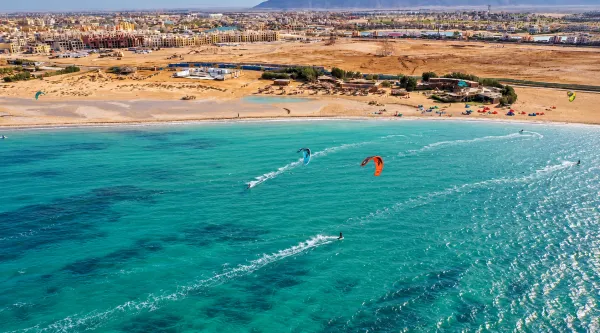
Crystal Clear
Beach
Sand
Rider Level
beginner
Spot characteristics
Spot Type
Flat
Rider Skill
beginner
Crowd
Seasonal Crowd
Beach Type
Sand
Water Quality
Crystal Clear
Tide Influence
All tide levels with different conditions (chop - flat - wave)
Kitesurfing in Dahab: Conditions, Wind & Season
Dahab is one of Egypt's most established windsurfing and kitesurfing destinations, located on the southeastern coast of the Sinai Peninsula, overlooking the Gulf of Aqaba and approximately 90 kilometres north of Sharm El Sheikh. Surrounded by dramatic desert mountains and crystal-clear Red Sea waters, Dahab is famous for its frequent northerly winds, warm climate and excellent flat-water conditions. Its combination of sheltered lagoons, open-water riding areas and professional watersports infrastructure attracts riders looking to improve their technique or enjoy extended sessions in a spectacular natural setting. However, the different riding zones around Dahab have distinct characteristics, and not all areas are equally suitable or authorised for kitesurfing.
The region benefits from predominantly northerly and northwesterly winds that are accelerated by the geography of the Gulf of Aqaba and the surrounding Sinai mountains. These winds can blow for extended periods, particularly between late spring and early autumn, creating favourable conditions for kitesurfing and windsurfing. The strongest and most consistent months are generally May through September, with June, July and August often providing frequent windy days. Typical rideable conditions can range from approximately 12 to 25 knots, although stronger episodes are possible. The daily wind pattern varies with regional pressure systems and local heating, and while afternoons can deliver excellent sessions, Dahab is also known for strong morning winds. Riders should therefore check the actual forecast rather than assume that the wind always strengthens later in the day.
Dahab's main watersports area is located around the lagoon south of the town, where shallow water and a predominantly sandy seabed create relatively smooth conditions. The sheltered shape of the bay reduces exposure to larger waves, making it particularly attractive for practising basic manoeuvres, transitions and freeriding techniques. Water depth varies across the lagoon, with some shallow sections suitable for standing and deeper channels farther from shore. However, Dahab Lagoon is primarily known as a windsurfing centre, and kitesurfing access may be restricted or separated from established windsurfing areas. Riders should confirm the currently authorised kite zones with local operators before launching rather than assuming that the entire lagoon is available for kitesurfing.
Wind direction and strength can vary considerably around the lagoon because of the surrounding terrain and the orientation of the shoreline. In some areas, northerly winds provide favourable cross-shore conditions, while other sections may experience offshore components, gusts or wind shadows. The relatively confined nature of the lagoon also means that launching and landing space can be limited, particularly when windsurfers, instructors and other water users are present. Even where kitesurfing is permitted, careful kite handling and respect for designated watersports zones are essential. Beginners should rely on professional instruction and local guidance to identify suitable launching areas and avoid sections affected by obstacles or restricted access.
For kitesurfers looking for more extensive flat-water riding, the Blue Lagoon, located farther north along the Sinai coast near Ras Abu Galum, is one of the region's best-known kite destinations. This remote lagoon offers broad areas of turquoise water, sandy surroundings and excellent conditions for freeriding and freestyle when the wind is suitable. Its exposure to the prevailing northerly winds makes it particularly attractive during the main windy season, although local wind angles and gusts still require attention. Reaching the Blue Lagoon generally involves a combination of overland transport and boat transfers, and it should be treated as a separate kitesurfing location rather than an extension of Dahab's main lagoon. Riders should arrange transport, equipment support and emergency procedures in advance.
Water conditions around Dahab range from smooth lagoon surfaces to moderate chop in the more exposed sections of the Gulf of Aqaba. The flat-water areas are particularly suitable for practising transitions, improving upwind technique and developing freestyle skills, while deeper open-water zones may offer opportunities for longer freeride sessions and hydrofoiling where access is permitted. Tidal variations can expose shallow patches and reduce usable water depth, making local knowledge important when selecting a riding area. Although sandy sections are relatively forgiving, other parts of the coastline contain coral, rocks and reef formations that can damage equipment or cause injuries. Riders should avoid shallow reef areas and respect any marine protection restrictions.
Dahab has a long-established watersports community, with professional centres providing instruction, equipment rental, storage and beach assistance. However, the availability of kitesurfing-specific services varies by location, and some facilities primarily serve windsurfers. Rescue coverage should always be confirmed directly with the operator responsible for the chosen riding area, especially when venturing beyond sheltered waters. The combination of strong winds, limited launching space in certain sections and occasional offshore conditions makes local guidance particularly valuable. Beginners and intermediate riders can find excellent progression opportunities in authorised kite areas, while advanced riders may prefer the stronger winds and more extensive riding space available at the Blue Lagoon.
For riders searching for kitesurfing in Dahab, flat-water kite spots in Sinai or windy destinations along Egypt's Gulf of Aqaba, the region offers an attractive combination of reliable seasonal winds, clear Red Sea water and varied riding environments. Its main strengths are the frequent northerly winds, the potential for smooth-water sessions and the availability of established watersports services. The key consideration is choosing the correct location: Dahab's main lagoon is not universally open to kitesurfing, while the more remote Blue Lagoon provides a dedicated alternative with different access and safety requirements. With suitable wind conditions, authorised launching areas and appropriate local support, Dahab and its surrounding coastline offer excellent opportunities for kitesurfing progression in one of Egypt's most distinctive Red Sea landscapes.
Dahab is best suited for
Spot profile
Travel spot
The typical kite travel destination, it is known for its great conditions, and kiters from around the world come here for their vacations.
Family spot
Located in an area that offers amenities for all the family and can provide good alternatives for everyone when the kiters are in the water.
Equipment
During the May-September main wind season, a small to medium kite is standard, with sizes around 7 to 10 meters covering typical afternoon thermal conditions, while in the lighter winter months larger kites from 10 to 13 meters are more practical. Most riders use a freeride board, though the spot can be good for foiling when the wind is down. In the hot months, board shorts or a swimsuit are fine, while a shorty or thin wetsuit may be needed in spring and autumn, and a slightly thicker suit for cooler winter sessions. Booties are useful only if planning to launch away from sandy areas or near coral patches, as the main lagoon entry is generally sand. A harness is mandatory, and learners often add an impact vest, especially during instruction or first rides.
Wind Conditions
Main wind directions at Dahab
Windy days per month in Dahab
Wind Speed Range
From 12 to 25 Knots
Suggested sizes
Forecast on Windy.com
Kitesurfing Safety & Local Rules at Dahab
The main hazards at Dahab come from shallow water, tidal changes and occasional coral or reef patches. At low tide, parts of the lagoon can become too shallow for safe riding, particularly during jumps and powered manoeuvres. Outside the main sandy lagoon, submerged coral heads and reef fragments can cause injuries or damage equipment. Check water depth before each session and consider protective footwear when entering unfamiliar areas.
Dahab is a popular destination for both kitesurfers and windsurfers, with designated zones for different activities and lessons. During busy periods, congestion near launching areas can increase the risk of collisions and tangled kite lines. Respect marked boundaries, follow local school instructions and maintain safe distances from beginners and other water users.
Although winds are generally sideshore or side-onshore, some sections of the outer bay can experience cross-offshore conditions, making it difficult to return to the launching area. Avoid riding too far outside the designated zones, especially in strong winds or without reliable rescue support. Always check local conditions and follow the launching, landing and re-entry procedures established by the kite centres.
Location
Closest City
Dahab
How to get There
The most common route is flying into Sharm el-Sheikh International Airport, then traveling by road along the Sinai coast to Dahab. This transfer typically takes 1.5 to 2 hours, with options for private taxis, shuttle buses, or pre-arranged pickups via hotel or kite center. There is no direct commercial airport in Dahab; all arrivals require the final road leg.
Access
Dahab's lagoon is publicly reachable as it sits adjacent to the main town and hotel areas, but functional access is largely organized via the kite schools, centers, or affiliated camps that operate storage, beach use, and launch areas. While the sandy lagoon itself is the easiest to access—often only a few minutes on foot from most seafront accommodations—prime sections and gear storage typically require center membership or a service fee. Other kiteable areas, such as the Blue Lagoon, are less accessible and usually require a boat ride, longer overland trip, or special arrangement with a school. Most of the main lagoon zone remains open to all, but rigging and launching in designated areas avoids conflict with other user groups and respects local regulation.
No-Wind Days: What to Do Around Dahab
Beyond kitesurfing, Dahab is one of the most fascinating destinations on Egypt's Red Sea coast, offering an exceptional combination of underwater adventures, desert landscapes, relaxation and traditional Sinai culture. Located on the eastern coast of the Sinai Peninsula, approximately 90 kilometres north of Sharm El Sheikh, this former Bedouin fishing village has developed into a popular destination for independent travellers and watersports enthusiasts while retaining its relaxed atmosphere. Unlike the large resort complexes found elsewhere along the Red Sea, Dahab is characterised by small beachfront hotels, welcoming guesthouses, informal restaurants and a lively international community. For a kitesurfing trip with non-kiters or a family holiday in South Sinai, Dahab provides an excellent balance between outdoor adventure, comfortable accommodation and opportunities to discover the region's remarkable natural environment.
One of Dahab's greatest attractions is its extraordinary underwater world. The Red Sea is internationally renowned for its coral reefs, colourful tropical fish and excellent visibility, making the area particularly attractive for snorkelling, scuba diving and freediving. The famous Blue Hole, located north of Dahab, is one of the region's most recognisable diving sites, featuring a dramatic underwater sinkhole surrounded by coral formations. Nearby, the Canyon is another popular dive site, known for its distinctive underwater geological formations. Numerous diving centres offer guided excursions, introductory courses and equipment rental for different experience levels. However, some sites feature extreme depths and challenging conditions, so visitors should always choose qualified operators and activities appropriate to their training. The Blue Hole's deep arch is particularly hazardous and unsuitable for recreational divers.
For visitors who prefer snorkelling and relaxed swimming, Dahab offers several beautiful coastal locations. The Lighthouse area, close to the town centre, is popular for its accessible reef and proximity to restaurants and cafés, although entry points and marine conditions should always be assessed before entering the water. Farther north, the Blue Hole and surrounding coastline offer additional opportunities to observe Red Sea marine life in suitable conditions. Organised excursions may also visit the protected Ras Abu Galum area, where dramatic mountains meet clear turquoise waters and traditional Bedouin settlements. Visitors should avoid touching coral, feeding marine animals or disturbing sensitive underwater habitats. The wider South Sinai coastline forms part of an important marine environment, and responsible tourism is essential to preserving its biodiversity.
One of the most memorable excursions from Dahab is the Blue Lagoon, a remote coastal area north of town famous for its turquoise waters, mountainous backdrop and simple beachfront camps. The journey generally involves organised transport and, depending on the route, a combination of vehicle, boat or walking transfers through the coastal landscape. The lagoon provides a striking contrast to Dahab's more developed waterfront, offering a peaceful environment for photography, relaxation and enjoying the scenery. Facilities are basic, and visitors should arrange transport, food, drinking water and return transfers in advance. The nearby Ras Abu Galum Protected Area is particularly appealing for travellers interested in nature, traditional coastal life and experiencing a quieter side of the Sinai Peninsula.
Dahab's surrounding desert and mountains offer excellent opportunities for outdoor exploration. The rugged landscapes of South Sinai are characterised by dramatic granite formations, narrow canyons, rocky valleys and spectacular desert scenery. Organised excursions can include guided hikes, camel rides, jeep trips and sunset visits to traditional Bedouin camps. One popular destination is the Coloured Canyon region, where distinctive sandstone formations create impressive patterns and narrow passages. Access and excursion routes vary according to local regulations and security conditions, so visitors should use reputable local guides and verify current travel advice. Desert excursions are particularly enjoyable during the cooler months, when temperatures are more comfortable for walking and exploring.
For travellers interested in history and culture, Saint Catherine's Monastery and Mount Sinai are among the most significant attractions in the region. Situated inland in the mountains of South Sinai, the monastery is one of the world's oldest continuously functioning Christian monastic communities and is associated with an extraordinary collection of religious and historical heritage. Nearby Mount Sinai is a major pilgrimage destination, with guided ascents often organised during the night to reach the summit around sunrise. The climb requires reasonable fitness, suitable footwear and preparation for potentially cold mountain temperatures. Visitors should check current access arrangements, monastery opening schedules and local security requirements before planning the excursion. Information about the area's heritage can be found through the UNESCO World Heritage listing for Saint Catherine.
The town of Dahab itself is a pleasure to explore, particularly around the Masbat and Lighthouse waterfront areas. Its pedestrian-friendly promenade is lined with beachfront restaurants, small shops, cafés, dive centres and traditional-style seating areas overlooking the Gulf of Aqaba. Visitors can browse local handicrafts, enjoy fresh fruit juices or relax in a seaside café while watching the mountains of Saudi Arabia across the water. The atmosphere becomes especially pleasant in the evening, when restaurants illuminate their waterfront terraces and travellers gather for relaxed dinners. Dahab's informal character and relatively compact layout make it easy to combine different activities throughout the day without spending much time travelling between locations.
Wellness and relaxation are also important parts of the Dahab experience. Yoga classes, massage services and small wellness studios cater to visitors looking for a slower pace between active days. Many beachfront hotels and guesthouses provide shaded terraces, swimming pools or comfortable lounging areas, while some establishments offer access to private beach facilities. Families can enjoy sheltered swimming areas where conditions permit, relaxed meals by the sea and short excursions suitable for children. For a family kitesurfing holiday in Egypt, Dahab is particularly attractive because different members of the group can choose between diving, snorkelling, beach relaxation and desert activities while sharing the same convenient holiday base.
Food is another highlight of visiting Dahab. The town offers a diverse selection of restaurants serving traditional Egyptian cuisine, fresh seafood, grilled meats, vegetarian dishes and international specialities. Local favourites include koshari, falafel, kofta, freshly baked flatbread and a variety of mezze dishes. Many restaurants feature cushions and low tables beside the sea, creating a relaxed atmosphere that reflects Dahab's distinctive travel culture. Accommodation ranges from affordable guesthouses and simple beach camps to boutique hotels and comfortable resorts, making the destination suitable for different budgets and lengths of stay. For practical travel information and additional destination ideas, visitors can consult the official Egyptian tourism website.
For anyone planning a kite trip to Dahab and wondering what else there is to do, South Sinai offers an extraordinary combination of marine life, mountain landscapes and cultural experiences. A no-wind day can include snorkelling at the Lighthouse reef, joining a guided diving excursion, exploring Ras Abu Galum and the Blue Lagoon, hiking through desert canyons or visiting Saint Catherine's Monastery. Visitors seeking a quieter experience can simply enjoy the beachfront cafés, yoga sessions and relaxed atmosphere of Dahab's waterfront. With its varied accommodation, extensive watersports infrastructure and numerous activities for a non-kiting partner or family, Dahab is an outstanding destination for combining kitesurfing with adventure and relaxation on Egypt's Red Sea coast.