
Kitesurfing in Diani Beach
Mombasa · Kenya
- Spot type Flat
- Rider level beginner
- Water Dark - Clear
- Beach Sand
- Crowd Seasonal crowd
- Tide effect Conditions vary
Kitesurfing in Diani Beach: Conditions, Wind & Season
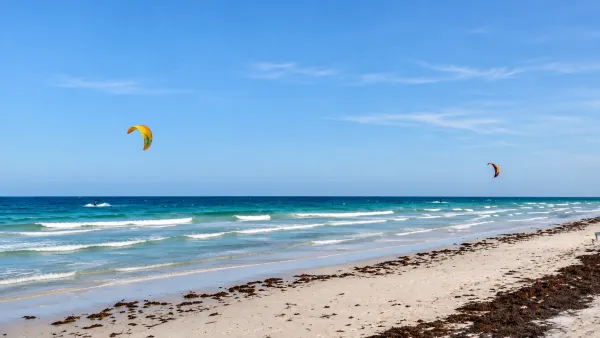
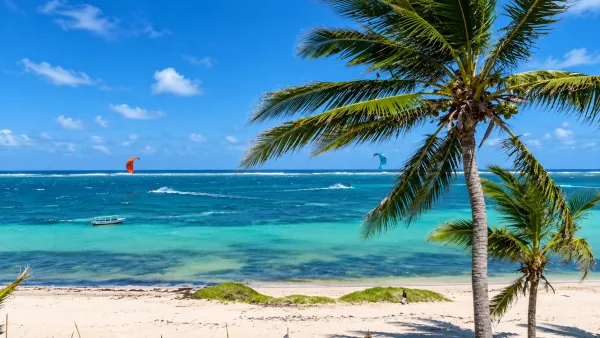
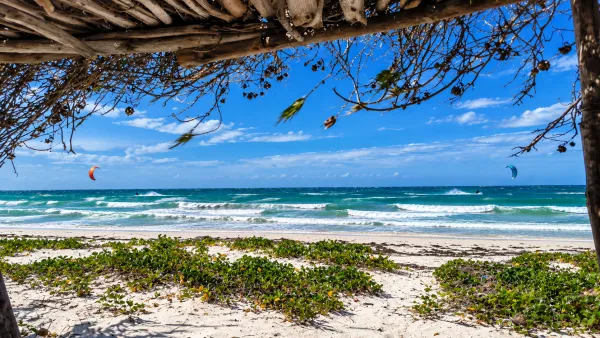
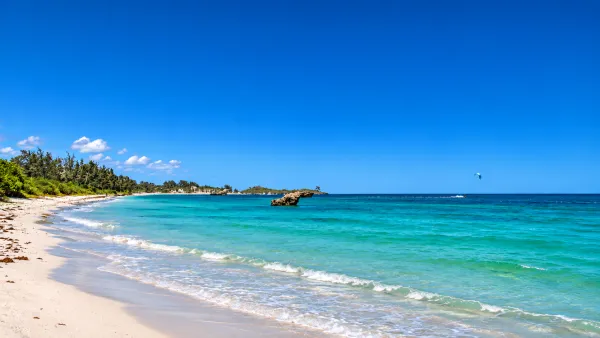
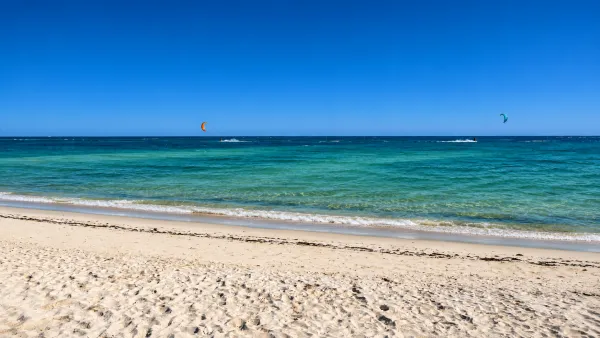
Diani Beach is one of Kenya's most established kitesurfing destinations, stretching along an extensive white-sand coastline south of Mombasa in Kwale County. Facing the warm waters of the Indian Ocean, the beach offers a combination of reef-protected shallow water, seasonal trade winds and generous sandy launching areas. Its sheltered lagoon provides enjoyable conditions for freeriding, beginner progression and freestyle, while stronger winds and deeper water farther offshore offer additional challenges for experienced riders. Most kitesurfing activity is concentrated along the southern sections of Diani and towards neighbouring Galu Beach, where established kite schools and equipment rental centres provide practical support. The combination of accessible launching conditions, warm tropical water and varied riding opportunities makes Diani one of the most popular kitesurfing locations on Kenya's southern coast.
The kitesurfing season follows Kenya's two main monsoon wind systems. The northeasterly Kaskazi generally blows from December to March, bringing relatively steady winds commonly around 10–18 knots, particularly suitable for relaxed freeriding and skill progression. The southeasterly Kusi, also called Kuzi, runs mainly from June to September and typically delivers stronger, more consistent winds around 15–25 knots, with occasional more powerful days. Both seasons can provide favourable side-shore to side-onshore conditions, depending on the exact launching position and local coastline orientation. During Kaskazi, lighter winds and relatively smooth water favour comfortable cruising and basic freestyle, while the stronger Kusi conditions are more attractive for powered freeriding, jumping and advanced manoeuvres. Wind reliability decreases during the transitional months, making December–March and June–September the preferred periods for planning a kitesurfing trip to Diani Beach.
Water conditions are strongly influenced by the tide and the offshore reef. At lower water levels, extensive shallow sections develop inside the lagoon, often providing flat to lightly choppy water suitable for practising water starts, transitions, upwind riding and controlled freestyle tricks. However, very low tides can expose coral formations and leave insufficient depth for safe riding, particularly during spring tides. As the tide rises, the lagoon becomes deeper and generally develops more wind-driven chop, while the available dry beach may become narrower. Beyond the protective reef, Indian Ocean swell can occasionally produce breaking waves suitable for directional wave riding when wind, swell and tide align. The predominantly sandy nearshore bottom is relatively forgiving, although isolated coral patches and reef formations require careful navigation. A freeride or freestyle twin-tip is the most versatile equipment choice, while hydrofoiling is possible only in deeper areas with sufficient clearance from submerged obstacles.
Launching and landing generally take place directly from the sandy beach, with several established kite centres operating along the Diani–Galu coastline. The broad shoreline provides convenient space for preparing equipment at lower tides, although high water levels and increased beach activity can restrict available room. Diani is suitable for beginners under professional supervision when wind strength and water depth are appropriate, while intermediate and advanced riders can enjoy freeriding, freestyle and occasional wave sessions farther offshore. Riders should respect designated kite-school areas, maintain clearance from swimmers and other beach users, and follow local launching guidance. Kite sizes around 10–14 m² are often suitable during lighter Kaskazi conditions, while 7–12 m² sizes may be preferable during stronger Kusi winds, depending on rider weight and equipment. Water temperatures remain warm throughout the year, making boardshorts or a swimsuit with a rash guard sufficient for most sessions, although a lightweight wetsuit or protective footwear can provide additional protection from sun exposure and coral.
The main hazards include shallow coral reefs, changing tidal depth, occasional stronger chop and increased beach activity during busy periods. At low tide, exposed reef sections and insufficient water depth can make jumping or falling dangerous, while higher tides may reduce launching space near beachfront vegetation and structures. Stronger Kusi winds can create more demanding conditions, particularly near the outer reef where breaking waves and currents may develop. Riders should check the tide before launching, identify safe passages through shallow areas and avoid crowded swimming sections. With its reliable seasonal trade winds, extensive sandy shoreline and versatile reef-protected lagoon, Diani Beach remains an excellent destination for kitesurfing in Kenya, offering accessible progression conditions alongside more powered freeriding and freestyle opportunities throughout the main windy seasons.
Something missing or out of date at this spot? Suggest a correction
Diani Beach is best suited for
Spot profile
- Travel spotA proven kite destination with reliable conditions, worth a trip. Kiters fly in from all over the world for their kite holidays, and you will probably find schools, rentals and a lively kite scene nearby.
- Family spotEasy to visit with family and friends. Facilities are close by and non-kiters have plenty to do while you are on the water, so everyone enjoys the day, whether they kite or not.
Equipment
A twin tip is the all-purpose board for Diani, especially given the large shallow lagoon and mostly flat or lightly choppy water near shore. Board size should match wind strength and rider preference – larger boards help during lighter Kaskazi months, while smaller twins or even directional boards suit the windier, more powered Kusi days. Most sessions favor mid-size kites around 9 to 12 meters, with bigger kites handy for the lighter winds of December to March. Kusi season can often mean downsizing your main kite, especially for lighter riders. The warm Indian Ocean eliminates the need for a wetsuit nearly all year; nearly everyone rides in boardshorts, bikinis, or a rash shirt. Some might opt for a thin shorty in July and August, but even then it's rarely required. Reef booties are optional if venturing near or beyond the outer reef, but for the sandy lagoon they're not necessary. Helmets, impact vests, and high SPF sun protection are smart extras for newer riders or anyone spending long days out.
Wind Conditions
Main wind directions
Windy days per month
Share of the days with more than 10 knots.
Wind speed range
10 - 17 knots
Wind strength on rideable days
- 7-11 kn71%
- 12-16 kn28%
- 17-22 kn1%
- 23-28 kn0%
- 29+ kn0%
Share of the daytime hours with 7+ knots.
Calculate your kite size
Estimate for a rider of your weight at Diani Beach: kite size = weight / wind speed x 2.2, adjusted for the kite shape and aspect ratio. Board, skills and gusts change the ideal size.
Month by month at Diani Beach
| Metric | Jan | Feb | Mar | Apr | May | Jun | Jul | Aug | Sep | Oct | Nov | Dec |
|---|---|---|---|---|---|---|---|---|---|---|---|---|
| Wind | ||||||||||||
| Rideable daysdays | 29 | 27.5 | 29 | 29 | 31 | 30 | 31 | 31 | 30 | 30.5 | 24.5 | 22 |
| Usable windhours | 224 | 215 | 207 | 238 | 277 | 267 | 277 | 275 | 263 | 249 | 163 | 143 |
| Average gustsknots | 21 | 22 | 20 | 22 | 25 | 25 | 25 | 23 | 22 | 20 | 17 | 17 |
| Temperature | ||||||||||||
| Air°C | 30 | 30 | 30 | 28 | 28 | 27 | 26 | 26 | 27 | 28 | 29 | 29 |
| Sea°C | 28 | 29 | 30 | 29 | 28 | 28 | 27 | 26 | 27 | 27 | 28 | 29 |
| Weather and sea | ||||||||||||
| Sunshinehours / day | 11.3 | 11.2 | 11 | 9.1 | 9.8 | 10.3 | 10.4 | 10.8 | 11.3 | 11.4 | 11.2 | 11.5 |
| Rainmm | 65 | 29 | 64 | 219 | 133 | 111 | 93 | 62 | 61 | 123 | 122 | 146 |
| Rainy daysdays | 14 | 9 | 14.5 | 25.5 | 21.5 | 22 | 23.5 | 21.5 | 21.5 | 20 | 21 | 25.5 |
| Wave heightm | 1.1 | 1 | 0.7 | 0.8 | 1.2 | 1.4 | 1.4 | 1.3 | 1.2 | 1 | 0.7 | 0.8 |
Typical monthly averages over several years, based on weather data: local thermal winds are usually stronger than shown, and sea temperature and waves are a regional estimate. A rideable day has at least 3 hours of 7+ knots between 10:00 and 18:00, usable wind counts those hours, a rainy day has 1 mm or more.
Forecast on Windy.com
Kitesurfing Safety & Local Rules at Diani Beach
The main hazards at Diani Beach, on Kenya's south coast, are changing tidal depths, shallow sandbanks and coral reef formations beyond the protected lagoon. At low tide, some sections become extremely shallow, increasing the risk of grounding, hard falls and equipment damage. Uneven seabed areas and sudden drop-offs can also catch inexperienced riders by surprise. As the tide rises, the beach narrows considerably, reducing the available space for safe launching and landing. Check tide tables carefully, inspect unfamiliar shallow areas and avoid powered manoeuvres where water depth is insufficient.
Outside the lagoon, the outer reef presents more demanding conditions, with breaking waves, stronger currents and sharp coral or rocky sections. A crash or unsuccessful kite relaunch near the reef can result in injuries or equipment damage, particularly when larger swells develop. Although prevailing onshore and side-onshore winds generally favour a return toward the beach, sudden wind shifts or approaching squalls can quickly make conditions more challenging. Fishing boats and water taxis may also cross the riding area, especially during busy periods. Maintain sufficient clearance from the reef and boat traffic, and avoid venturing beyond the lagoon without suitable experience.
Diani Beach is a popular tourist destination shared with swimmers, beachgoers, fishermen and numerous kite schools. During high tide or peak lesson hours, launching areas can become crowded, increasing the risk of tangled lines, collisions and uncontrolled kite movements near people or obstacles. Respect designated kite zones, swimming areas and instructions from local schools or beach marshals. Keep equipment organised, maintain generous downwind clearance and remain alert to other riders, particularly beginners. Strong tropical sunshine also makes adequate sun protection and hydration important throughout the year.
How to reach Diani Beach
- Closest cityMombasa
- How to get thereFly into Moi International Airport in Mombasa, then drive south to Diani Beach, which is roughly a 1 to 1.5 hour road transfer depending on traffic and the ferry crossing or route used. It is also common to arrange a private transfer from Mombasa or from Ukunda airstrip for a shorter final leg. Road access is straightforward once in the Diani area, with beach hotels and kite centers spread along the coast road and nearby beach access points.
- AccessDiani Beach is publicly accessible, with open entry from beach hotels, local beach roads, and several kite center launch points along the southern Diani and Galu areas. Some access points are adjacent to or controlled by kite schools, especially where lessons, storage, or club services are based, but the beach itself is not generally restricted. Riders can enter via hotel frontages, well-marked public beach paths, or through the designated school launch areas. If using a school-managed launch, you must follow their procedures and boundaries, but otherwise, the beach functions as an open, multi-use public space. Most parking is at hotels or on local side roads leading up to the sand.
No-Wind Days: What to Do Around Diani Beach
Diani Beach is one of Kenya's most celebrated coastal destinations, famous for its long stretches of powdery white sand, turquoise Indian Ocean waters and swaying palm trees. Located south of Mombasa, this tropical paradise combines beautiful natural scenery with a well-developed tourism infrastructure, making it an excellent destination for much more than kitesurfing. With beachfront restaurants, comfortable accommodation, wildlife excursions and plenty of activities for non-kiting partners, Diani is particularly attractive for families, couples and travellers looking to combine outdoor adventure with a relaxing beach holiday.
The beach itself is one of Diani's greatest attractions, stretching for kilometres along Kenya's southern coastline. Long morning walks, sunbathing, beach photography and relaxing beneath the palms are among the simplest pleasures here. At low tide, the retreating ocean reveals shallow pools and sections of reef, while calmer conditions can be suitable for swimming and stand-up paddleboarding. However, tides, currents, exposed coral and sea urchins require attention, particularly when travelling with children. Many beachfront resorts also provide swimming pools, shaded gardens and wellness facilities for visitors who prefer to relax away from the ocean.
Snorkelling, scuba diving and boat excursions are among the most popular activities around Diani. The offshore coral reef supports colourful tropical fish and other marine life, while local operators arrange guided snorkelling trips and glass-bottom boat excursions. Farther south, Kisite-Mpunguti Marine National Park and the nearby Wasini Island area offer some of Kenya's most rewarding marine experiences. Full-day excursions commonly combine snorkelling over coral gardens, traditional dhow sailing and opportunities to observe dolphins in their natural habitat. Sightings are never guaranteed, and choosing responsible operators who respect marine wildlife is essential.
For wildlife enthusiasts, Shimba Hills National Reserve provides an excellent alternative to the beach. Located inland from Diani, this scenic reserve combines tropical forest, rolling grasslands and panoramic viewpoints. It is particularly known for its sable antelope population, alongside elephants and other wildlife. Guided excursions may include a visit to Sheldrick Falls, depending on access conditions. Travellers seeking a more traditional African safari can also arrange longer trips to Tsavo East or Tsavo West National Parks, where expansive landscapes and opportunities to observe large mammals create a memorable contrast to the Indian Ocean coastline.
Diani also offers interesting opportunities to discover Kenya's coastal wildlife and cultural heritage. Colobus Conservation works to protect the area's threatened colobus monkeys and their forest habitat, with educational visits available through its programmes. Nearby Kaya Kinondo Sacred Forest provides guided experiences introducing visitors to the traditions of the Digo community and the cultural importance of Kenya's sacred coastal forests. These excursions are particularly rewarding for families and travellers interested in conservation, local history and the natural environment beyond the beach.
Restaurants, cafés and beachfront bars are an important part of Diani's appeal. Visitors can enjoy freshly grilled seafood, coconut-based Swahili curries, pilau, Indian-inspired dishes and international cuisine, often with beautiful ocean views. The area also has shopping centres, craft stalls, supermarkets and a variety of wellness facilities offering massages, yoga and spa treatments. Evenings range from relaxed beachfront dinners and cocktails to livelier bars and occasional music events, providing more entertainment options than the quieter beaches farther south. Despite its popularity, Diani still offers peaceful stretches of coastline for visitors seeking tranquillity.
Accommodation is available across a wide range of budgets, from boutique hotels and guesthouses to beachfront villas, self-catering apartments and full-service family resorts. Diani's established tourist infrastructure includes supermarkets, pharmacies, ATMs, medical facilities and transport services, making extended stays relatively straightforward. Ukunda Airport provides convenient domestic connections, particularly with Nairobi, while Mombasa's Moi International Airport offers additional regional and international routes. Taxis, tuk-tuks and private transfers are commonly used for getting around, although journey times to Mombasa depend on traffic and the Likoni ferry crossing. Visitors should follow normal travel precautions and use reputable operators for excursions and transport.
With its spectacular beaches, rich marine life, nearby wildlife reserves and vibrant coastal atmosphere, Diani Beach offers an exceptional variety of experiences beyond kitesurfing. Whether snorkelling in Kisite-Mpunguti Marine National Park, exploring the forests of Shimba Hills, discovering Swahili cuisine or simply enjoying a peaceful afternoon beneath the palms, visitors will find plenty to fill their days. Its combination of natural beauty, comfortable facilities and accessible excursions makes Diani one of Kenya's best choices for a family kitesurfing holiday or a longer tropical escape with non-kiting partners.
Other kitesurfing spots near Diani Beach
All kitesurfing spots in Kenya
Last updated: