
Kitesurfing in Wellington
Wellington · New Zealand
- Spot type Chop
- Rider level intermediate
- Water Dark - Clear
- Beach Sand
- Crowd Seasonal crowd
- Tide effect Conditions vary
Kitesurfing in Wellington: Conditions, Wind & Season
Wellington is one of New Zealand's most distinctive urban kitesurfing destinations, located at the southern end of the North Island where the powerful winds of Cook Strait shape the riding conditions. Known for its frequently strong winds and dramatic coastal setting, the city offers a combination of open-water freeriding, choppy conditions and occasional wave riding. Unlike destinations dominated by predictable thermal breezes, kitesurfing in Wellington is influenced by rapidly changing weather systems, making each session different. The main riding locations include Lyall Bay and Seatoun, two contrasting spots that provide access to the region's windy coastline while requiring careful attention to local conditions and launching restrictions.
Wellington's reputation as one of the world's windiest cities makes it particularly attractive to experienced kitesurfers seeking powerful conditions. Riding opportunities exist throughout the year, with spring and summer, especially from September through March, generally providing longer days and more comfortable temperatures. Northerly and northwesterly winds are common, often accelerating through Cook Strait and around the surrounding hills, while southerly weather systems can bring strong winds and significant changes in sea conditions. Wind strength frequently reaches levels suitable for smaller kites, although gustiness and sudden shifts can make sessions demanding. Rather than relying on a single prevailing direction, riders need to match each forecast with the most appropriate beach.
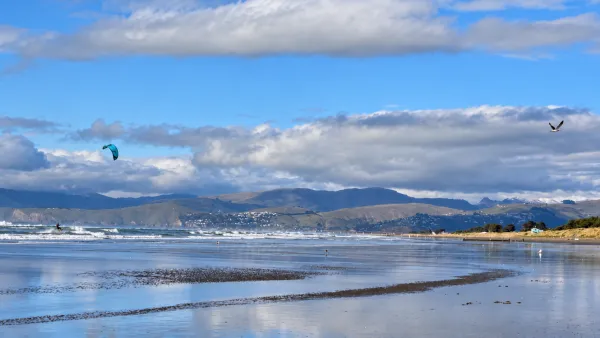
Lyall Bay is Wellington's best-known coastal kitesurfing location, situated on the city's southern shoreline close to Wellington Airport. Facing the open waters of Cook Strait, the bay offers an energetic combination of wind-driven chop, breaking waves and occasional larger swell. Southerly conditions can produce challenging surf, making Lyall Bay particularly interesting for confident riders who enjoy wave-oriented freeriding and dynamic ocean conditions. The sandy beach provides direct access to the water, although launching and landing are restricted to designated sections at the western end. Its proximity to the airport also means that special airspace procedures may apply, and riders must verify current requirements before launching.
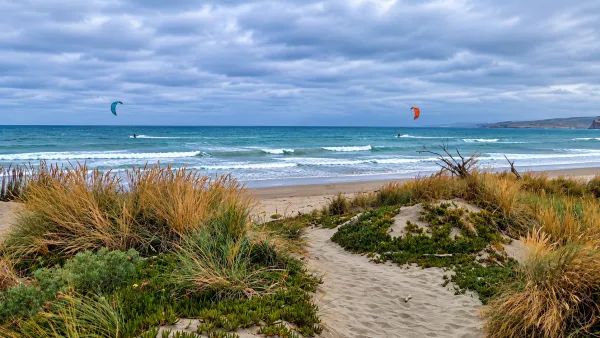
Seatoun offers a different riding environment on the eastern side of Wellington Harbour, where the surrounding coastline provides a more enclosed setting than Lyall Bay. Water conditions are generally characterised by chop and wind-driven waves rather than the exposed ocean surf found on the southern coast. Depending on wind direction, Seatoun can provide enjoyable freeriding opportunities, particularly for riders who prefer harbour conditions over breaking waves. However, the beach is relatively narrow, and the available launching space is constrained by nearby buildings, recreational areas and other water users. Careful site selection and respect for designated kite areas are essential to enjoying the spot safely.
The contrast between Lyall Bay and Seatoun gives Wellington a useful variety of riding conditions within a relatively small geographical area. Lyall Bay is better suited to riders seeking open-water exposure and waves, while Seatoun offers a harbour-oriented alternative when its wind direction and launching conditions are favourable. Neither location is a dedicated flat-water freestyle lagoon, and both require confident kite handling. Tides influence the available beach space and nearshore water depth, while wind direction can significantly change the difficulty of launching and returning to shore. Checking both the wind and tide forecasts is therefore an important part of planning a session.
Wellington is primarily suited to intermediate and advanced kitesurfers who are comfortable with strong, gusty winds and relatively compact urban launching areas. Experienced riders can enjoy powered freeriding, jumps and wave manoeuvres when conditions are appropriate, while confident intermediates may find suitable sessions during more moderate weather. Beginners should seek professional instruction and carefully selected conditions rather than attempting independent launches at the city's exposed beaches. At Lyall Bay, riders must follow current airport-related procedures and designated launching restrictions, while Seatoun requires particular attention to nearby obstacles, overhead lines and other beach users. Local knowledge is especially valuable because wind turbulence and access rules can vary between locations.
For anyone exploring kitesurfing in Wellington, kiteboarding in Cook Strait or wind-powered riding around New Zealand's capital, the region offers an exciting combination of strong winds, varied coastal conditions and accessible urban beaches. Its greatest attraction is the possibility of enjoying powerful freeriding and wave sessions without travelling far from the city. Although Wellington demands greater experience and preparation than many sheltered kitesurfing destinations, its energetic conditions and contrasting riding locations make it a rewarding choice for confident kitesurfers looking to experience the distinctive winds of southern New Zealand.
Something missing or out of date at this spot? Suggest a correction
Wellington is best suited for
Spot profile
Family spot
Located in an area that offers amenities for all the family and can provide good alternatives for everyone when the kiters are in the water.
Local spot
Maybe not be worth a real journey to reach this spot, but great if you live close by and it is a windy day. In the end, being out on the water feels great anywhere
Equipment
A full wetsuit is essential at all times due to cool water temperatures, typically 4/3mm or 5/3mm even in summer, and stepping up to thicker suits in winter. Standard freeride twin tips or chop-oriented boards handle the local water best, with smaller kites often needed given strong winds; most sessions use kites on the smaller size for control when gusts hit. Footwear is optional but preferred by some on rockier sections or for extra comfort during launches, especially in compact urban beaches. Riders looking to maximize lighter wind opportunities may want a foil. When small waves line up, wave boards come into play, especially at the more exposed sections. Always prioritize thermal protection over lightweight gear in Wellington.
Wind Conditions
Main wind directions at Wellington
Windy days per month in Wellington
Wind Speed Range
From 12 to 35 Knots
Suggested sizes
7 mt and below
8 - 9 mt
10 - 11 mt
12 - 13 mt
Forecast on Windy.com
Kitesurfing Safety & Local Rules at Wellington
The main hazard at Wellington's kitesurfing spots is the exceptionally strong and unpredictable wind generated by Cook Strait weather systems. Sudden gusts, lulls and rapid changes in wind direction can make launching, landing and riding particularly demanding, especially during northwesterly conditions when powerful squalls may develop. Strong winds can also produce challenging chop and increase the risk of being dragged toward rocks, shoreline obstacles or other water users. Riders should choose conservative kite sizes, monitor weather forecasts carefully and avoid launching when conditions exceed their abilities.
Strict launching restrictions apply at several Wellington beaches. At Lyall Bay, launching and landing are restricted to the western end near the toilet block, with airport-related notification procedures required because of nearby aviation activity. Riders must verify current requirements with the relevant authorities before launching. At Seatoun, limited beach space, nearby playgrounds, garages, jet ski lanes and overhead power lines create additional hazards. Use only designated rigging and launching areas, maintain generous clearance from obstacles and never fly a kite near power lines, roads or crowded public spaces.
Tidal changes can further restrict launching space and alter water depth, potentially exposing obstacles or making safe landings more difficult. Congested urban beaches also increase the risk of tangled kite lines and collisions with swimmers, pedestrians and other watersports users. Respect posted restrictions, designated riding zones and local right-of-way rules, and check for updated council or airport requirements before each session. Wellington's demanding winds and constrained launching areas make local knowledge and confident kite-handling skills particularly important, especially for first-time visitors.
Location
Closest City
Wellington
How to get There
Wellington is reached by flying into Wellington Airport or by driving from anywhere in New Zealand's North Island. Lyall Bay sits adjacent to the airport and is easily accessed from urban roads or the central business district. Seatoun is in Wellington Harbour, close to the Cook Strait entrance, and Petone is north of central Wellington via Hutt Valley. All beaches have public road access and parking, but each may have regulated launch areas.
Access
The main Wellington kite beaches are reachable by public road with parking near each spot, but launch zones are strictly regulated. Lyall Bay requires all launching and landing at its far west end in front of the toilet block, and riders must seek airport tower permission before first launch. Seatoun's rigging area is tightly defined east of the garages and away from marked no-launch zones. No launching permitted near playgrounds, parks, toilets, or power lines. All other major Wellington beaches are publicly accessible but expect local kiting rules and shared beach-use arrangements wherever you go.
No-Wind Days: What to Do Around Wellington
Wellington, New Zealand's capital, combines spectacular coastal scenery, cultural attractions and vibrant urban life, making it an excellent destination for a kitesurfing holiday with family, friends or non-kiting partners. Surrounded by green hills and a beautiful natural harbour, the city offers easy access to beaches, waterfront promenades, museums, restaurants and outdoor activities. Unlike remote kitesurfing destinations, Wellington allows visitors to combine time on the water with sightseeing and entertainment, even when the weather interrupts their plans.
Lyall Bay is one of Wellington's most popular coastal neighbourhoods, known for its sandy beach, surf culture and relaxed atmosphere. Visitors can enjoy long walks along the shoreline, watch surfers or stop at beachfront cafés for breakfast and coffee. Nearby Oriental Bay offers a more sheltered waterfront setting, with a sandy beach, restaurants and beautiful harbour views. Wellington's waterfront promenade is ideal for walking, cycling and exploring the city's lively public spaces, particularly during sunny afternoons.
Wellington is widely recognised as New Zealand's cultural capital. The Museum of New Zealand Te Papa Tongarewa is a must-visit attraction, featuring exhibitions about Māori culture, natural history, art and the country's heritage. The Wellington Museum provides another interesting perspective on the city's maritime history, while independent galleries and creative spaces are scattered throughout the centre. Information about attractions, events and cultural experiences is available through Wellington's official visitor website.
For panoramic views, the historic Wellington Cable Car climbs from Lambton Quay to Kelburn, where visitors can explore the beautiful Wellington Botanic Garden. Mount Victoria Lookout is another highlight, offering spectacular views across the harbour, airport and surrounding coastline. Nature enthusiasts can visit Zealandia Te Māra a Tāne, an urban wildlife sanctuary with native forest trails and opportunities to observe rare New Zealand birds. Farther south, the rugged coastline around Red Rocks provides dramatic scenery and the possibility of spotting fur seals during the appropriate season.
The wider Wellington region offers several attractive coastal communities worth exploring. Seatoun and Scorching Bay provide quieter seaside settings with sheltered beaches, parks and scenic harbour views. Across the harbour, Petone combines a long waterfront promenade with cafés, restaurants and independent shops, while Eastbourne offers peaceful beaches and coastal walking trails. These destinations are particularly appealing for families and non-kiting partners looking for a relaxed day away from the city centre.
Food and dining are central to Wellington's identity, with the city famous for its coffee culture, craft breweries and diverse restaurants. Cuba Street is particularly lively, offering independent cafés, international cuisine, vintage shops and bars, while Courtenay Place is known for nightlife and entertainment. The waterfront provides attractive dining options overlooking the harbour. Wine enthusiasts can also plan a day trip to Martinborough in the Wairarapa region, known for its vineyards, cellar doors and excellent Pinot Noir.
For longer excursions, Wellington provides access to the Kāpiti Coast, the Wairarapa countryside and ferry crossings across Cook Strait to Picton in the South Island. The ferry journey offers spectacular views of Wellington Harbour and the Marlborough Sounds, although services depend on weather conditions. These trips are particularly rewarding for visitors exploring New Zealand by road or combining kitesurfing with a broader sightseeing itinerary.
Accommodation ranges from budget hostels and holiday apartments to boutique hotels and luxury waterfront properties. Staying in central Wellington provides easy access to restaurants, museums and public transport, while Lyall Bay, Kilbirnie and Seatoun offer quieter coastal surroundings. Wellington Airport is conveniently located near the southern beaches, and public buses connect many neighbourhoods with the city centre. A rental car is useful for exploring more distant beaches and regional attractions, although the central waterfront is easily explored on foot.
With its lively cultural scene, spectacular harbour, excellent restaurants and easy access to nature, Wellington offers plenty to enjoy beyond kitesurfing. Whether visiting Te Papa, hiking through Zealandia, discovering coastal villages or enjoying the city's famous café culture, visitors will find an appealing combination of outdoor adventure and urban convenience. Its variety of activities makes Wellington particularly suitable for families, couples and non-kiting partners looking to experience New Zealand's capital.
Other kitesurfing spots near Wellington
All kitesurfing spots in New Zealand
Last updated: