
Kitesurfing in Kapiti Coast
Wellington · New Zealand
- Spot type Wave
- Rider level beginner
- Water Dark - Clear
- Beach Sand
- Crowd Seasonal crowd
- Tide effect Conditions vary
Kitesurfing in Kapiti Coast: Conditions, Wind & Season
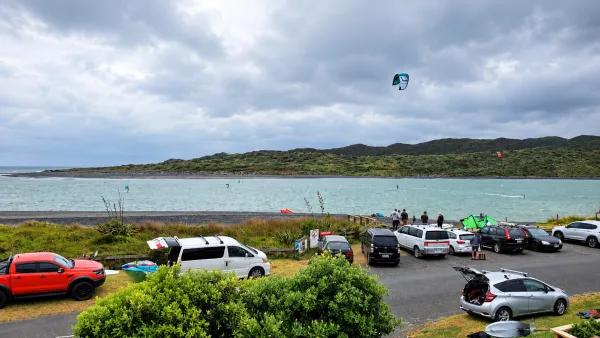
The Kapiti Coast is one of the most accessible kitesurfing areas on the western coast of New Zealand's North Island, stretching north of Wellington through coastal communities such as Raumati Beach, Paraparaumu and Waikanae. Facing the Tasman Sea, this extensive sandy coastline offers open-water freeriding, moderate waves and plenty of space for long coastal sessions. The presence of Kapiti Island offshore creates a distinctive riding environment, influencing both wind quality and local sea conditions. Unlike sheltered flat-water lagoons, kitesurfing on the Kapiti Coast is primarily about enjoying exposed beaches, changing winds and the freedom of riding along a broad natural shoreline.
Kitesurfing is possible throughout the year, although spring and summer, particularly from September through March, generally offer the most attractive combination of wind opportunities and milder temperatures. The prevailing winds are often northwesterly and westerly, influenced by the weather systems crossing central New Zealand and the wider Cook Strait region. Wind strength can vary considerably, with moderate breezes suitable for freeriding and stronger frontal conditions producing demanding sessions. Kapiti Island can interrupt the airflow, particularly in westerly conditions, creating wind shadows and gusty areas along parts of the coastline. As a result, wind direction and consistency are just as important as the forecast wind speed when choosing where to ride.
Water conditions vary between moderate chop, small wind-driven waves and more energetic surf when Tasman Sea swells reach the coast. On lighter days, the water can be relatively manageable for comfortable freeriding, although truly flat conditions are uncommon. Stronger northwesterly and westerly winds generate increasing chop and breaking waves, offering opportunities for riders interested in coastal wave manoeuvres and directional-board riding. The long sandy beaches also provide potential for extended freeriding runs when wind direction, tide and local access conditions are favourable. However, the exposed coastline offers limited protection from changing weather and larger swells, making careful session planning essential.
The main riding opportunities are found along the sandy beaches around Paraparaumu, Raumati and Waikanae, where broad stretches of shoreline provide space for preparing equipment and launching kites. Beach width changes significantly with the tide, and some sections that appear spacious at low water become considerably narrower at high tide. This is particularly important around Waikanae, where the available launching area can shrink to approximately 15 metres in certain locations. Lower tides generally provide more room for rigging and landing, while higher water levels may bring waves closer to dunes, fences and beach access paths. The predominantly sandy seabed is relatively forgiving, although river mouths and estuaries can introduce shifting sandbanks and stronger currents.
The Kapiti Coast is best suited to intermediate and advanced kitesurfers who are comfortable with open-water conditions and variable winds. Confident intermediate riders can enjoy freeriding and practising transitions during moderate conditions, particularly when the beach is wide and the surf remains small. More experienced riders may appreciate stronger wind days, larger waves and the possibility of longer coastal runs. Beginners should approach the area cautiously, as gusty winds, shorebreak and changing tidal space can complicate launching and recovery. Professional instruction and a carefully selected location are important for anyone still developing independent riding skills.
The main safety considerations are wind turbulence caused by Kapiti Island, rapidly changing weather, tidal beach narrowing and the exposed nature of the coastline. Westerly winds can become particularly inconsistent where airflow is disturbed by the island, producing sudden increases or decreases in power. Strong onshore winds may also make launching and landing difficult when the beach is narrow. Riders should avoid crowded shoreline sections, maintain generous clearance from dunes and other obstacles, and take additional care near river mouths after heavy rainfall. Local council regulations and any restrictions affecting beach activities should always be checked before launching. Reliable self-rescue skills are essential, especially when riding farther from established access points.
For anyone exploring kitesurfing near Wellington or looking for open-coast kiteboarding on New Zealand's North Island, the Kapiti Coast offers an appealing combination of long sandy beaches, varied water conditions and year-round wind opportunities. Its greatest attraction is the freedom to enjoy coastal freeriding and occasional wave sessions in a relatively natural setting, with Kapiti Island providing a distinctive backdrop. Although wind quality can be unpredictable and tidal changes require careful attention, the region rewards experienced riders who select their sessions according to local conditions rather than relying on wind strength alone.
Something missing or out of date at this spot? Suggest a correction
Kapiti Coast is best suited for
Spot profile
Travel spot
The typical kite travel destination, it is known for its great conditions, and kiters from around the world come here for their vacations.
Family spot
Located in an area that offers amenities for all the family and can provide good alternatives for everyone when the kiters are in the water.
Local spot
Maybe not be worth a real journey to reach this spot, but great if you live close by and it is a windy day. In the end, being out on the water feels great anywhere
Equipment
For Kapiti Coast, take a freeride or beginner-to-intermediate kitesurfing setup that can handle variable chop and messy beach break waves, pairing with a board suited to wavey or choppy conditions. Water is cool year-round, so a full wetsuit at 4/3mm is ideal for spring through autumn and 5/3mm for winter, with booties recommended for foot protection near rocky or narrow launches. Use a larger kite for lighter days; in NW and W winds the spot can get gusty, so having a range of mid-to-large kites is helpful. Those keen to engage more with surf conditions will benefit from a wave-oriented directional board.
Wind Conditions
Main wind directions at Kapiti Coast
Windy days per month in Kapiti Coast
Wind Speed Range
From 15 to 30 Knots
Suggested sizes
7 mt and below
8 - 9 mt
10 - 11 mt
12 - 13 mt
Forecast on Windy.com
Kitesurfing Safety & Local Rules at Kapiti Coast
The main safety concern along the Kapiti Coast is unpredictable wind, particularly in northwesterly and westerly conditions. Kapiti Island can disrupt the airflow, creating wind shadows, sudden gusts and significant variations in wind strength. These effects can make launching, riding and landing challenging, especially when the wind shifts unexpectedly. Riders should carefully assess local conditions and avoid sessions when the wind is excessively gusty or unreliable.
Tides also play an important role in beach safety. Although most launching areas are sandy and relatively free of major obstacles, the shoreline can narrow considerably at high tide, particularly around Waikanae. Some sections may shrink to approximately 15 metres, leaving limited room between the water, dunes, fences and beach access paths. Launching and landing become more difficult under these conditions, especially during strong onshore winds. River mouths and estuaries can introduce additional currents, shifting sandbanks and uneven seabed conditions, particularly following heavy rainfall.
The exposed coastline offers little shelter from waves and changing weather, making reliable self-rescue skills essential. Riders should select spacious launching areas, maintain sufficient clearance from other beach users and avoid narrow shoreline sections where returning safely could be difficult. Access restrictions and local council bylaws should also be respected, particularly around protected areas or organised activities. Checking wind forecasts, tide tables and local regulations before launching is the best way to minimise risks along the Kapiti Coast.
Location
Closest City
Wellington
How to get There
Kapiti Coast’s main risks are rooted in wind quality and changeable beach geometry rather than persistent hard hazards. NW and W winds, while prevalent, are significantly influenced by offshore Kapiti Island. This can lead to pronounced gustiness or partial wind blockage, meaning sessions can quickly shift from manageable to unpredictable. Winds from the direct west, especially, are notorious for being gusty and variable because they sometimes pass over or are deflected by the island, resulting in strong, uneasy pulses that complicate launches, riding, and landings. The terrain itself is gener
Access
The beaches are generally open to the public, with vehicle access restricted by council bylaws, meaning all users park on adjacent streets or formal lots and walk in. There is no general entry fee for regular beachgoing or kitesurfing. Most access is via well-signed public roads leading through Waikanae or Paekakariki to main beachfront parking. Some activities, especially larger group uses or anything involving equipment beyond personal gear, may need prior written approval from the Kāpiti Coast District Council. Vehicle access to the sand is not permitted. Launching is best done at the southwest end of Waikanae Beach, near the estuary, where space is usually adequate. Some areas near residential or fenced shoreline sections have limited room, especially at high tide.
No-Wind Days: What to Do Around Kapiti Coast
Stretching along the western coastline of New Zealand's North Island, the Kāpiti Coast offers a relaxed seaside atmosphere, beautiful sandy beaches and easy access to nature reserves, coastal villages and Wellington's cultural attractions. Waikanae Beach is particularly appealing for families, couples and non-kiting partners, combining the charm of a quiet coastal community with convenient cafés, restaurants and everyday services. During no-wind days, visitors can explore scenic walking trails, discover native wildlife, enjoy the region's beaches or venture inland to the forested foothills of the Tararua Range.
Waikanae Beach is one of the area's main attractions, offering a long stretch of sand with beautiful views across the Tasman Sea toward Kāpiti Island. The beach is ideal for leisurely walks, picnics, beach games and relaxing beside the ocean. Swimming is popular during summer when conditions are suitable, although visitors should remain aware of waves, currents and changing tides. The nearby village provides cafés, casual dining and essential services, while the surrounding residential streets maintain a peaceful holiday atmosphere. Families will appreciate the relaxed environment and the opportunity to spend time outdoors without travelling far from their accommodation.
One of the most rewarding nearby attractions is the Waikanae Estuary Scientific Reserve, where the Waikanae River meets the Tasman Sea. This protected wetland environment features walking tracks, coastal vegetation and excellent opportunities for birdwatching. Visitors may encounter native and migratory birds while exploring the estuary's peaceful surroundings. The Waikanae River trails also provide enjoyable routes for walking and cycling, connecting sections of the coastline with inland recreational areas. These relatively accessible natural spaces are particularly attractive for families and visitors looking for gentle outdoor activities away from the beach.
Kāpiti Island is undoubtedly one of the region's most distinctive attractions. Located offshore from Paraparaumu Beach, the island is an important nature reserve and bird sanctuary, protecting native forest and several threatened New Zealand bird species. Guided visits offer opportunities to discover the island's conservation history, explore walking trails and observe native wildlife, potentially including kākā, kōkako, takahē and kiwi during appropriate guided experiences. Access is strictly controlled, with approved transport operators, visitor permits and advance reservations required. Trips are weather-dependent, so planning ahead is essential. Information about conservation, visitor access and permitted activities is available through the New Zealand Department of Conservation.
The wider Kāpiti Coast offers several attractive seaside communities worth exploring. Paraparaumu Beach features a lively beachfront area with cafés, restaurants and views toward Kāpiti Island, while the nearby town centre provides supermarkets, shopping facilities and additional services. Farther south, Raumati Beach and Raumati South offer relaxed coastal surroundings, local eateries and pleasant walking opportunities. Paekākāriki, at the southern end of the district, has a more rugged character, with dramatic coastal scenery and a small village atmosphere. Exploring these neighbouring communities is an enjoyable way to experience the region's different landscapes and local character.
For visitors interested in hiking, the Paekākāriki Escarpment Track is one of the most spectacular walks in the area. Forming part of the Te Araroa long-distance trail, this challenging coastal route climbs steep hillsides above the railway and highway, offering impressive views across the Tasman Sea and toward Kāpiti Island. The track includes numerous steps, narrow sections and swing bridges, making it better suited to reasonably fit walkers comfortable with heights. Families seeking easier alternatives can explore coastal promenades, riverside paths or the walking trails around Queen Elizabeth Park, a large recreational reserve between Raumati South and Paekākāriki.
Inland from Waikanae, visitors can discover the beautiful Ngā Manu Nature Reserve, a protected environment featuring native forest, wetlands and opportunities to observe New Zealand wildlife. The reserve is particularly interesting for families and nature enthusiasts, offering a closer look at native birds, reptiles and conservation initiatives. The nearby Akatarawa and Tararua foothills provide additional opportunities for forest walks, scenic drives and outdoor exploration. Together, these natural attractions make the Kāpiti Coast an excellent destination for visitors interested in wildlife, photography and peaceful landscapes.
Food and dining options across the Kāpiti Coast range from relaxed beachfront cafés and bakeries to restaurants serving contemporary New Zealand cuisine and international dishes. Waikanae, Paraparaumu and Raumati provide convenient choices for breakfast, lunch and dinner, while local markets and specialty food producers offer opportunities to discover regional products. The area is known for its friendly community atmosphere rather than energetic nightlife, although local pubs, restaurants and occasional events provide evening entertainment. Visitors looking for a broader selection of bars, concerts and cultural experiences can easily plan an excursion to Wellington.
Wellington, New Zealand's capital, is close enough for an enjoyable day trip and offers an extensive range of museums, galleries, restaurants and waterfront attractions. The Museum of New Zealand Te Papa Tongarewa is particularly rewarding, with exhibitions exploring Māori culture, natural history and the country's heritage. Visitors can also ride the historic Wellington Cable Car, explore the Botanic Garden or enjoy the city's lively café culture. Regular train services connect Waikanae and Paraparaumu with Wellington, making it possible to explore the capital without driving. More information about regional attractions and experiences is available through Wellington's official visitor website.
Accommodation along the Kāpiti Coast includes beachfront holiday houses, self-catering apartments, motels, guesthouses, campgrounds and family-friendly holiday parks. Waikanae Beach is ideal for visitors seeking a quieter seaside atmosphere, while Paraparaumu offers a broader selection of shops, restaurants and accommodation. Raumati and Paekākāriki provide additional options for those who prefer smaller coastal communities. The region is accessible from Wellington by car in approximately 45–60 minutes, depending on the destination and traffic, while the Kāpiti Line railway provides convenient connections to Waikanae and Paraparaumu. A rental car is useful for exploring the coastline, inland reserves and more remote attractions.
With its beautiful beaches, protected wetlands, native wildlife and welcoming seaside communities, the Kāpiti Coast offers plenty to enjoy beyond kitesurfing. Whether exploring the Waikanae Estuary, visiting Kāpiti Island, hiking above Paekākāriki or discovering Wellington's museums and restaurants, visitors will find an appealing combination of outdoor recreation, relaxation and cultural experiences. Its family-friendly atmosphere and convenient location make Waikanae Beach and the wider Kāpiti Coast excellent choices for a New Zealand kitesurfing holiday with non-kiters, children or friends who want more than time on the water.
Other kitesurfing spots near Kapiti Coast
All kitesurfing spots in New Zealand
Last updated: