One of the peculiarities of kitesurfing, compared to many other water sports, is how quickly a beginner can learn to ride. With favourable wind conditions, suitable equipment and a good instructor, it is possible to go from never having touched a kite to riding a few hundred metres in just a few days.
This is certainly one of the reasons why kitesurfing has become so popular. But it also creates a rather misleading perception of how much we have actually learned.
After all, once we can stand on the board, ride in both directions and perhaps even manage a few transitions, we might reasonably consider ourselves kitesurfers. And technically we are.
The problem is that riding a kiteboard is just one part of kitesurfing. And, strangely enough, some of the most important skills have very little to do with the board itself.
We are dealing with a large aerodynamic wing, connected to our body by 20 metres or more of lines, capable of generating considerable forces while flying in an environment that we cannot control. Add the sea, changing wind conditions, other beach users and the occasional equipment malfunction, and suddenly standing on a board doesn't seem like such a remarkable achievement anymore.
So, rather than going through the usual beginner recommendations about taking lessons, buying suitable equipment and practising regularly (all perfectly valid, of course), let's focus on five mistakes that reveal something more interesting: the difference between knowing how to ride and understanding how kitesurfing actually works.
1. Treating the Kite Bar Like a Throttle
One of the first things we learn during our kite lessons is that pulling the bar increases the kite's power, while pushing it away reduces it. Simple enough. Unfortunately, this explanation is only partially correct. The kite bar is not an accelerator, and the relationship between how far we pull it and how much power the kite generates is certainly not linear.
To understand why, we need to consider a fundamental aerodynamic parameter: the angle of attack.
The angle of attack represents the angle between the kite's wing profile and the relative airflow reaching it. On a conventional four-line inflatable kite, pulling the bar increases the tension in the steering lines relative to the front lines, changing this angle and generally increasing the aerodynamic lift generated by the canopy. But only up to a certain point.
Every wing has a critical angle of attack beyond which the airflow can no longer remain properly attached to its upper surface. Once this limit is exceeded, the aerodynamic lift drops dramatically and the kite starts to stall. In kitesurfing, this phenomenon is commonly called backstalling.
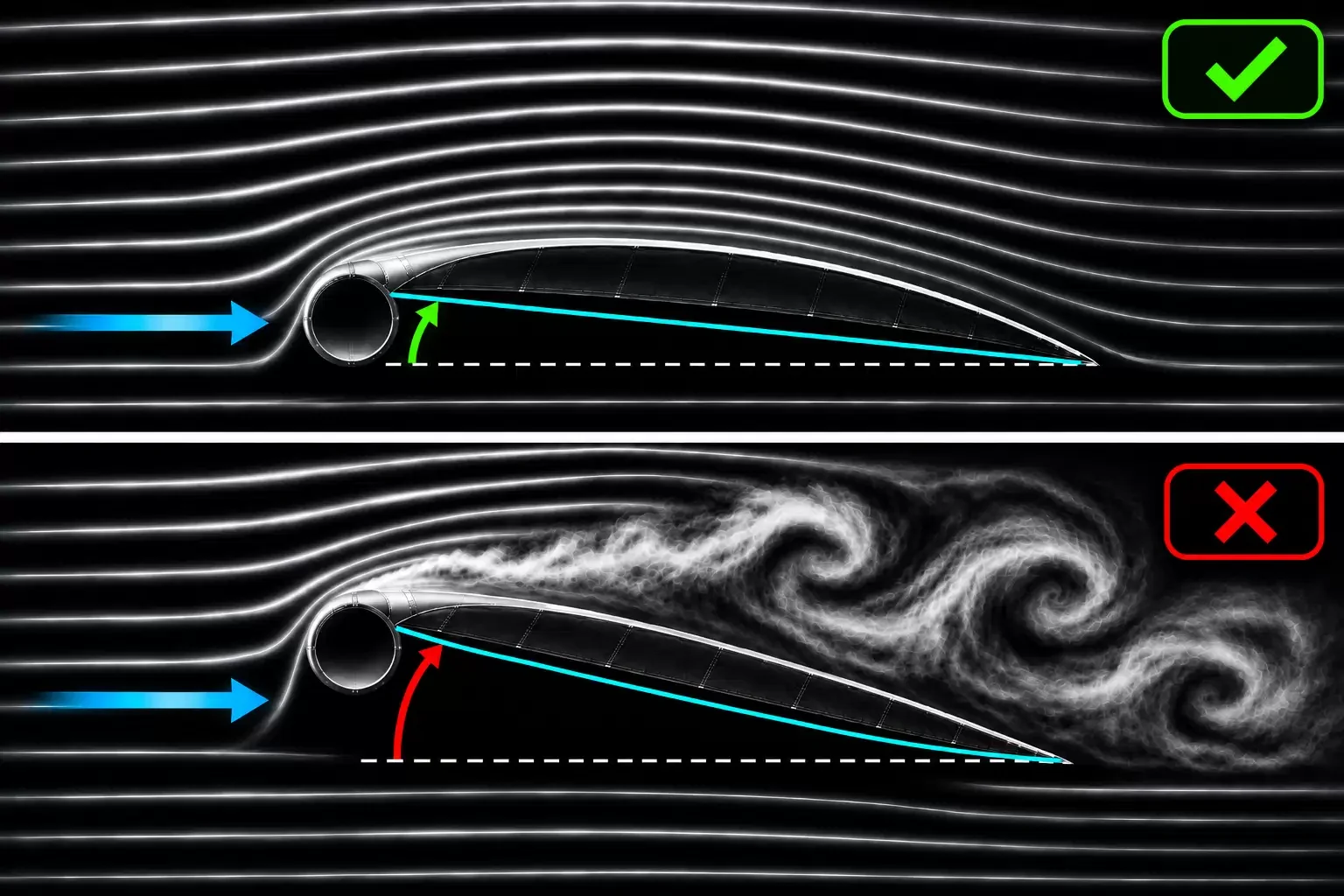
Instead of continuing to fly towards the edge of the wind window, the kite starts moving backwards, with its trailing edge descending towards the power zone. In more pronounced cases, it can fall backwards into the water. And what is the instinctive reaction of many beginners when they see their kite losing altitude? Pull the bar even harder, of course!
Unfortunately, this increases the angle of attack even further, making the situation worse. The solution, under normal controllable conditions, is exactly the opposite: reduce the tension on the steering lines by pushing the bar away, allowing the kite to recover its normal aerodynamic behaviour.
There is, however, another aspect worth considering. When the kite recovers from a stall, it can suddenly accelerate forward through the wind window. If it has drifted deep into the power zone, the resulting pull can be considerable. In a dangerous situation, especially close to the beach, activating the quick release may be necessary rather than trying to recover the kite's flight.
This behaviour becomes particularly noticeable in light wind conditions, when beginners desperately try to extract more power from a kite that is already struggling to stay in the air. Incorrect trimming or unsuitable line settings can make the problem even worse.
There is another important parameter in the equation: the kite's speed through the air. A moving kite can generate considerable additional aerodynamic force, which is why moving it through the wind window during a waterstart can produce the necessary propulsion even when keeping it stationary would not.
In other words, the amount of power available depends on more than the bar position. The kite's speed, angle of attack, apparent wind and position in the wind window all play their roles.
We already examined the mechanism in more detail in our article What's a Stall of a Kite and How to Prevent It. The important lesson is that pulling harder doesn't necessarily mean getting more power. Sometimes, understanding when to release the bar is far more useful than knowing how to pull it.
2. Believing That 18 Knots Are Always 18 Knots
When planning a kitesurfing session, the first thing we normally check is the wind forecast. Windguru, Windy, Windfinder or whatever application we prefer tells us that tomorrow we should expect 18 knots. Excellent! We already know which kite to bring and start imagining a nice afternoon on the water.
But are 18 knots really the same everywhere? Not exactly. And there are two important reasons why identical wind speeds can produce very different riding conditions.
The quality of the wind
Let's imagine two kitesurfing spots, both with an average wind speed of 18 knots. At the first, the wind blows steadily across open water, without encountering significant obstacles. At the second, it crosses buildings, trees or hills before reaching the beach, generating turbulence, gusts and wind shadows.
The average speed might be identical, but the kite's behaviour can be dramatically different. Obstacles disturb the airflow, creating variations in both wind intensity and direction. A kite flying through these disturbed areas can suddenly lose power or accelerate unexpectedly.
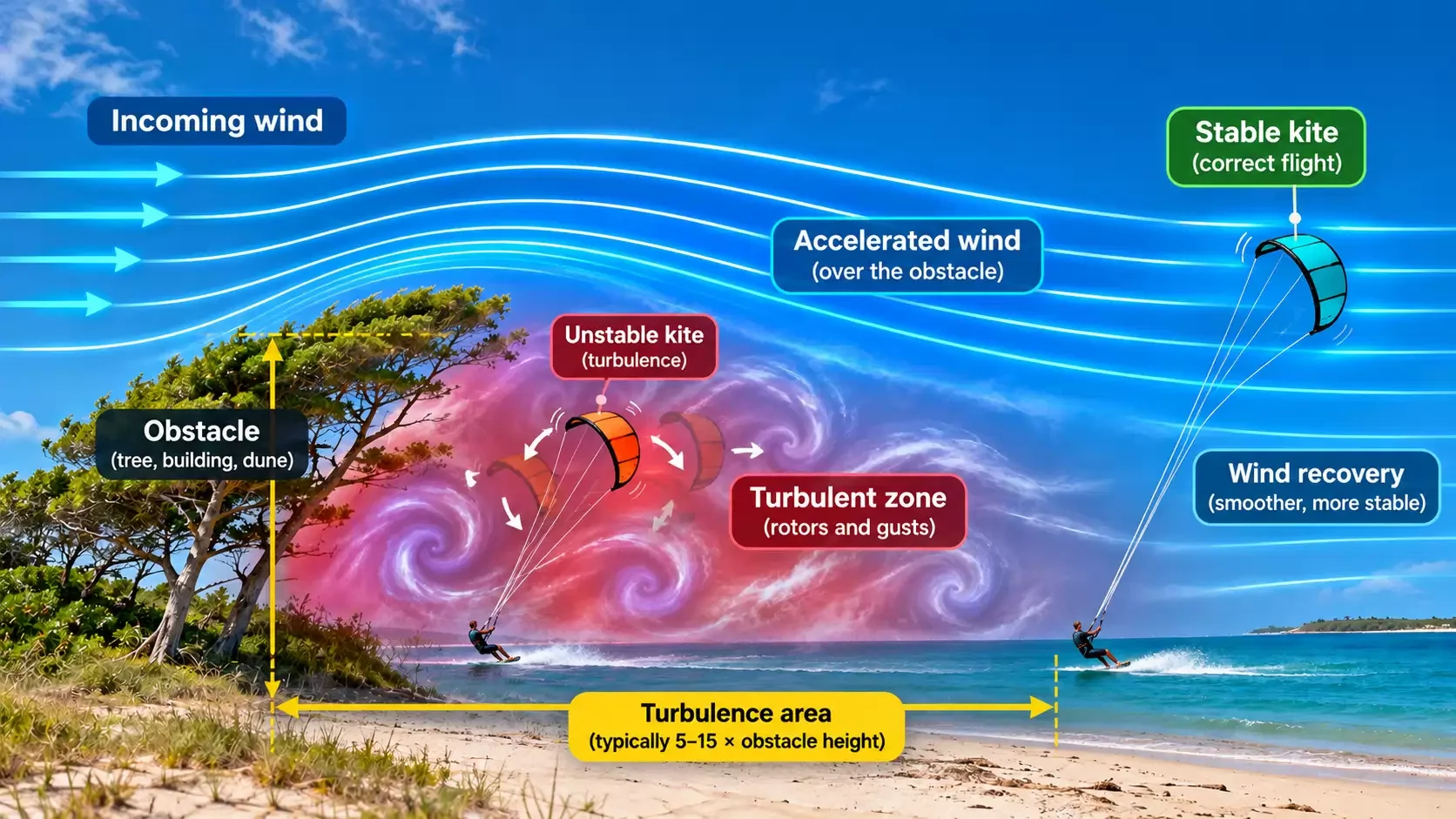
This effect is particularly noticeable when launching close to obstacles. Near the ground, the wind might be weak and turbulent, while just a few metres higher it becomes considerably stronger. The kite can therefore behave very differently as it rises through the wind window.
We examined these less obvious effects in our article about the strange behaviours of the wind window.
The influence of water conditions
But there is another factor that beginners often underestimate: the condition of the water. Consider a relatively light wind of 14 knots, close to the minimum required for many kiters riding conventional twin-tips. On perfectly flat water, the board can accelerate smoothly and maintain its planing speed with relatively little resistance. The same wind blowing over a choppy sea, however, might be barely sufficient to keep us riding.
Why? Every small wave hitting the board disturbs its movement, increasing resistance and reducing speed. In marginal wind conditions, even a modest loss of speed can make the difference between maintaining a plane and sinking back into the water.
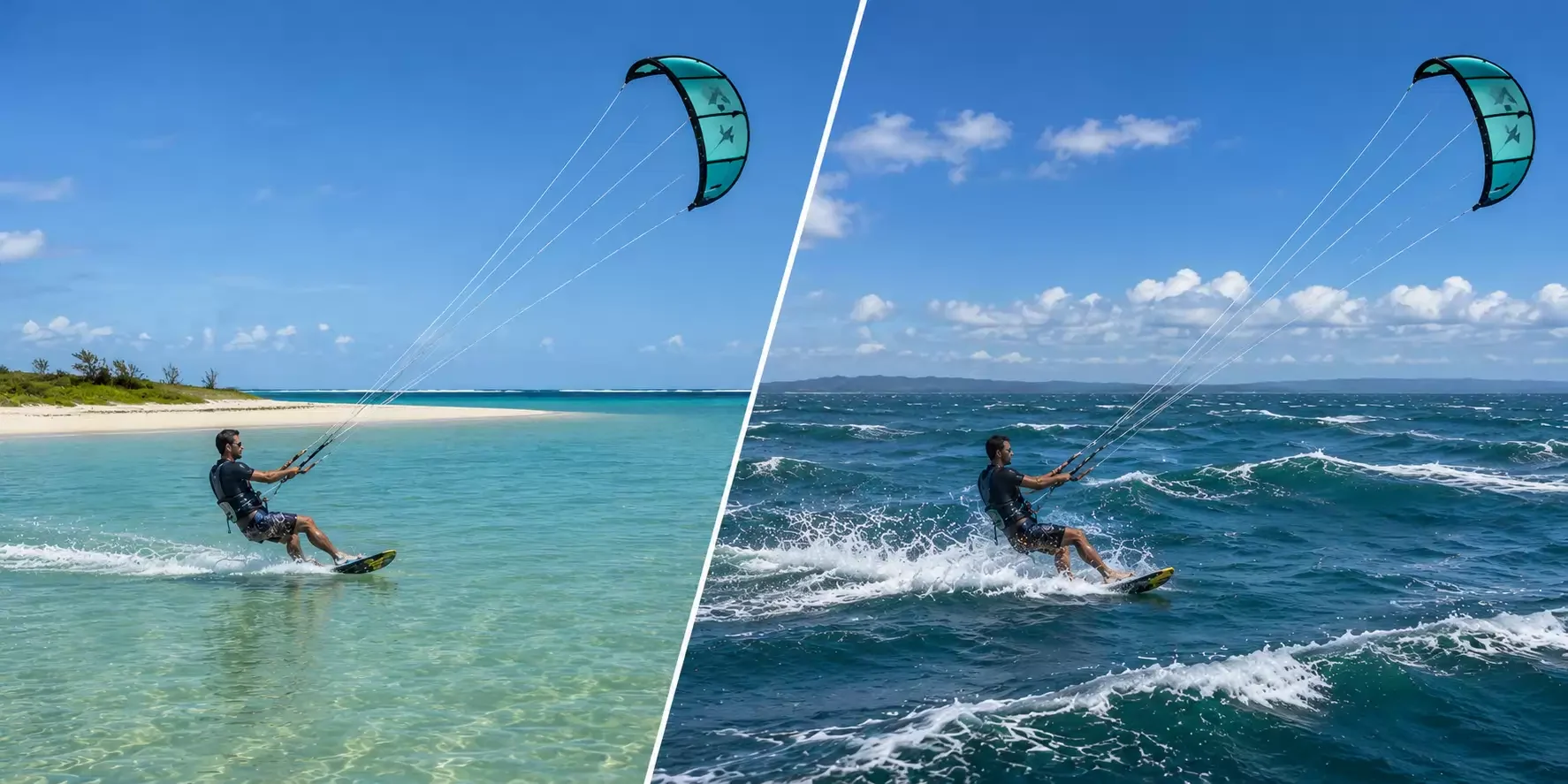
There is also an interesting aerodynamic consequence. As we ride, the kite experiences the apparent wind, resulting from the combination of the natural wind and the relative movement between the kite and the surrounding air. When our speed drops, this apparent wind changes, potentially reducing the useful propulsion generated by the kite.
We might therefore enter a frustrating situation: we need more speed to generate sufficient power, but we don't have enough power to recover the speed we are losing. This effect is particularly noticeable below approximately 14–15 knots, although the actual threshold depends considerably on rider weight, board dimensions, kite characteristics and technique.
Larger waves can make matters even more complicated, although experienced wave riders may also use the energy of the waves to their advantage.
So, next time the forecast promises a nice 14-knot session, don't look exclusively at the wind numbers. Consider the water conditions as well. Those 14 knots might be perfectly enjoyable on a flat lagoon and barely sufficient to ride in a choppy sea. Same wind, same equipment, completely different session.
3. Treating Launching and Landing as the Easy Part
A considerable amount of time during a beginner's kitesurfing course is dedicated to waterstarts, body dragging and the first attempts at riding. Perfectly reasonable, since this is what students are naturally eager to learn.
However, one of the most delicate moments of an entire kitesurfing session might happen before we even touch the water: launching the kite. Let's think about the difference between losing control of a kite while riding offshore and losing control while standing on the beach.
In the first case, provided we have enough clear water around us, the consequences might be a rather unpleasant body drag, a crashed kite and some time spent retrieving the board.
On the beach, the same uncontrolled pull could send us towards rocks, trees, buildings, parked cars or other people. And the power generated by the kite doesn't become any smaller just because we are standing on the sand.
The key to a safe assisted launch is positioning the kite correctly at the edge of the wind window, where the aerodynamic forces are sufficiently limited and predictable. But this is where many inexperienced kiters, and sometimes even their launch assistants, make mistakes. Consider what happens when the assistant holds the kite too far inside the power zone. The canopy becomes strongly loaded by the wind, the lines pull heavily and the rider might struggle to maintain position even before the assistant releases the kite.
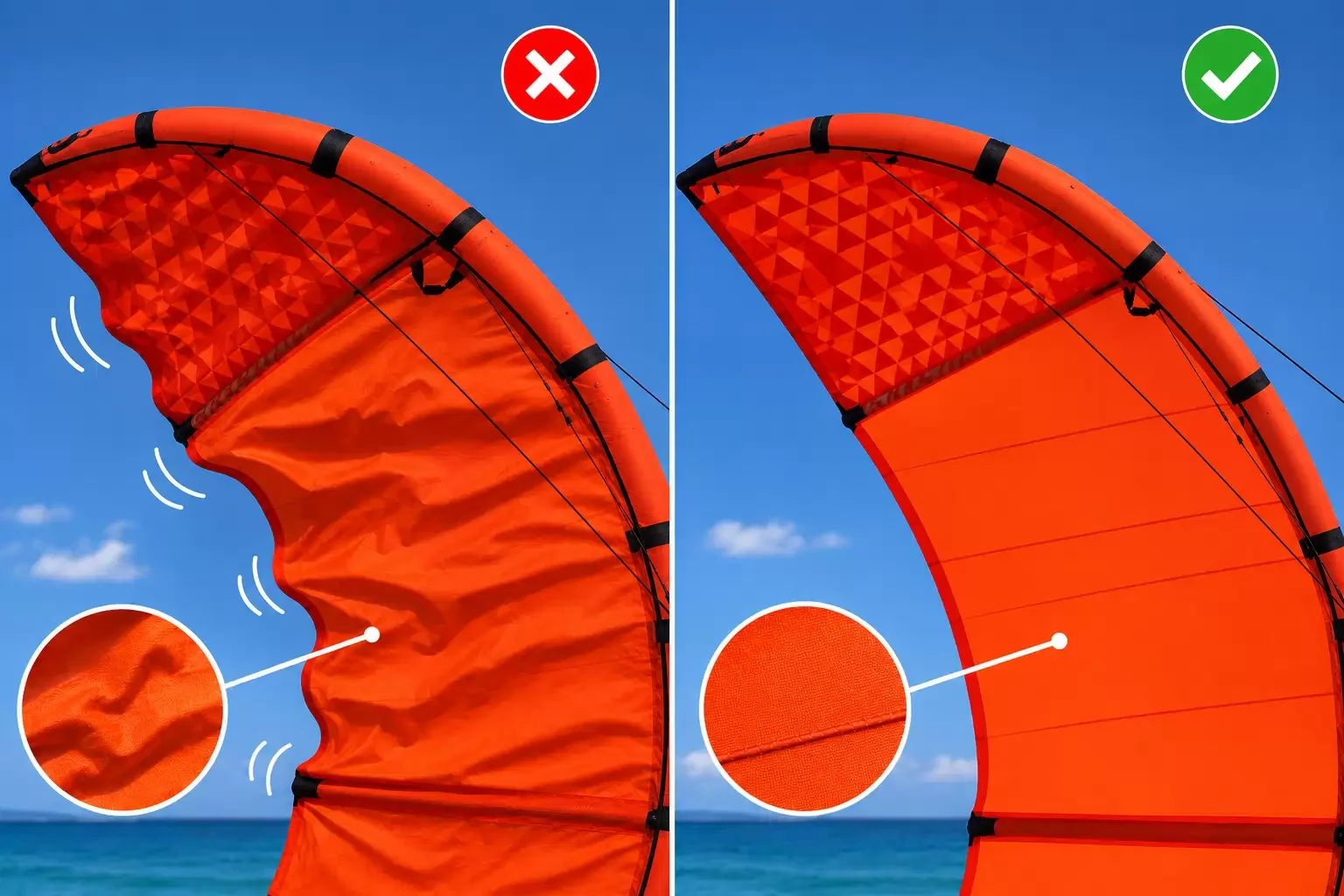
The opposite situation is equally interesting. If the assistant stands too far upwind relative to the correct launching position, the kite might not receive enough pressure to maintain its shape and can begin flapping. Releasing it in these conditions could make it fall backwards, rotate or drift into the power zone. When the lines become tensioned again, the kite may suddenly accelerate and generate an unexpected pull.
In other words, both excessive and insufficient loading during the launch can create dangerous situations, although for completely different aerodynamic reasons.
Another interesting detail is the role of the assistant. A good launch assistant doesn't simply hold the kite until the rider gives a thumbs-up. Their responsibility includes noticing possible problems and refusing to release the kite if something doesn't look right. This might occasionally disappoint an impatient rider. Better a few seconds of disappointment than an uncontrolled launch.
Landing requires similar attention, especially when the wind is gusty, the beach is crowded or the rider is becoming tired after a long session. The important point is that launching and landing are not secondary operations to be learned casually after mastering the board. They are fundamental kitesurfing skills, and potentially among the most consequential ones when performed incorrectly. For beginners, assisted launching and landing under appropriate supervision should remain the normal approach until these operations can be managed competently and safely.
4. Being Able to Ride but Unable to Retrieve the Board
One of the most underestimated skills in kitesurfing is certainly body dragging upwind. Beginners often consider it a rather boring exercise before getting to the real fun: riding the board. But in reality, this skill is fundamental to becoming an independent kitesurfer.
In kite schools, we sometimes hear a rather optimistic statement: if you can body drag upwind and retrieve your board, you can already consider yourself independent, even if you can't ride properly yet.
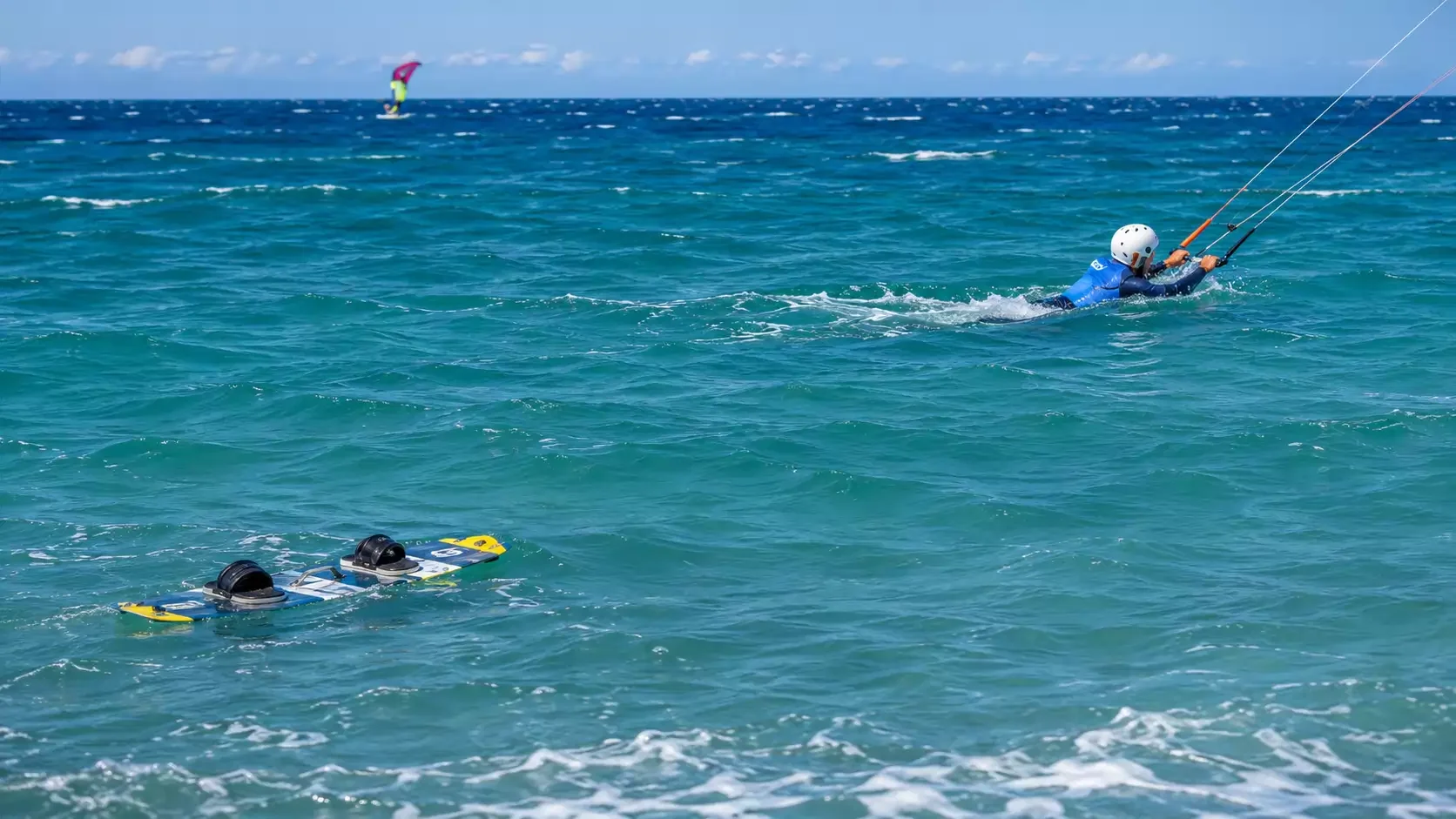
Well, this might be a little exaggerated, but there is some good reasoning behind it. Being independent means being able to manage your equipment and return safely to shore without depending on someone else. And strictly speaking, none of this requires standing on a board.
Think about a beginner who can ride a few hundred metres but becomes helpless every time the board slips off their feet. Compare that with someone who can barely waterstart but confidently controls the kite, retrieves the board and body drags back to shore. Who is better prepared to manage an unexpected situation?
Of course, real independence also involves evaluating wind conditions, launching and landing safely, and knowing how to handle emergencies. But mastering upwind body dragging is certainly one of its fundamental requirements.
For the technical details on how to perform it efficiently, including kite positioning, body orientation and the most common mistakes, have a look at our 7 Tips to Boost Your Body Drag Upwind Skills.
5. Believing the Quick Release Is a Magic Emergency Button
Modern kitesurfing equipment has made enormous progress in terms of safety. Compared to the early generations of kites, today's control bars offer sophisticated emergency systems capable of dramatically reducing the kite's power in dangerous situations.
But there is a common misconception among beginners: believing that activating the quick release automatically solves an emergency.
When we activate the main quick release, the kite should flag out on its designated safety line, losing most of its aerodynamic power. However, tangled lines, blocked safety mechanisms or incorrect equipment configurations can prevent the system from working properly. Even a correctly functioning system might leave some residual pull, especially in strong winds.
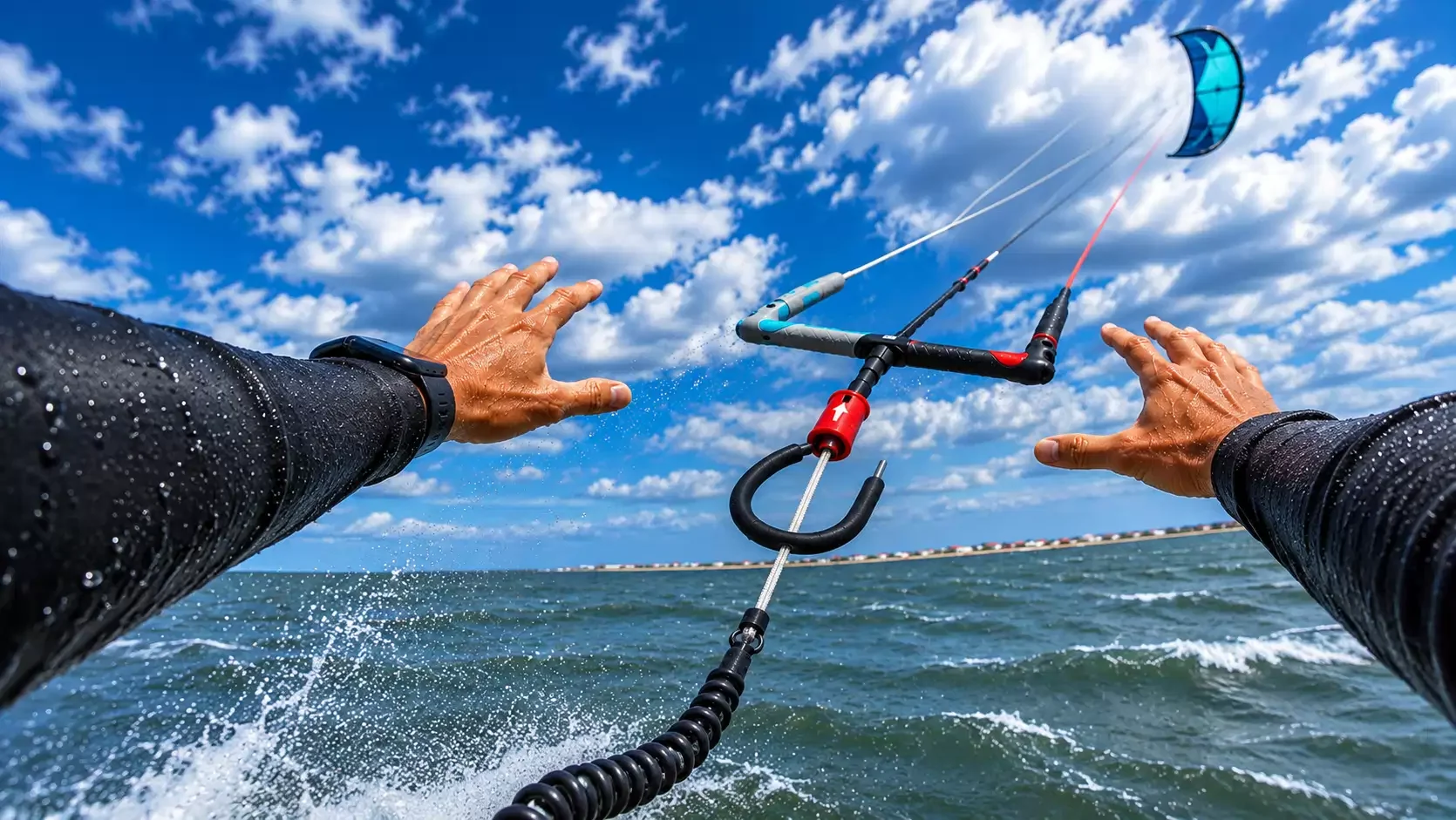
For a detailed explanation of these mechanisms, have a look at our article The Kite Bar: Functions, Evolution, Components, and Its Safety.
But there is another important consideration: activating the quick release is not necessarily the end of an emergency. It might just be the beginning.
Imagine being in deep water with a kite that can no longer be relaunched. The safety system has worked perfectly, but now you are floating in the sea, connected to a depowered kite by several metres of line. What next?
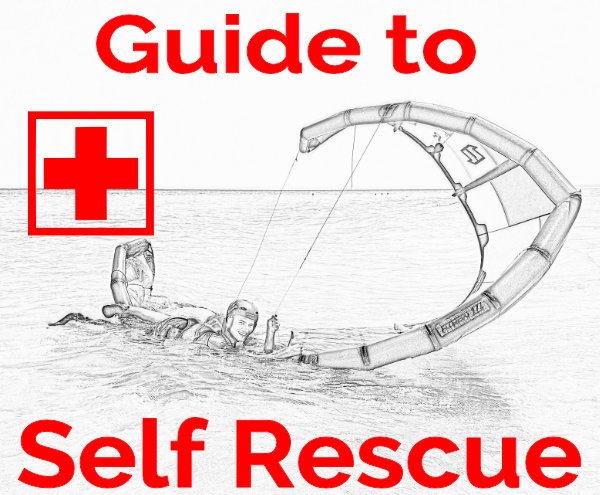
This is where knowing how to perform a self-rescue becomes fundamental. Depending on the conditions, we might be able to secure the kite and use it to return towards shore. In other circumstances, particularly with offshore winds, external assistance may become necessary.
We have already explained these procedures in our Self-Rescue in Kitesurfing guide.
The important lesson is that safety doesn't simply depend on having the right equipment. We must understand how it works, regularly check its condition and know what to do after activating it. And perhaps the most important safety system is not even attached to our harness: it's our ability to recognize dangerous conditions and avoid getting into trouble in the first place.
So, When Can We Really Consider Ourselves Independent Kiters?
Being able to ride a kiteboard is only part of what makes us competent kitesurfers. In fact, some of the most important skills are also the least spectacular: understanding the wind, controlling the kite, launching safely, retrieving a lost board and managing emergencies.
What really matters is understanding how our equipment behaves and being able to react correctly when things don't go as expected. Knowing why a kite stalls, how turbulence affects its flight or what happens after activating a quick release gives us a considerable advantage over simply reacting by instinct.
Of course, independence doesn't mean being capable of handling every possible situation. Even experienced riders can encounter conditions beyond their abilities or unexpected equipment failures. The difference is that experience, combined with a good technical understanding, should help us recognize potential problems and make better decisions before they become serious.
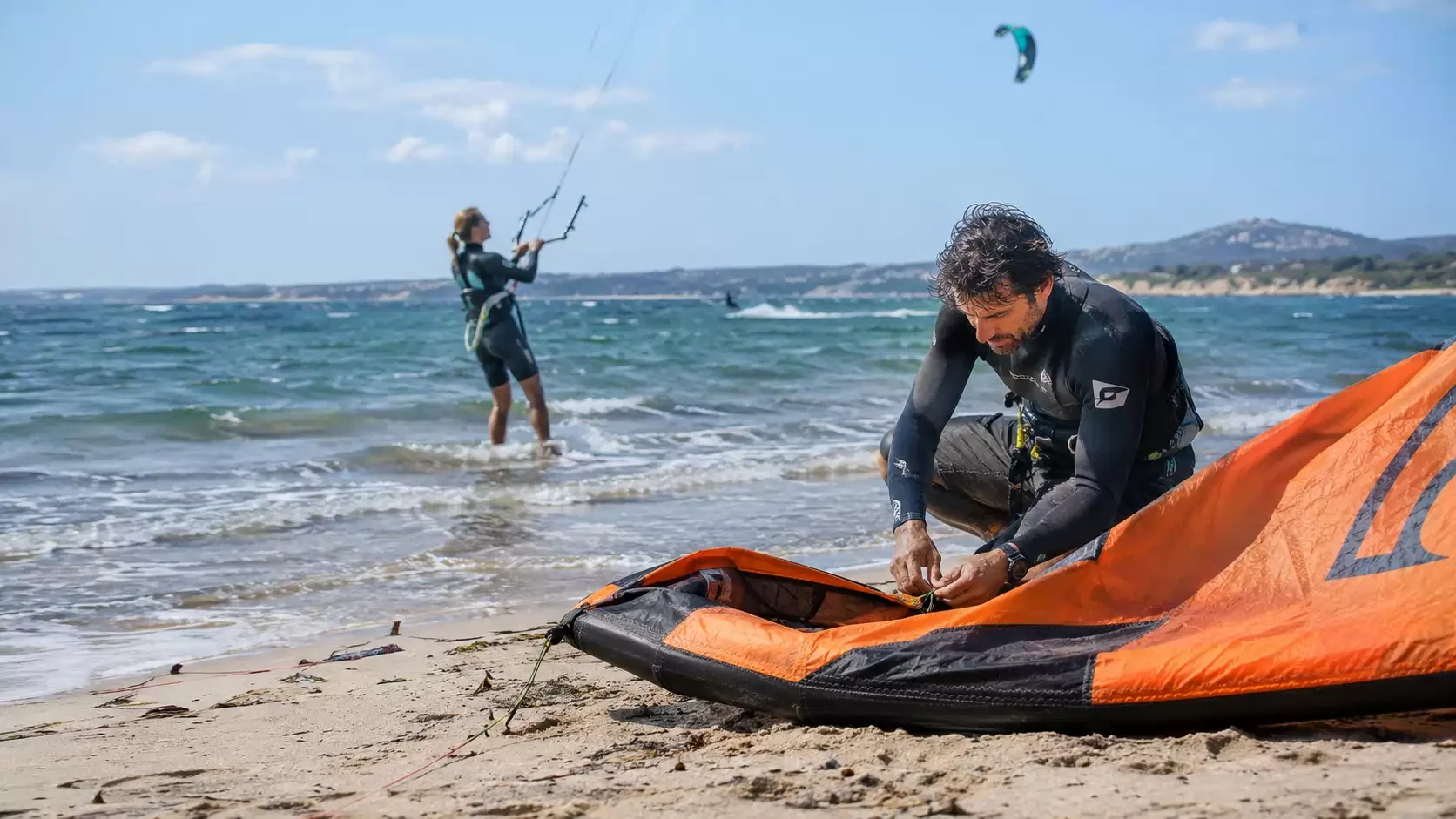
Perhaps we should measure our progression not only by how high we can jump or how many tricks we can perform, but also by how confidently we can manage an entire session, from preparing the equipment to returning safely to shore, without depending on others.
And this is where some of those rather boring exercises from our first kite lessons suddenly become much more interesting. Body dragging, relaunching and practising emergency procedures might not be what we look forward to when arriving at the beach, but keeping these skills sharp is certainly worth the effort. Naturally, emergency procedures should be practised in controlled conditions, with appropriate supervision when necessary.
After all, learning to ride is the fun part. Knowing how to manage everything else is what allows us to keep enjoying it.