This February 2026 I decided to escape the European winter and spend some time travelling around the Philippines. The idea was quite simple: warm weather, beautiful tropical islands, some good kitesurfing sessions and, above all, the pleasure of discovering places I had never visited before. For us Europeans, February is certainly not the most appealing month of the year, but on the other side of the world, in the Philippines, it is right in the middle of the Amihan season, when the northeast monsoon brings some of the best kitesurfing conditions to this enormous archipelago.
Whenever I talk with fellow kiters about the Philippines, the first destination that comes to mind is almost inevitably Boracay. And I find this rather curious. We are talking about a country with more than 7,000 islands, an extraordinary variety of coastlines, lagoons, reefs and beaches, and yet the international kitesurfing community seems to concentrate most of its attention on one small island. Of course, Boracay has earned its reputation, but I have always been convinced that the most interesting places are not necessarily the most famous ones.
So, rather than organizing the usual kite holiday around a single destination, I decided to explore several islands, moving between different kitesurfing spots and enjoying everything that the Philippines has to offer beyond the water. This meant taking domestic flights, travelling along sometimes rather adventurous roads and organizing boat transfers, but also discovering extraordinary landscapes, different local cultures and some surprisingly beautiful places to go kiting.
Here is my journey through some of the best kitesurfing spots in the Philippines, finishing, inevitably, in the famous Boracay. But I can already tell you that the places I found along the way were certainly not less interesting.
Siargao Island: Kitesurfing in General Luna, with a touch of tropical luxury
One of the most fascinating stops of my Philippine trip was Siargao, the beautiful island located on the eastern side of the archipelago, facing the Pacific Ocean. Siargao is internationally famous for surfing, particularly for the legendary Cloud 9 wave, but what many people don't know is that it also offers interesting conditions for kitesurfing.
The main tourist destination on the island is General Luna, a small coastal town that has developed around the international surfing community. What immediately struck me was its atmosphere. I would describe it as a rather unique combination of laid-back tropical life and sophisticated, eco-chic tourism. Imagine beautiful wooden villas hidden among coconut palms, stylish little resorts, open-air lounges and elegant restaurants that seem to blend naturally into the surrounding vegetation.
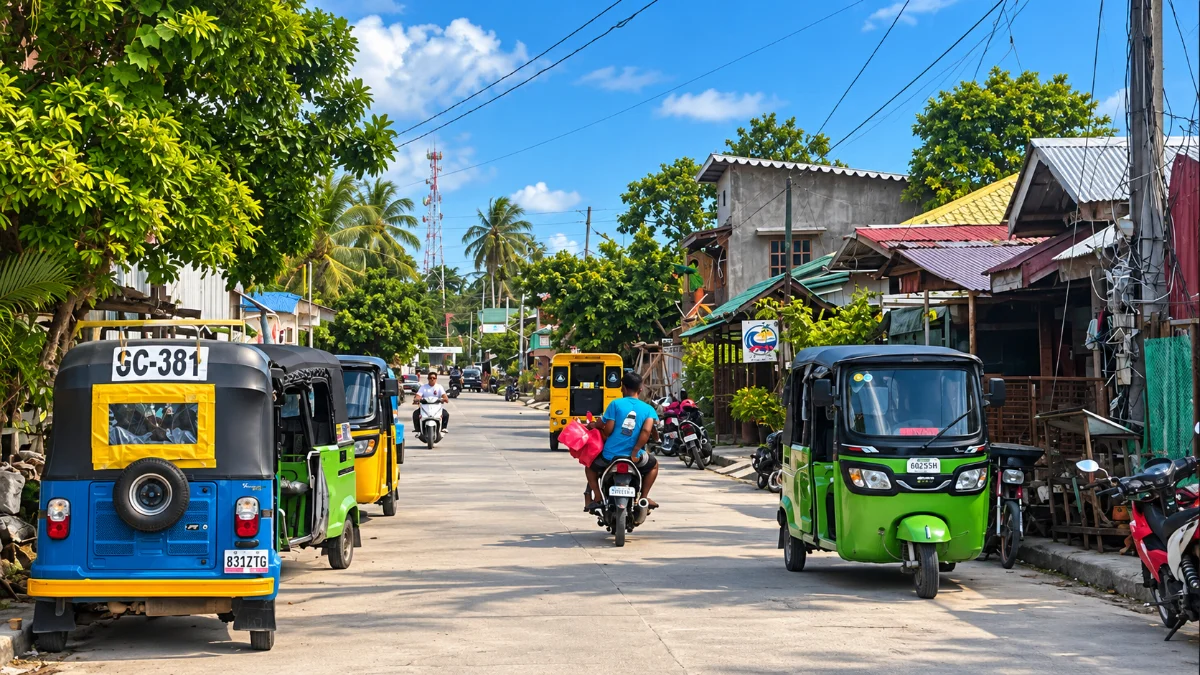
There is something almost contradictory about General Luna, and I found it particularly appealing. Everything looks relaxed and informal, with people moving around on scooters, barefoot surfers carrying their boards on the scooters and small cafés hidden along the road. But behind this apparent simplicity, you discover an unexpectedly sophisticated hospitality scene. Some restaurants could easily compete with fashionable establishments in Bali or other international luxury destinations, offering beautifully designed interiors, creative international cuisine and excellent cocktails, all surrounded by tropical gardens and coconut trees.
It is what I would call a luxury hipster atmosphere: sophisticated without being excessively formal, fashionable but still very much connected to the island environment. Bamboo, wood, tropical plants and carefully designed spaces give many establishments a natural appearance, while the food, service and overall comfort can be surprisingly upscale. Of course, not everything is cheap by Philippine standards, but the quality and originality of many places make General Luna a very enjoyable destination, even for someone who has little interest in surfing or kitesurfing.
And then there is the kiting. At General Luna, the coast is protected by an extensive reef that creates a large lagoon with beautiful flat water. During the Amihan season, particularly from December to March, the northeast wind blows across the lagoon, offering good conditions for freeriding and freestyle. The wind is generally lighter than in some of the better-known Philippine kite destinations, so bringing a larger kite or a hydrofoil can definitely be a good idea.
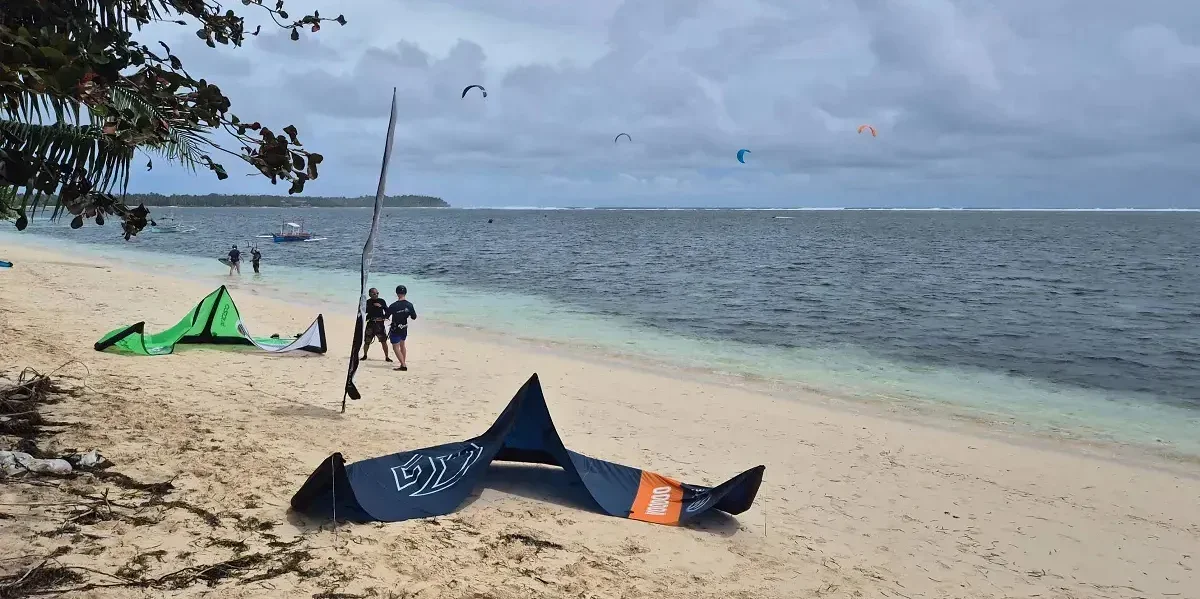
The lagoon is very shallow in places, and the tide plays an important role. At low tide, sections of the reef become dangerously close to the surface, so choosing the right moment to go out is essential. But with sufficient water depth and a good breeze, the conditions can be very pleasant, with flat water and that beautiful tropical scenery that makes kitesurfing in this part of the world so special.
Another great advantage of Siargao is that the island offers something to do practically every day, regardless of the wind. If you enjoy surfing, you are in one of the best destinations in Asia. Otherwise, you can explore the small surrounding islands, visit Sugba Lagoon, discover hidden beaches or simply enjoy the excellent restaurants and relaxed atmosphere of General Luna.
For me, Siargao was one of the most pleasant surprises of the trip. It combines a beautiful tropical environment, an interesting kitesurfing spot and a social atmosphere that is quite different from the usual beach resort. A place where you could easily decide to stay longer than originally planned.
Palawan: Emerald Playa Beach and the wild beauty of the Philippines
Moving west, my next destination was Palawan, probably one of the most spectacular regions of the Philippines from a natural point of view. This long island is famous for its limestone cliffs, turquoise lagoons, jungle-covered mountains and countless small islands scattered along its coastline.
Palawan is certainly not unknown to international tourism, particularly around El Nido and Coron, but kitesurfing is still a relatively secondary activity here. And this is part of its charm: most people come for the extraordinary scenery, while kiters have the opportunity to discover beautiful beaches that are not yet dominated by kite schools and kites of any brand filling the sky. The obvious downside is that you definitely have to bring all what you need for kiting and eventual small repairs, if bad luck hits.
My first stop was Puerto Princesa, the main city of Palawan, where I wanted to have a look at Emerald Playa Beach. Located a short distance from the city, this spot offers an interesting combination of flat water close to the beach and small waves further out, where the reef creates a natural barrier against the open sea.
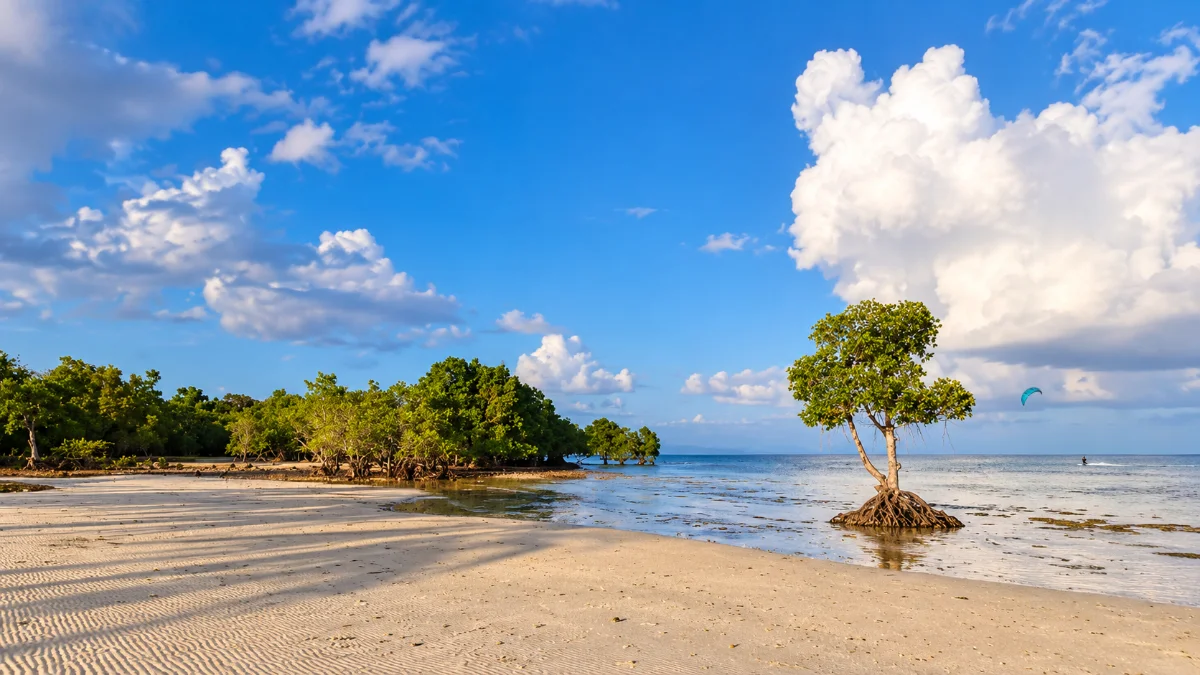
During the northeast monsoon, the wind can reach a very enjoyable 18–25 knots, and the relatively shallow water makes it a suitable location for freeriding and practicing freestyle manoeuvres. The reef lies approximately 500 metres offshore, offering some variety for riders looking for something different from the flat-water lagoon. As always in these tropical locations, however, you should pay attention to the water depth and coral formations, particularly at low tide.
What I appreciated about Emerald Playa is that it does not feel like a destination built exclusively around kitesurfing. It is simply a beautiful stretch of Philippine coastline where the geographical conditions happen to be favourable for our sport. You can enjoy a session and then return to Puerto Princesa, with all its restaurants, markets and the daily life of a real Philippine city rather than a tourist village.
The area also offers some extraordinary excursions. The famous Puerto Princesa Underground River is a remarkable natural attraction, while Honda Bay provides plenty of opportunities for island hopping, snorkeling and exploring the surrounding beaches. Palawan is definitely one of those destinations where travelling with a non-kiting partner is not going to create too many problems!
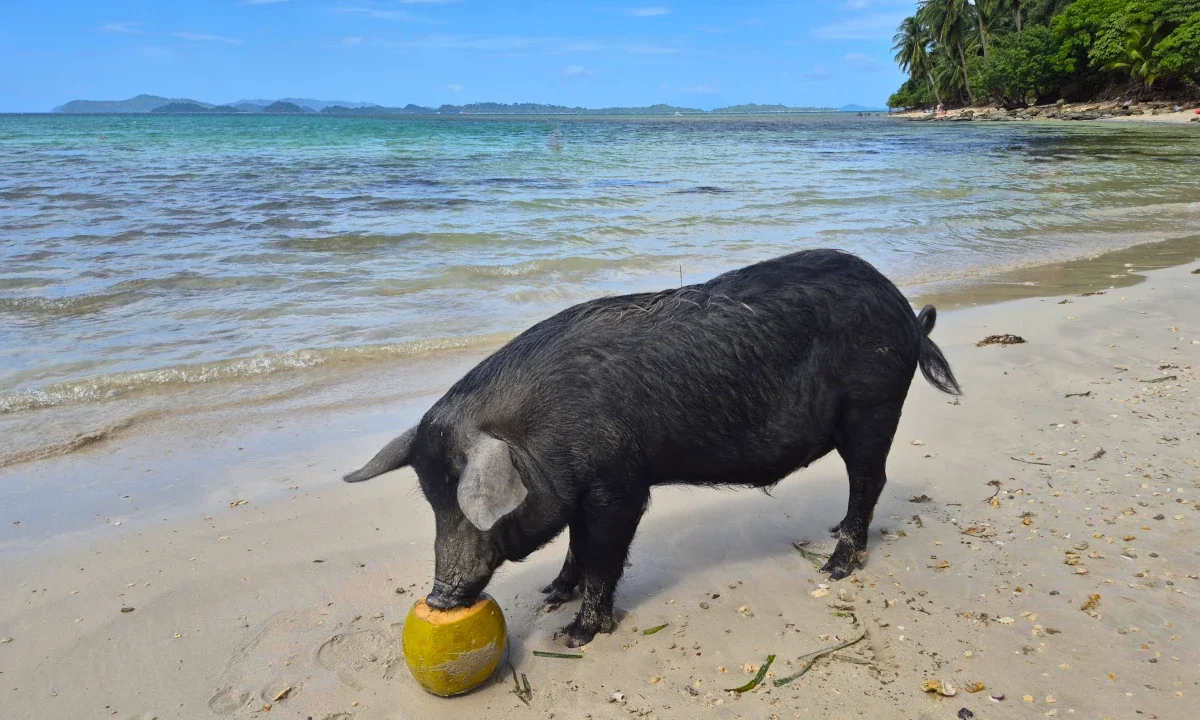
And talking about Palawan's wildlife, I also had a rather funny encounter with a wild pig, happily busy eating a coconut. The animal seemed completely uninterested in my presence, concentrating instead on its tropical meal. I couldn't resist stopping to take a few pictures. After all, it isn't every day that you meet a coconut-eating wild pig during a kitesurfing holiday! Sometimes the most memorable encounters of a trip have absolutely nothing to do with wind and waves.
Sibaltan: the quieter side of El Nido
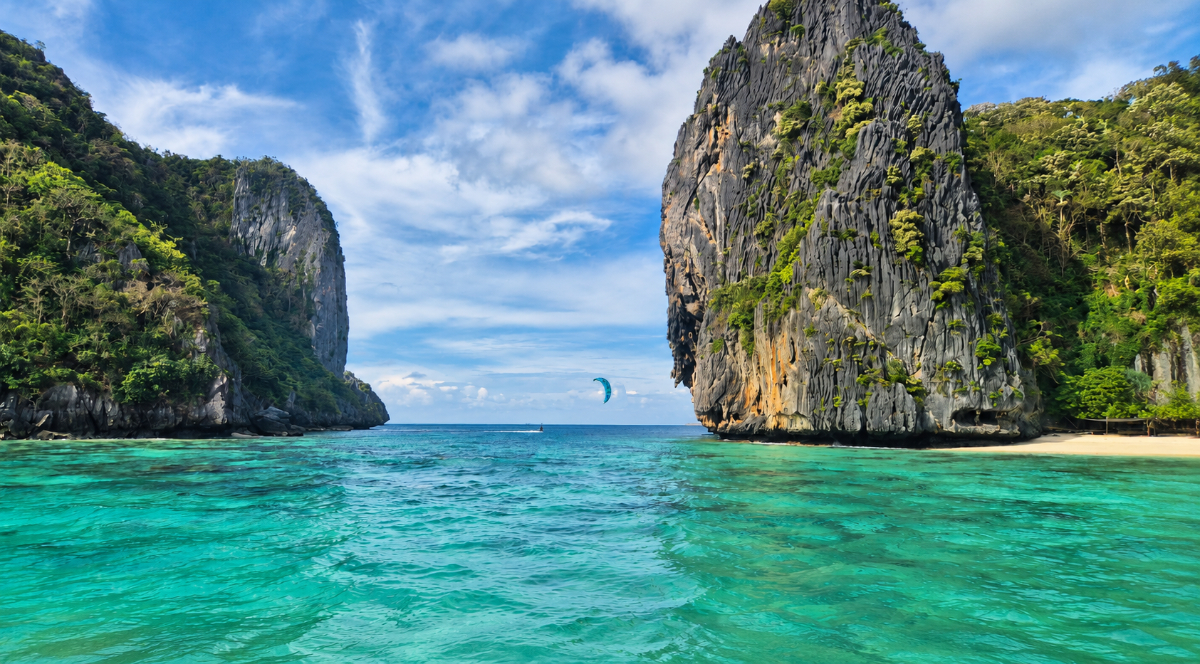
Continuing north through Palawan, the landscape becomes increasingly spectacular as you approach El Nido, one of the most famous destinations in the entire Philippines. The enormous limestone formations rising vertically from the sea, the hidden lagoons and the beautiful tropical islands create scenery that is almost difficult to believe. I tried to kite out there, but you need to rent a private boad (right in town) to take you in the middle of the sea surrounded by the cliffs, because from El Nido beach, covered by a high hill, is impossible to get out (Jelly fished are also quite an hazard close to the coast). if you are luky as I was the north west wind can kick in and have you ride in a crazy scenario in between the limestone island formations.
After visiting El Nido's western coastline, where most visitors concentrate on, I moved to discover the eastern side of the peninsula, particularly the small village of Sibaltan.
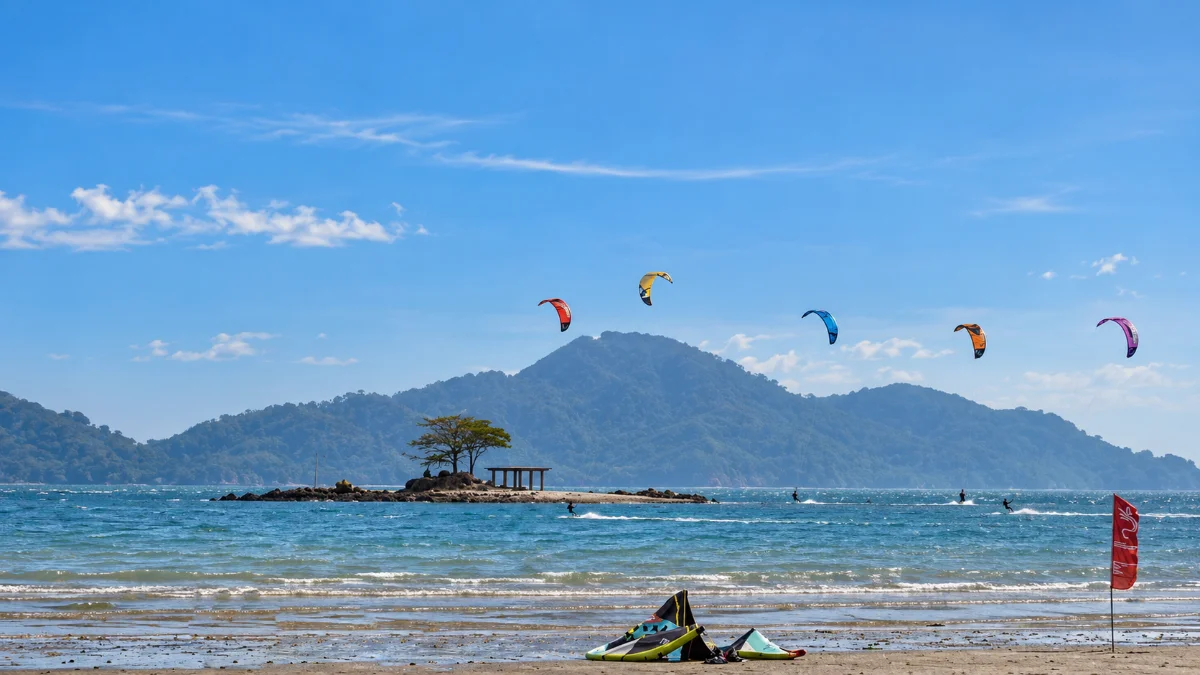
Here the atmosphere changes completely. The busy tourist environment of El Nido gives way to a much quieter coastline, with long sandy beaches, coconut trees, small fishing villages and a limited number of guesthouses and local resorts. The place still has that authentic tropical atmosphere that can be difficult to find in destinations where mass tourism has already transformed the landscape.
The geographical position is particularly interesting for kitesurfing. While the famous western coast of El Nido is relatively sheltered from the northeast monsoon and, as I said, you need a boat to take you in the middle of the sea, Sibaltan faces the Amihan directly. From November to March, and sometimes into April, the wind creates very good conditions along this stretch of coast, with broad beaches and plenty of space to launch a kite.
There are local kite schools and a small community of riders, but the atmosphere remains extremely relaxed. You are not surrounded by hundreds of tourists watching your every manoeuvre, and there is no continuous procession of kites crossing in front of you. Just the wind, the water and the beautiful natural environment of northern Palawan.
What I particularly like about destinations such as Sibaltan is that kitesurfing has not yet completely changed their original character. You are visiting a Philippine village where people have their own lives and activities, and the arrival of a few kiters is simply one more element of the local economy. This makes the experience quite different from that of an established international kite resort.
And if you happen to have a windless day, the famous lagoons and islands of El Nido are close enough to justify spending some time exploring them. I would certainly not recommend coming all the way to Palawan without taking advantage of its extraordinary natural attractions.
Union Beach: Boracay's quieter neighbour
Leaving Palawan behind, my next destination was Panay Island, more precisely Caticlan, the small town that serves as the main gateway to the famous Boracay. But before crossing the narrow channel separating the mainland from the island, I wanted to have a look at a kitesurfing spot that, despite being so close to Boracay, receives surprisingly little attention from international kiters: Union Beach.
And here comes another interesting example of how the popularity of a destination does not necessarily reflect the quality of its kitesurfing conditions. Just a few kilometres away, Boracay attracts thousands of visitors every year and has become one of the most established kiteboarding destinations in Southeast Asia. Yet Union Beach, enjoying practically the same Amihan winds, remains a much quieter place, with a beautiful sandy coastline, coconut trees and considerably fewer kites in the sky.
The spot is located only a short drive from Caticlan Airport and offers excellent conditions during the northeast monsoon, particularly between November and March. The wind blows predominantly side-onshore, and the reef-protected lagoon creates shallow, relatively flat water, especially around high tide. These conditions make Union Beach particularly attractive for beginners and intermediate riders, but experienced kiters looking for some good freestyle sessions will certainly not be disappointed either.
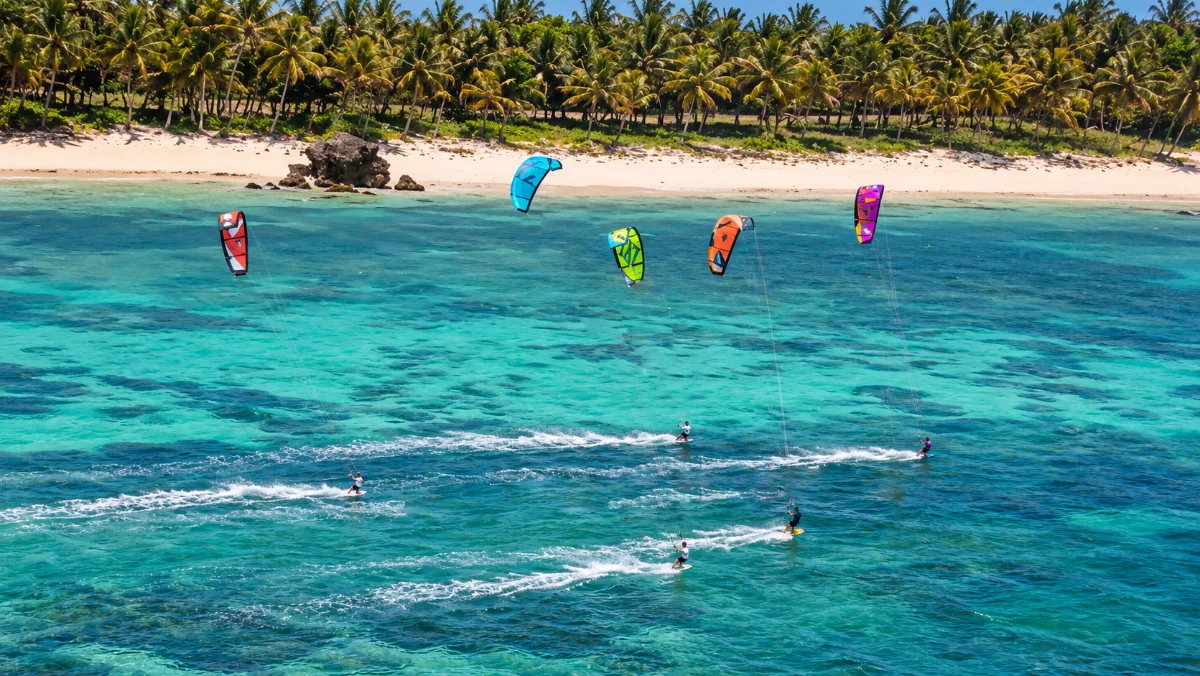
There are a few kite schools and small resorts directly on the beach, but the atmosphere is considerably more relaxed than on the neighbouring island. No endless succession of shops, restaurants and bars, and no crowds of tourists invading every available metre of sand. You have the wind, a beautiful tropical beach and enough room to enjoy your session without having to constantly look over your shoulder to avoid other riders.
What makes Union Beach particularly appealing is the possibility of combining its peaceful environment with everything Boracay has to offer. The famous island is just across the channel, and reaching it is relatively easy. Some experienced kiters even organize downwinders between the two locations, although this is obviously something that requires suitable conditions and proper local knowledge.
In my opinion, Union Beach is an excellent alternative for those who prefer spending their holidays actually kitesurfing rather than being surrounded by the social life of a busy international resort. And considering its proximity to Boracay, I find it rather surprising that it is not more popular.
But, of course, having arrived all the way to Caticlan, it would have been rather strange not to cross the channel and finally visit the most famous kitesurfing island in the Philippines.
Boracay: finally, the island everybody talks about
And so, after travelling through several Philippine islands and discovering such different environments, I finally arrived in Boracay, the place that most kiters would probably have chosen as their very first destination.
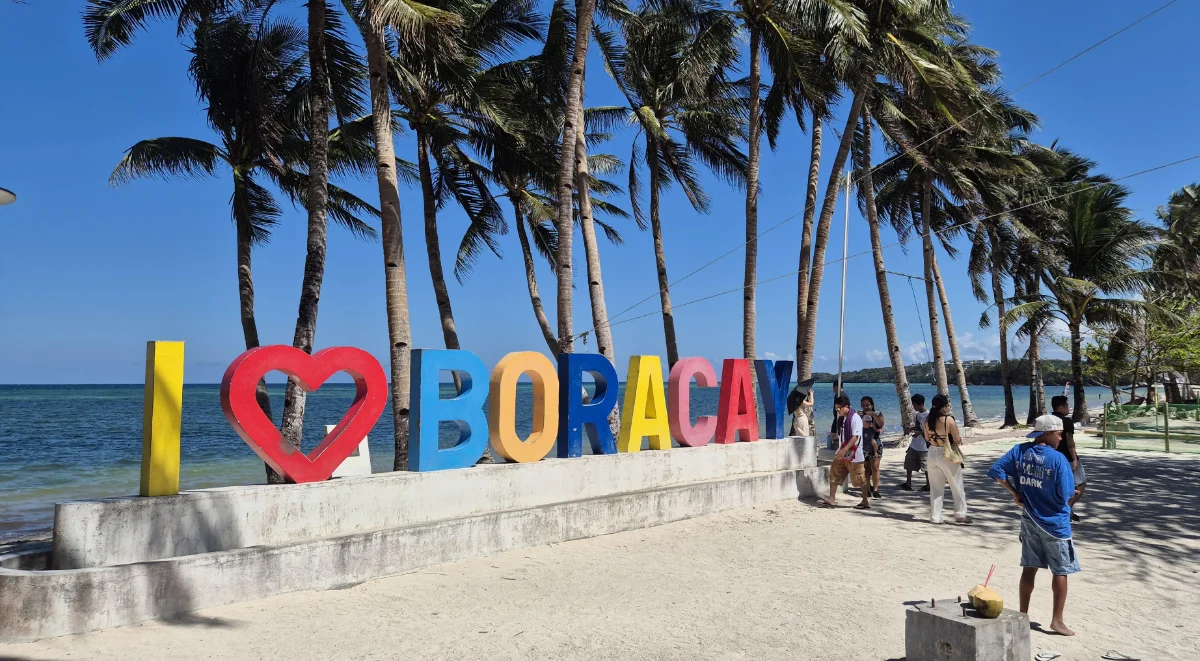
Boracay is undoubtedly beautiful. Its famous White Beach, stretching for almost four kilometres along the western coast, is one of those tropical beaches that seem to have been designed specifically for tourism brochures. Powdery white sand, transparent turquoise waters, coconut trees and spectacular sunsets make it an extremely attractive holiday destination.
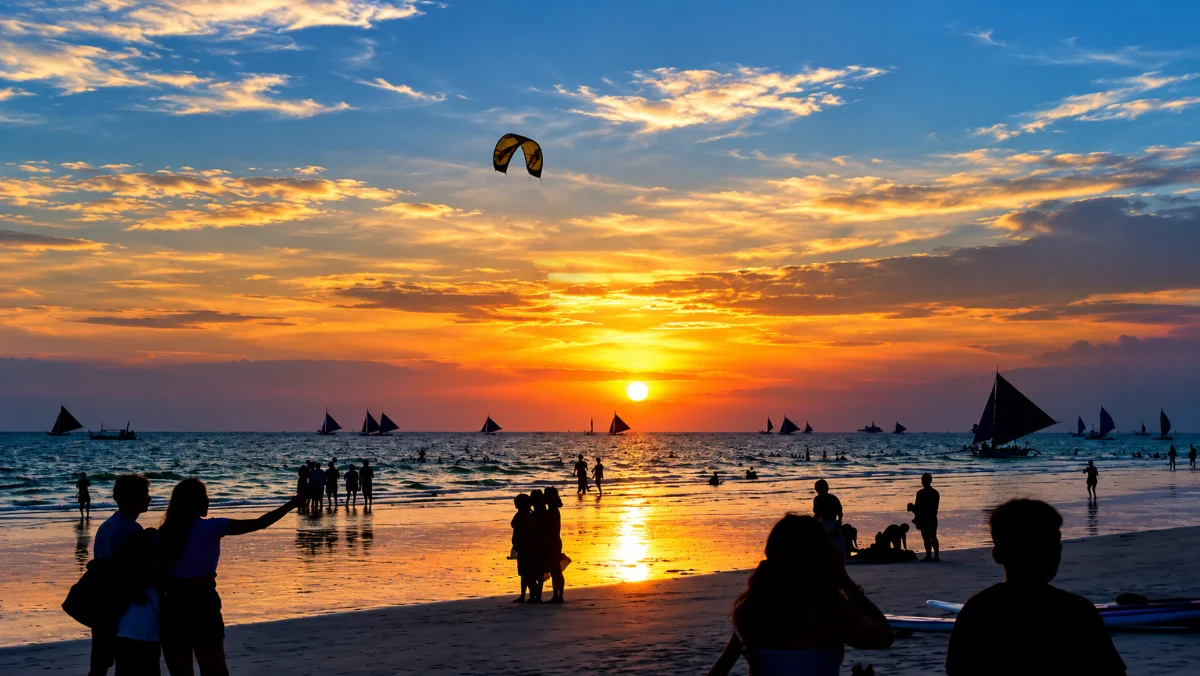
But the difference from the other places I had visited was immediately evident. Boracay is considerably more developed, with an impressive concentration of hotels, restaurants, shops and beach bars. The atmosphere is lively, sometimes rather crowded, and the island offers all the advantages and disadvantages of an internationally established tourist destination. Practically everything is available, but the feeling of discovering an untouched tropical paradise is certainly not what comes to mind.
For kitesurfing in February, however, the main location is not White Beach but Bulabog Beach, on the eastern side of the island. This is where the northeast Amihan wind blows directly into the lagoon, providing the conditions that have made Boracay famous among kiters from all over the world.
Bulabog is certainly a very good kite spot. The wind is generally reliable during the winter season, the water inside the reef is relatively flat, and there are plenty of schools, rental facilities and experienced instructors. You can arrive without equipment, take lessons, rent a kite or simply enjoy the company of a large international community of riders. There is a reason why Boracay has become such a popular destination, and it would be unfair not to recognize it.
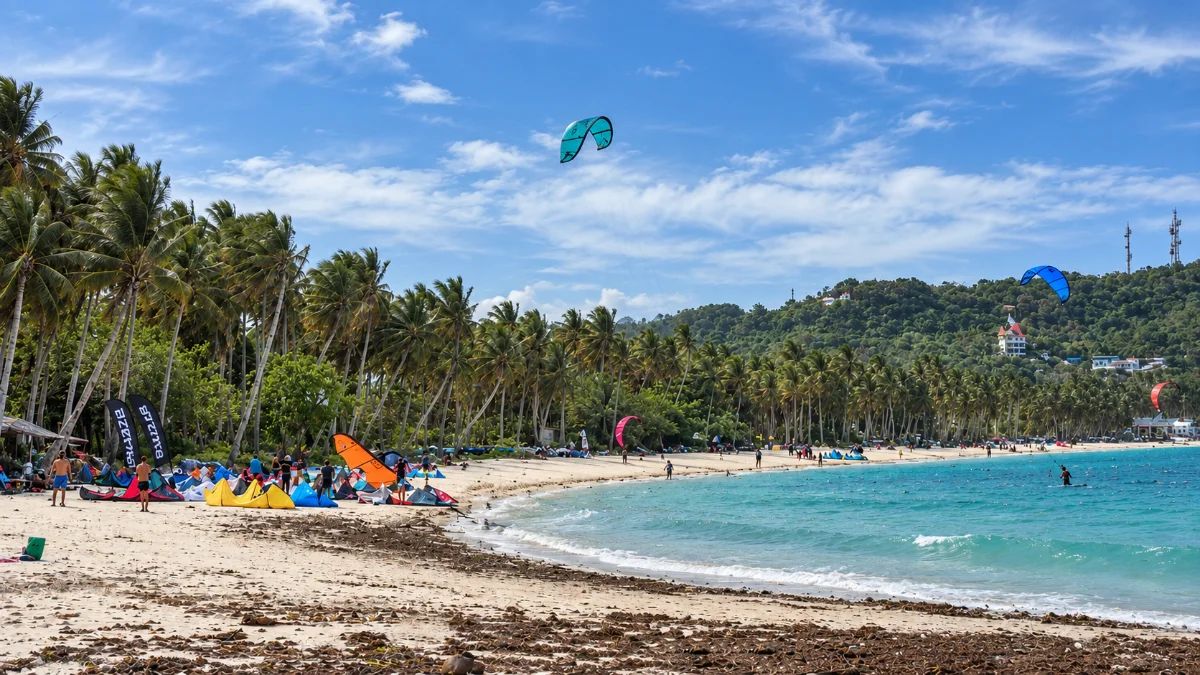
Nevertheless, after having seen the peaceful beaches of Palawan, the beautiful lagoon at General Luna and the simplicity of Union Beach, I must admit that Boracay felt a little less special than its international reputation might suggest. Not because it lacks natural beauty or good kitesurfing conditions, but simply because everything here is much more organized, commercial and crowded.
I perfectly understand why many kiters enjoy returning to Boracay every year. Having reliable wind, good accommodation, equipment rentals and dozens of restaurants within walking distance is certainly convenient. But there is also something wonderful about arriving at a beach where you can prepare your kite without being surrounded by dozens of other riders, or where the nearest restaurant is just a small family-run place under the coconut trees.
White Beach, on the opposite side of the island, deserves a visit for its spectacular sunsets and lively atmosphere. It can also become a kitesurfing location during the Habagat season, generally between June and October, when the southwest monsoon reverses the wind direction. But during my February visit, in the middle of the Amihan season, the kitesurfing activity was naturally concentrated on Bulabog.
So, is Boracay worth visiting? Absolutely. It is a great destination for a comfortable kitesurfing holiday, with good winds, plenty of facilities and a lively international atmosphere. But after having explored several other islands, I was increasingly convinced that reducing kitesurfing in the Philippines to Boracay would be a terrible mistake.
And there was still one more place I wanted to discover. Something completely different from Boracay, despite being accessible by an organized boat excursion from the same general area. A little sandbar lost in the Sulu Sea, where the concept of a tropical kite paradise takes on an entirely different meaning.
Seco Island: when paradise is nothing more than a sandbar
One of the most extraordinary kitesurfing experiences you can organize while staying in the Boracay and Caticlan area is an excursion to Seco Island, a tiny, uninhabited sandbar located in the Sulu Sea, approximately 50 kilometres west of Panay Island.
Calling Seco an island is probably a little generous. It is essentially a strip of white sand, approximately 400 metres long and 100 metres wide, surrounded by incredibly transparent tropical waters. There are no hotels, no restaurants, no roads, no buildings and practically no vegetation. Nothing but sand, sea and wind. And, for a kitesurfer, this combination can be more than enough.
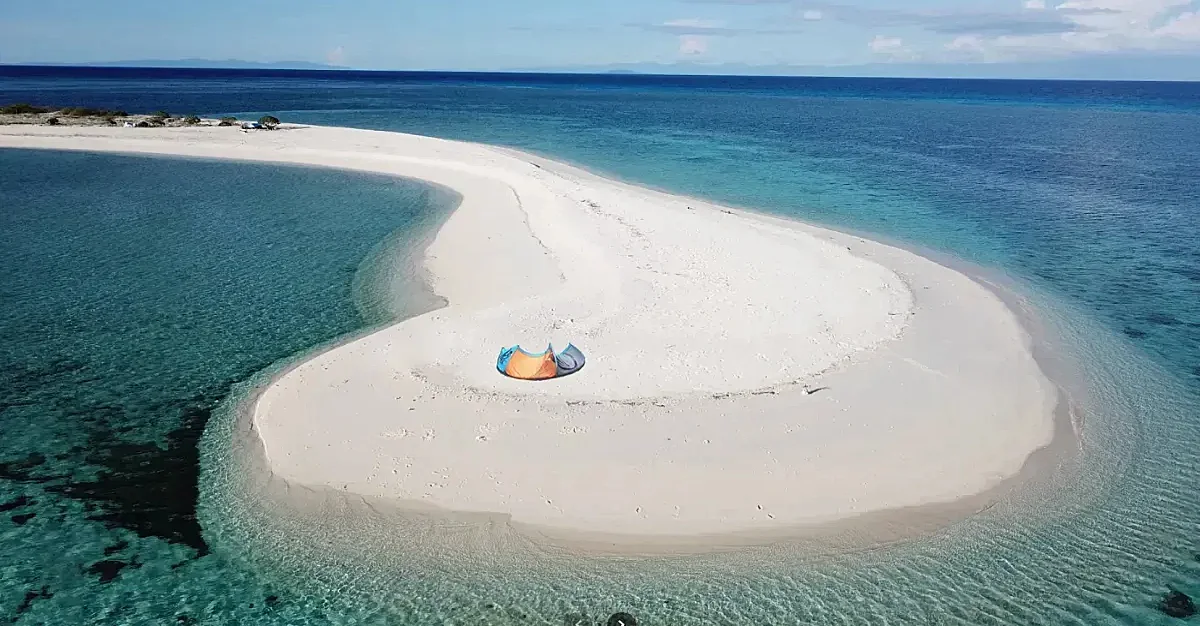
Seco is generally visited through organized boat excursions from the Boracay–Caticlan region, with boat departures and permissions coordinated through operators on Panay. Reaching the island requires a considerable crossing through open water, so this is not the kind of excursion that you can decide to improvise after breakfast. The trip needs to be properly organized, and the weather conditions must be suitable not only for kitesurfing but also for navigating safely to and from the sandbar. Access is regulated because Seco is a protected marine area, so local authorization and the availability of approved excursions need to be checked in advance.
But all this effort is precisely what makes Seco so fascinating. The moment you reach such an isolated place, with nothing around but the horizon, you understand why some of us are prepared to travel thousands of kilometres carrying enormous bags full of kite equipment. There is something quite special about a place where practically the only human activity is what you have brought with you.
The kitesurfing conditions are excellent during the Amihan season, generally from November to April. The northeast monsoon reaches Seco without encountering mountains, buildings or other obstacles, producing beautifully clean and consistent winds. Typical conditions range from approximately 15 to 25 knots, although stronger days are possible, and the exposed position often means more wind than in the relatively sheltered lagoon of Boracay.
The shallow waters surrounding the sandbar create extraordinary flat-water conditions, with plenty of space for freestyle manoeuvres and long runs across a transparent turquoise sea. Further away from the protected areas, small waves and reef formations offer something different for more experienced riders. But the reef, changing tides and the complete isolation of the spot require considerable attention. There are no permanent rescue services, and a properly organized trip with safety support is essential.
What really makes Seco exceptional, however, is not only the quality of the wind or the flatness of the water. It is the environment itself. Imagine preparing your kite on a completely deserted strip of sand, with no buildings, no traffic, no music coming from nearby beach bars and no tourists wandering between your lines. Just the sound of the wind and the water moving over the reef.
We kiters are always looking for paradise. I spend hours searching for the best spots on the internet, studying wind statistics and admiring pictures of remote tropical beaches. But very often, when we finally arrive at these famous destinations, we discover that somebody has already built a hotel, a beach bar and a collection of sunbeds directly on the sand. Seco Island reminds us that the real luxury does not necessarily require any of these things.
It is certainly not a destination for everybody. There is no comfortable resort waiting for you at the end of the session, no restaurant serving cocktails at sunset, and even basic necessities such as drinking water, shade and food need to be arranged beforehand. Some organized expeditions may include overnight stays when specifically authorized, but access restrictions and environmental protection rules have to be respected. After all, preserving such a fragile natural environment should be much more important than allowing unlimited numbers of kiters to use it.
And this is perhaps the most striking contrast with Boracay. On one side, you have an internationally famous resort island where practically everything has been organized around tourism. On the other, a little strip of sand in the middle of the sea, where nature is still the absolute protagonist. Both offer beautiful kitesurfing conditions, but the experiences could hardly be more different.
For me, Seco Island represents one of the most fascinating possibilities of kitesurfing in the Philippines. It is not just another spot to add to a list, but the kind of place that reminds us why discovering new destinations is such an important part of our sport.
The Philippines: more than 7,000 islands, and certainly more than Boracay
Looking back at my February 2026 trip, what I enjoyed most was the extraordinary diversity of the places I visited. Every island seemed to have its own character, its own atmosphere and its own way of combining tourism with local life.
Siargao surprised me with its sophisticated eco-chic atmosphere, where stylish restaurants and beautiful tropical resorts blend into a wonderfully relaxed surf environment. Palawan impressed me with its spectacular scenery, beautiful coastlines and the possibility of discovering relatively unknown kitesurfing spots. Union Beach demonstrated that excellent kite conditions can sometimes be found just a few kilometres away from the most famous destinations, without the crowds. Boracay offered all the advantages of a well-established kite resort, while Seco Island represented almost the exact opposite: an isolated sandbar where the wind and the sea are practically the only things that matter.
And this is what I particularly enjoyed about travelling through the Philippines. Kitesurfing becomes a good excuse for discovering an extraordinary country, with beautiful landscapes, colourful markets, small fishing villages, excellent seafood and incredibly friendly people. Even the transfers between islands, sometimes long and not particularly comfortable, become part of the adventure. You travel on small boats, cross tropical islands covered by coconut trees and discover places that would probably never have been on your itinerary if you had simply booked a week in a famous kite resort.
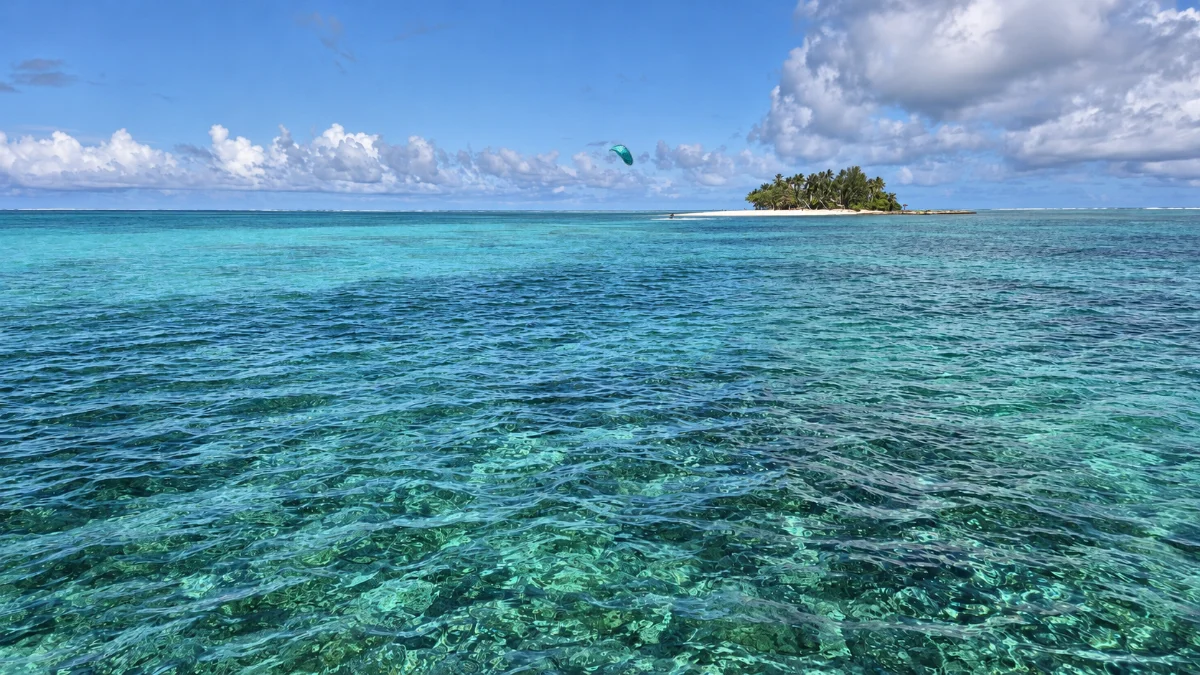
Of course, organizing a kitesurfing island-hopping holiday in the Philippines requires some careful planning. Distances between islands can be considerable, and unlike what you might imagine looking at a map, travelling by boat is not always a practical option. In most cases, you will have to rely on domestic flights, often connecting through Manila or Cebu, even when your next destination seems relatively close.
Fortunately, several airlines operate throughout the archipelago, including Cebu Pacific, Philippine Airlines, AirAsia Philippines and some minor others. Flights can be quite affordable, although travelling with bulky kite equipment may considerably increase the cost, so always check the baggage allowances before booking. And here comes an important suggestion: book your domestic flights well in advance! Popular routes can fill up quickly, and arriving at the airport without a confirmed reservation may leave you waiting on standby, hoping that somebody doesn't show up for their flight. Not exactly the best way to spend your precious holiday time!
The Amihan season, particularly between December and February, is generally the most reliable period for the spots described in this article, but wind and weather conditions can vary considerably from one island to another. My advice is to organize your itinerary and flights before departure, rather than improvising transfers once you are there.
As said, travelling with kite equipment is not always particularly comfortable either, especially when small boats and domestic flights are involved. But in my opinion, this is a relatively small price to pay for the possibility of discovering so many different places during the same holiday.
So, should you go kitesurfing in Boracay? Certainly. It deserves its reputation and remains one of the best-established kite destinations in Southeast Asia. But should you travel all the way to the Philippines and spend your entire holiday there? Well, after this trip, I would definitely say that you would be missing a great deal.
There is a whole archipelago waiting beyond Boracay, with beautiful tropical beaches, quiet lagoons, remote islands and some extraordinary places to go kiting. And perhaps the greatest pleasure is not necessarily finding the strongest wind or the flattest water, but discovering a place that you had never heard of before starting your journey.
My suggestion? Go to Boracay, enjoy it, but don't forget to look around. There are more than 7,000 islands in the Philippines. It would really be a pity to stop at just one.