Kitesurfing in Hamata
Marsa Alam - Egypt
Spot Type
Flat
Water
Crystal Clear
Beach
Sand
Rider Level
beginner
Spot characteristics
Spot Type
Flat
Rider Skill
beginner
Crowd
Seasonal Crowd
Beach Type
Sand
Water Quality
Crystal Clear
Tide Influence
All tide levels with different conditions (chop - flat - wave)
Kitesurfing in Hamata: Conditions, Wind & Season
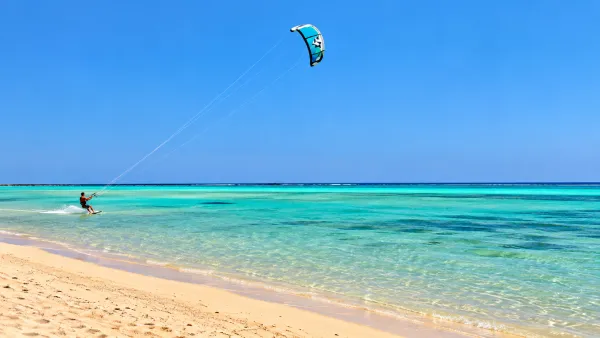
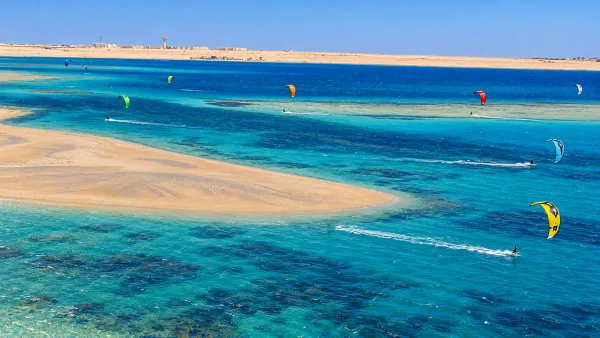
Hamata is one of Egypt's most distinctive kitesurfing destinations, located on the southern Red Sea coast, approximately 170 kilometres south of Marsa Alam. Known for its extensive shallow-water lagoon, turquoise sea and remote desert surroundings, Hamata offers an exceptional environment for flat-water kitesurfing. The riding area extends across a broad coastal lagoon protected by offshore reefs and islands, creating relatively smooth water conditions even when stronger winds blow across the region. Compared with the more developed kitesurfing destinations farther north, Hamata offers a quieter and more natural setting, attracting beginners, intermediate riders and experienced kitesurfers looking for spacious riding areas, reliable seasonal winds and long freeride sessions.
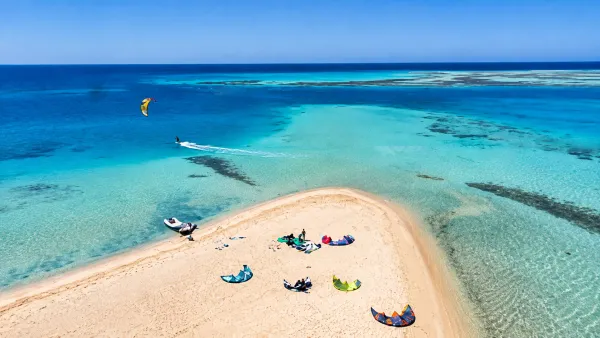
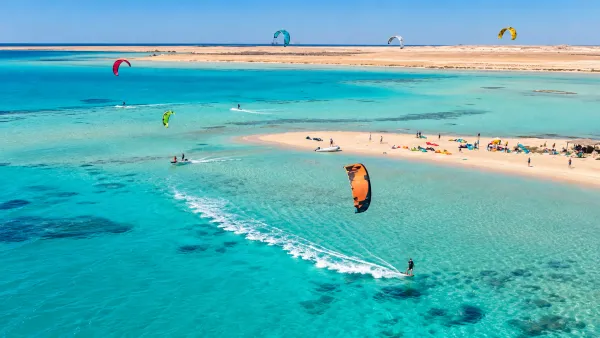
The main kitesurfing area consists of a vast shallow lagoon bordered by sandy beaches, reef formations and small mangrove-covered islands. Much of the lagoon features a predominantly sandy seabed, with water depths varying from shallow standing areas to deeper channels depending on the location and tidal conditions. These characteristics make Hamata particularly attractive for learning water starts, practising upwind riding and developing basic board control. The relatively smooth surface also appeals to freestyle enthusiasts who prefer predictable water conditions for practising transitions and controlled manoeuvres. However, the lagoon is not uniformly shallow or free of obstacles, and riders should familiarise themselves with designated riding boundaries before venturing farther from the main launching area.
Hamata benefits from the predominantly northerly and northwesterly winds that characterise Egypt's southern Red Sea coast. These winds are influenced by regional pressure patterns, the surrounding desert landscape and the orientation of the coastline, which can help maintain sustained airflow over the water. Depending on the exact launching location, the wind commonly arrives side-shore or with a side-offshore component, creating favourable conditions for freeriding but also requiring attention to drift and rescue arrangements. On some days, the morning wind may be lighter before strengthening around midday or during the afternoon. However, wind development varies according to regional weather conditions, and riders should always assess the actual wind direction and strength before launching.
The main kitesurfing season generally extends from April through October, with particularly attractive conditions during late spring, summer and early autumn. From June through September, frequent northerly wind episodes can produce speeds of approximately 20 to 30 knots, although lighter periods and stronger days are also possible. Spring and autumn often provide enjoyable riding conditions with more moderate temperatures, while winter sessions remain possible when suitable weather systems develop. Wind reliability generally decreases outside the main season, and conditions should not be assumed to be rideable every day. During summer, the combination of strong sunshine, high air temperatures and sustained wind makes adequate hydration and sun protection particularly important.
One of Hamata's greatest attractions is the quality of its flat water. The surrounding reef systems and offshore islands reduce the impact of larger Red Sea waves, leaving much of the central lagoon relatively smooth or lightly rippled during moderate winds. Stronger conditions can generate short wind-driven chop, particularly in wider or more exposed sections, but significant breaking waves are generally absent from the main riding area. Beyond the protected lagoon, the water becomes deeper and more exposed, with increased chop and occasional small waves near reef passages. These outer sections require greater experience and local knowledge, especially where the wind has an offshore component or where reef formations restrict safe navigation.
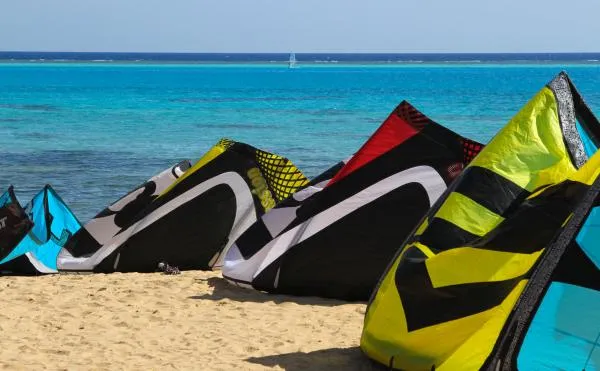
The sandy beach near the established kite facilities provides a practical environment for preparing equipment, launching and landing. The gently sloping shoreline allows access to shallow water, while designated launching corridors help organise the movement of riders and reduce conflicts between beginners and independent kitesurfers. However, not every section of the surrounding coast is suitable for launching, and coral fragments, submerged rocks or sensitive habitats may be present outside the main kite station. Riders should use authorised access points and follow the instructions of local operators. During busier periods, particular care is needed around launching areas, training zones and riders practising close to shore.
Tides play an important role in determining the usable riding area at Hamata. At higher water levels, the lagoon generally offers more continuous space for freeriding, while low tide can expose sandbanks, reef flats and other shallow obstacles. Some areas may become unsuitable for jumping or even normal riding when the water level drops. Although the predominantly sandy bottom is relatively forgiving, accidental contact with submerged coral or hard surfaces can cause injuries and equipment damage. Riders should avoid attempting powered tricks in insufficient depth and maintain safe distances from reef edges. Hydrofoil kitesurfing is possible in appropriately deep sections, but the extensive shallow-water areas make careful route selection essential, and foiling should not be attempted without confirming adequate clearance.
Hamata is particularly well suited to freeriding and skill progression. Beginners can benefit from shallow-water training areas under professional supervision, while intermediate riders have opportunities to practise transitions, improve upwind technique and build confidence in stronger winds. Experienced kitesurfers can enjoy longer cruising sessions, powered freeriding and flat-water freestyle in sections with sufficient depth and space. The relatively open riding environment also offers possibilities for extended tacks, although longer-distance sessions should be planned with local guidance and appropriate safety support. Big-air manoeuvres and advanced freestyle require particular caution because shallow water and nearby reef formations can make hard landings especially dangerous.
Kitesurfing facilities in Hamata are concentrated around specialised kite camps, beach stations and nearby accommodation. Established operators may provide professional lessons, equipment rental, storage, launching assistance and boat rescue within their designated riding areas. Because the location is relatively remote, riders should confirm the availability of replacement equipment, repair services and rescue coverage before travelling. Independent kitesurfers should also check whether access is restricted to particular beaches or kite centres. The distance from major towns means that emergency assistance may take longer to reach the area, making suitable safety equipment, reliable communication and responsible session planning particularly important.
The coastal environment around Hamata is ecologically sensitive, with mangrove habitats, coral reefs and offshore islands forming part of the wider southern Red Sea marine ecosystem. Some surrounding areas are subject to conservation rules and restrictions intended to protect wildlife and fragile habitats. Kitesurfers should respect designated riding zones, avoid approaching protected mangrove areas and never land on offshore islands without confirming that access is permitted. Particular care is needed when navigating near shallow reefs, as accidental contact can damage both equipment and living coral. Following local environmental regulations helps preserve the natural conditions that make Hamata such a distinctive kitesurfing destination.
For riders searching for kitesurfing in Hamata, flat-water kite spots in southern Egypt or remote kitesurfing destinations on the Red Sea, this expansive lagoon offers an appealing combination of seasonal northerly winds, shallow sandy water and relatively uncrowded riding areas. Its greatest strengths are the spacious lagoon, smooth water conditions and opportunities for freeriding and progression across different skill levels. Although shallow reefs, tidal variations, side-offshore winds and the remote location require careful preparation, Hamata remains one of Egypt's most rewarding flat-water kitesurfing destinations, particularly for riders who value long sessions, natural surroundings and a less developed coastal environment.
Hamata is best suited for
Spot profile
Travel spot
The typical kite travel destination, it is known for its great conditions, and kiters from around the world come here for their vacations.
Adventure spot
That dream place out of the normal touristic routes. Once you reach it, you feel in paradise, it can be anything extraordinary, a hidden gem, remote and fascinating.
Family spot
Located in an area that offers amenities for all the family and can provide good alternatives for everyone when the kiters are in the water.
Equipment
A standard freeride setup works best at Hamata, with most riders using kite sizes from 9 to 12 meters depending on body weight and the season's expected winds, and a larger kite is helpful for lighter wind days, especially outside the high summer. The water is predominantly warm for most of the year, so boardshorts and a lycra rashguard are typical; during cooler months or days with stronger wind, a shorty or thin wetsuit offers comfort. Booties are not essential in the sandy lagoon and launch zone but can be useful in reefier or rougher sections if you ride beyond the main flat water area or want more foot protection.
Wind Conditions
Main wind directions at Hamata
Windy days per month in Hamata
Wind Speed Range
From 12 to 30 Knots
Suggested sizes
7 mt and below
8 - 9 mt
10 - 11 mt
12 - 13 mt
Forecast on Windy.com
Kitesurfing Safety & Local Rules at Hamata
The main hazards at Hamata come from shallow coral reefs, changing water depth and its remote location. Although the main lagoon has a generally safe sandy bottom, reef patches and sharp coral formations are present near its outer edges, particularly at low tide. Avoid riding outside marked channels, where contact with coral can cause injuries or damage equipment. Beyond the lagoon, stronger currents and choppy water can make returning to shore more difficult.
Some of the nearby sandy islands are protected areas where landing is prohibited. Kitesurfers must respect these restrictions and avoid landing their kites or going ashore on protected islands, even in an emergency unless necessary for immediate safety. Always check local regulations and maintain sufficient distance from restricted areas to avoid accidental entry or damage to the fragile environment.
Hamata is relatively isolated, with limited access to medical facilities and potentially delayed rescue assistance. Equipment failure or losing a board far from shore can therefore become a serious problem. Ride within your abilities, remain within sight of other kitesurfers and be confident in your self-rescue skills. Carry adequate water and sun protection, and check weather conditions before heading out.
Location
Closest City
Marsa Alam
How to get There
The usual route is to fly into Marsa Alam International Airport (RMF) and then continue by road to Hamata, which is commonly described as about a 2.5-hour drive. Some travel guides also mention it as roughly 170 km from Marsa Alam airport, while other visitors may use Hurghada for broader flight options and then face a much longer transfer.
Access
Access is generally public through the local kitesurf area and hotel/transfer network, but it is remote and usually reached by organized transport rather than casual walk-in access. The most common access pattern is airport transfer from Marsa Alam, with many visitors staying in kite camps or nearby accommodation. Some parts of the surrounding nature area may be regulated, and local rules about where not to land or walk should be followed.
No-Wind Days: What to Do Around Hamata
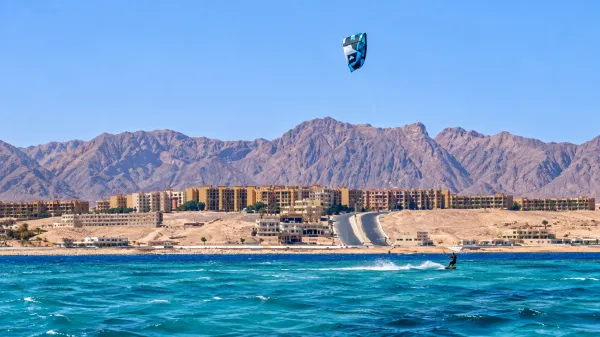
Beyond kitesurfing, Hamata offers one of the most remote and unspoiled holiday experiences on Egypt's southern Red Sea coast. Located south of Marsa Alam, near the coastal settlements of Berenice and Wadi Lahami, Hamata is surrounded by vast desert landscapes, turquoise lagoons, mangrove forests and beautiful coral reefs. Unlike the developed resort destinations of Hurghada and Sharm El-Sheikh, this region remains largely untouched by mass tourism, with accommodation concentrated around small eco-lodges, diving camps and dedicated kitesurfing centres. The appeal of Hamata lies in its extraordinary natural environment, peaceful atmosphere and sense of isolation. For a kitesurfing trip with non-kiters, it is particularly attractive to travellers who enjoy nature, snorkelling, wildlife photography and simple beachfront relaxation rather than shopping, nightlife or organised entertainment.
One of the greatest attractions around Hamata is the exceptional underwater environment of the southern Red Sea. The region is famous for its clear water, colourful coral reefs and remarkable marine biodiversity. Snorkelling provides an excellent alternative to kitesurfing on calm days, allowing visitors to discover tropical fish, coral gardens and other marine species in suitable areas. Some coastal locations offer access to reefs from designated entry points, while organised boat excursions reach more remote snorkelling and diving sites. Visitors should be aware that coral formations, currents and changing sea conditions can make certain areas unsuitable for inexperienced swimmers. Choosing a guided excursion and respecting local marine protection regulations is particularly important in this environmentally sensitive region.
The nearby Fury Shoals reef system is one of the most celebrated diving destinations in Egypt's southern Red Sea. This extensive collection of offshore reefs, coral gardens and underwater formations attracts divers from around the world. Organised excursions from the wider Hamata and Wadi Lahami region can provide access to spectacular sites featuring colourful hard and soft corals, tropical fish and fascinating underwater topography. Some locations include coral pinnacles, channels and swim-through formations suitable for appropriately experienced divers. Snorkelling opportunities may also be available at selected sheltered reefs, depending on sea conditions and the operator's itinerary. Because many sites are offshore and relatively remote, excursions should always be arranged through reputable diving centres with appropriate safety equipment and emergency procedures.
Another remarkable natural attraction is the Hamata Islands, a group of low-lying islands surrounded by shallow turquoise waters and coral reefs. These islands form part of the wider protected marine environment associated with Wadi El Gemal National Park and provide important habitats for seabirds and other wildlife. Boat excursions may offer opportunities to admire the islands, observe marine life and enjoy the spectacular coastal scenery from permitted areas. However, landing on some islands is restricted or prohibited to protect sensitive nesting habitats and fragile ecosystems. Visitors should never assume that an apparently empty beach is open to the public and must follow the instructions of authorised guides and park authorities. The Egyptian Environmental Affairs Agency provides information about Egypt's environmental protection initiatives and natural heritage.
The mangrove habitats around Hamata and the nearby Qulaan area are among the most distinctive natural features of this coastline. These remarkable trees survive in the harsh coastal environment and provide important shelter and breeding habitats for fish, birds and other marine organisms. Guided nature excursions can introduce visitors to the ecological importance of mangroves and the delicate relationship between the desert and the sea. The surrounding landscape is particularly beautiful for photography, with green vegetation contrasting against pale sand, turquoise water and distant desert mountains. Birdwatchers may observe coastal and migratory species, particularly during seasonal migration periods. Visitors should remain on permitted routes, avoid damaging roots or vegetation and respect any restrictions designed to protect these sensitive ecosystems.
For visitors interested in exploring the desert, the landscape inland from Hamata offers a dramatic contrast to the Red Sea coastline. The Eastern Desert is characterised by rugged mountains, rocky valleys and extensive open plains, creating beautiful scenery for guided walks, photography and desert excursions. Depending on local availability, experienced guides may organise short trips into accessible desert areas or visits to traditional settlements. The region's remoteness makes independent exploration inadvisable, particularly because roads, communications and emergency services are limited. Visitors should arrange excursions through established local operators and carry adequate drinking water, sun protection and suitable footwear. The changing colours of the mountains during sunrise and sunset are among the most memorable features of the southern Egyptian desert.
Wadi El Gemal National Park, extending across a large section of the southern Red Sea coast and Eastern Desert, is one of the region's most important protected natural areas. The park includes coastal wetlands, mangrove habitats, offshore islands, desert valleys and mountainous landscapes, supporting an impressive diversity of wildlife. Guided excursions can provide opportunities to learn about the region's ecosystems, observe birds and discover the traditional relationship between local communities and the surrounding environment. Some itineraries explore coastal areas, while others focus on desert landscapes and historical sites associated with ancient trade and mineral extraction. Because the park covers an extensive territory, access arrangements and excursion possibilities vary considerably. Visitors should organise trips in advance and follow all conservation regulations.
For travellers interested in history, the wider southern Eastern Desert contains fascinating traces of ancient Egyptian and Roman activity. The region was historically associated with trade routes, mining settlements and the extraction of valuable minerals and stones. One particularly interesting historical destination is the ancient emerald-mining district of Mons Smaragdus, where emeralds were extracted during the Roman period. These remote archaeological remains provide a glimpse into the extraordinary challenges of working and travelling through the desert in ancient times. However, reaching such sites requires specialised transport, experienced guides and any necessary official permissions. These excursions are better suited to adventurous travellers with a strong interest in archaeology than to visitors seeking casual sightseeing near the beach.
For non-kiting partners and families, Hamata offers a peaceful environment centred on simple outdoor activities and relaxation. Many kite camps and eco-lodges provide shaded seating areas, beachfront lounges and communal dining spaces where visitors can enjoy the coastal scenery. Swimming and snorkelling may be possible in designated areas when conditions are suitable, while beach walks, reading, photography and wildlife observation provide enjoyable alternatives during windless hours. Unlike larger Egyptian resorts, however, Hamata generally has limited entertainment facilities, shopping opportunities and children's activities. Families should choose accommodation carefully and confirm the availability of suitable swimming areas, meals, medical assistance and transport before travelling. The destination is best suited to visitors who appreciate tranquillity and natural surroundings rather than extensive resort amenities.
Food and accommodation in Hamata reflect the area's remote character. Most visitors stay in dedicated kite camps, diving lodges or small beachfront properties that provide accommodation, meals and organised transfers as part of a package. Dining is generally informal, with communal meals and a selection of Egyptian and international dishes depending on the property. Evenings are often spent relaxing after a day outdoors, sharing experiences with other travellers or enjoying the peaceful desert atmosphere beneath the stars. Because shops, pharmacies and other services are extremely limited, visitors should bring essential personal supplies, medications, sun protection and any specialised equipment they may need. It is also advisable to arrange airport transfers and excursions before arrival. General information about travelling in Egypt is available through the official Egyptian tourism website.
For anyone planning a kite trip to Hamata and wondering what else there is to do, Egypt's far southern Red Sea coast offers an extraordinary opportunity to experience nature in a remote and peaceful setting. A no-wind day can include snorkelling over colourful coral reefs, joining a guided diving excursion to Fury Shoals, observing wildlife around the mangrove habitats or exploring permitted coastal areas near the Hamata Islands. Visitors interested in the wider landscape can arrange guided excursions into Wadi El Gemal National Park or simply enjoy the silence and beauty of the surrounding desert. With its remarkable marine environment, secluded beaches and relaxed atmosphere, Hamata is an outstanding destination for combining kitesurfing with underwater exploration and a genuine escape from the crowds, particularly for non-kiting partners and families who appreciate nature and simple outdoor experiences.