
Kitesurfing in Bayly Road
New Plymouth · New Zealand
- Spot type Wave
- Rider level expert
- Water Dark - Clear
- Beach Sand
- Crowd Few people
- Tide effect OK high tide
Kitesurfing in Bayly Road: Conditions, Wind & Season
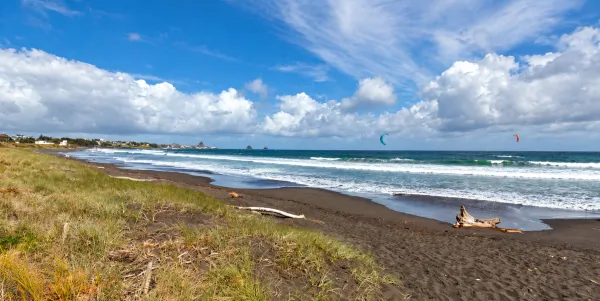
Bayly Road is a challenging ocean kitesurfing spot on New Zealand's west coast, in the Taranaki region near Okato and Warea, southwest of New Plymouth. Exposed to the Tasman Sea, this stretch of coastline offers consistent swell, breaking waves and a rugged combination of sandy beach and rocky shoreline. Unlike sheltered flat-water locations, Bayly Road is primarily a wave-riding destination suited to advanced kitesurfers comfortable with demanding ocean conditions. Its relatively isolated setting and limited crowds provide plenty of space on the water, but the rocky launch and changing tidal conditions require considerable experience and careful preparation.
The main kitesurfing season generally extends from September through December, when spring and early summer weather systems provide some of the most favourable wind opportunities along the Taranaki coast. Potentially usable wind directions include N, NNE, NE, SE, SSE and S, although their suitability depends on the precise launching area, swell direction and local coastal topography. Wind speeds during rideable sessions typically range from approximately 12 to 25 knots, with stronger gusts possible during frontal conditions. The exposed coastline can experience rapid weather changes, making it important to assess wind direction and strength carefully before launching. The best sessions occur when suitable wind combines with organised swell and manageable shorebreak.
Water conditions at Bayly Road are predominantly wavy, with regular Tasman Sea swell producing medium-sized breaking waves and occasionally larger surf during stronger weather systems. The exposed coastline creates an energetic riding environment where wave selection, timing and board control are essential. Experienced riders can enjoy carving turns and down-the-line wave riding when the swell is well organised, while stronger winds may generate additional chop between breaking sections. The spot is not suitable for conventional flat-water freestyle, and the combination of waves, rocks and shifting currents makes technical jumping or wakestyle manoeuvres particularly demanding. Directional wave riding is the principal attraction.
The shoreline consists of sandy sections mixed with rocks and harder seabed features, creating a more complicated launching environment than a typical open sandy beach. Tides strongly influence the available space, the position of breaking waves and the exposure of shoreline hazards. Higher water levels may improve access over some rocky sections, but they can also reduce the amount of dry beach available for rigging and landing. At lower tides, additional rocks and uneven seabed may become exposed, increasing the risk of equipment damage or injury. Riders should inspect the launch carefully and select a suitable tidal window rather than assuming that high tide always provides the safest conditions.
Access is available from Bayly Road, with parking relatively close to the coastline and a short approach to the launching area. However, the final entry point and usable beach space depend on local conditions and the state of the tide. Launching and landing require particular care because of the proximity of rocks, uneven ground and breaking waves. The location is generally uncrowded, but this also means that assistance may be limited if equipment fails or conditions deteriorate. Riders should assess the wind angle, identify safe entry and exit routes and avoid launching when insufficient clearance is available from shoreline obstacles.
Bayly Road is best suited to advanced and expert kitesurfers with strong wave-riding skills and experience managing difficult launches. A directional surfboard paired with a responsive wave kite is the preferred setup for exploiting the breaking waves, while a manoeuvrable twin-tip can be used in suitable conditions. Kite sizes around 7–12 m² may cover a range of moderate to stronger winds, depending on rider weight and actual conditions. A 4/3 mm wetsuit is generally appropriate during warmer periods, while a 5/4 mm wetsuit may be preferable in colder months. Neoprene boots can provide additional protection when walking across rocky areas, although avoiding hazardous entry points remains essential.
The main hazards include submerged and exposed rocks, powerful shorebreak, changing swell, rip currents and restricted launching space. Wave conditions can become significantly more challenging when larger swell coincides with strong winds or an unfavourable tide. Falling near rocky sections carries a greater risk of injury, while damaged equipment or a failed relaunch can leave riders in difficult conditions close to shore. Sudden wind shifts and the exposed coastal setting further increase the importance of careful weather assessment. Bayly Road is not recommended for beginners or inexperienced intermediate riders, and independent sessions should only be attempted with appropriate local knowledge and reliable safety arrangements.
Bayly Road offers a demanding but rewarding wave-kitesurfing experience along New Zealand's rugged Taranaki coastline. Its combination of Tasman Sea swell, seasonal winds and relatively uncrowded water makes it attractive to experienced riders seeking challenging ocean sessions. Although the rocky shoreline and tide-sensitive launch require careful planning, Bayly Road provides an appealing alternative to more accessible beaches for advanced kitesurfers who prioritise wave riding and technical ocean skills.
Something missing or out of date at this spot? Suggest a correction
Bayly Road is best suited for
Spot profile
Travel spot
The typical kite travel destination, it is known for its great conditions, and kiters from around the world come here for their vacations.
Local spot
Maybe not be worth a real journey to reach this spot, but great if you live close by and it is a windy day. In the end, being out on the water feels great anywhere
Equipment
Wave-oriented kite gear is the best fit for Bayly Road. Most riders will want a directional board or a compact, controllable twin-tip well suited for handling chop and steep faces, while kites in the 7 to 10m range tend to be appropriate for the region's typical 12–25 knot wind, adjusting size to actual wind strength. Wetsuit thickness should be 3/2mm in summer (November to March), 4/3mm or even 5/3mm plus hood in winter months, as Taranaki coastal water is usually cool even on warmer days. Booties are strongly recommended all year because of the rocky shore and tidal launch area; gloves and a thin hood can be useful for early spring or late autumn sessions when the water drops below 14°C.
Wind Conditions
Main wind directions at Bayly Road
Windy days per month in Bayly Road
Wind Speed Range
From 12 to 25 Knots
Suggested sizes
8 - 9 mt
10 - 11 mt
12 - 13 mt
Forecast on Windy.com
Kitesurfing Safety & Local Rules at Bayly Road
The main hazards at Bayly Road are the rocky shoreline, submerged obstacles and limited launching space. Rocks scattered along the water's edge create a significant risk of injury or equipment damage during launching, landing and unexpected falls. Tidal changes affect the available beach width, with suitable rigging and launching opportunities restricted to particular water levels. Kite lines can easily become caught on exposed rocks, while an uncontrolled landing may drag riders or equipment onto the rocky shore. Check tide conditions carefully, inspect the launching area and identify a safe exit route before entering the water.
Wave conditions and changing wind strength create additional risks, particularly when riding close to shore. Breaking waves over variable water depth can push riders toward submerged or exposed rocks, while sudden gusts or lulls may complicate kite control and make returning safely to the launch difficult. Self-rescue is especially challenging because drifting downwind may lead directly onto hazardous rocky sections. Maintain generous clearance from the shoreline, avoid riding waves too close to exposed obstacles and assess wind, swell and tide conditions before each session.
Bayly Road is best suited to expert kitesurfers with strong wave-riding skills, precise kite control and reliable self-rescue abilities. The restricted launching area leaves little margin for error, particularly when recovering a dropped kite or returning in deteriorating conditions. Although the beach is generally quiet, the lack of other riders or bystanders can make assistance difficult during an emergency. Avoid riding alone, prepare a clear recovery plan and do not launch when the tide leaves insufficient safe space. Beginners and intermediate riders should choose a more forgiving location with a sandy shoreline and easier access.
Location
Closest City
New Plymouth
How to get There
Drive from New Plymouth toward the Okato and Warea coastal area via SH45. There are no access restrictions or complex instructions: the spot is publicly accessible with parking available very close to the launch. Travelers arriving from elsewhere will generally fly into New Plymouth for the last overland leg; Auckland, Wellington, and Christchurch offer wider airport options but are several hours away by car.
Access
Public access is reported, with no special instructions or particular access difficulties listed. Parking is available at the spot, and no private-fee or permit requirement is mentioned in the available information.
No-Wind Days: What to Do Around Bayly Road
Located along the rugged Taranaki coastline on New Zealand's North Island, Bayly Road offers a peaceful rural setting surrounded by green farmland, dramatic ocean views and the region's distinctive black-sand beaches. Unlike developed seaside resorts, this stretch of coast is characterised by small settlements, quiet country roads and relatively untouched landscapes. Its location makes it particularly attractive for travellers combining kitesurfing with surfing, hiking and scenic road trips. During no-wind days, visitors can explore the spectacular Taranaki coastline, discover nearby villages or head inland towards the impressive volcanic landscapes of Mount Taranaki.
The coastline around Bayly Road is one of the area's main attractions, with dark volcanic sand, rocky shorelines and powerful Tasman Sea waves creating a dramatic natural environment. Visitors can enjoy coastal photography, beach walks and watching the changing ocean conditions. The surrounding farmland and distant views of Mount Taranaki provide beautiful scenery, particularly during clear mornings and late afternoons. Swimming is generally less suitable along exposed sections of this coastline due to strong surf, currents and rocky areas, so visitors should choose supervised beaches elsewhere in the region when conditions allow.
One of the best ways to explore the area is by following Surf Highway 45, the scenic coastal road connecting New Plymouth with the settlements of western Taranaki. The route passes through rolling farmland, small villages and numerous beaches known for their surfing culture. Nearby Okato and Warea offer a glimpse into rural New Zealand life, with occasional cafés, local shops and beautiful coastal scenery. Farther along the highway, visitors can discover additional surf beaches, scenic viewpoints and quiet stretches of coastline. The journey is particularly rewarding for photographers and travellers who enjoy exploring at their own pace.
Mount Taranaki is undoubtedly the region's most spectacular natural landmark. Rising dramatically above the surrounding countryside, this almost perfectly symmetrical volcanic mountain dominates the landscape and offers numerous hiking opportunities. Egmont National Park, also known as Te Papakura o Taranaki, features native forests, waterfalls and walking tracks suitable for different experience levels. Popular excursions include the short walk to Dawson Falls and the scenic trails around the mountain's lower slopes. More demanding alpine routes require appropriate experience, equipment and favourable weather, as conditions can change rapidly. Visitors can find information about tracks and safety through the official Department of Conservation website.
New Plymouth, approximately 30 minutes north of Bayly Road depending on the exact access point, provides the region's main cultural and recreational attractions. The city's Coastal Walkway stretches along the waterfront, offering beautiful views of the Tasman Sea and opportunities for walking, jogging and cycling. The iconic Te Rewa Rewa Bridge is a popular photography location, especially when Mount Taranaki is visible in the background. Visitors can also explore Pukekura Park, a beautiful urban garden featuring lakes, walking paths and lush vegetation. The city's relaxed atmosphere and waterfront cafés make it an enjoyable destination for a day away from the beach.
For art and culture enthusiasts, New Plymouth offers several interesting attractions. The Govett-Brewster Art Gallery and Len Lye Centre showcase contemporary art and the innovative work of New Zealand artist Len Lye, while Puke Ariki combines museum exhibitions, regional history and cultural displays. The city also has a growing food scene, with restaurants, cafés and breweries serving local produce and regional specialities. Visitors interested in exploring more of the area can consult the official Taranaki tourism website for attractions, events and travel inspiration.
The wider Taranaki region offers additional opportunities for outdoor recreation, including mountain biking, forest walks and scenic drives through the countryside. Coastal settlements such as Ōakura provide attractive beaches, cafés and a more developed seaside atmosphere, while the countryside inland offers peaceful rural landscapes and views of the mountain. Surfing is particularly popular along this coastline, with numerous breaks suited to different experience levels depending on swell and conditions. For families and non-kiting partners, combining short coastal excursions with visits to New Plymouth's parks and attractions provides plenty of variety throughout a longer stay.
Accommodation and dining options directly around Bayly Road are limited, making New Plymouth the most practical base for most visitors. The city offers everything from budget hostels and holiday parks to self-catering apartments, motels and comfortable hotels. Smaller coastal communities such as Ōakura and Okato may provide additional guesthouses and holiday homes, although availability is more limited. Restaurants, supermarkets, pharmacies and other essential services are concentrated in New Plymouth, so visitors should bring food, drinking water and necessary supplies when heading to the more isolated beaches. A rental car is strongly recommended, as public transport connections to rural coastal access points are limited.
With its dramatic volcanic coastline, scenic rural roads and proximity to Mount Taranaki and New Plymouth, Bayly Road offers plenty to enjoy beyond kitesurfing. Whether exploring Surf Highway 45, hiking through native forests, photographing black-sand beaches or discovering the cultural attractions of New Plymouth, visitors will find an appealing combination of outdoor adventure and relaxed regional travel. Its peaceful setting makes Bayly Road particularly suitable for independent travellers, nature lovers and non-kiting partners who enjoy exploring New Zealand's less-developed coastal landscapes.
Other kitesurfing spots near Bayly Road
All kitesurfing spots in New Zealand
Last updated: